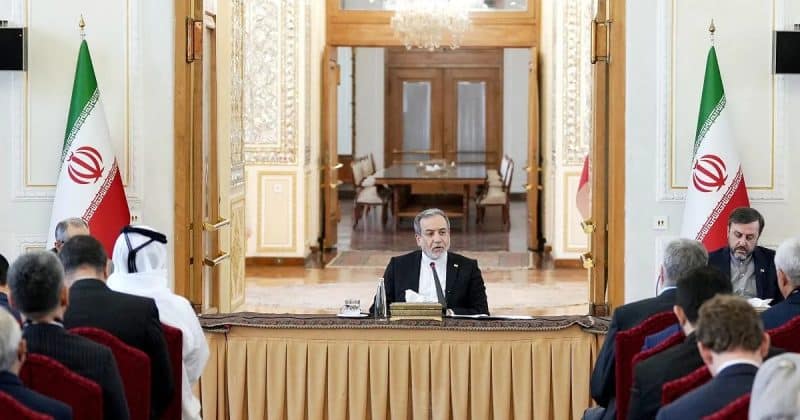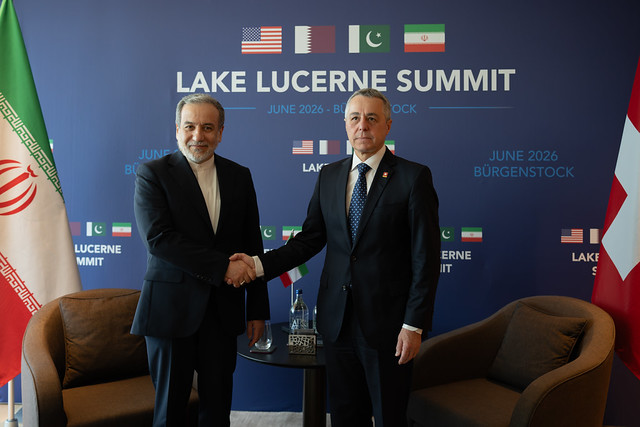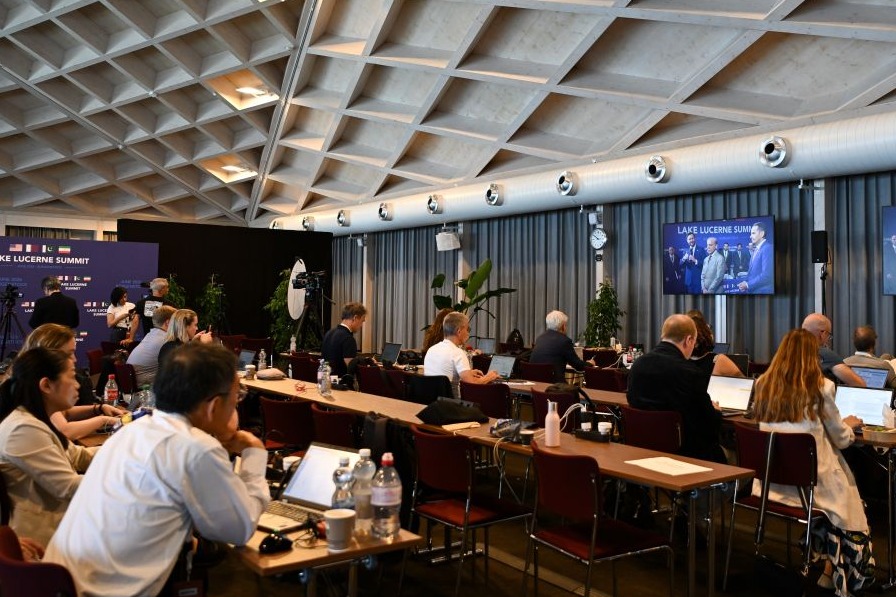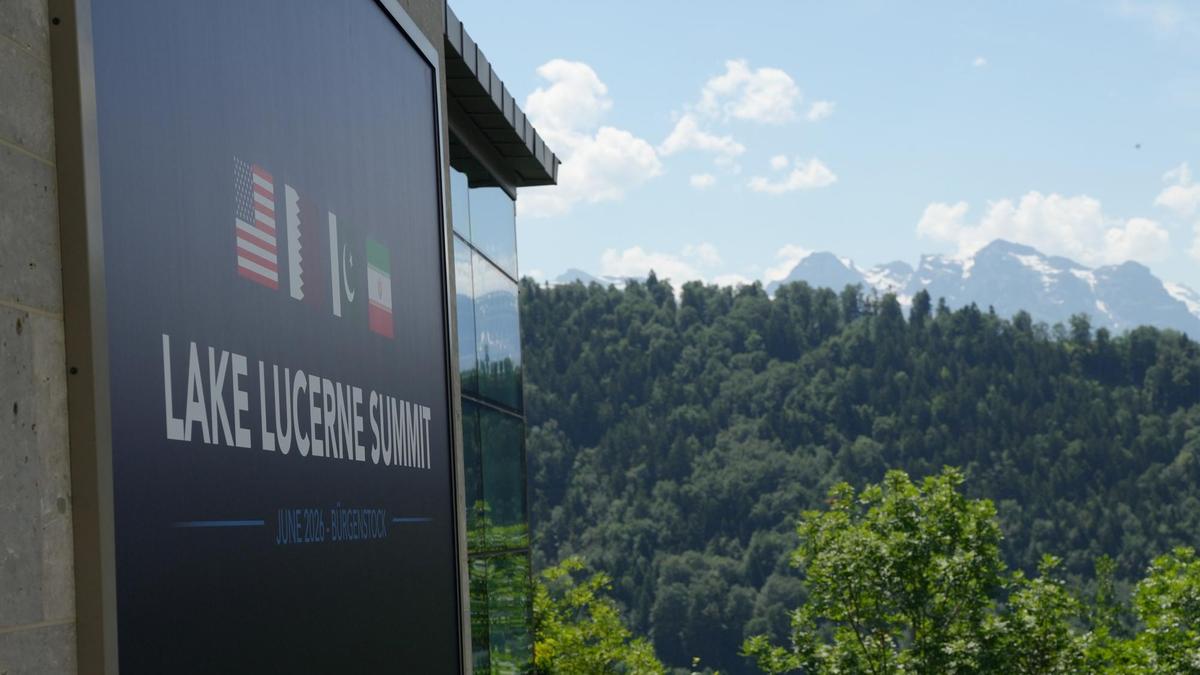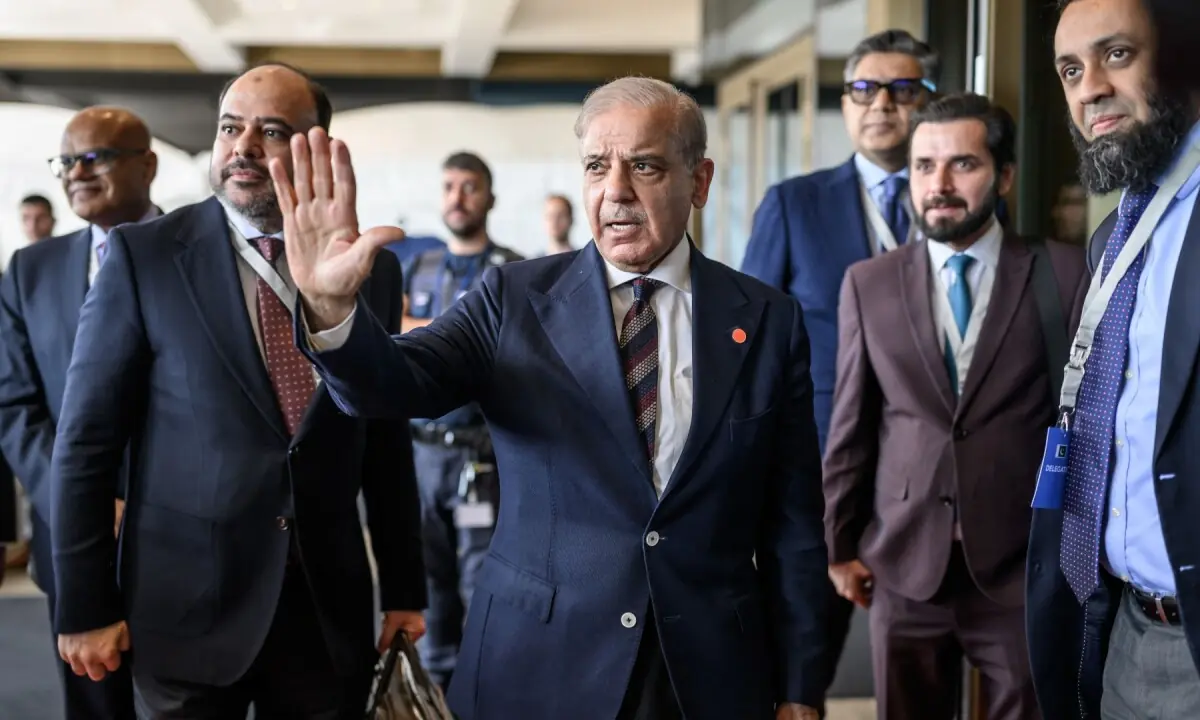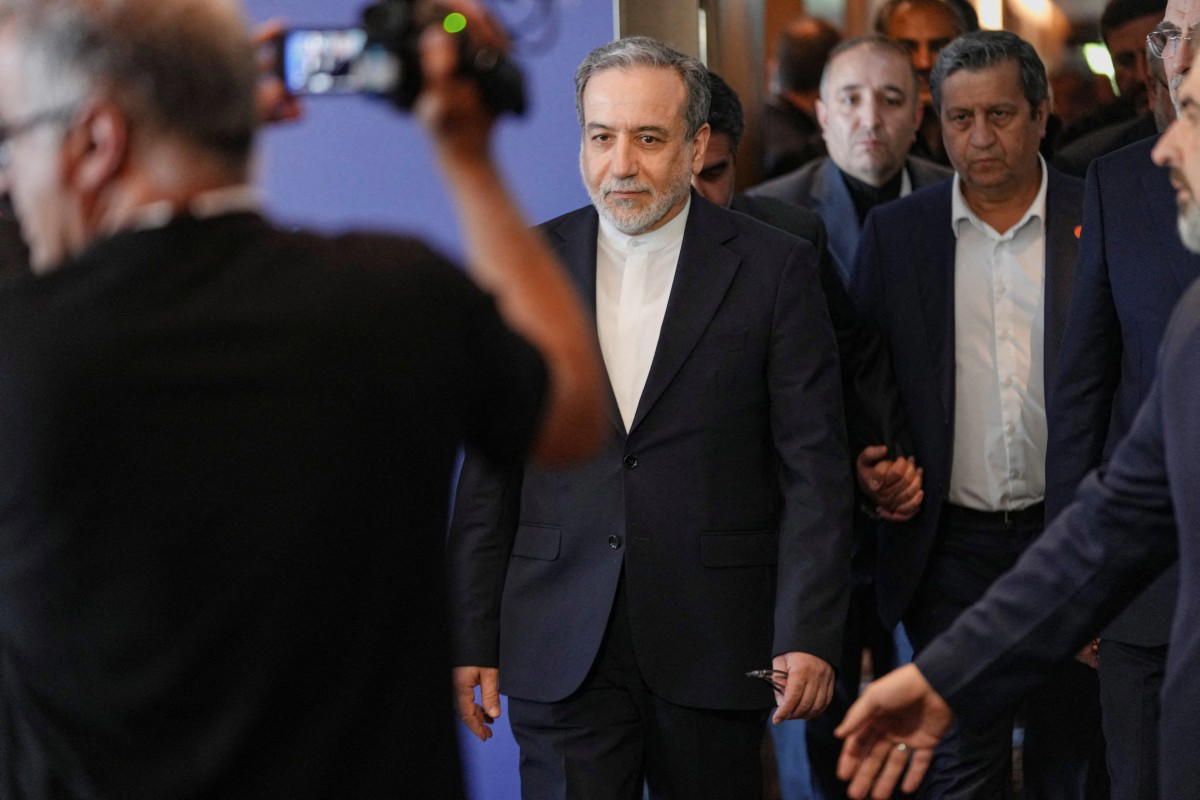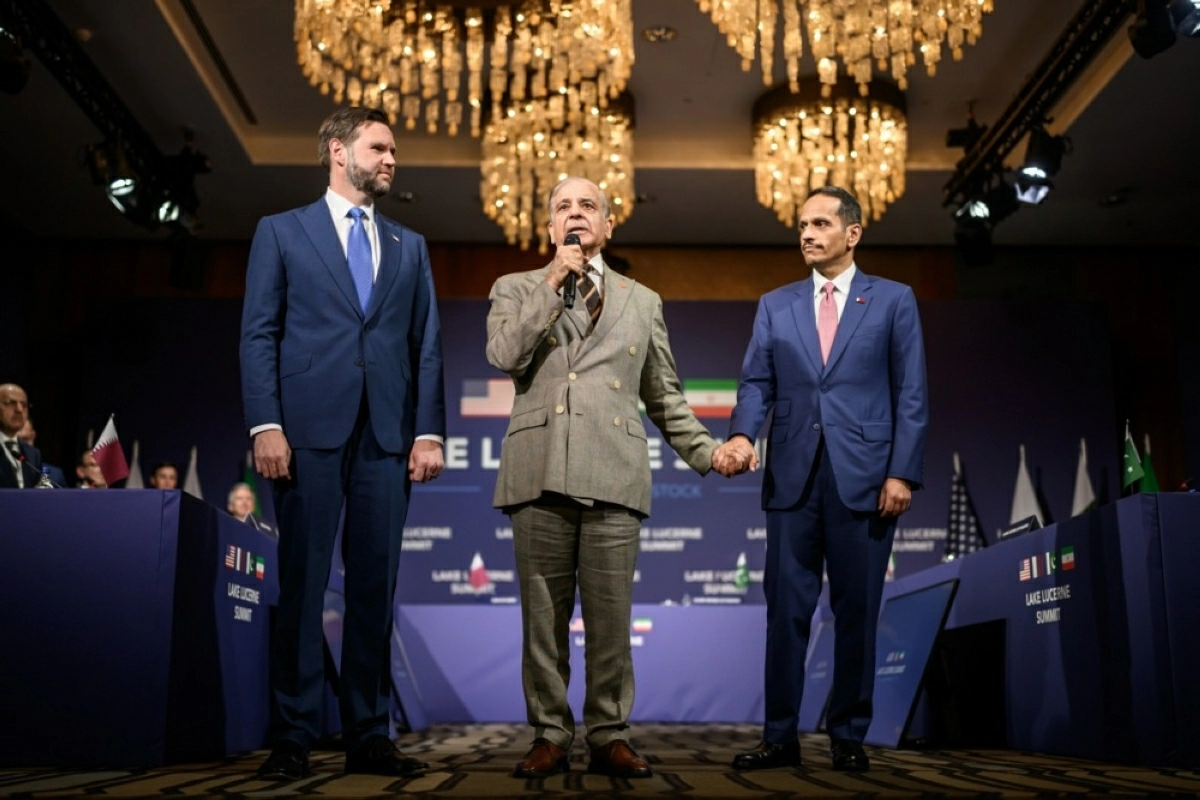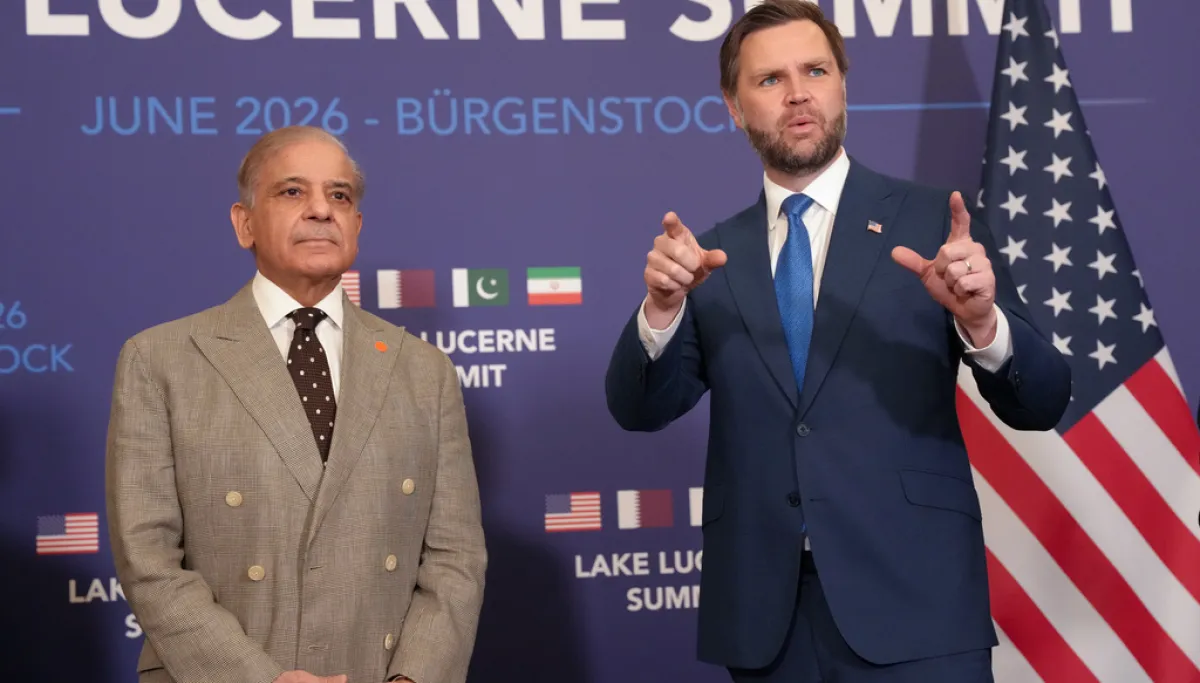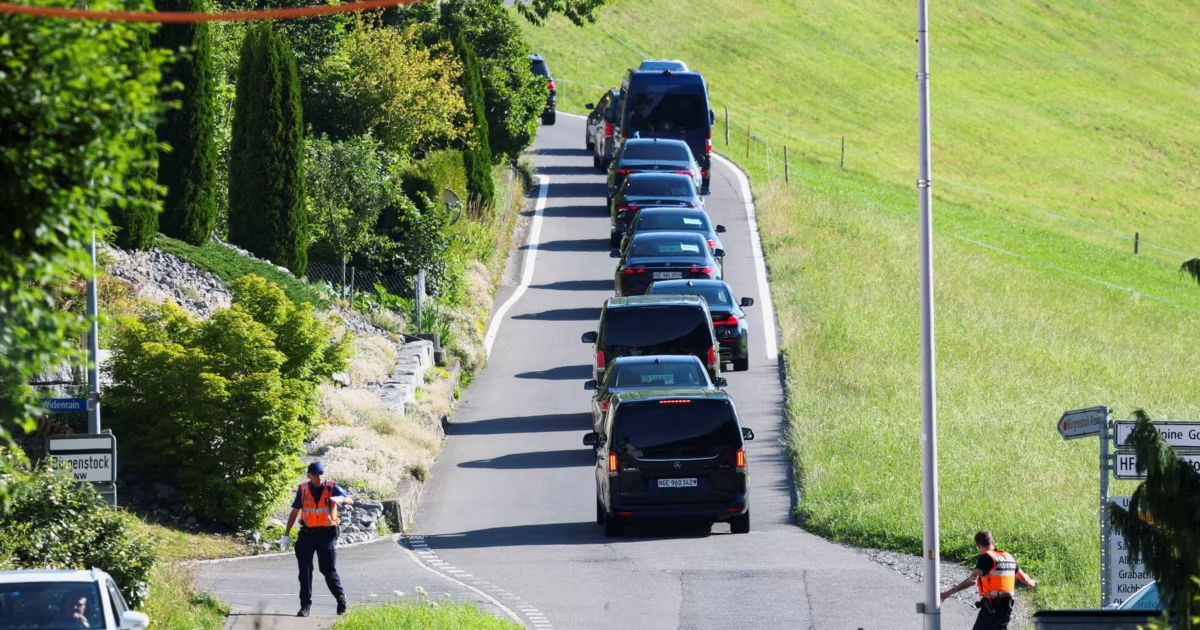
LUCERNE, Switzerland -- Delegations from the United States, Iran, Qatar and Pakistan began gathering on June 21 at the Lake Lucerne Summit, launching what could become the most consequential diplomatic effort yet to stabilize the Middle East after weeks of war.The formal talks, centered on implementing the US-Iran memorandum of understanding that established a 60-day cease-fire, are set to begin within hours, according to RFE/RL reporting from the summit venue.But officials on all sides acknowledge the process could stretch into the next day, underscoring the complexity of the agenda and the fragility of the truce itself.
The summit's setup reflects the unusual coalition behind the deal: The flags of Washington and Tehran flanked by Qatar and Pakistan, the two states that played critical mediation roles in brokering the agreement.While the core focus remains Iran's nuclear program and mechanisms for deescalation, the talks are expected to unfold across multiple tracks, with side sessions addressing regional flashpoints including Lebanon and maritime security in the Strait of Hormuz. Neither Israel nor Lebanon is directly represented, but both conflicts loom heavily over the discussions.All delegations are now in place, with Pakistan arriving last. Prime Minister Shehbaz Sharif and Pakistan's military chief, Field Marshal Asim Munir, landed in Switzerland on June 21 and are expected to take part in the negotiations.The timing is critical. The Israel-Lebanon cease-fire, only two days old, is already under visible pressure. Lebanese authorities say Israeli strikes killed 67 people over the past 48 hours, while Hezbollah attacks left five Israeli soldiers dead. Israel has since paused operations, but Prime Minister Benjamin Netanyahu has vowed retaliation for any future threats.Hezbollah is both a militant group and political party that controls much of southern Lebanon. It is considered a terrorist organization by the United States, although the European Union has only blacklisted its armed wing.