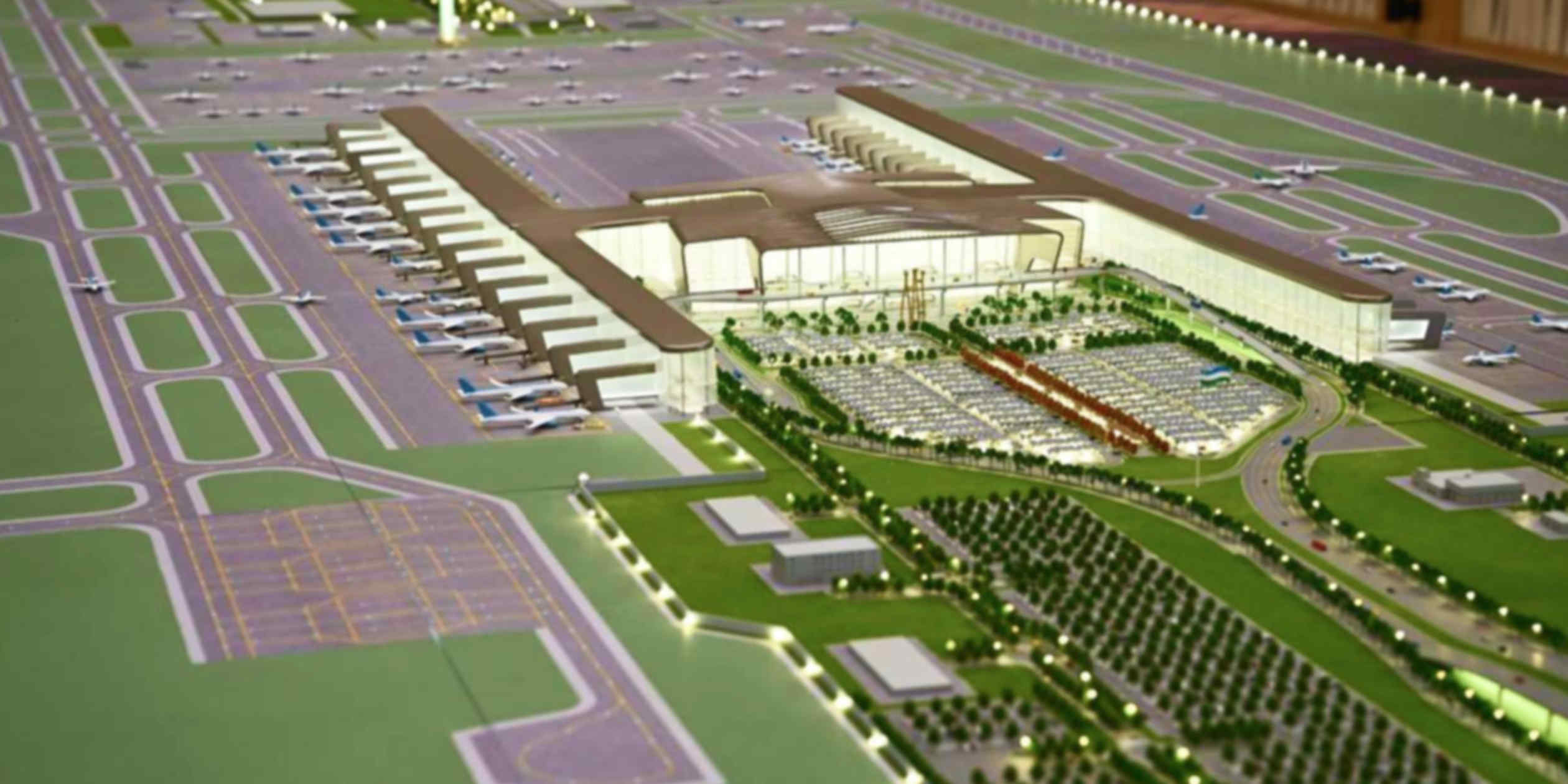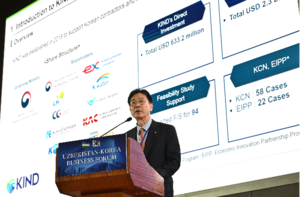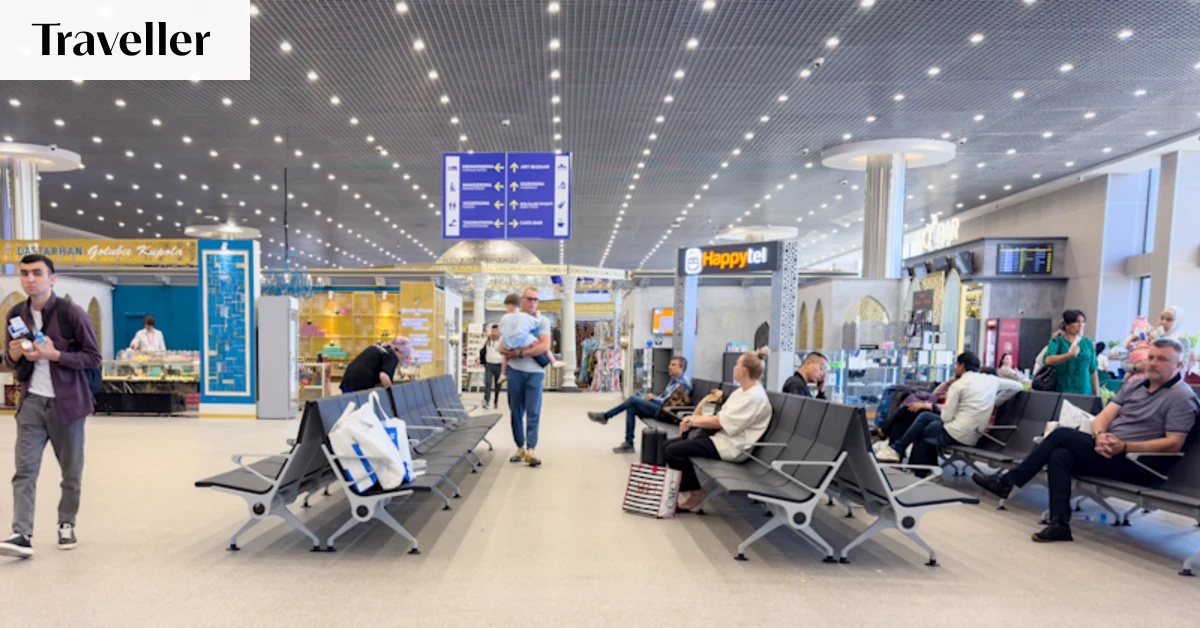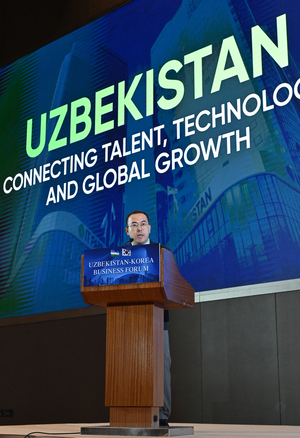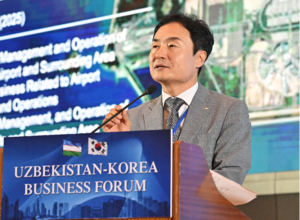
Lee Sang-yong, executive director of the New Business division at Incheon International Airport Corp., speaks at the Korea-Uzbekistan Business Forum 2026 in Tashkent, Uzbekistan, Tuesday. (Im Se-jun/The Korea Herald) TASHKENT, Uzbekistan — Incheon International Airport Corp. is moving to turn Uzbekistan’s rapidly growing air travel demand into its next overseas growth engine, joining major airport development projects in Tashkent and Urgench as country seeks to make itself a regional aviation hub.Speaking at the Korea-Uzbekistan Business Forum in Tashkent, Lee Sang-yong, executive director of IIAC’s new business division, said the Korean airport operator aimed to apply its experience in developing and running one of the world’s busiest airports.“Incheon International Airport’s goal is to apply its world-class airport service capabilities to the two airports and build and operate a second version of the Incheon International Airport in Uzbekistan,” Lee said.At the center of the push is the New Tashkent Airport project, a $2.5 billion plan to build the largest international airport in Central Asia.Under the Tashkent project, IIAC is expected to help build and operate a new airport with an annual passenger capacity of 17 million passengers, expandable to 47 million upon full completion. Lee said the project will be developed under a build-transfer-operate model, with construction expected to take four years and operation to continue for 31 years.About 41 percent of the $2.5 billion cost will come from equity investments by IIAC, Korea Overseas Infrastructure and Urban Development Corp., Japan’s Sojitz and Jalux, Saudi Arabia’s Vision Invest and Uzbekistan Airports. The rest is expected to be financed through senior secured loans from the European Bank for Reconstruction and Development, the US International Development Finance Corp., the Japan Bank for International Cooperation and commercial banks.Under the build-transfer-operate project, the company will build by 2028 a 39,000-square-meter passenger terminal capable of handling 3 million passengers annually, as well as a 1,400-square-meter cargo terminal and other facilities. In return for transferring ownership after construction, IIAC will operate the airport for 19 years.“We will make every effort so that Tashkent Airport can become a hub airport in Central Asia and an airport loved by the people for its convenience and comfort,” Lee said.IIAC is also developing the Urgench airport project after signing a contract with Uzbekistan Airports in December last year.Lee explained that Uzbekistan’s aviation market is expanding rapidly on the back of economic growth, liberalized aviation policies and rising foreign visitor numbers.Uzbekistan’s airport passenger traffic reached 15.5 million in 2025, up 3.5-fold from 2021, with average annual growth of 36.5 percent, according to Lee. The number of foreign visitors reached 11.7 million in 2025, rising at an average annual rate of 34 percent since 2020.Lee said IIAC planned to position Tashkent as a Central Asian hub and Urgench as a regional gateway, while working to attract more airlines and expand international flight networks.The company also plans to apply its airport operating systems, advanced baggage-handling capabilities, and new technologies such as AI, robotics and digital tools to the Uzbek projects."We will also train local airport staff through education programs based on our experience with international aviation bodies, including the International Civil Aviation Organization and Airports Council International," he added.Lee said the Tashkent airport project alone was expected to generate $5.3 billion in production inducement effects across construction, manufacturing and logistics, and create $2 billion in added value and more than 30,000 new jobs.The overseas push comes as IIAC seeks to expand beyond its home base after completing four phases of development that boosted its annual passenger capacity to 106 million.In 2025, IIAC handled 74 million international passengers, ranking third globally, and placed fourth in air cargo, Lee said. The airport is served by 110 airlines operating 187 routes to 57 countries.IIAC posted revenue of $2.1 billion and operating profit of $450 million in 2025, with an operating margin of 21 percent. Non-aeronautical revenue accounted for about 66 percent of total revenue, supported by duty-free, food and beverage and other commercial facilities, Lee said.The airport operator has carried out 42 overseas projects in 18 countries, generating about $600 million in accumulated revenue. Its overseas portfolio includes airport operations and investment-development projects in Kuwait, the Philippines and Indonesia.
Incheon Airport backs Uzbekistan’s aviation hub ambitions
TASHKENT, Uzbekistan — Incheon International Airport Corp. is moving to turn Uzbekistan’s rapidly growing air travel demand into its next overseas growth engine
TL;DRAI
Incheon International Airport invests 41% in New Tashkent Airport ($2.5B, 17–47M annual passengers, 19-year BTO model). Uzbekistan aviation demand surged 3.5× (2021–2025, 36.5% CAGR); IIAC applies AI-robotics-baggage automation to capture regional logistics hub growth.
692 words~3 min read