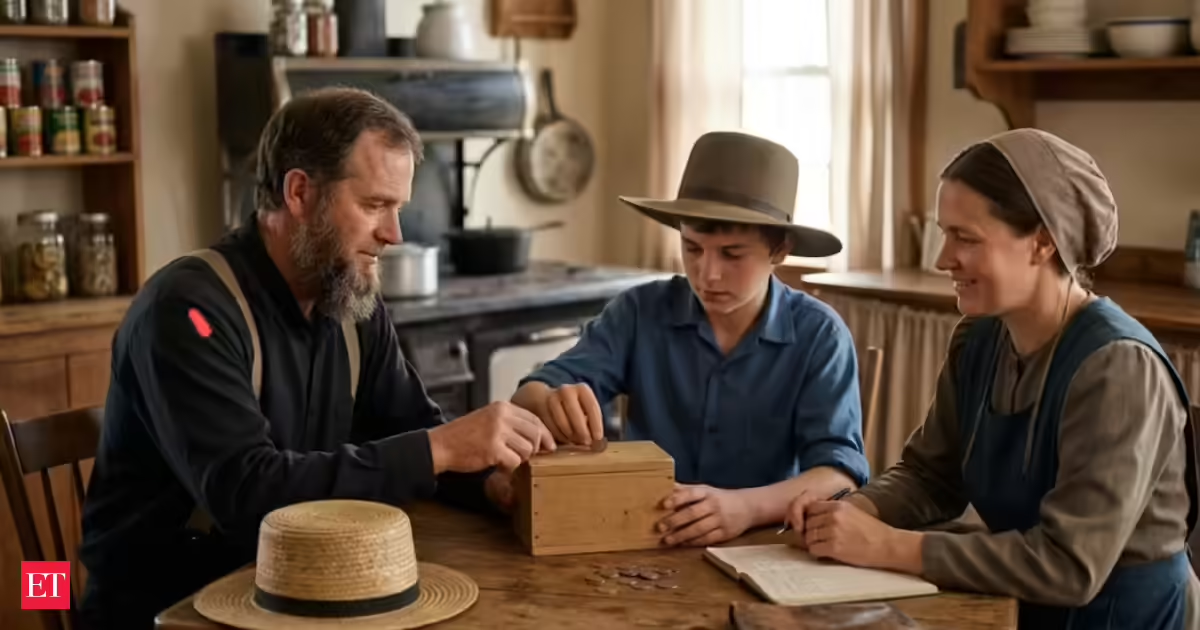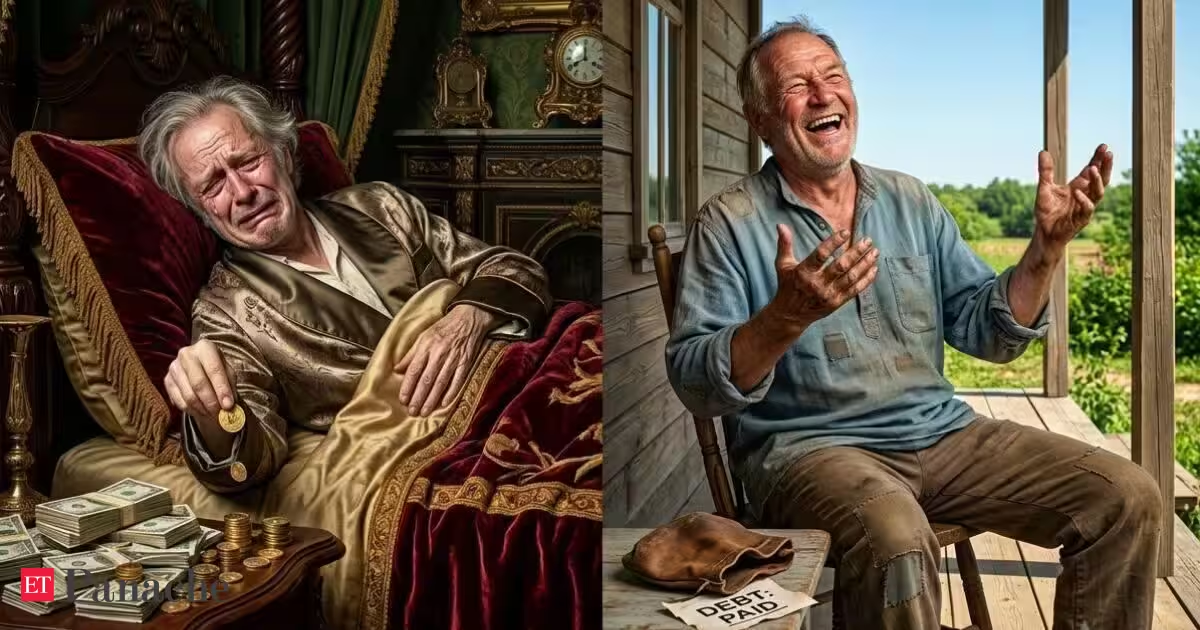
Have you ever met someone who seemed to have everything, money, a good job, and a big house, yet still appeared unhappy? Have you ever wondered why some people with far less seem more content and fulfilled?In a world where success is often measured by income and possessions, it can be easy to believe that money is the answer to most problems. Yet an old Amish saying offers a different perspective, suggesting that true wealth may come from things that cannot be bought.What this proverb meansThe literal meaning of the proverb is straightforward. A person without money may struggle to meet basic needs and face financial hardship. However, the saying argues that a person whose entire life revolves around money may be in an even worse position.The deeper message is that money is important, but it should not become the sole measure of success. Family, friendships, health, faith, kindness, and purpose are also valuable parts of a meaningful life. Someone who has wealth but lacks these things may feel empty despite their financial success.Significance of the proverb in real lifeThis proverb remains relevant because many people spend years chasing financial goals. While earning money is necessary, problems can arise when work and wealth become more important than relationships, personal well-being, or time with loved ones.The saying encourages balance. It reminds people to build a life that includes both financial security and meaningful connections. The takeaway is simple: money can improve comfort, but it cannot replace the things that give life lasting value.Lesson on relationshipsStrong relationships require time, trust, and care. A person may be financially successful, but if they neglect family members or close friends, they can still feel lonely.The proverb reminds us that loved ones are a form of wealth that cannot be measured in dollars. Investing in relationships often brings rewards that money cannot buy.Lesson on friendshipGood friends offer support during difficult times and share life's happiest moments. These connections cannot be purchased or guaranteed by wealth.The saying teaches that friendships are among life's greatest treasures. A rich social life often contributes more to happiness than material possessions.Lesson on successMany people define success through income, promotions, or possessions. While these achievements can be important, they are only part of the picture.The proverb suggests that true success includes character, purpose, and meaningful relationships. A balanced life is often a more reliable measure of achievement than financial status alone.Lesson on happinessPeople often believe they will be happy once they earn more money or acquire more things. Yet happiness frequently comes from experiences, relationships, and a sense of belonging.This Amish wisdom reminds us that money can solve some problems, but it cannot create lasting fulfillment by itself. Genuine happiness often grows from the things that money cannot purchase.Lesson on prioritiesLife presents countless opportunities to focus on earning, spending, and acquiring more. The proverb encourages people to pause and consider what truly matters.By keeping relationships, health, and personal values alongside financial goals, people can create a richer and more meaningful life.Who are the Amish people?The Amish are a traditional Christian community that traces its roots to the 16th-century Protestant Reformation in Europe. They belong to the Anabaptist movement, which emphasizes adult baptism, simple living, humility, and a strong commitment to faith. Most Amish communities in North America are known for using horse-and-buggy transportation, wearing plain clothing, and speaking Pennsylvania German in addition to English. They generally avoid many modern technologies, including television, internet access, and public electricity, believing that these can weaken family and community bonds.Despite sharing common beliefs, the Amish are not a single uniform group. There are dozens of Amish subgroups, each with its own rules regarding technology, dress, and interaction with the outside world. Their way of life is centered on preserving traditions and maintaining a close-knit community guided by Christian values.
Amish proverb of the day: ‘He who has no money is poor; he who has nothing but money is even poorer.’ - a lesson on the wealth that money can't buy
Amish proverb of the day highlights that true wealth lies beyond monetary possessions. The saying emphasizes that a life solely focused on money can be less fulfilling than one rich in family, friendships, health, and purpose. It encourages a balanced approach, reminding us that while money offers comfort, it cannot replace the value of connections and well-being.
633 words~3 min read