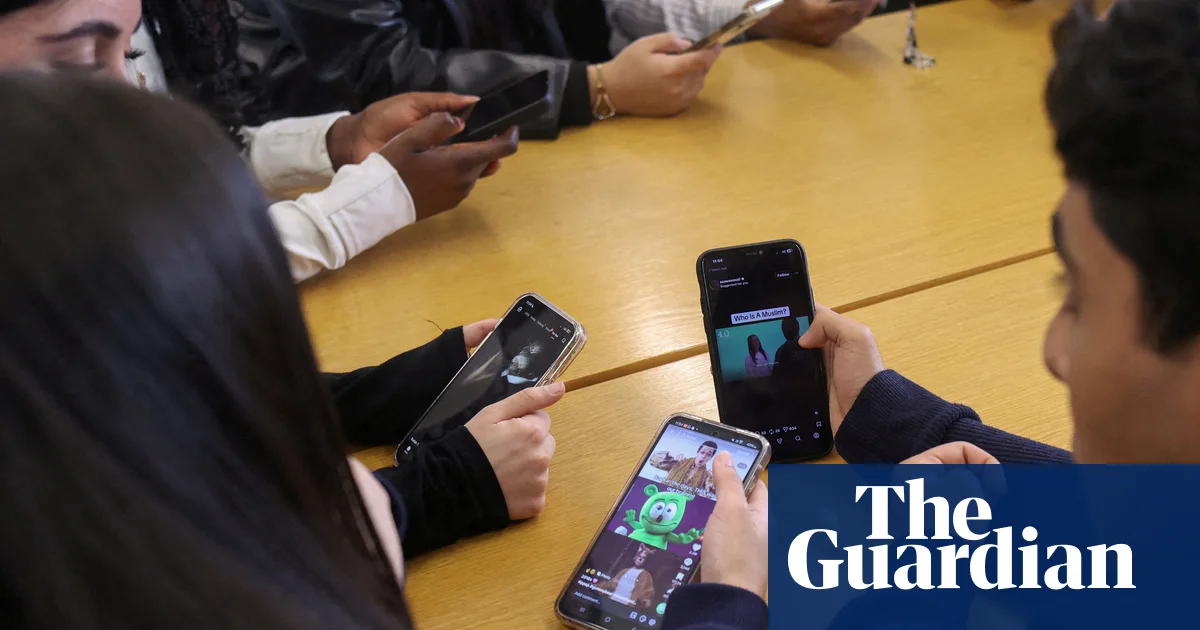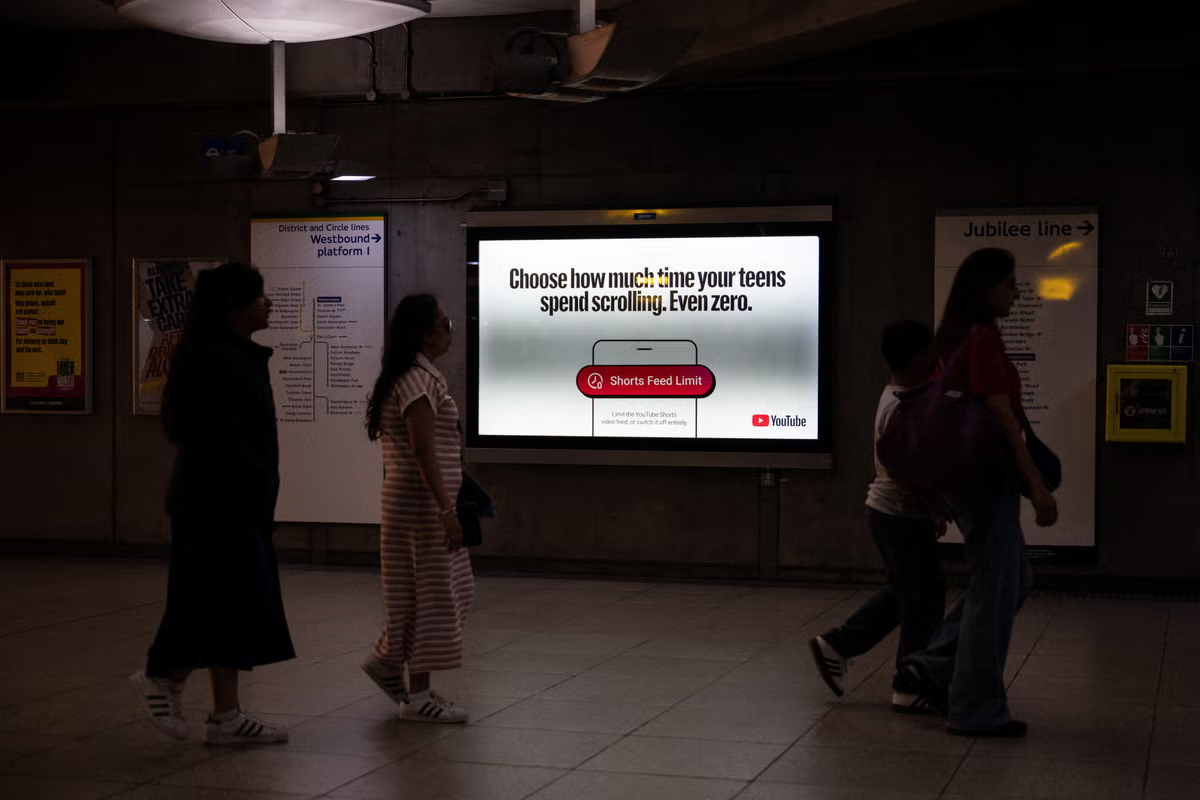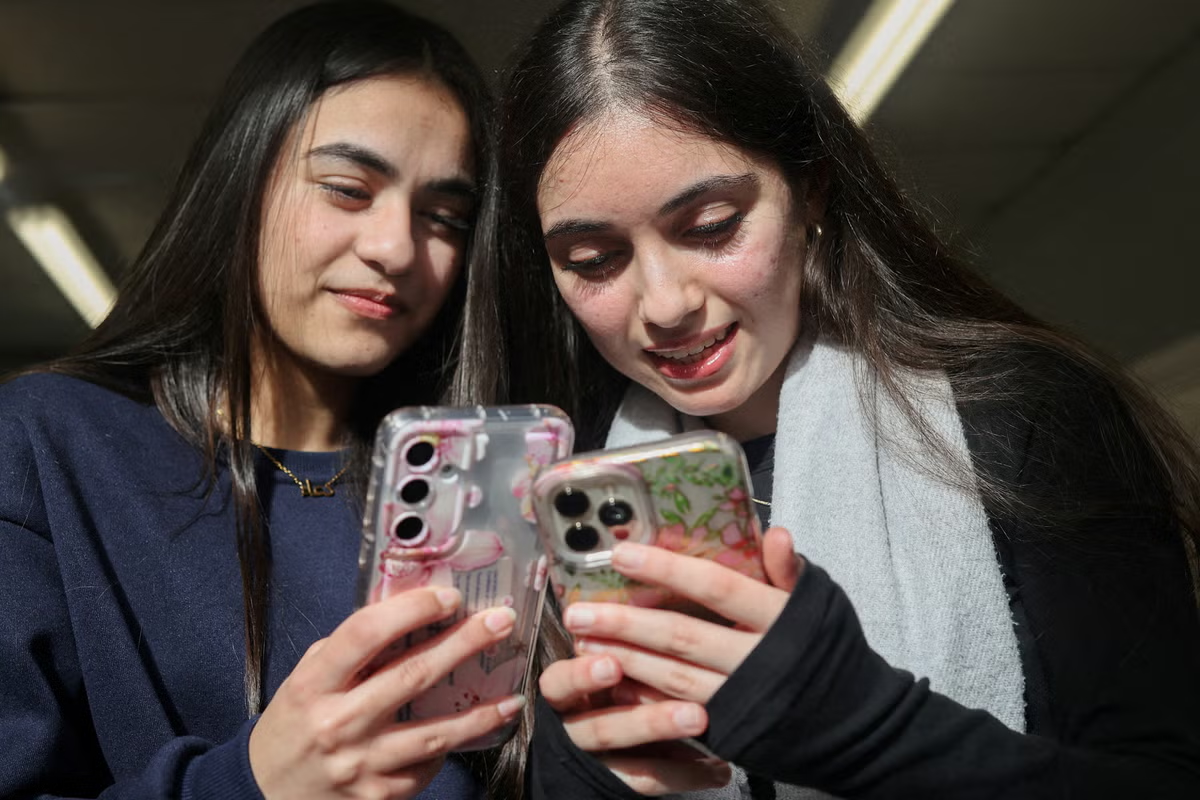
When the news broke that Keir Starmer was implementing an under-16s social media ban next year – with promises that it would be even more rigorous than the Australian ban it’s based on – the battle lines were immediately drawn.Across TV, radio and social media, the irresistible narrative of old vs young was in evidence everywhere. On news programmes, older commentators, campaigners, parents and politicians largely celebrated the news, and younger representatives expressed reservations or outright outrage at the ban. Campaigners like Paddy Crump at FlippGen, which campaigns for digital wellbeing and safety, felt the Starmer cabinet had just overridden and “ultimately ignored” the voices and advice of young people. On TikTok the responses were less measured, with thousands of youngsters calling for a French-style revolution and a storming of the House of Commons (which would require teens to actually get off TikTok and get to Westminster). However, the notion that this is a gleeful win for older people and a tragic loss for young people isn’t anywhere close to the real picture when you look beyond the binary narrative. Gen Z and Gen Alpha (those aged from 2 to 16)are both entirely digital native generations who have grown up online and immersed in social media. Social media is one of the defining factors of Gen Z’s lives and how they experience the world. It is central to how the aged 18-30 cohort communicate, date, learn and think – and has influenced everything from their politics to how they see their looks and bodies. Being guinea pigs for Generation Big Tech hasn’t been a great experience and when you talk to most of them, they now express the unequivocal view that they wish they’d been raised with either more controls or the absence of social media. The likelihood is that there is a reckoning coming, as millions of Gen Z feel they were the unwitting participants in a tech experiment that has left them feeling angry and damaged. They are also paying forward their acquired wisdom to Gen A – and those old enough are listening.Many young people are beginning to understand that their generation has been a test subject for rampant social media use (Reuters)Anabelle, 14, says: “My sister is 19 and she is constantly telling me how much she regrets wasting so much time on social media and getting obsessed with influencers, skincare, beauty, buying, selling, telling you you’re ugly or less fun than everyone online and how much it wrecked her head. “If she sees me on TikTok or Insta, she pulls the phone out of my hand like she would a cigarette. We get mentored by the upper sixth form girls at our school, and they are all saying the same thing. Social media is poison and to focus on real-world friends and hobbies.”The cigarette analogy is a good one – the perception that the naughty, “cool” kids smoked and drank, and the squares and bores didn’t. I’ve spoken to hundreds of younger teens, both boys and girls, who will whisper they think the social media ban is brilliant and something they support, but who won’t voice this view to their mates or in class for fear of ridicule.I know I’m not the only one who thinks this but we’re all sort of trapped because everything gets communicated via SnapchatAlexandra, 16Nitesh, 15, says: “I can’t wait for a social media ban, honestly. I hate it. It causes so much trouble. Every argument starts on Snapchat. Or someone comments on someone else’s girl’s TikTok and it all kicks off. Girls who are friends one day but aren’t friends the next because of something on Snap or Insta. Schools have Snapchat beef with another school and it gets scary. I just want to go back to playing in the park and having a laugh like we used to when we were little.”Nitesh’s girlfriend, Alexandra, 16, is in total agreement. “Oh my days, get rid of it! I absolutely hate it. Every conversation is about this influencer or that influencer or who has more followers, or did you buy this product everyone’s obsessed with on TikTok? I’m so sick of it, but you can’t say so because everyone will think you’re like a teacher or something. I know I’m not the only one who thinks this but we’re all sort of trapped because everything gets communicated via Snapchat. If they turned the internet off and went back to books, I’d honestly be happy except I wouldn’t be able to find anything – I live for Google Maps, so I’m glad they’re not banning that.” The social media ennui is certainly not unique to Nitesh and Alexandra. When you go into schools, the growing sense among Gen A of boredom with social media is evident everywhere. Though they still use Snapchat, game and watch short-form videos in vast quantities, their dwindling interest in social media generally and many of the platforms specifically is obvious. Ancient apps: Young people view certain platforms – namely Instagram and Facebook – as for an older contingent (Reuters)Gen A’s view is that TikTok belongs to Gen Z, with Sacha, 13, memorably telling me: “I hate TikTok. It’s full of Gen Z whining about ADHD or ADD from their cars and not remotely interesting.” Similarly, they view Instagram as something for parents and Facebook as something more akin to Magna Carta than anything relevant to their lives. The platforms they will mourn the loss of most are YouTube, which Gen A actually do use for both learning and entertainment, and Snapchat, which they use for communication and to make plans. But even the potential loss of these sites has lots of Gen A quite philosophical.Tom, 15, says: “I used to really like, like live for, YouTube as both a poster and a watcher. But lately, it’s totally had an agenda. What the algorithm sends me versus my twin sister or even some of my mates is insane. It’s really obvious it’s not a neutral platform and that winds me up. I don’t want to be told what to watch or think.”This is felt widely across Gen A, who are increasingly savvy about how algorithms work and the goals of the companies that create them. This generation of teenagers has grown up in a time of maximal political, cultural and social disharmony and many of them are well aware that social media is a major factor in division and hatred. I’ve been to dozens of school debates in the last two years where the “ban social media for under-16’s” hasn’t just won the debate but obviously been the consensus view of the group. I used to really live for YouTube as both a poster and a watcher. But lately, it’s totally had an agenda. What the algorithm sends me versus my twin sister or even some of my mates is insaneTom, 15There is no doubt that there tends to be more support for the social media ban among kids and teenagers in schools, communities and families where there is a greater wealth of time, money and resources. Kids who come from backgrounds where they are encouraged to do hobbies, have fun things to do, safe places to go and parents who have the time and money to facilitate them can more easily envision a life without Snap, YouTube or TikTok. They don’t need YouTube to explain their chemistry homework to them if they have a great teacher or a tutor, or the comforting background noise of TikTok if they have friends and family to hang out with or a safe youth club to go to. The major concern should now be the millions of kids who actually do use social media for friendship, connection, learning or comfort. In all the discussion and arguments in the coming months, we should be mindful that the absence of social media is not going to be felt equally by all of those affected.The ban is being framed by many experts and leaders as a huge long-term win for young people – and only time will tell if that’s right – but we must take every measure to ensure this doesn’t become a loss for the children and teens who have grown up viewing social media as a valuable teacher, confidante and friend. If this is going to be a win, let’s make sure it’s a win for all young people.
Teenagers have strong views on the social media ban – just not the ones you think
With the government announcing that children and young teens will be unable to access certain platforms as they have before, many expect a generation raised on such apps will be crestfallen. Chloe Combi speaks to young people about how they actually feel and what they will miss
1,399 words~6 min read