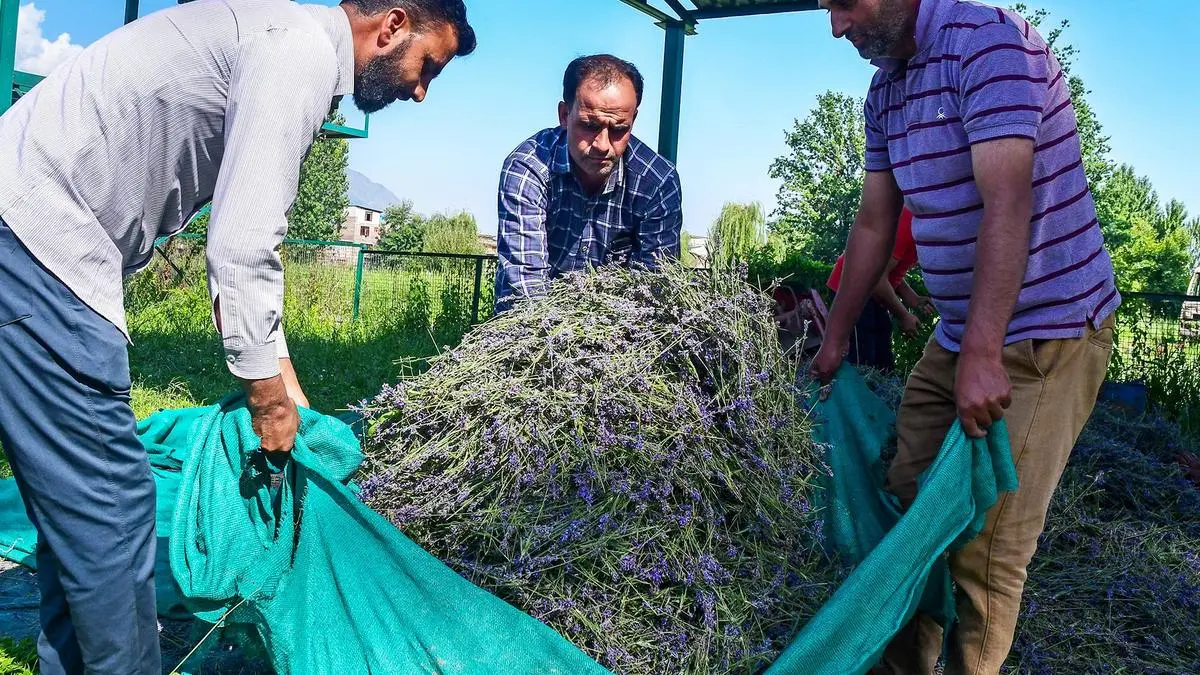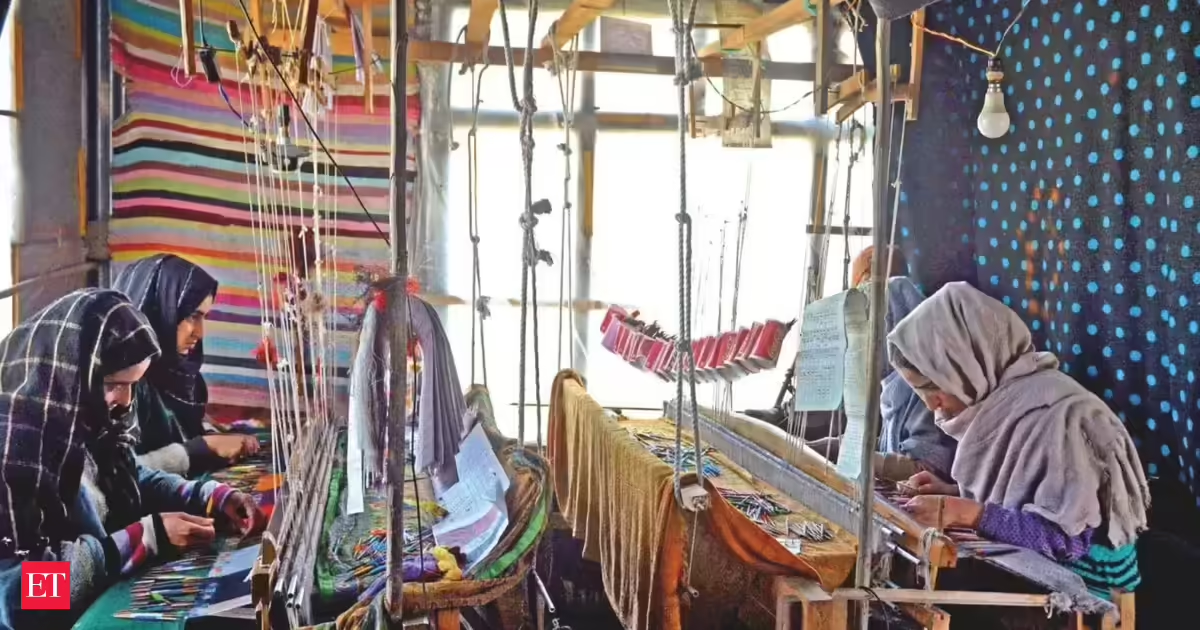
Cash strapped Himachal Pradesh is looking to earn a revenue of ₹2,000 crore through hemp cultivation. Moving towards the same, the state cabinet recently approved amendments to the Himachal Pradesh NDPS Rules, 1989, to regulate the cultivation, processing, manufacturing, warehousing and transportation of cannabis for medical and scientific purposes.By fostering this new sector, the government is not only seeking to make Himachal the most prosperous state by 2032 but is also creating a new ecosystem for startups and youth employment. (HT Photo for representation)Under what is being termed as the state’s “Green to Gold” push, the state aims to position Himachal Pradesh as a manufacturing centre for ‘Hempcrete’- an innovative, carbon-negative construction material, as well as specialised textiles and ayurvedic medicines.By fostering this new sector, the government is not only seeking to make Himachal the most prosperous state by 2032 but is also creating a new ecosystem for startups and youth employment.The government says that as the farmers were backing up from cultivation of traditional crops due to the nuisance created by the wild life monkeys, destroying crops with little left for the farmers to earn. This strategic shift is designed to replace the plant’s “narcotic” image with a “resource” identity. Projections indicate that regulated cultivation could generate additional revenue of ₹1,000 crore to over ₹2,000 crore annually, once fully scaled.Industrial hemp is a climate-resilient crop that requires 50% less water than traditional fiber crops like cotton and thrives even in marginal soils where other crops struggle. To support this transition, premier institutions including Chaudhary Sarwan Kumar Himachal Pradesh Krishi Vishvavidyalaya (CSK HPKV) Palampur and Dr YS Parmar University of Horticulture and Forestry, Nauni, are leading pilot studies to develop high-yield, low-THC seed varieties tailored for the Himalayan climate.“Himachal Pradesh’s decision to allow regulated cannabis cultivation could emerge as a major source of income for farmers while opening new opportunities in the textile, cosmetic and pharmaceutical sectors,”, said horticulture and revenue minister Jagat Singh Negi on Saturday. He said that industrial hemp and medicinal cannabis cultivation will be strictly regulated, generate higher farmer incomes, and create opportunities in textiles, cosmetics and pharmaceuticals.Speaking with HT, Negi said the state cabinet had taken an “important and visionary decision” after extensive consultations and field studies within and outside Himachal Pradesh.“There were concerns among people that it could promote drug abuse. A committee comprising legislators studied the issue in detail, interacted with public representatives across districts, and found that industrial cannabis cultivation does not lead to narcotic use because the intoxicating content remains extremely low,” he said.Negi clarified that the policy primarily focuses on industrial hemp cultivation, which can be used to manufacture a range of products. “Industrial hemp can be used to produce fibre for textiles, clothing and various cosmetic products. There are numerous commercial applications, making it a highly valuable crop,” he said.The minister said medicinal cannabis cultivation would also be permitted under a tightly controlled regulatory framework. “The medicinal component will be regulated because cannabis-based formulations are increasingly being used in the treatment of cancer and several other diseases. Similar to licensed opium cultivation in states like Rajasthan and Madhya Pradesh, medicinal cannabis production will be undertaken through a regulated system for pharmaceutical purposes,” he said.According to Negi, only a limited number of licences would initially be issued for cannabis farming. He said the crop has the potential to generate higher returns than many traditional crops while requiring comparatively less water and fewer chemical inputs.CM aims to create hemp-bubHimachal Pradesh chief minister Sukhvinder Singh Sukhu’s hemp-hub vision aims to position Himachal Pradesh as a manufacturing centre for ‘Hempcrete’- an innovative, carbon-negative construction material, as well as specialised textiles and ayurvedic medicines.By fostering this new sector, the government is not only seeking to make Himachal the most prosperous state by 2032 but is also creating a new ecosystem for startups and youth employment.For decades, cannabis has grown wild across the valleys of Kullu, Mandi, and Chamba, often marred by associations with the illegal drug trade, but henceforth, it will be widely acclaimed for its medicinal properties for pain management and inflammation besides its uses in textile and apparel industry, paper and packaging industry, cosmetics and personal care industry, biofuel and energy industry etc.“With proper regulation and awareness, hemp can become a key driver of eco-friendly industrial development especially in hill and rural economies like Himachal Pradesh”, the CM had said after cabinet’s decision on January 24, 2025 to clear a pilot project for controlled cultivation.
Green to gold: Himachal eyes ₹2,000-crore revenue boost with regulated cannabis farming
Under what is being termed as the state’s “Green to Gold” push, the state aims to position Himachal Pradesh as a manufacturing centre for ‘Hempcrete’- an innovative, carbon-negative construction material, as well as specialised textiles and ayurvedic medicines
743 words~3 min read