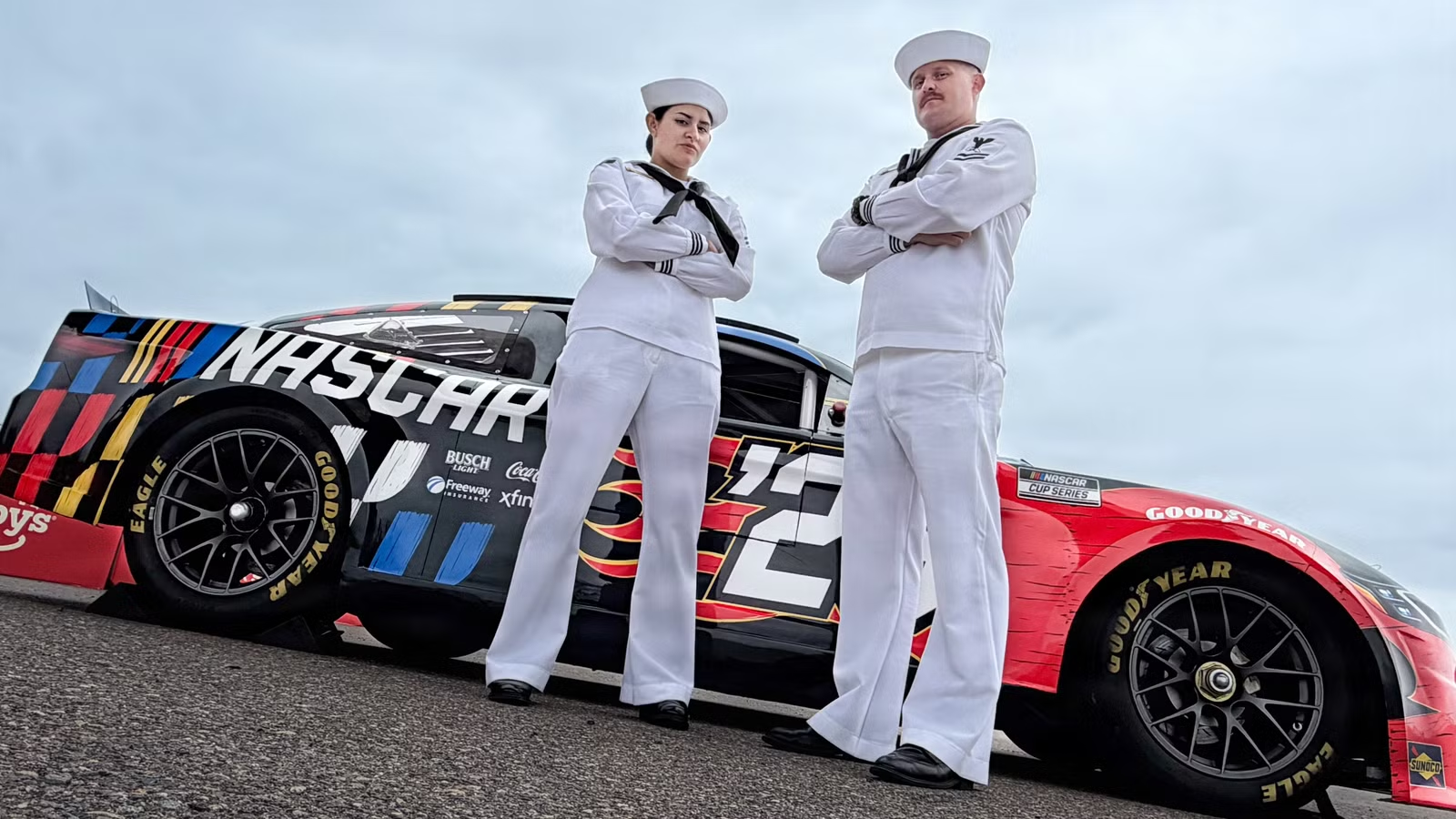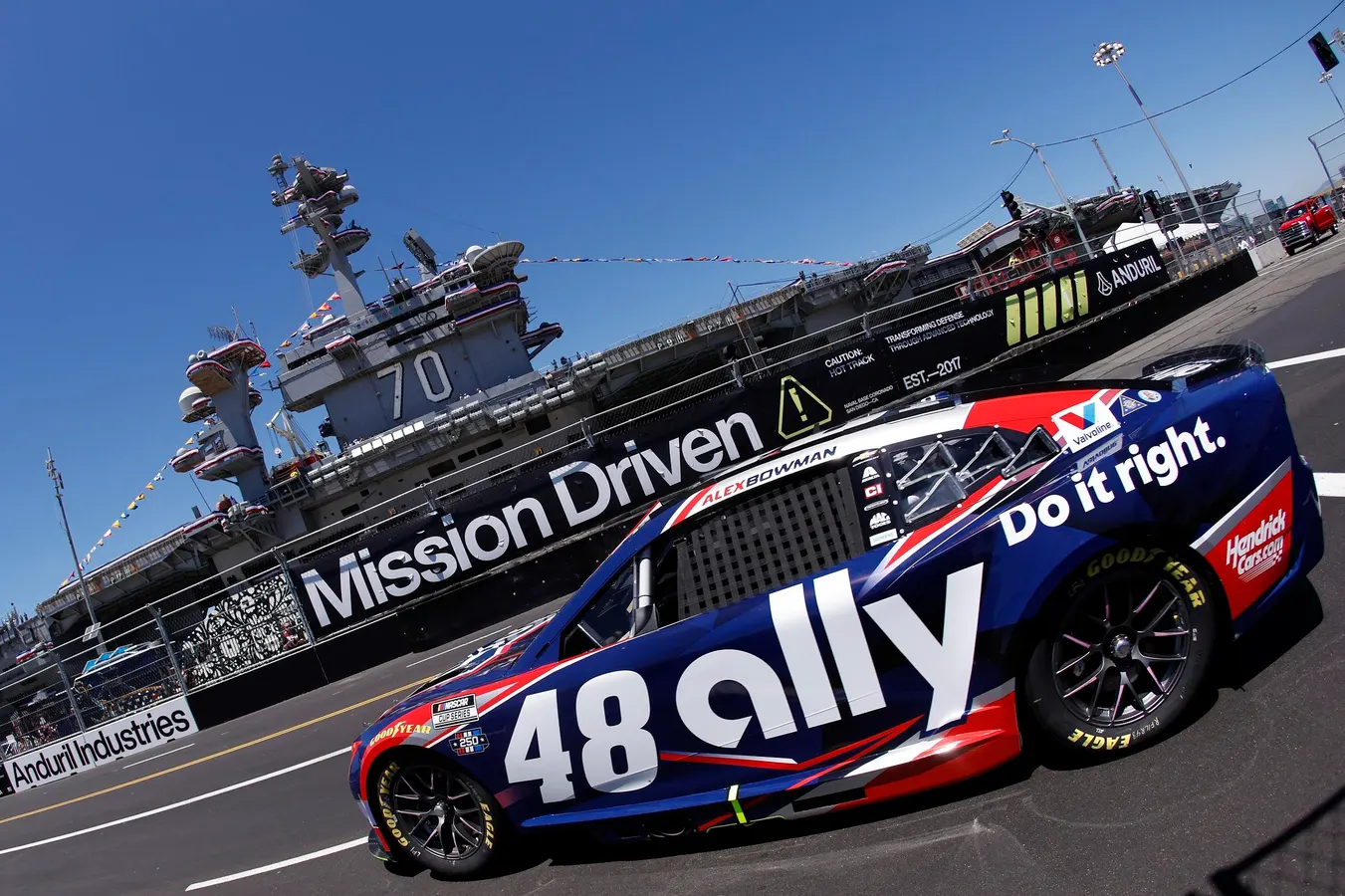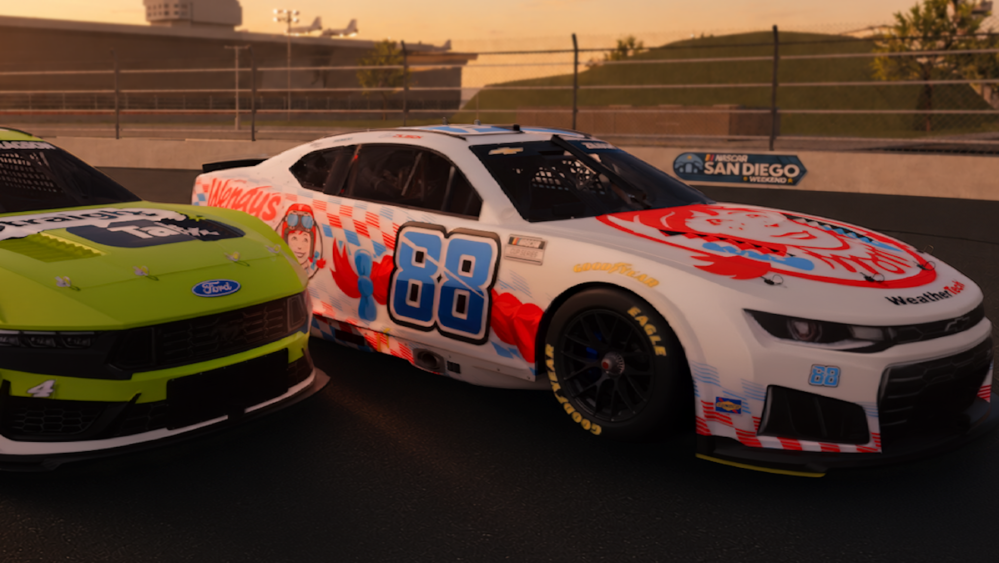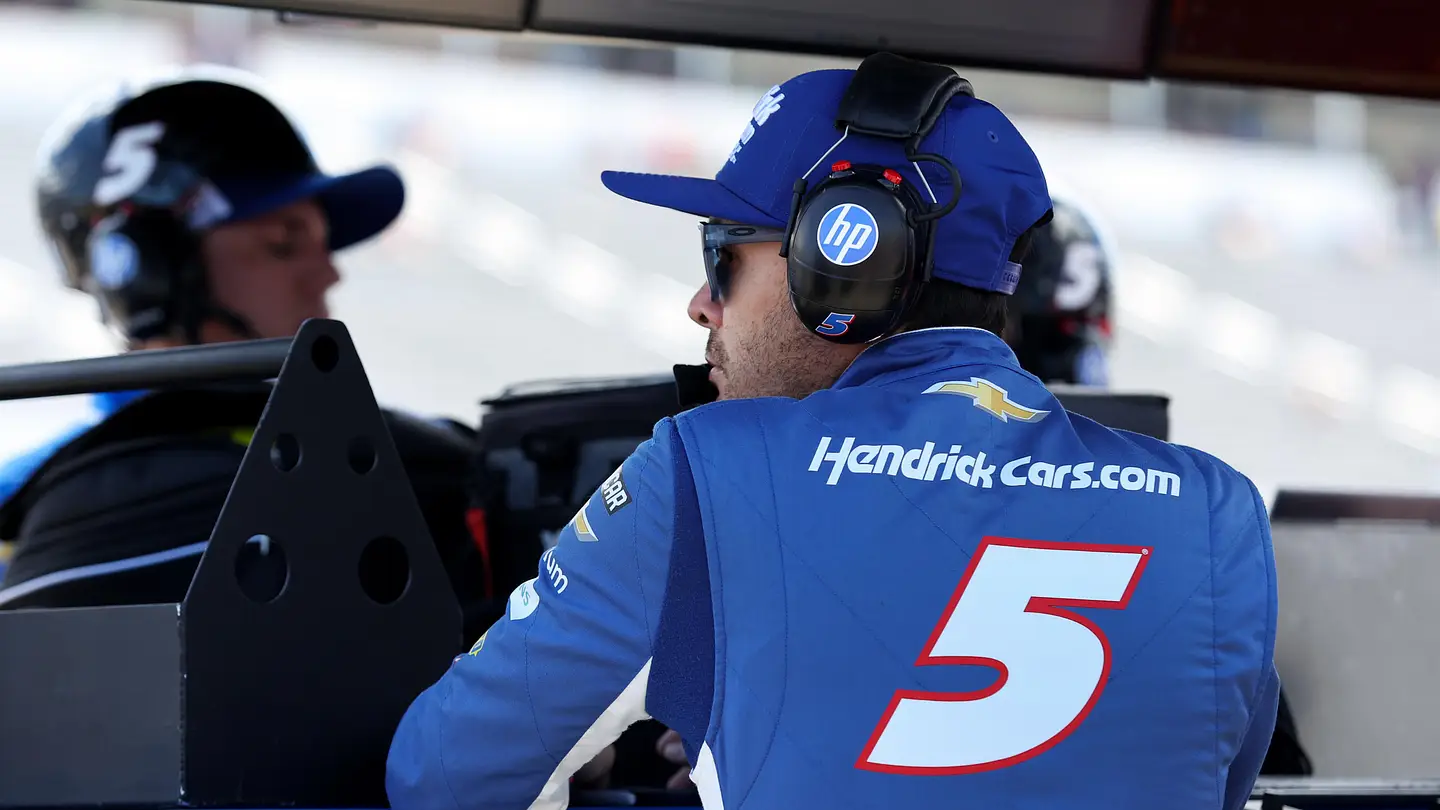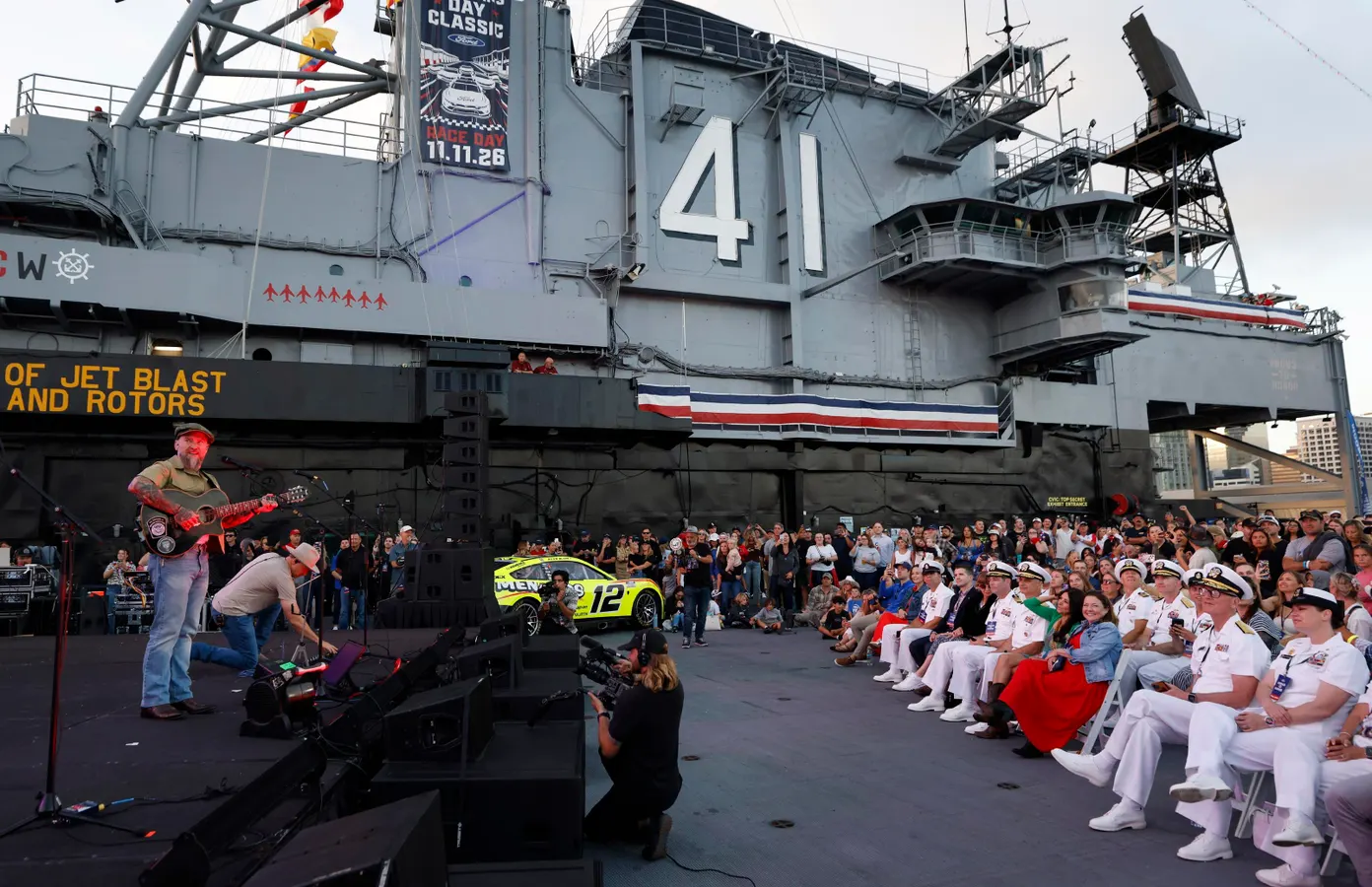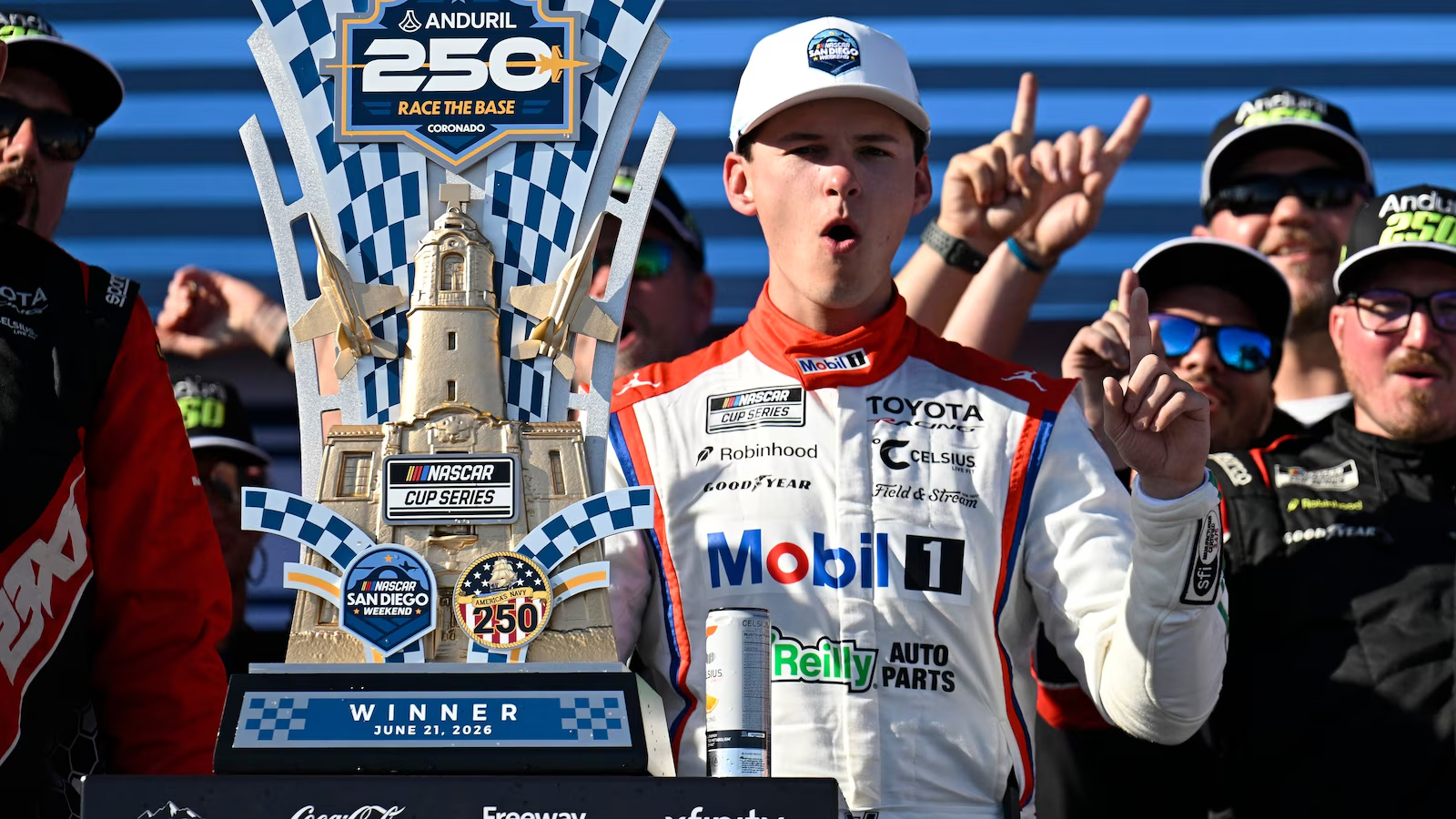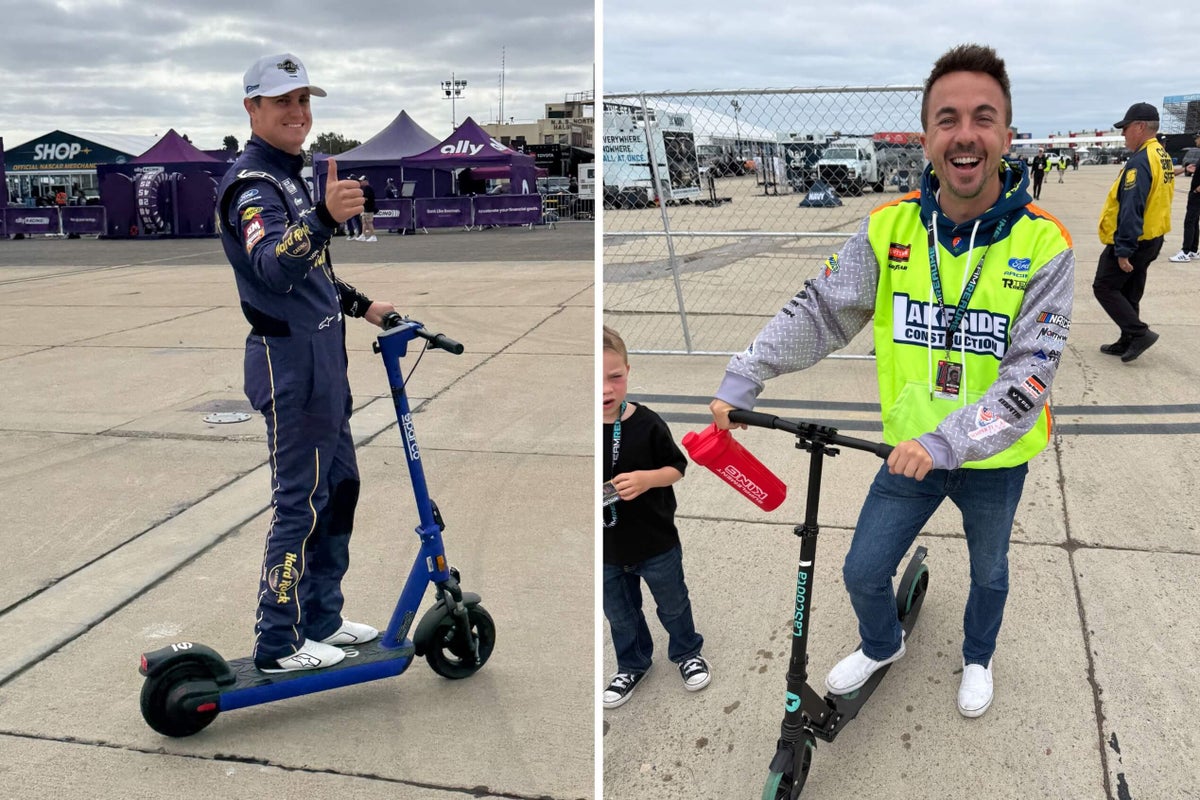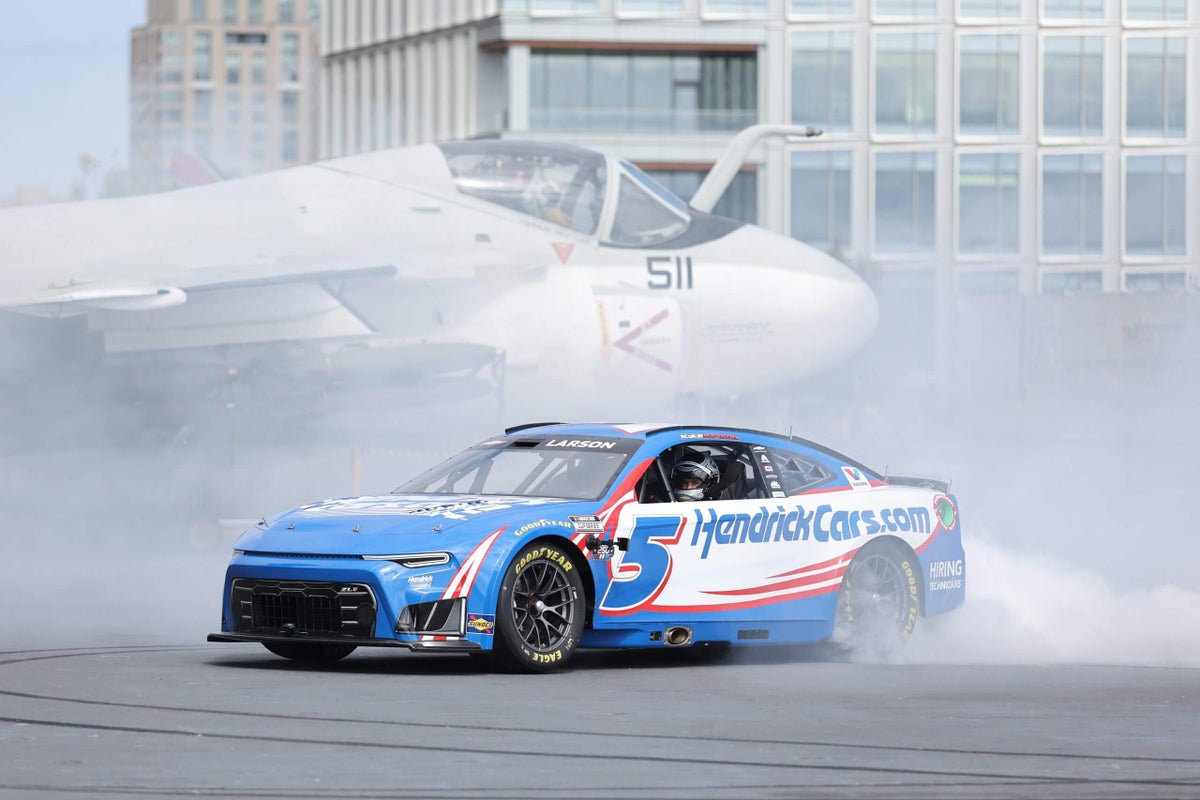
NASCAR will race on an active military base for the first time in its 78-year history this weekend with a 3.4-mile circuit on Naval Base Coronado, across the bay from downtown San Diego.The picturesque location will have an impressive aircraft carrier backdrop, cross part of a helicopter tarmac and wind past maintenance hangars that have been converted into high-end hospitality areas (with the aircraft still inside). Plus, the aerial shots of the water and the San Diego skyline will make this one of the most memorable races in NASCAR history.Below, we take a crack at answering some of the questions readers may have.Denny Hamlin scores three Cup Series victories in a row for first time Wait, did you say active military base?Oh yeah. When all of the aircraft carriers are in port (and only one is right now), Naval Air Station North Island has approximately 35,000 personnel on base during a given day. So even though only the USS Carl Vinson is currently docked here, there are still thousands of people (both who live on base and who commute) coming in and out daily.NASCAR’s 3.4-mile circuit (the longest track in the Cup Series!) has shut down some key roads or blocked major intersections, which will jam up some of the base traffic. Plus, there are approximately 40,000 civilians expected to come onto the base for Saturday and Sunday’s races (both of which are sold out), while Friday’s action is largely limited to Navy personnel and Coronado residents.NASCAR is used to helping minimize headaches for locals. It had to deal with the setup, teardown and logistics of the Chicago street-course race for three years (2023-25), which is the only other street race in Cup Series history to date.The Chicago track wove around Grant Park, including down Michigan Avenue and DuSable Lake Shore Drive, and residents had to be informed and educated about the disruption to their area through countless meetings.So, from that standpoint, working on a contained Navy base is easier than working in a major downtown area.Construction workers install fencing during preparations for this weekend’s races. All three of NASCAR’s national series are set to compete on the course. (Orlando Ramirez / Getty Images)What is the cost to taxpayers?According to documents reviewed by The Athletic as part of a Freedom of Information Act request earlier this year, there is no federal spending on this event. The agreement between NASCAR and the Navy is structured as a “no-cost concessionaire contract” in which both parties stand to benefit.NASCAR gets access to the base for its race and has the right to sell sponsorship for the event. In exchange, NASCAR provided 1,000 tickets to the Navy, committed to installing a NASCAR-branded racing simulator on the base, arranged a meet-and-greet session with at least 10 drivers for 75 sailors and their families and made a cash guarantee for concession sales (the specific amount was redacted).Additionally, the Navy retained alcohol sales rights for the event and is keeping all of those proceeds. NASCAR is also paying the Navy’s catering service to provide catering for hospitality areas at the event.NASCAR is on the hook for everything related to course setup: building the grandstands, barriers, fencing and the fan zone. And NASCAR is also covering all of the transportation costs for those related supplies.In exchange, the Navy gets both a brilliant recruiting tool and a platform for entertaining its sailors and their families.Since it’s on normal roads, is this an easy course?Uh, no. Drivers are saying this could be the most difficult track in NASCAR history.As in … ever!“It’s going to be extremely challenging,” Chase Briscoe said. “I feel like it’s going to be the hardest track, road-course-wise, we’ve probably ever ran. It’s so rough, and it’s going to be really, really technical. It’s narrow in spots, it’s wide in spots, and just like the way you have to approach every corner is super unorthodox.”Even the heavily favored Shane van Gisbergen, who has won nearly 50 percent of his road-racing starts in the Cup Series, said he crashed multiple times in the simulator while preparing for the race.NASCAR cannot change the streets of a Navy base, so it had to make do with the available areas. Those include bumpy base roads, newly paved areas, smooth concrete, slick parking lots and aircraft tarmac (part of the course is in the area where helicopters and other aircraft are parked).Much of the circuit is also extremely rough (“Your back is going to be sore as hell at the end of that one,” Joey Logano said), and drivers in their simulators found instances where their wheels were completely off the ground with a dip and a surprisingly steep downhill.“There hasn’t been anything as challenging as this, because of the uniqueness of it,” Michael McDowell said.Chicago is the closest cousin, but Brad Keselowski said that track “wasn’t a fair way to compare it.”“Chicago had a lot of 90-degree corners, where San Diego has high-speed chicanes and low-speed chicanes, which are different than just 90-degree corners,” he said. “So it’ll be a very difficult course.”Oh, and the drivers only get 50 minutes of practice on a track they’ve never seen before.What were some of the challenges in building the course?Perhaps the most notable is in the Turn 4 area, where tracks in the ground (resembling railroad tracks) help a large crane move back and forth to load aircraft carriers at the docks.The tracks cannot be removed, and Cup Series cars run very low (almost sealed to the ground) to maximize their aerodynamic benefits, which could cause issues. They don’t just cross the road in one spot, but rather curve gently and even run straight down the middle of the street at one point.Also, the tight corners in some areas could create a mess, and NASCAR could have very long cautions if that happens. Driving at caution-car speed around a 3.4-mile track could take quite a long time.A sign welcomes Shane van Gisbergen to Naval Base Coronado during a visit earlier this month. The road-course ace will be the favorite for Sunday’s race. (Orlando Ramirez / Getty Images)Which American driver will win America’s 250th birthday race?This is awkward, and you’ll want to sit down for this one. A driver from Down Under is heavily favored to win on Sunday.Van Gisbergen, a New Zealand native, came to America three years ago and won the inaugural Chicago Street Race in his NASCAR debut, stunning the racing world. Now he’s a full-time Cup driver and has been completely dominant on the twisty tracks; he has a wildly impressive seven wins in 14 road races, specializing in street courses thanks to his time in Australia’s Supercars series.So as much as it might seem fitting to have an American win the 250th anniversary race for both the country and the Navy, it’s likely a Kiwi could do it instead.
What to know about NASCAR’s historic San Diego race on Naval Base Coronado
NASCAR is racing this weekend on an active military base outside San Diego. Here's a guide to the sport's showcase event of the year.
1,140 words~5 min read