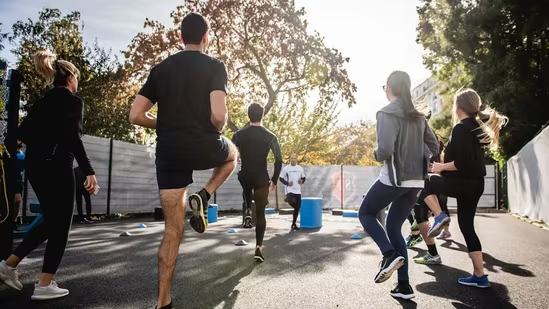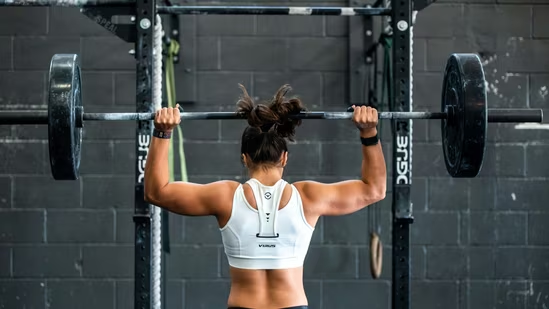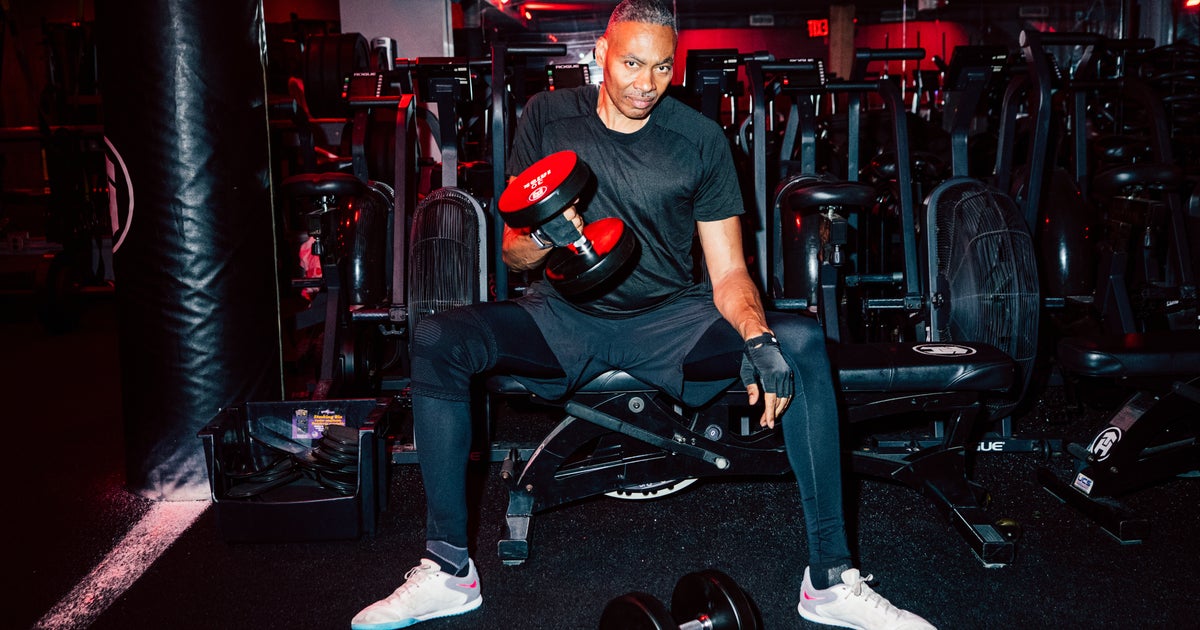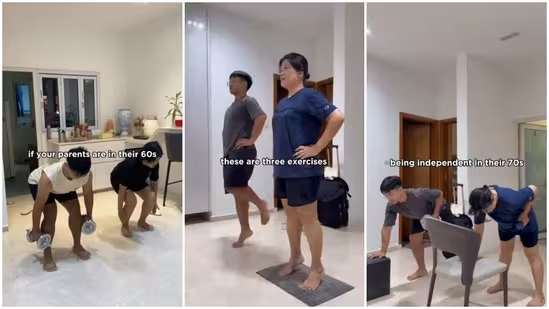
Many people believe they're ‘too old to exercise’ after 50. Orthopaedic surgeon Dr Manan Vora explains why staying active is crucial for long-term independence. Older adults may think that ageing means slowing down, avoiding exercise, and accepting physical decline as inevitable. However, according to Dr Manan Vora, orthopaedic surgeon and sports doctor based in Mumbai, these beliefs may be doing more harm than good.After 50, muscle health is key to independence, not just appearance, says doctor. (Unsplash)In his June 17 Instagram video, Dr Vora addressed a common question: Why do many people in their 60s, 70s and even 80s in other countries continue to exercise, hike, lift weights and live independently, while many older Indians believe they are “too old” to stay active? “It’s not genetics. It’s a belief system,” he said. (Also read: Can taste help people eat less? Experts explain why satisfaction may be the missing ingredient in healthy diets )According to Dr Vora, many older adults are held back by fears that exercise will damage their knees, increase the risk of falls or prove dangerous. “These are not medical facts. These are stories, and these stories are making your parents weaker each and every year,” he explained.What does science say about exercise after 50Dr Vora pointed to scientific evidence showing that regular physical activity can significantly improve quality of life as people age. “The right exercise reduces arthritis pain. It doesn’t cause it. Strength training prevents falls. It doesn’t cause them. Weights aren’t dangerous, but weakness is,” he said.He stressed that after the age of 50, building and maintaining muscle is no longer primarily about appearance. Instead, it plays a critical role in preserving mobility, balance and independence.“After the age of fifty, muscle is not about looking fit. It’s about getting up from a chair without help, climbing stairs, surviving a fall and staying independent,” he said.How small exercises can make a big differenceDr Vora also emphasised that older adults do not need intense workouts or heavy weightlifting to experience the benefits of exercise. “Nobody’s asking them to lift 100 kilos,” he said, recommending simple activities such as chair squats, wall push-ups, resistance-band exercises and heel raises performed three times a week.According to him, these small but consistent efforts can determine whether a person remains independent later in life or becomes increasingly reliant on others for everyday tasks.Summing up his message, Dr Vora said, “Muscle after 50 is independence.” He encouraged viewers to share the message with parents and grandparents who believe they are too old to exercise, reminding them that staying active can help maintain strength, confidence and quality of life well into older age.Note to readers: This article is for informational purposes only and not a substitute for professional medical advice. Always seek the advice of your doctor with any questions about a medical condition.This report is based on user-generated content from social media. HT.com has not independently verified the claims and does not endorse them.Akanksha Agnihotri is a lifestyle journalist with over 3 years of experience. She is a psychology graduate and holds a postgraduate diploma in Radio and Television Journalism from the Indian Institute of Mass Communication, Delhi, where she graduated as a gold medalist. Originally from Bhopal, the beautiful capital of Madhya Pradesh, she draws inspiration from the city’s rich cultural heritage and layered storytelling traditions that subtly shape her narrative voice.
Mumbai surgeon shares advice for Indian parents and grandparents over 50 who think they're ‘too old to exercise’
Many people believe they're ‘too old to exercise’ after 50. Orthopaedic surgeon Dr Manan Vora explains why staying active is crucial for long-term independence. | Health
TL;DRAI
Dr Vora argues staying active after 50 is belief-driven, not genetic; exercise reduces arthritis pain and prevents falls. Thrice-weekly simple exercises preserve independence: standing unaided, climbing stairs, surviving falls. Muscle health proves critical for aging well.
784 words~4 min read