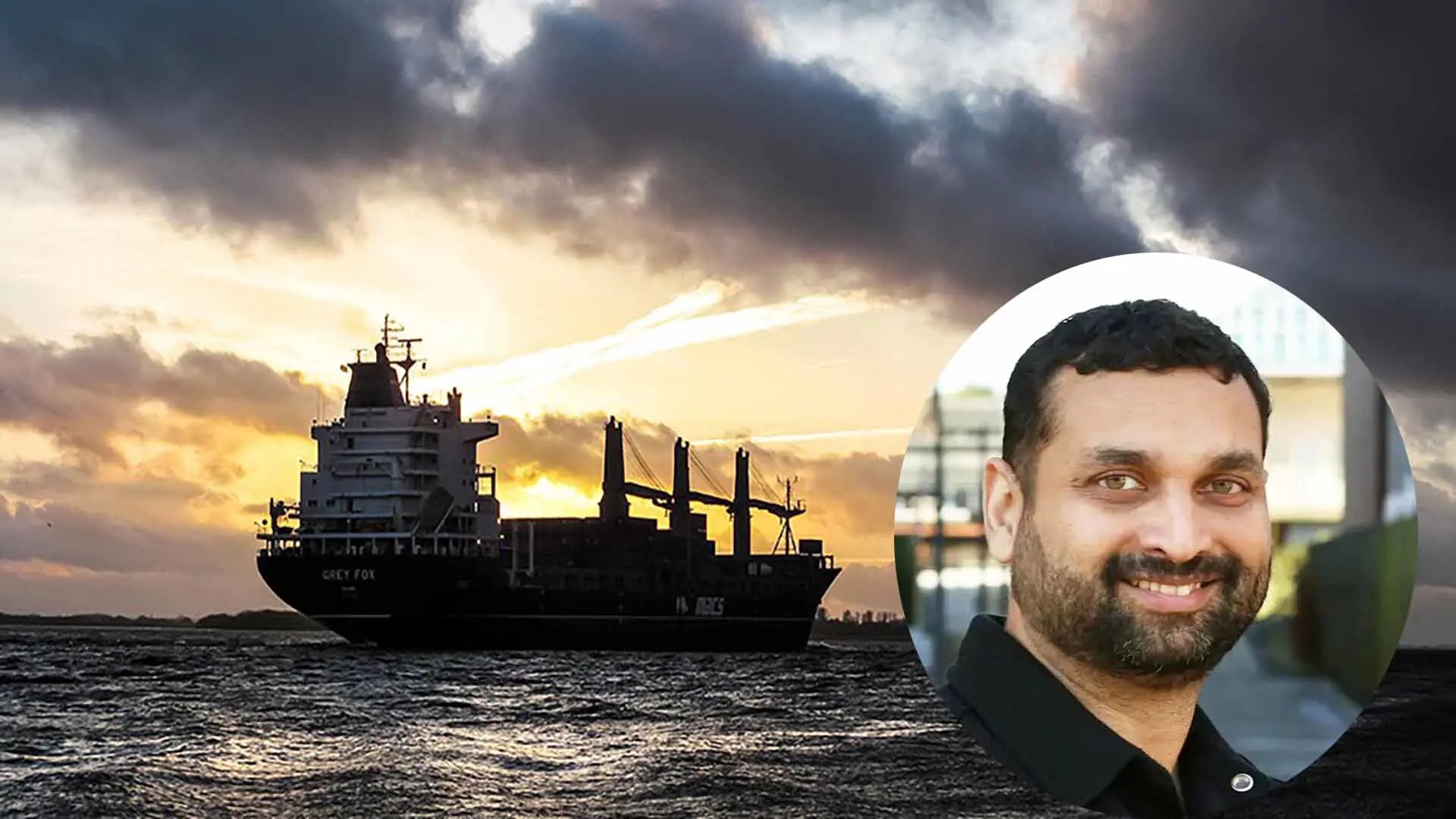
Fayas Malik Kanchiralla, postdoctoral researcher at the Department of Environmental and Energy Sciences, has together with colleagues analyzed how the International Maritime Organization's (IMO) proposed climate framework affects shipping's transition to new marine fuels. The study has been published in Nature Energy. Credit: Chalmers University of Technology
Fayas Malik Kanchiralla, a postdoctoral researcher at the Department of Environmental and Energy Sciences, together with colleagues has analyzed how the International Maritime Organization's (IMO) proposed climate framework affects shipping's transition to new marine fuels.
Climate regulations for shipping may have the opposite effect if they are poorly designed. A new study from Chalmers University of Technology shows that emissions risk being shifted from ships to fuel production if the International Maritime Organization (IMO) removes parts of its proposed climate framework. The researchers conclude that both economic instruments and life cycle-based fuel requirements are needed to reduce shipping's climate impact.
In the study "Marine fuel choices and related life-cycle environmental impacts under global shipping policies," researchers at the Department of Environmental and Energy Sciences at Chalmers University of Technology analyzed IMO's proposed global climate framework for shipping. The study was recently published in Nature Energy. Using a global energy system optimization model, the researchers compared different approaches for guiding the transition to fossil-free marine fuels.