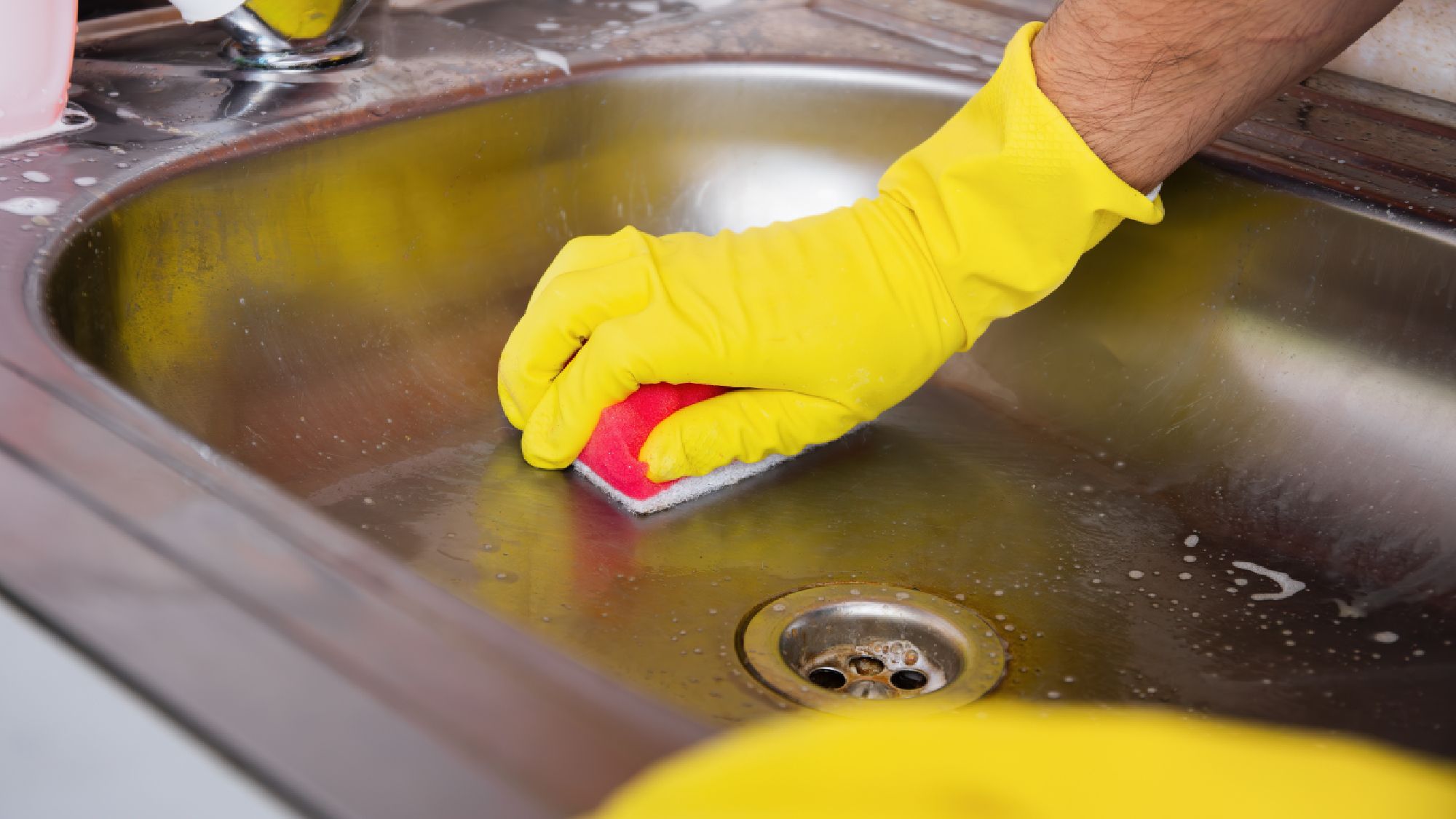
You clean your sink every day. But there's a small opening you've probably never paid attention to that's teeming with bacteria right now.Your sink's overflow hole is the kitchen's most disguised hygiene problem. It's warm, dark, and perpetually damp. Simon Roberts, director at quartz worktop retailer Vogue Worktops, says it's consistently overlooked despite being one of the dirtiest parts of your sink.Warmer summer temperatures make this bacterial build-up even more problematic, creating smells and hygiene issues that seem to come from nowhere. Here's how to clean it properly.
1. Use baking of soda and white vinegar
This combination creates a natural cleaning reaction that reaches into the narrow opening. Bicarbonate of soda and vinegar generate fizzing action that dislodges trapped food particles and mineral deposits clinging to the inside walls. According to Roberts, "The fizzing action helps loosen built-up grime inside the channel. After letting it sit for around 10-15 minutes, flushing it through with boiling water helps wash residue away." As some overflow holes can be very small and narrow, you could always use a white vinegar spray for easy application. This method works without bleach or toxic fumes, making it safe for regular use in kitchens.