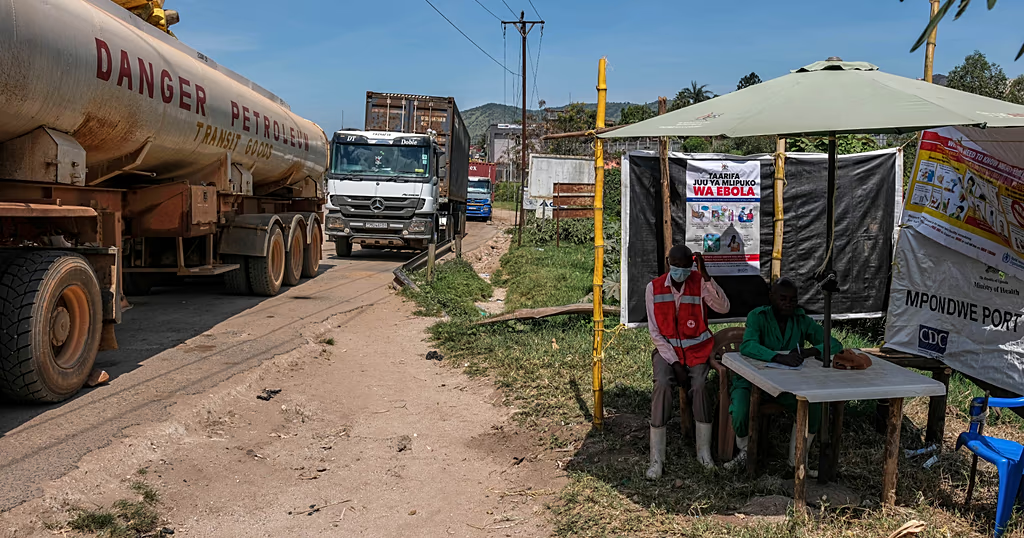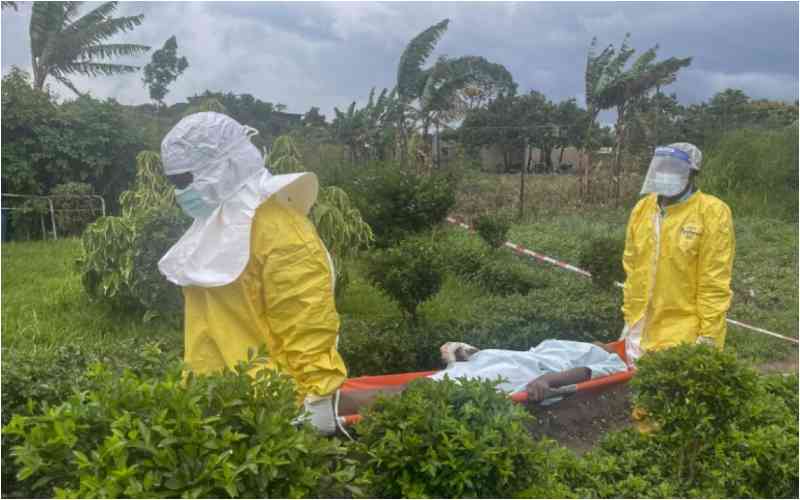
70 healthcare workers are part of the over 900 confirmed cases in DRC, and 17 are dead from the infection. [AFP]
As Ebola cases surge in the Democratic Republic of Congo (DRC), Kenyan health authorities and the public are being urged to stay alert without fear, thanks to a crucial distinction in how Ebola virus spreads compared to other infections like COVID-19 and Mpox.
The World Health Organization (WHO) and Africa Centres for Disease Control and Prevention (Africa CDC) have emphasized that Ebola patients become infectious only after showing symptoms, unlike COVID-19, which can spread silently. This means symptom-based screening such as temperature checks at border points remains the most effective way to identify and isolate cases early, a strategy Kenya is advised to adopt rigorously.
“The key message is that testing travellers who have no symptoms is not scientifically justified for Ebola,” said Dr. Wessam Mankoula, Acting Manager of Incident Management Support at Africa CDC, during the organization's recent weekly press briefing.
“Ebola is different from COVID. You become infectious only after symptoms develop, and lab tests like PCR often require 24 to 72 hours after symptoms appear to detect the virus. Screening for symptoms at points of entry and exit remains our best tool to prevent cross-border transmission.”