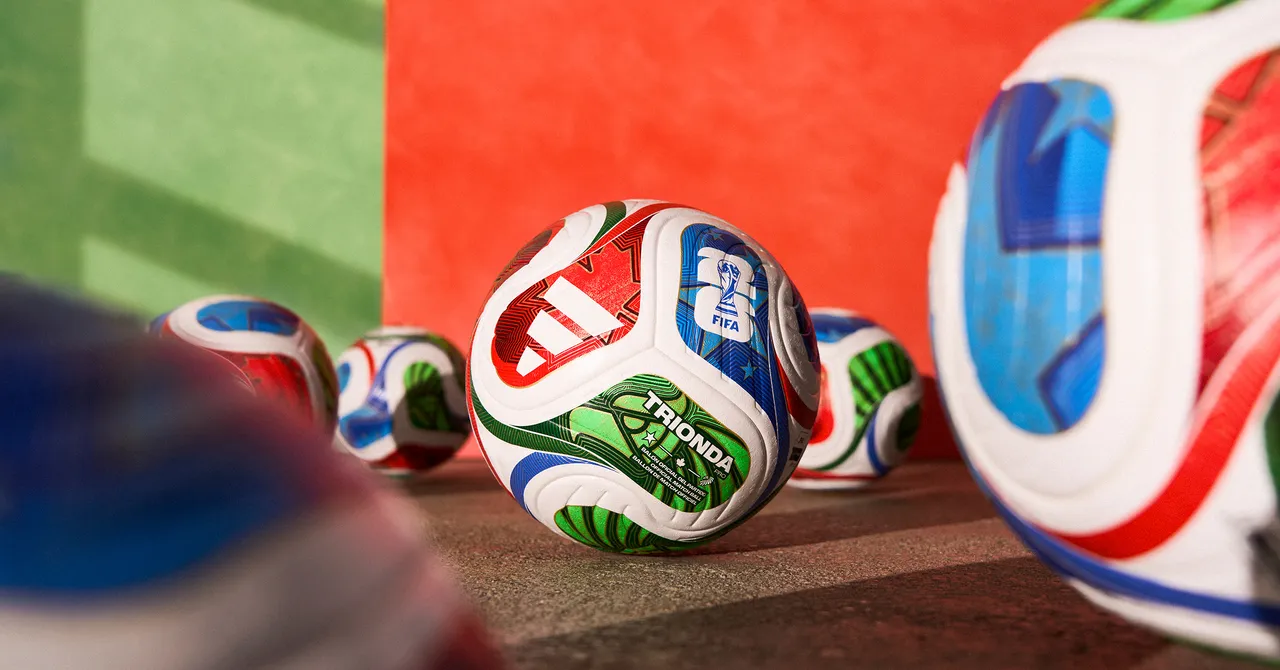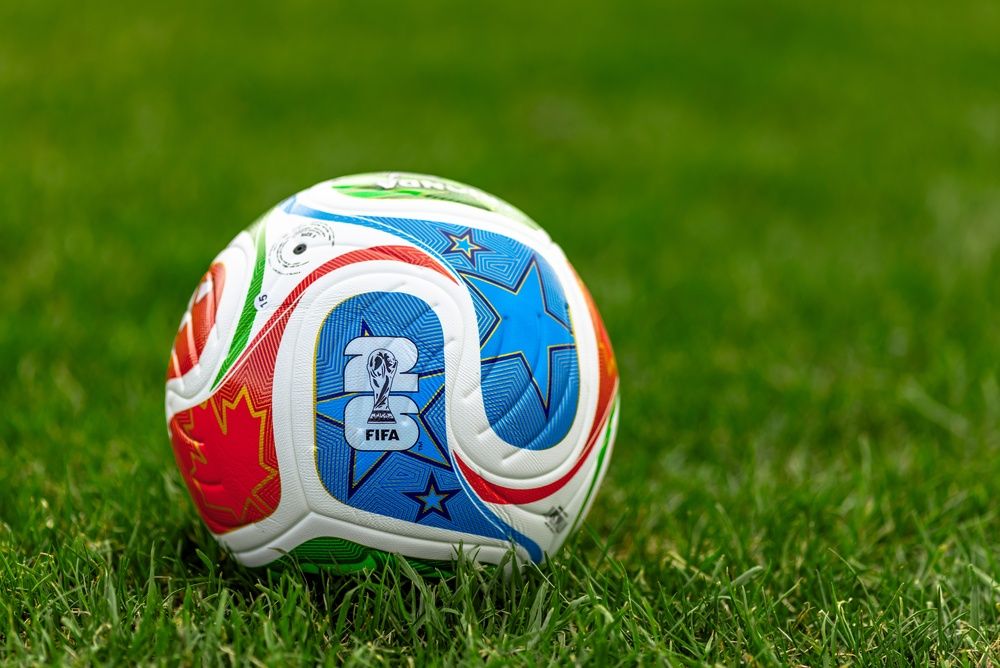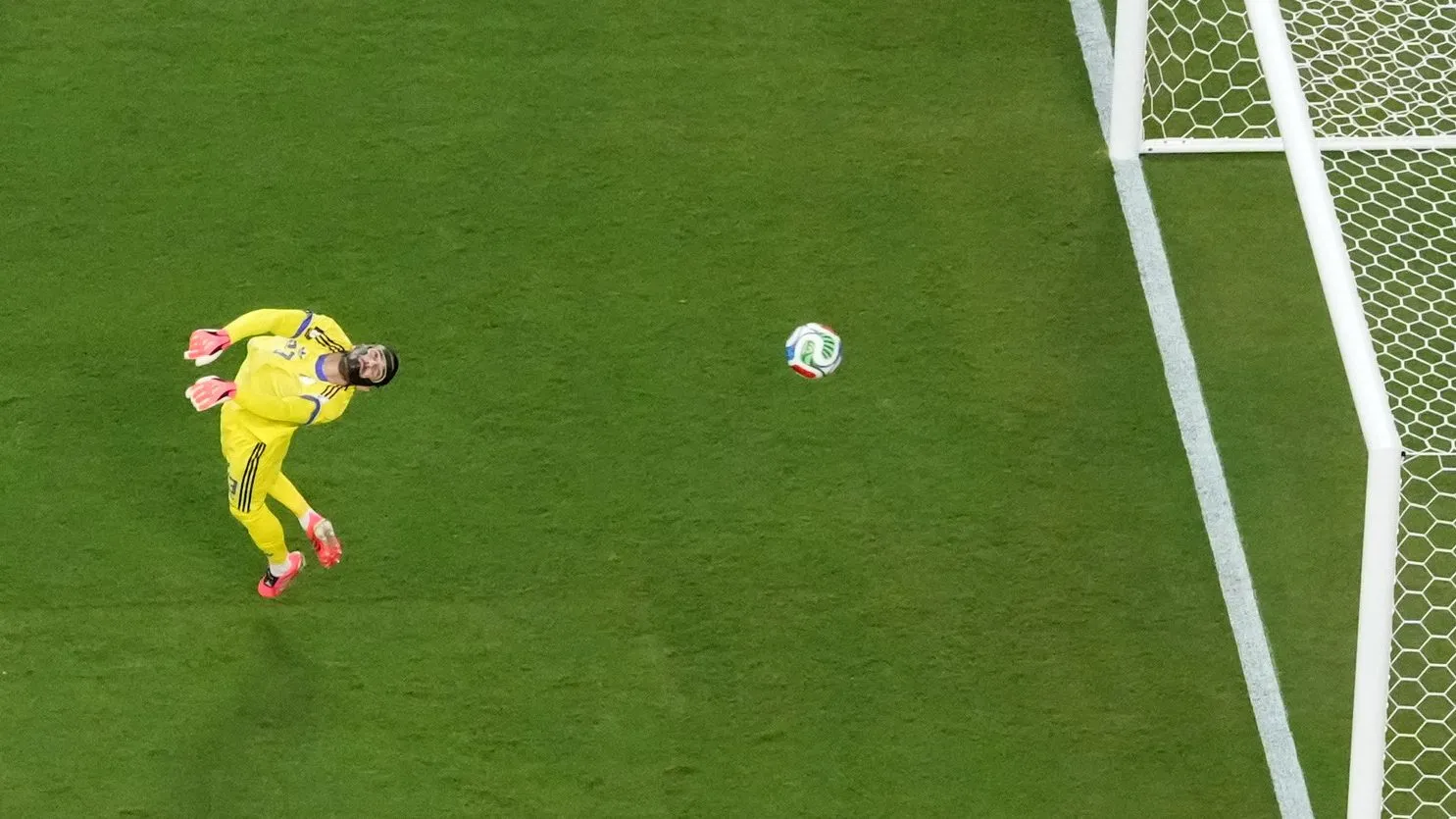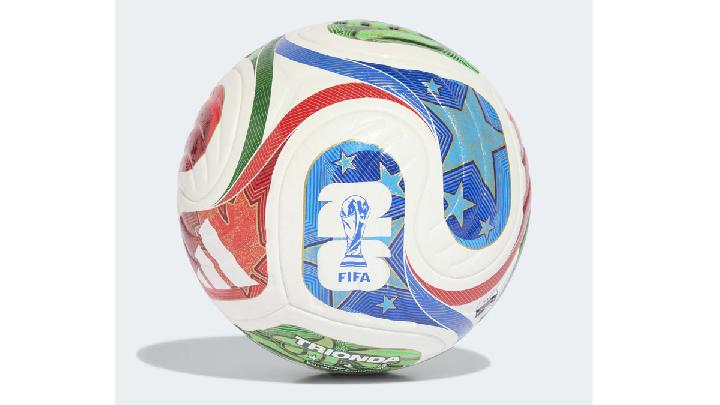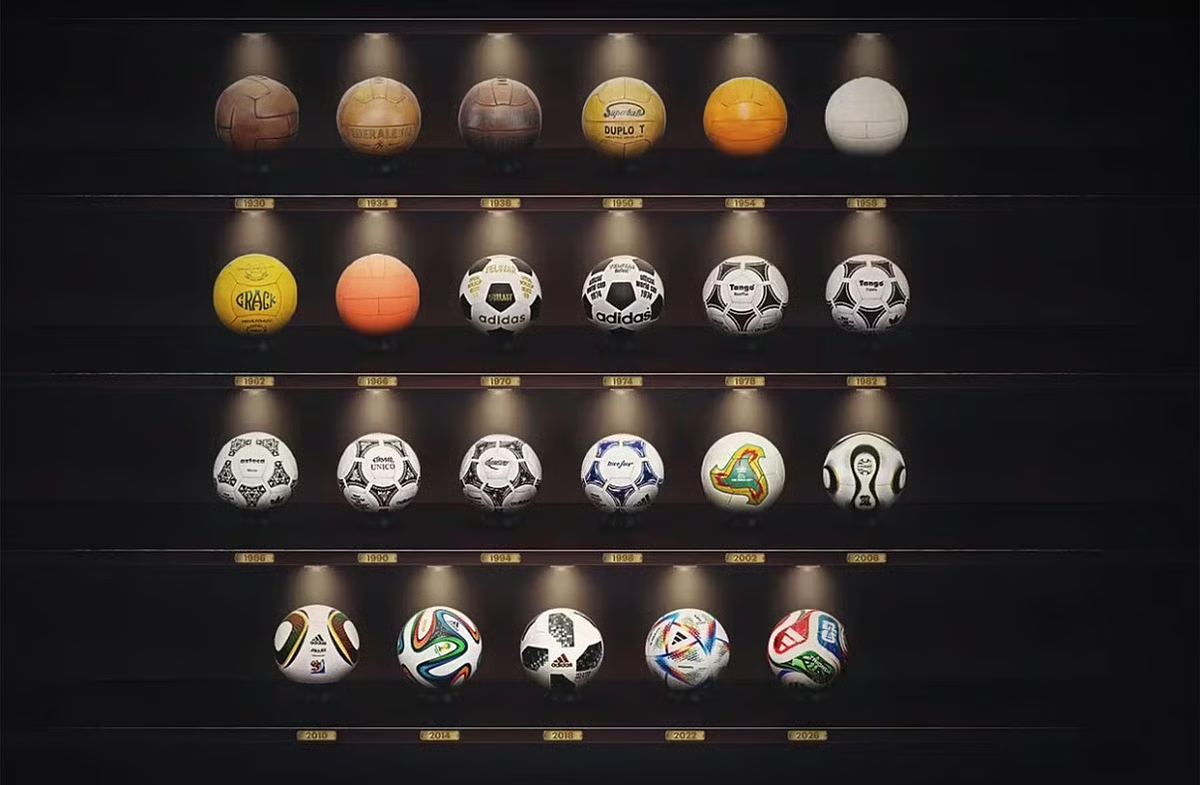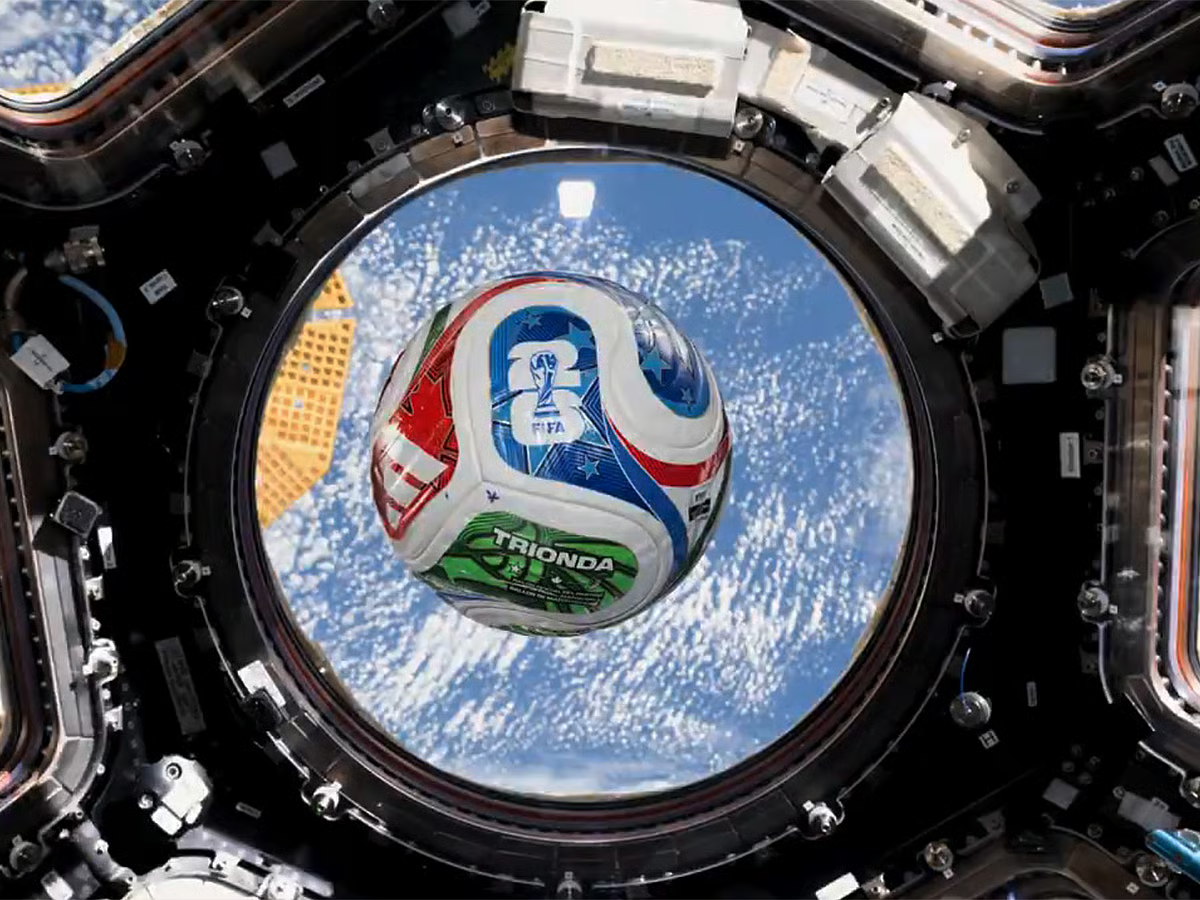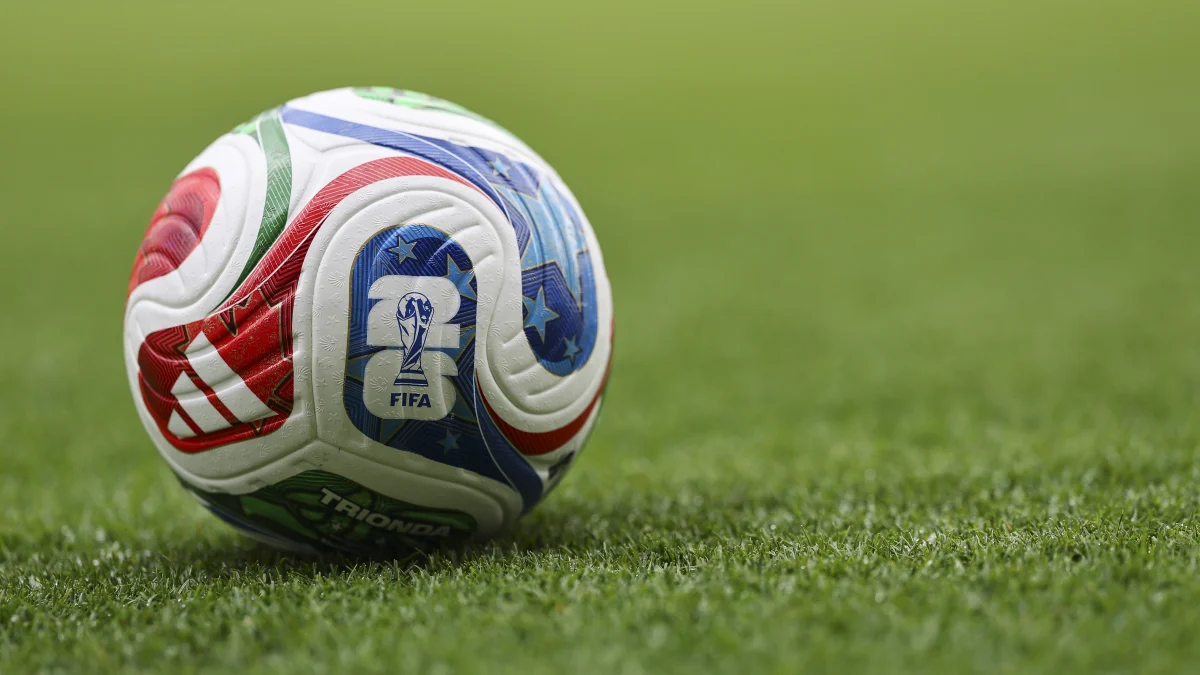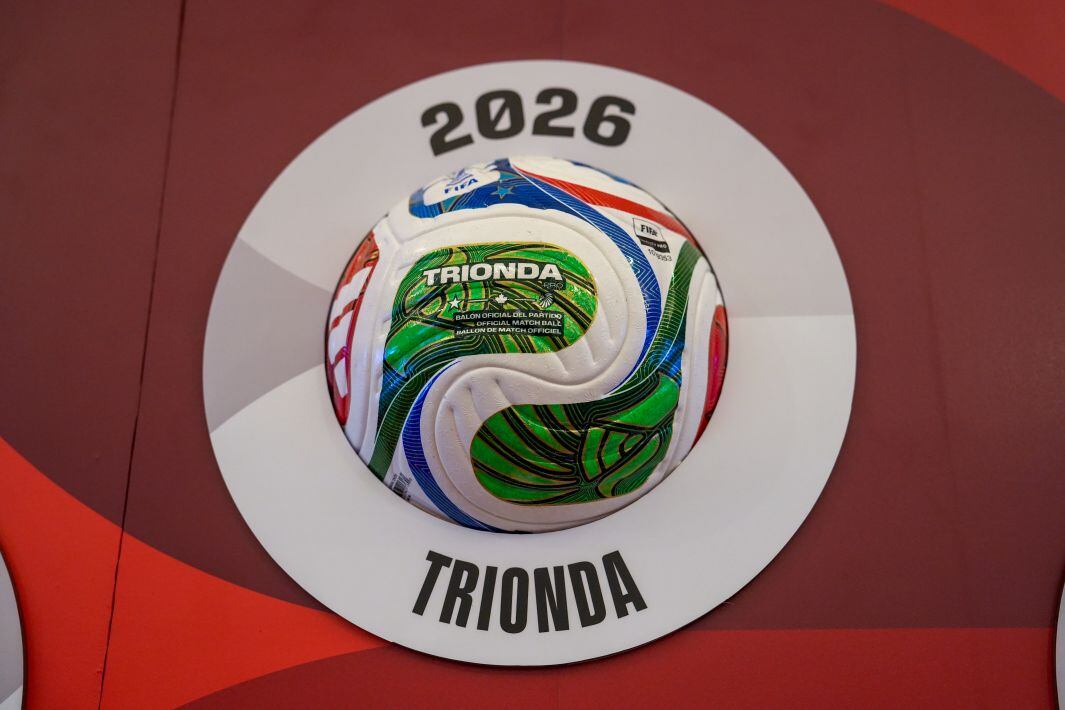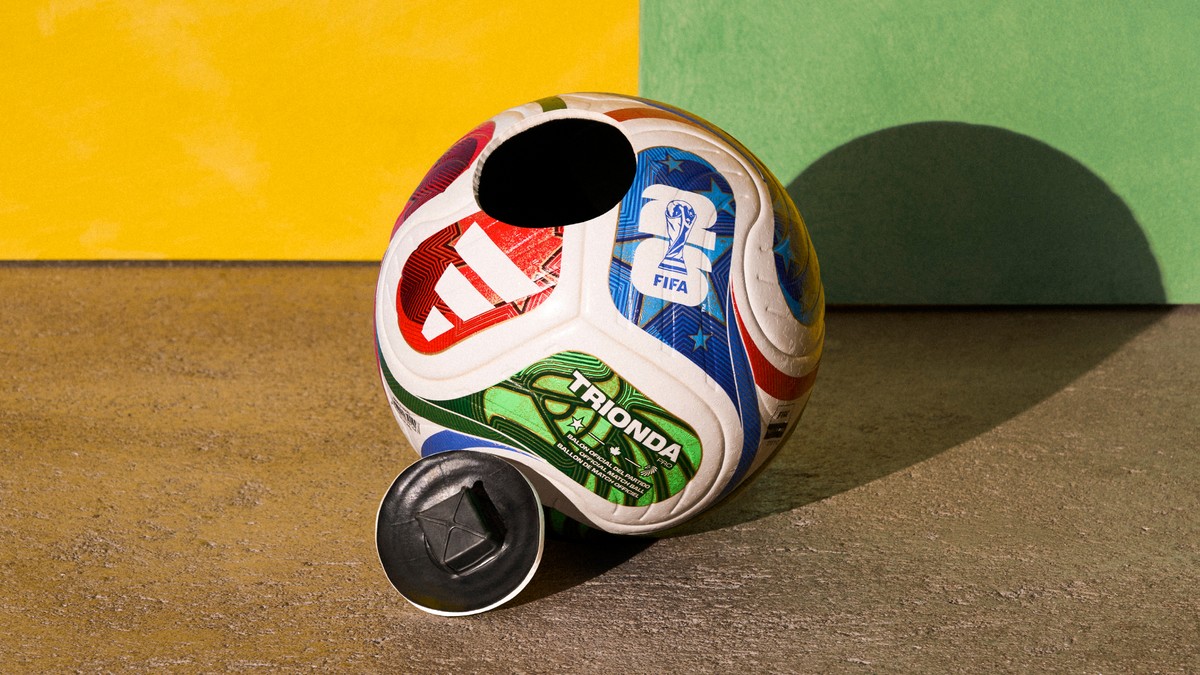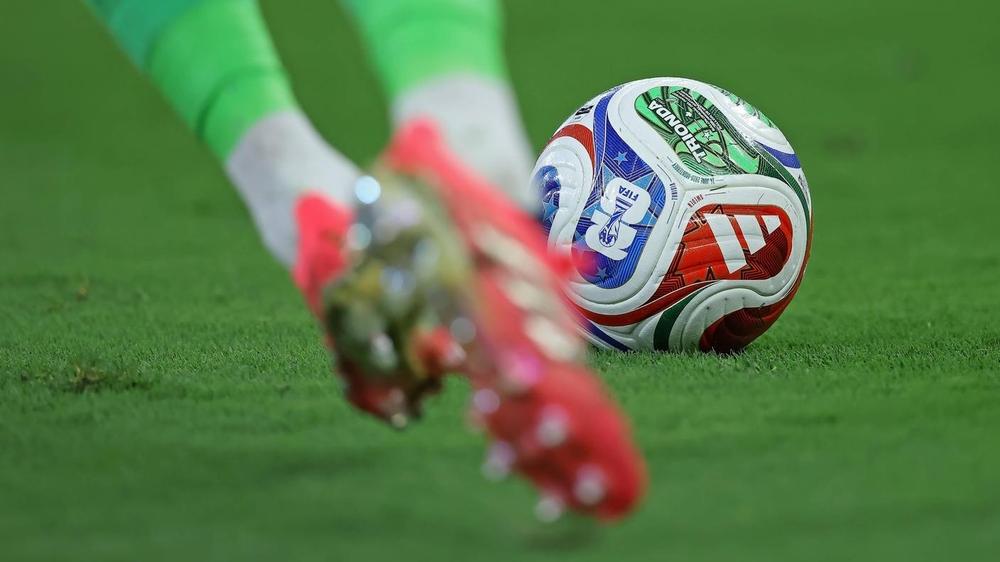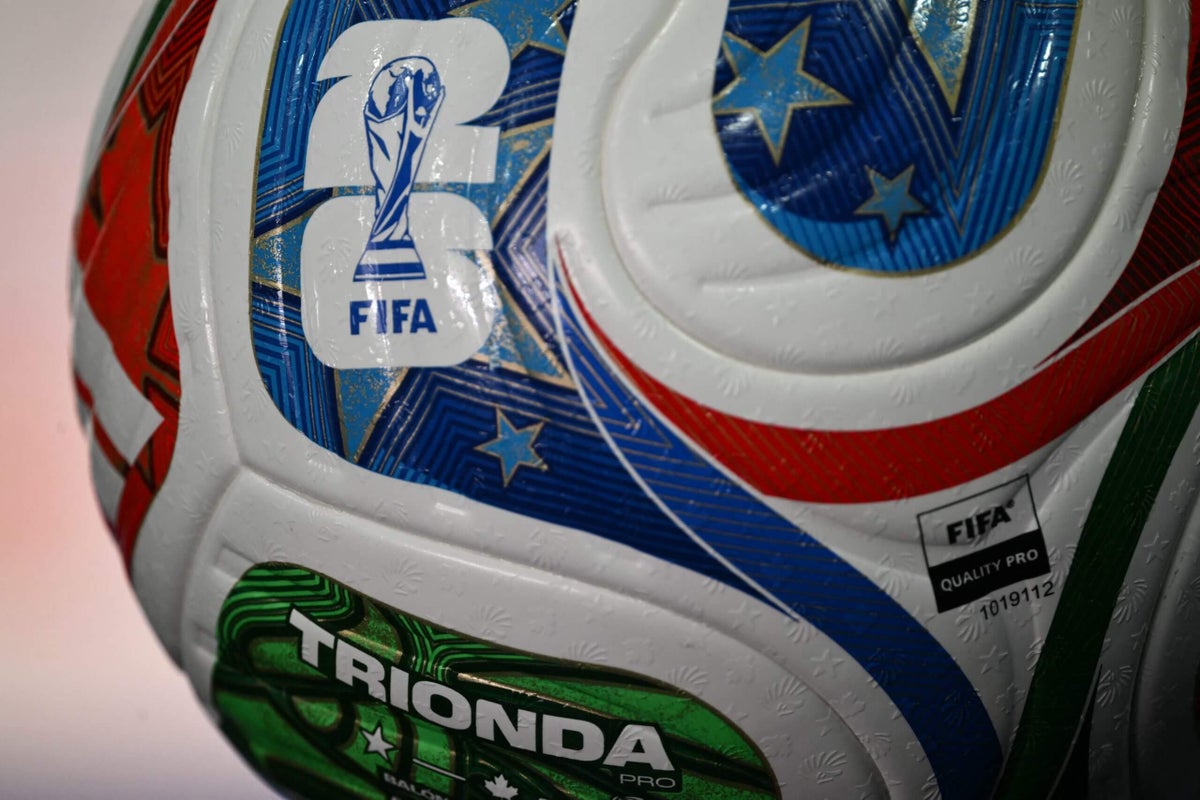
Get free access to the most comprehensive World Cup coverage in The Athletic appThe ball is a defining feature of every World Cup. It’s the game’s equivalent of the artist’s paintbrush or the musician’s instrument, designed for the best players to perform and to catch the eye of those watching — in the stadium and elsewhere.“Every single ball is different,” says Andy Harland, a professor at Loughborough University in England who has tested Adidas’ major tournament footballs ever since the 2002 World Cup, “and there’s no such thing as the perfect flight of a ball. It’s subjective.”Harland spends the better part of an hour on a video call with The Athletic to talk through one fundamental question: what’s the science behind a World Cup football?Adidas says that three-and-a-half years of work and around 300 lab tests went into the Trionda ball. It contains a chip which helps with semi-automated offside calls, as well as determining who last touched it. Like all modern balls, the outer layer is polyurethane and the inner is a mix of materials (primarily polyester), inside which the bladder is located — that’s the bit that gets inflated.Notably, the Trionda consists of only four panels, which are thermally bonded together. It’s the fewest panels ever for a World Cup ball and five times fewer than the version used at the previous edition of the tournament in 2022.When The Athletic took a selection of footballs to Loughborough last May for testing, we spoke to Ieuan Phillips.He’s a researcher there and a colleague of Harland, and carried out research on the Qatar 2022 ball. Phillips has a huge trolley of 30 footballs from different eras that he has analysed to understand their differences.Phillips’ ball trolley, pictured in May 2025 (Liam Tharme/The Athletic)“Adidas’ 2004 Roteiro was the first ball that went from being hand-stitched to being thermally bonded,” he said. “It took basically the same panel design. It’s got an inner carcass, so a woven layer around the bladder onto which the panels are thermally-bonded, which allows no stitching because it’s all glued as one piece.”Harland offers some reasons as to why a ball might be designed with fewer panels, with the caveat that he and Phillips just test the balls — it’s Adidas that creates them.“The smaller number of panels, generally speaking, lowers the assembly costs,” he says. Something called ‘mould tooling’ is needed for all the panel shapes and component parts, so more and different pieces require greater materials.“With more straightforward production and more straightforward assembly comes greater reliability, so there are going to be those advantages. Every ball is, give or take, the same now. It’s not like it was back in the handmade days, when there were big discrepancies between balls.”Harland contrasted this year’s ball to the one produced for the 1970 tournament in Mexico, the first time Adidas created a bespoke ball for a World Cup. The iconic Telstar design, made of leather, it took hours to craft.“We had, of its day, probably the world’s most-advanced 32-panel hand-stitched soccer ball used on the elite level,” Harland says. Twelve of the panels were black pentagons, to make the spin of the ball visible for the TV audience. “The champagne colour and the coloured graphics… I still meet people who say it was their favourite ball,” he adds.So what’s changed in half a century since? Materials and manufacturing have improved, leading to “cheaper and faster (manufacturing) and higher quality controls,” Harland explains. Because panels are custom-designed, there’s much more creative licence, which helps explain the switch from a 20-panel ball four years ago to a four-panel one this time.The Trionda in action during the Spain vs Cape Verde group game (Roberto Schmidt/AFP via Getty Images)“The specifics of this tournament, which has games played at sea level and at altitude, mean that there’s an added complication,” says Harland. The highest stadium is Estadio Azteca in Mexico at 2,200m (7,218ft), which provides aerodynamic challenges in addition to physiological ones. At higher altitudes, balls tend to fly straighter and curve less.
Analysing the Trionda: The science behind the 2026 World Cup ball
How the history of soccer has been shaped by panels, grooves and a desire to avoid wobbliness
TL;DRAI
Adidas Trionda embeds an offside-detection chip and uses only 4 panels (down from 20), reducing manufacturing complexity and assembly costs. The trend signals broader market shifts toward embedding real-time automation and decision systems in physical products.
1,716 words~8 min read