A while back I wrote a post called "I Made Claude Code Think Before It Codes. Here's the Prompt." The premise struck a nerve: the problem with AI coding assistants was never intelligence. These models can write a working function faster than you can describe it. The problem was process. Left to its own devices, Claude Code behaves like a brilliant junior developer who skipped the part of the job where you read the existing code, write a test, and attack your own work before you ship it. It codes first and thinks later.
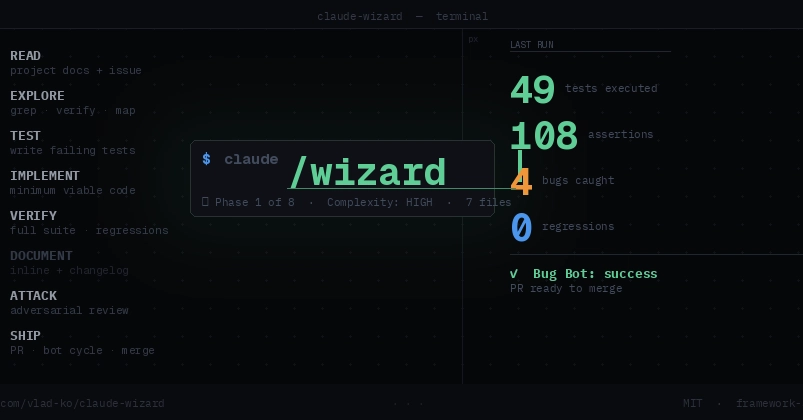
So I gave it a process. I called it /wizard, and it forced one Claude into the habits of a disciplined senior engineer: read the codebase before writing a line, define "done" with acceptance criteria before implementing, write a failing test first, then the minimum code to pass it, then try to break what you just wrote. Same output, working code, but without the 2am "why is this broken in production" follow-up.
That was version one. One Claude, one discipline, one pull request at a time.
This post is about what happened when I stopped trying to make Claude a better developer and started making it a better engineering team, and about what that did to my own job. Because here is the part nobody warned me about. In v1, I stopped writing the code and stopped doing line-by-line reviews. In v2, the next layer fell away too: I stopped writing the deep technical prompts and the GitHub issues that fed the work. What's left is a different altitude entirely. I tune the workflows and supervise the agents that run inside them. I conduct.