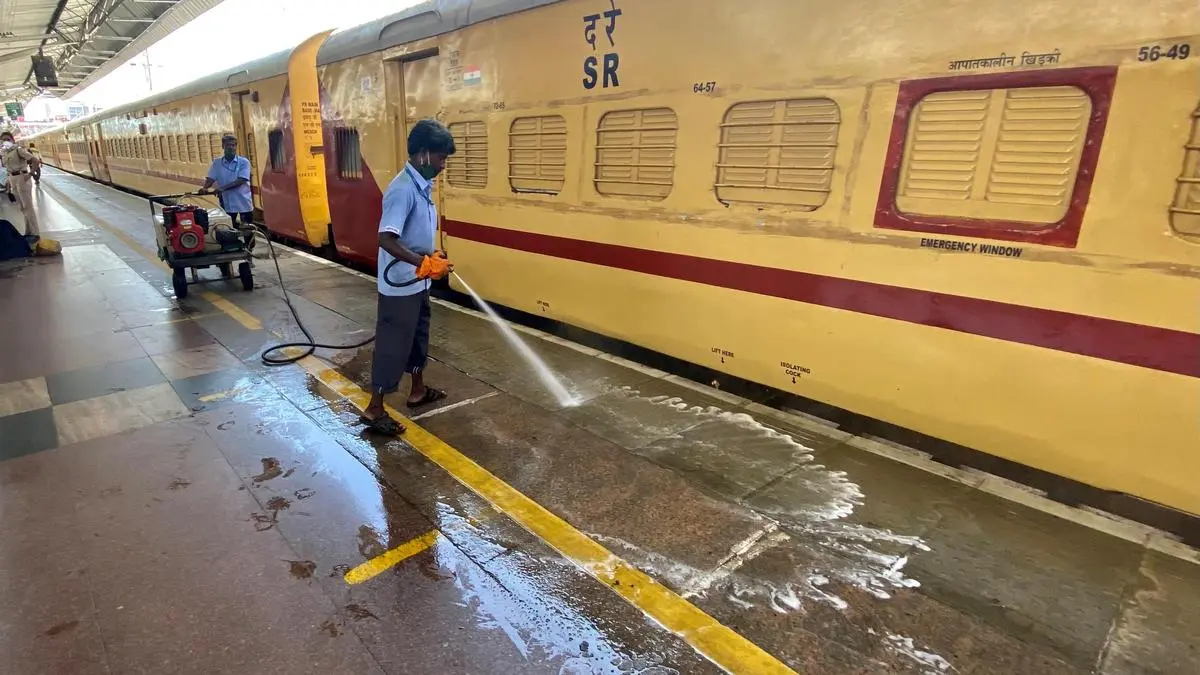
The decision to make cleanliness in general class coaches comparable with higher classes highlights an incongruous class mindset for a basic service
| Photo Credit:
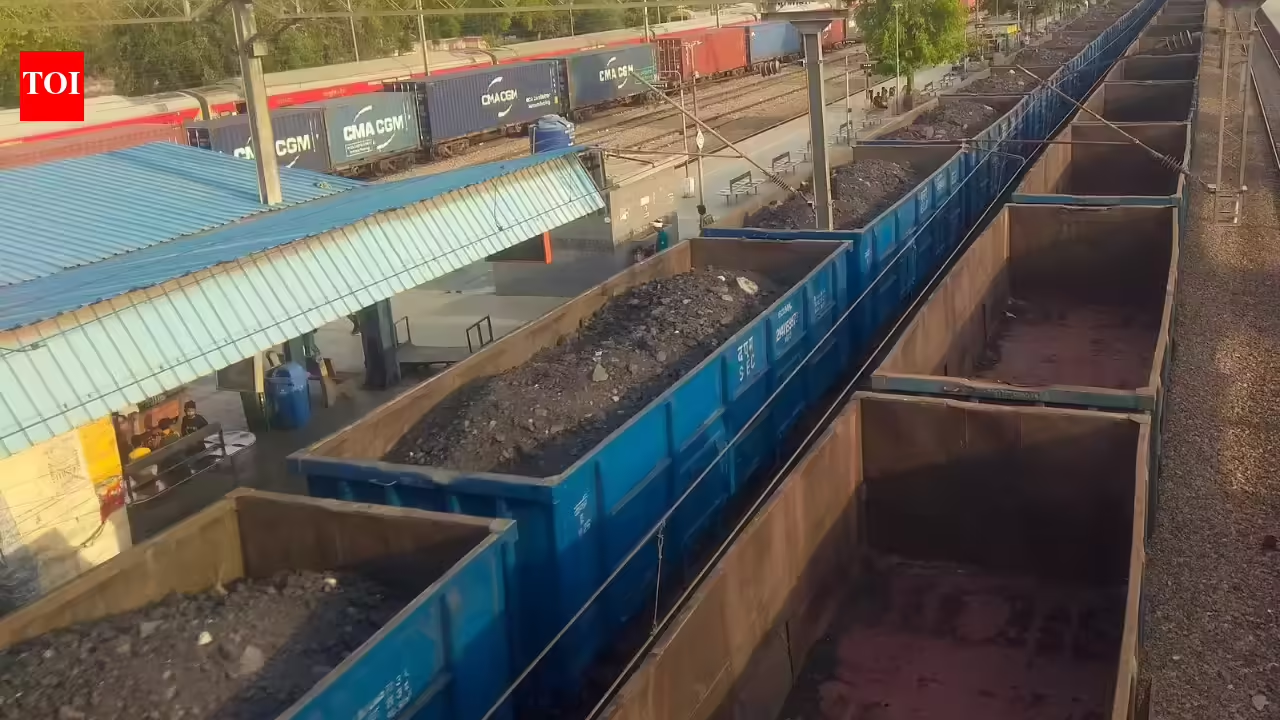
The Ministry of Railways has launched an ambitious “52 reforms in 52 weeks” agenda, aiming to enhance safety, technology, efficiency and service through a time-bound framework. While intended to drive accountability and continuous change, these measures often reflect incremental operational improvements rather than deep structural reforms. The initiative’s impact hinges on whether it delivers fundamental systemic change or merely repackages ongoing projects.Several measures do address long-standing concerns. The decision to make cleanliness in general class coaches comparable with higher classes highlights an incongruous class mindset for a basic service and even obscures the fact that the level of cleanliness even in higher classes is hardly acceptable. This and efforts to streamline linen management are essentially operational refinements. Their impact on service quality will depend on how effectively underlying systemic weaknesses are addressed.Establishment of over a hundred Gati Shakti cargo terminals aims to enhance multimodal logistics, but this recurring pitch since 2022 has not yet increased rail’s modal share. Initiatives like specialised automobile wagons and containers have been on for more than a decade with gradual gestation. Experience with bulk cement movement illustrates the limits of incremental policy adjustments; despite the ‘reform’, rail’s modal share remains modest and revenue gains limited to only around 4 per cent. The tech focus, including the RailTech Policy and innovation portal, aims to fund startup prototyping. However, global experience shows that technology and innovations do not get assimilated through public platforms. It requires institutional willingness to adopt, adapt and scale. Without changes in organisational culture and risk-sharing mechanisms, such initiatives remain largely demonstrative. A more effective approach would combine simplified adoption processes with meaningful risk mitigation for developers.AI agenda merits scrutinyThe Artificial Intelligence agenda also merits closer scrutiny. Applications such as intrusion detection, fire safety and monitoring are useful, but the goal of reducing accidents to single digits cannot be achieved without deploying AI in core safety functions, which seems to be missing. Real-time analysis of train running data and signalling logs, drawn from extensive digital systems such as station data loggers and locomotive computers, is essential. While such analysis is impossible to perform manually at scale, it can now be carried out effectively using AI to generate actionable alerts from near-miss events and to foster a stronger safety culture.The changes in passenger-centric ticketing flexibility are generally good moves, like passengers can now digitally change their boarding station up to 30 minutes before the train’s departure from its origin station. Other tweaks like elimination of refunds for cancellations made less than eight hours before departure, which aim to curb speculative bookings, may prove restrictive, particularly when compared with more flexible practices in other modes of transport, and will lead to dissatisfaction among genuine passengers needing to reschedule their travels.Global experience shows the real challenge is not technology availability but its integration into operations and decision-making. Without changes in culture, procurement and accountability, initiatives remain limited. The reform exercise, however, reflects a broader tendency to label ongoing or incremental work as ‘reforms’. While this may serve communication objectives, it risks diluting the concept. Genuine reform requires systemic shifts in structures, incentives and outcomes, rather than marginal adjustments.Looking ahead, a sharper focus on a few critical areas could yield more meaningful transformation. Freight operations require a fundamental reorientation. Assured, time-tabled freight services are essential in a logistics environment where reliability is as important as cost. Without this, rail will struggle to expand its modal share. Passenger experience, particularly for the large number of travellers in non-AC segments, demands a more comprehensive approach. A rapidly developing economy moving towards the stated goal of Viksit Bharat cannot afford to overlook the dignity and basic comfort of millions who rely on rail travel.There is also a strong case for expanding the role of the private sector in freight and higher-end passenger train operations, rolling stock manufacturing and commercial exploitation as a part of station redevelopment within a balanced regulatory framework. This can bring in capital, innovation, operational flexibility, and above all, efficiencies.Equally important are governance reforms within the organisation. Decision-making in IR continues to be based on feudal, hierarchical and fragmented structures that can impede responsiveness and innovation. Greater decentralisation, clearer accountability and a shift towards performance-based management are necessary.Finally, IR must invest in leadership in at least one domain of railway technology, rather than remaining a follower across multiple areas.The “52 reforms in 52 weeks” initiative reflects an intent to energise the system and signal change. Its success will depend on whether it evolves into a coherent programme of structural transformation. Without that shift, the risk is that the narrative of reform outpaces its substance.The writer is an Independent Consultant and retired GM of ICFbl20-think-train1