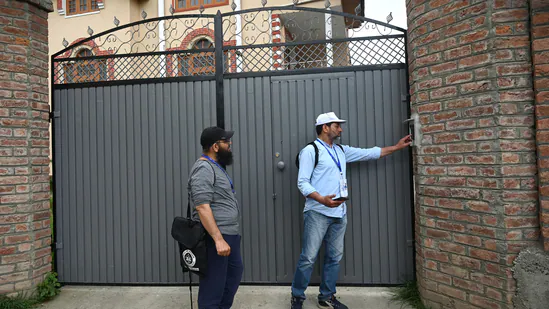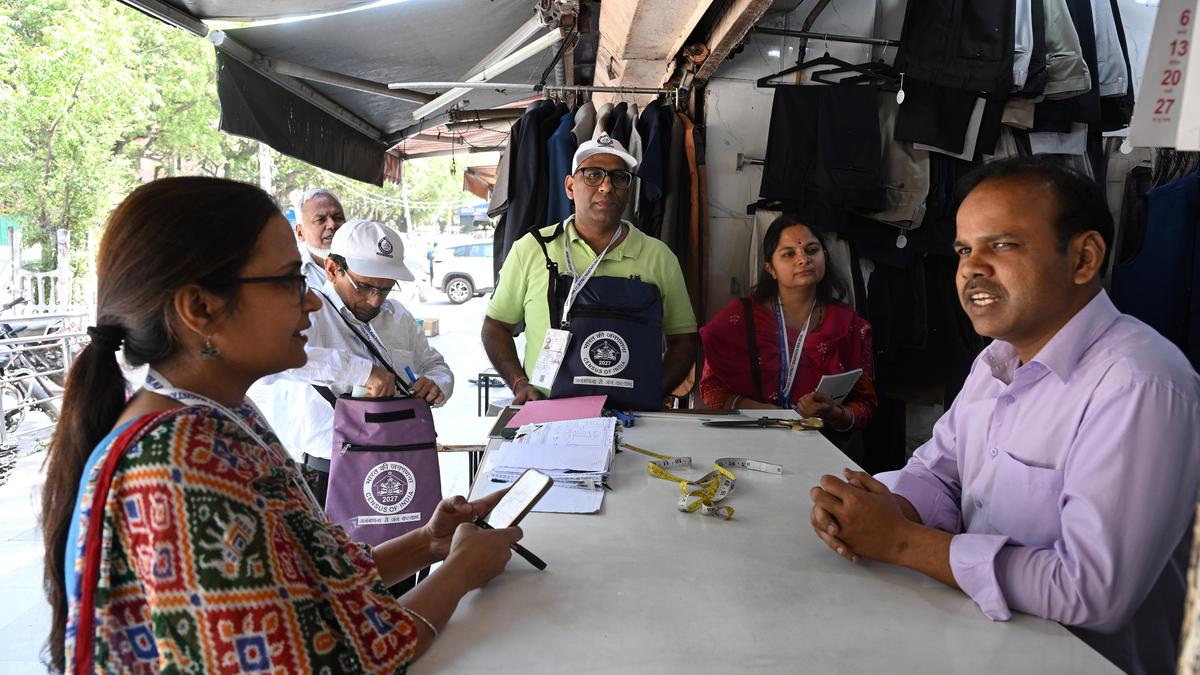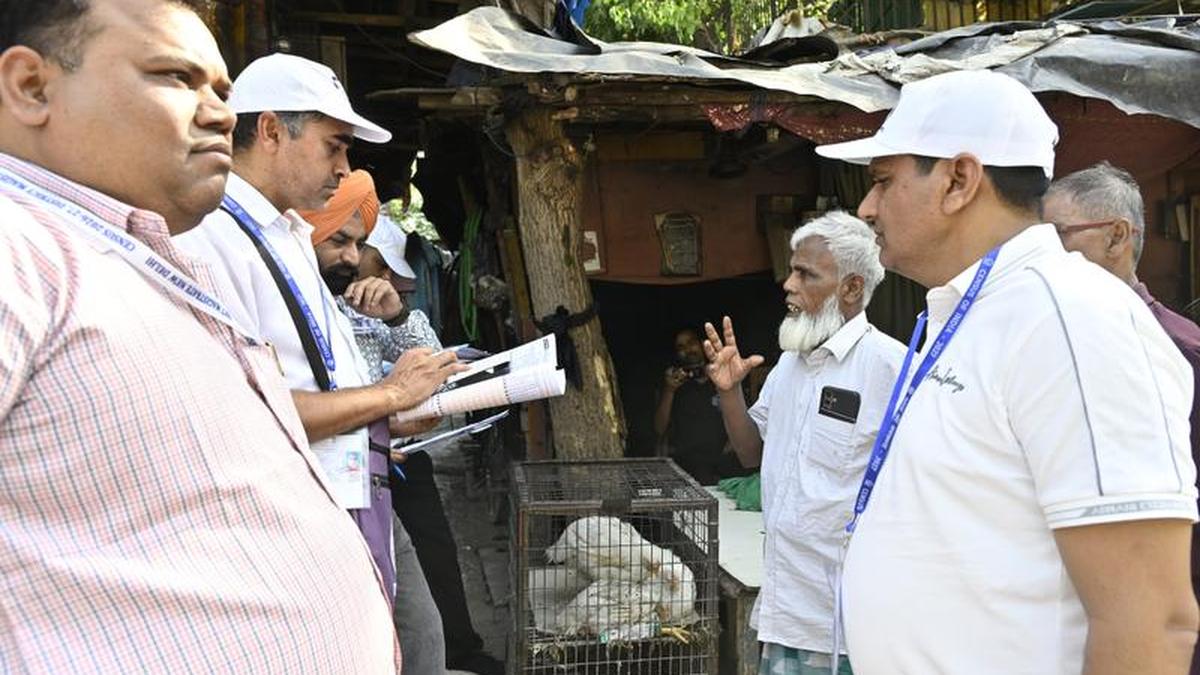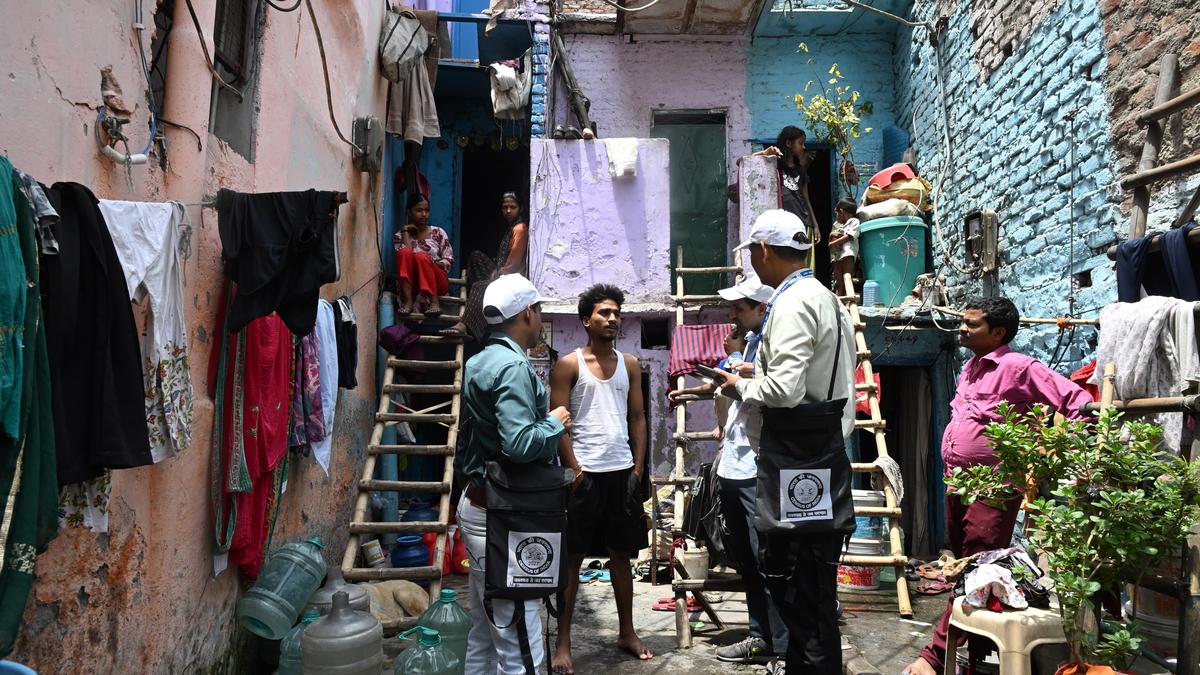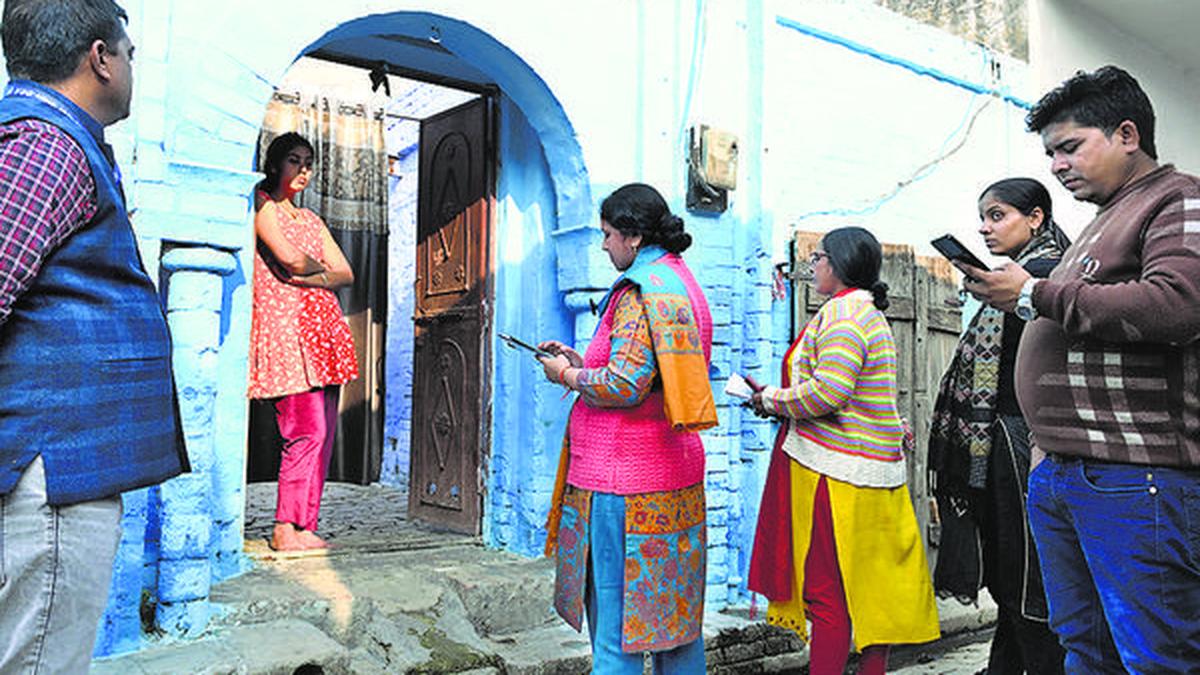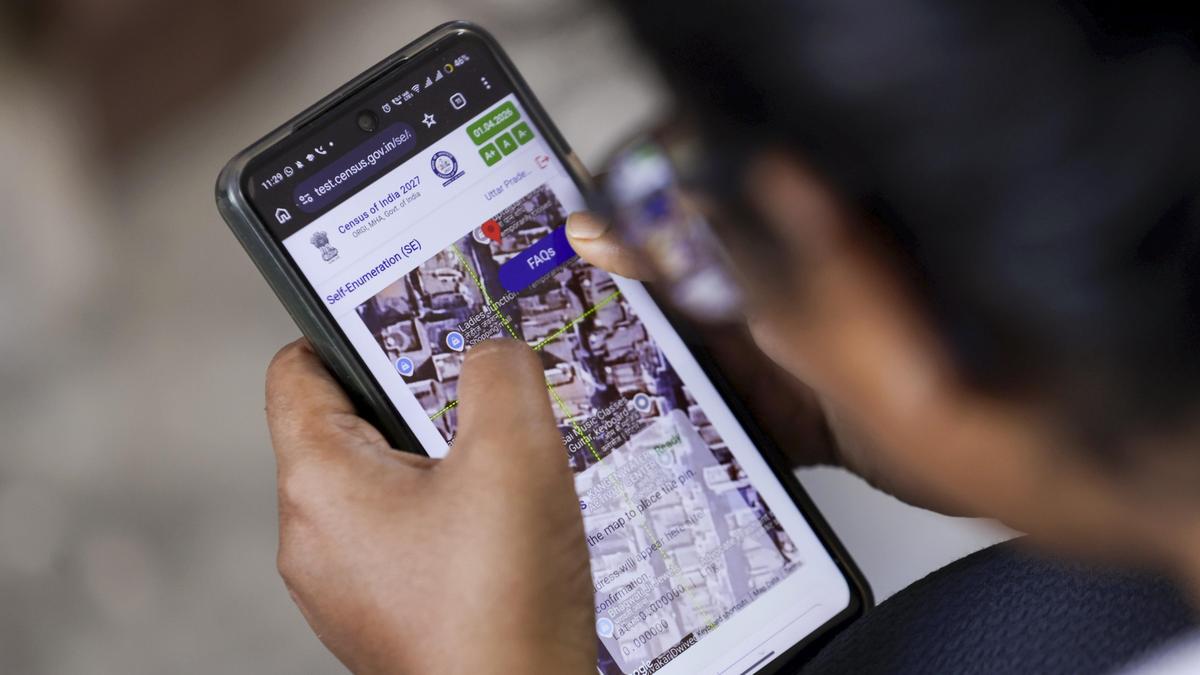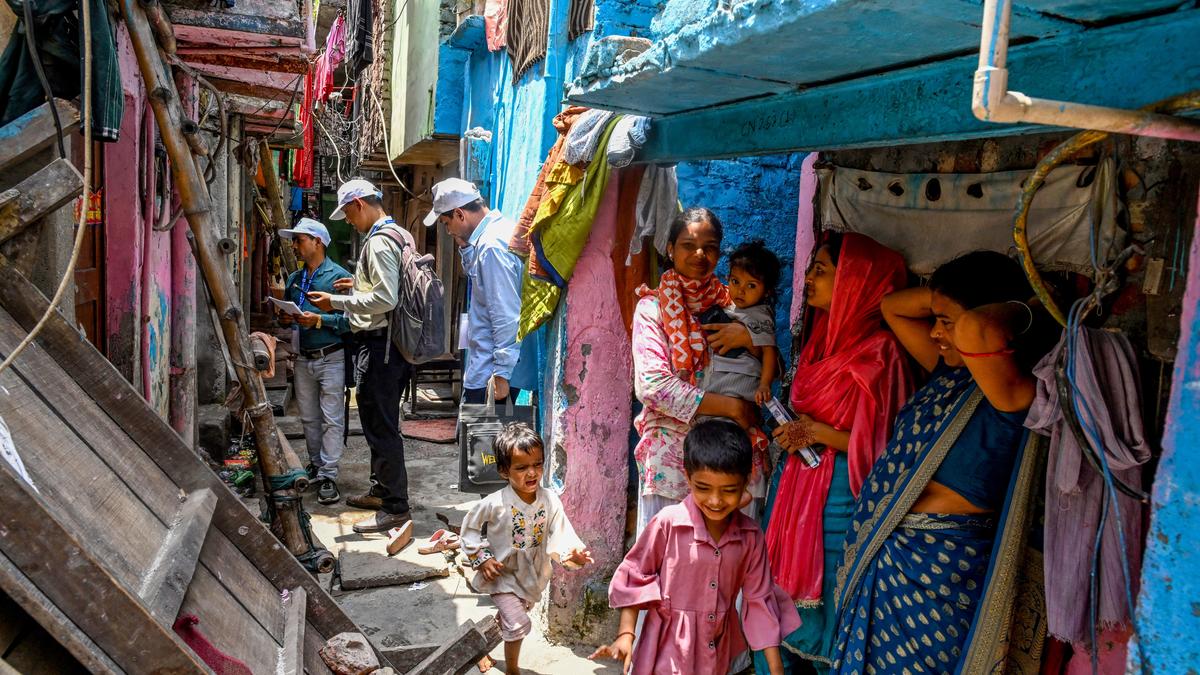
Every day for about a month, M. Soumina, a government-school teacher, began her mornings by knocking on the doors of apartments in a multi-storey residential complex in East Delhi’s Mayur Vihar.Although the school where she taught was closed for the summer break, Soumina had her task cut out for her after being appointed an enumerator for the ongoing Census. The exercise relies on about 33 lakh government teachers and other enumerators, who will spend nearly a year surveying an estimated 1.4 billion Indians on housing, amenities, and demographics.For Soumina, the work meant spending hours going door to door in a brutal Delhi summer, with temperatures consistently hovering between 40°C and 42°C. She surveyed 150 flats spread across 17 apartment blocks and administered a 33-question survey to each household within 26 days.“I was making those visits daily from May 19,” said Soumina. “I had an app on my phone to record the data. Before asking the questions, the households also have to be mapped and geotagged on the app.”Other than her smartphone, a black bag, a QR-enabled identity card, and a white cap with the Census logo to protect her from the heat, Soumina’s companion during these visits was her husband, who works in the production unit of a newspaper. She said she felt safer with him around.Like Soumina, enumerators working on the Census report facing several challenges in the field, including heat, connectivity issues, and safety concerns. Though the exercise is being conducted through a digital system designed for real-time monitoring, field workers said conditions on the ground and supervisory instructions are affecting data collection. Many of them have also flagged these issues on social media.A massive exerciseThe questions that enumerators asked are part of the Houselisting and Housing Operations (HLO), the first phase of the Population Census 2027. The questionnaire was notified by the Registrar General and Census Commissioner of India on January 22.The 2027 Census marks several firsts: it is India’s first fully digital Census, the first to collect caste data, and the first to allow residents to self-enumerate. The exercise was originally scheduled for 2021, but was postponed because of the COVID-19 pandemic. As a result, India is conducting its population count six years later than the decennial schedule, with governments continuing to rely on 2011 Census data for policy planning and welfare programmes.The HLO phase involves the collection of data on housing conditions, household composition, basic amenities, and assets to assess living standards. It captures information on the structure of dwellings; access to water, sanitation, and energy, ownership of consumer goods, and the number of people living in a household. It also collects residents’ mobile numbers for official communication.The HLO phase will lay the foundation for the second phase of the Census — Population Enumeration — scheduled for February 2027. In Ladakh and the snow-bound regions of Uttarakhand, Jammu and Kashmir, and Himachal Pradesh, both phases have been set a deadline of September 30, 2026, due to weather constraints.The second phase will enumerate caste and collect other detailed individual-level data, including religion. Each enumerator gets an honorarium of ₹25,000 for completing the task. So far, 23 States and Union Territories have completed the first phase.Meeting strangersWith several occupants being working professionals, Soumina said it was difficult to get them to answer questions during the day.“Most residents leave for work around 8.30 in the morning. So I visited homes between 7 and 7.30 with my husband. While some were accommodative, others asked us to come again later or skip the exercise altogether,” she said.If a house was locked, she would go back again and again until she got the data, Soumina added. “Sometimes the visit extended into the evening, so I would again go with my husband.”Like her, many female enumerators, mostly government school teachers, said they asked their husbands or other male members in their families to accompany them during field visits.Meenu Verma, a primary school teacher from Rae Bareli, Uttar Pradesh, said that her husband and brother-in-law helped her during the exercise. “I was assigned 172 houses,” she said. “My husband and I used to wake up at 4 in the morning and reach the assigned village by 7. From 7 to about 11, we would find people in their homes, but after noon, due to the heat, the entire village would be deserted.”She said they would then hesitate to knock on doors. “Many of them had no awareness about the Census, so we had to first explain it them. I want to request the government to appoint enumerators in pairs. Or a male colleague should accompany a female enumerator. Not everyone is polite. And in villages, houses are spread afar,” Verma said.On May 21, a First Information Report (FIR) was registered against a Delhi resident for allegedly harassing a female Census enumerator while she was on duty. On June 13, a Delhi court convicted the accused, Sandeep Panwar, 43, for the crime. Earlier, on April 25, a female Census enumerator was allegedly denied entry into an apartment building in Bengaluru where an unidentified individual allegedly used abusive language against her, following which an FIR was registered against him.Dinesh Kumar Dwivedi, a Hindi lecturer at a government school, who was Soumina’s supervisor, said six enumerators were reporting to him. “Fetching data from slum clusters was easier than seeking information from multi-storey apartments,” he said.In Haryana and Delhi, Census enumerators, mostly government school teachers, complained that they faced hostility and were denied entry by residents of high-rise buildings and residents’ welfare associations (RWAs). The district administration of Gurugram wrote letters to RWAs saying that according to Section 8(2) of the Census Act, 1948, every resident is “legally bound” to answer Census-related questions to the best of their knowledge or belief.“The slum residents were hesitant initially,” said Dwivedi, who collected data as an enumerator during the 2011 Census. “They thought this was an exercise to demolish the slums. When they understood its purpose, they were more than forthcoming. Some thought that participating in it would make them eligible for government schemes. Many others came to us with documents, asking for help in applying for welfare schemes.”Dwivedi recalled that in 2011, the process was tedious: all the data had to be noted down on paper, which could get lost or damaged. He said residents were reluctant to share information on assets as they feared tax raids.The digital divideBeyond personal safety, the digital divide in India has also affected fieldwork. In metros and towns with better mobile connectivity, enumerators entered data directly on their phones. Elsewhere, they said they recorded details on paper or in notebooks and uploaded them on the app after going back home.Read: Census 2027: heat, locked doors pose challenges for survey deadlineAccording to the Comprehensive Modular Survey: Telecom, conducted from January to March 2025 as a part of the 80th round of the National Sample Survey, 83.3 % of rural households and 91.6% of urban households had access to Internet. The total number of households surveyed was 34,950 (19,071 in rural areas and 15,879 in urban areas) and the total number of people was 1.42 lakh (82,573 in rural areas and 59,492 in urban areas). In the survey, a person was considered to have “used the internet” if they had accessed it at least once in the past three months.“Connectivity is a huge issue, especially in rural areas. Once an enumerator has logged in, it is difficult to make changes, and if the network is poor, the data can get corrupted,” said an enumerator from U.P.
Census 2027: The pressures of counting India
Census enumerators face several challenges in field, including heat, connectivity issues, and safety concerns; despite being a digital system designed for real-time monitoring, field workers say conditions on ground and supervisory instructions affect data collection.
2,373 words~11 min read