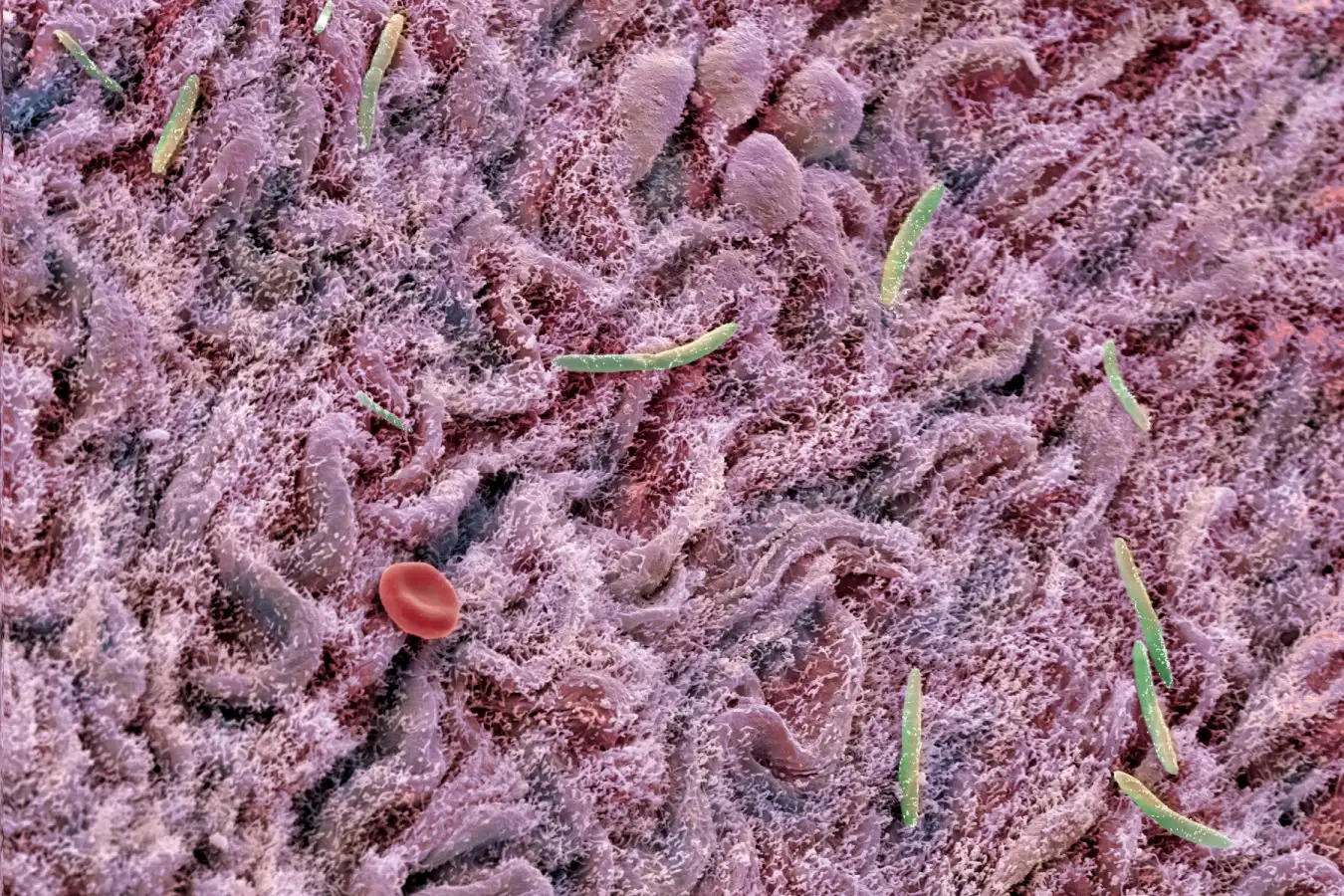
A scanning electron micrograph of the intestinal lining of a mouse, with several bacteria (green) and one red blood cell (red)CJC Copyright: IKELOS GmbH/Dr. Christopher B. Jackson/Science Photo Library
A faecal microbiome transplant (FMT) could make an aged brain as adaptable as a young one. Our gut microbiome has been linked to our risk of depression and may even play a role in shaping our personality. But for the first time, a study has shown that older mice given the gut microbiomes of younger animals via an FMT experience improved brain plasticity. This suggests that they could overcome a condition similar to amblyopia, also known as lazy eye, which is typically only successfully treated in childhood.
“This study suggests that microbial communities may help regulate critical periods of brain development by defining when developmental windows of heightened plasticity open and close,” says Parisa Gazerani at Oslo Metropolitan University in Norway, who wasn’t involved in the work. “It suggests that the gut microbiome may be an active developmental partner that helps shape neural circuit maturation alongside sensory experience, immune activity and genetic programming.”
Neuroplasticity, the brain’s ability to remodel itself, means that conditions like amblyopia can be treated in children by temporarily covering their stronger eye. This forces the brain to forge new connections to the weaker eye, improving overall vision. But plasticity peaks at a young age, decreasing as our brains naturally prune unused connections during adolescence.