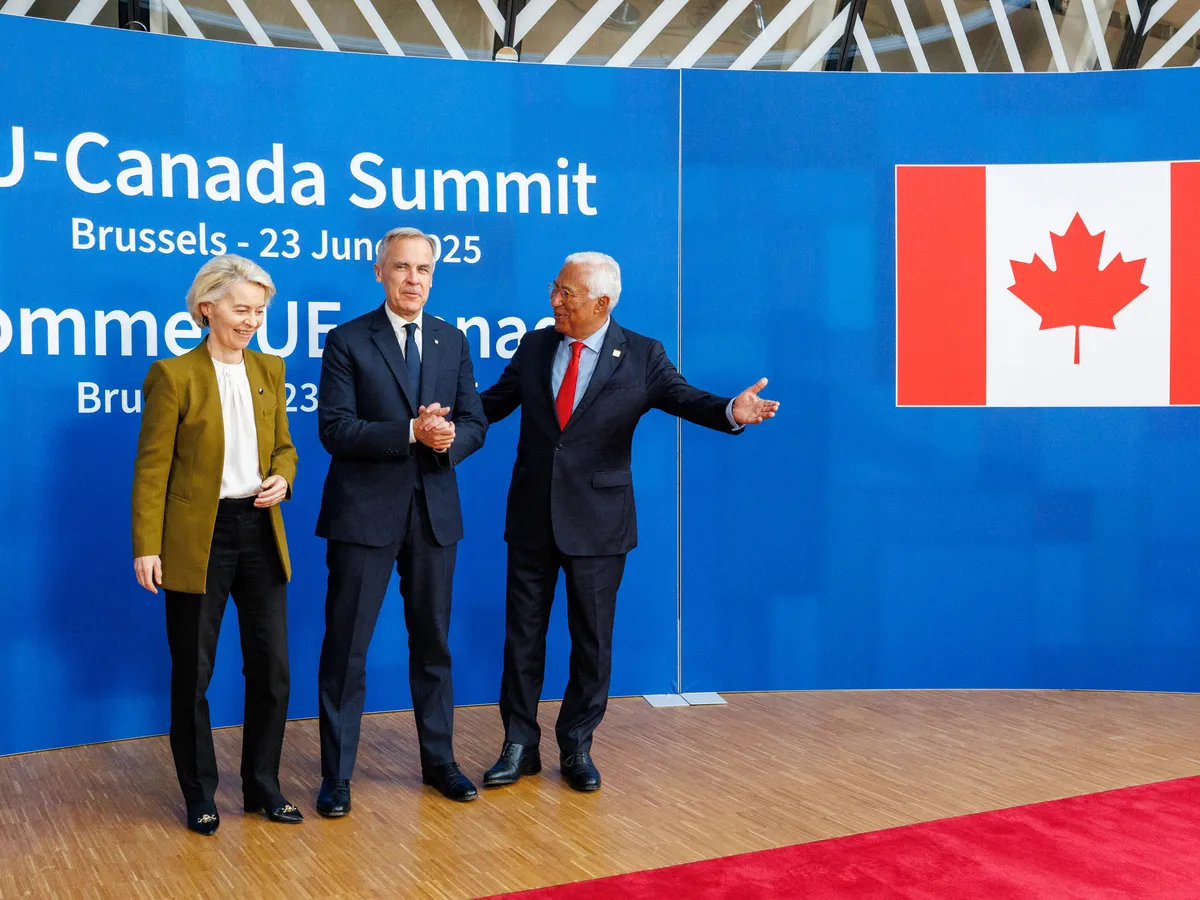
Skip to Content Subscribe Our Offers My Account Manage My Subscriptions FAQ Newsletters Canada Canadian True Crime Canadian Politics Health World Israel & Middle East Financial Post NP Comment Longreads Puzzmo Diversions Comics NP News Quiz New York Times Crossword Horoscopes Life Eating & Drinking Style Sponsored Play for Ontario Travel Travel Canada Travel USA Travel International Cruises Travel Essentials Culture Books Celebrity Movies Music Theatre Television Business Essentials Advice Lives Told Tails Told Shopping Buy Canadian Home Living Outdoor Living Kitchen & Dining Tech Style & Beauty Personal Care Entertainment & Hobbies Gift Guide Travel Guide Amazon Prime Day Deals Savings National Post Store More Sports Hockey Baseball Basketball Football Soccer Golf Tennis Driving Vehicle Research Reviews News Gear Guide Obituaries Place an Obituary Place an In Memoriam Classifieds Place an Ad Celebrations Working Business Ads Archives Healthing Epaper Manage Print Subscription Profile Settings My Subscriptions Saved Articles My Offers Newsletters Customer Service FAQ Newsletters Canada World Financial Post NP Comment Longreads Puzzmo Diversions Life Shopping Epaper Manage Print Subscription HomeNP CommentChris Selley: We can learn things from the EU without joining itEuropeans often evince just as much of an idealized view of Canada as some Canadians do of the European Union You can save this article by registering for free here. Or sign-in if you have an account.From left, European Commission President Ursula von der Leyen, Prime Minister Mark Carney and European Council President Antonio Costa pose during the 20th EU-Canada summit in Brussels, on June 23, 2025. Photo by Olivier Matthys /AFPNothing about the idea of Canada joining the European Union has ever made any sense. More trade with Europe? Absolutely. But a political union? It’s not just ludicrous but impossible on multiple levels, including constitutionally. And one of the oddest things about it has been watching the idea come almost exclusively from the centre-left of the Canadian political spectrum. If anything, it’s the right that should welcome the idea.Enjoy the latest local, national and international news.Exclusive articles by Conrad Black, Barbara Kay and others. Plus, special edition NP Platformed and First Reading newsletters and virtual events.Unlimited online access to National Post.National Post ePaper, an electronic replica of the print edition to view on any device, share and comment on.Daily puzzles including the New York Times Crossword.Support local journalism.Enjoy the latest local, national and international news.Exclusive articles by Conrad Black, Barbara Kay and others. Plus, special edition NP Platformed and First Reading newsletters and virtual events.Unlimited online access to National Post.National Post ePaper, an electronic replica of the print edition to view on any device, share and comment on.Daily puzzles including the New York Times Crossword.Support local journalism.Create an account or sign in to continue with your reading experience.Access articles from across Canada with one account.Share your thoughts and join the conversation in the comments.Enjoy additional articles per month.Get email updates from your favourite authors.Create an account or sign in to continue with your reading experience.Access articles from across Canada with one accountShare your thoughts and join the conversation in the commentsEnjoy additional articles per monthGet email updates from your favourite authorsSign In or Create an AccountorTo wit: On Wednesday in Brussels, the European Parliament resoundingly passed new rules for member states on asylum policy. Removal orders for people found living illegally in EU member countries will come with an actual short-term obligation to leave — what a concept! — and if authorities deem a person a risk to abscond, that person can be detained for up to 30 months while the authorities sort out the file. Countries can also deport these people to “return hubs” — third countries willing to accept them to await the final decision.This newsletter from NP Comment tackles the topics you care about. (Subscriber-exclusive edition on Fridays)By signing up you consent to receive the above newsletter from Postmedia Network Inc.We encountered an issue signing you up. Please try againAs the bill passed, the parliament chamber echoed with cries of “send them back!”Britain’s 2022 agreement to deport illegal migrants to Rwanda, where they would be processed and then resettled in other countries, was hugely controversial in Britain, where anti-migrant sentiment is far more mainstream and open than in Canada. (To be fair, the European bill specifies these third countries must have a respectable human rights record. It would be a stretch to put Rwanda in that category.)So, let’s pause and imagine the outcry were any Canadian politician to propose deporting failed asylum seekers and illegal residents to a third country willing to take them, even a relatively high-functioning one — Panama, say, or Barbados. Heads would explode. “Trumpian! Trumpy Trump Trumpian!” people would cry. Which is ironic, because the whole “Canada into the EU” narrative is based on Brussels providing a supposed moral antipode to modern Washington.By my rough count, most of the prominent voices advancing this “Canada in the EU” narrative are, in fact, European. And they often evince just as much of an idealized view of Canada as some Canadians do of the EU.The Economist’s Brussels bureau chief Stanley Pignal kicked things off way back in January of 2025. “Both (Canada and the EU) trade openly, fret about global warming and dislike guns, the death penalty and Russian aggression,” he wrote in the magazine’s Charlemagne column.“Despite a residual attachment to the frontier spirit, Canadians can be thought of as honorary Europeans,” he wrote. “Like Europeans, Canadians believe that markets work but must be tempered by welfare states. Both trade openly, fret about global warming and dislike guns, the death penalty and Russian aggression.”OK. But that describes basically every developed Western democracy except the United States.Somewhat more compellingly, Pignal went on to describe what the EU could do for Canada.“The Brussels antitrust machinery has done a fine job keeping competition vibrant in areas such as banking, airlines and telecoms, giving Europeans a better deal than Canadians get.“Canada talks about cutting carbon emissions but has yet to really do so, while Europe’s emissions are down over one-third from their peak. EU countries have figured out how to create a single market (flawed as it is) that makes it easier to trade between them than it often is for Canadian firms to trade across the 13 provinces and territories.”Except the people who would have to advance this cause in Canada don’t want to solve interprovincial trade barriers … or else, they would have. (Remember when Trump 2.0 was going to finally going to break down those barriers? Trump has more than two years left in office, and the whole effort came off the boil ages ago. Once he’s gone, provinces will probably introduce new barriers.)Those same people don’t want more competition in banking, airlines and telecoms … or else, they would allow it. And they don’t really care about reducing emissions; they just “fret” performatively about it, which is, demonstrably, all that most nominally climate-concerned Canadians demand from their politicians.Talking of which: Canada has more than nine per cent of the world’s proven oil reserves, while no EU country has any worth mentioning. Surely that alone proves the folly of an economic union.It might behoove Canada to watch how these migration reforms play out in Europe, though. If only by dint of geography, we don’t have a problem on the same scale Europe does. And again, I cannot envision any political party ever supporting the third-country deportation idea. But Canadian asylum policy is a long-standing debacle. If the EU is a moral exemplar, or even just a respectable political entity, we should be willing to learn without joining — not least when it comes to economic integration and competition.National Post cselley@postmedia.com Join the Conversation This website uses cookies to personalize your content (including ads), and allows us to analyze our traffic. Read more about cookies here. By continuing to use our site, you agree to our Terms of Use and Privacy Policy.
Chris Selley: We can learn things from the EU without joining it
Europeans often evince just as much of an idealized view of Canada as some Canadians do of the European Union
TL;DRAI
EU Parliament approved asylum rules enabling third-country deportations and 30-month detention periods. Canadians and Europeans idealize each other's governance models while ignoring that EU migration policy is as restrictive as positions Canadians typically reject from Washington.
1,308 words~6 min read