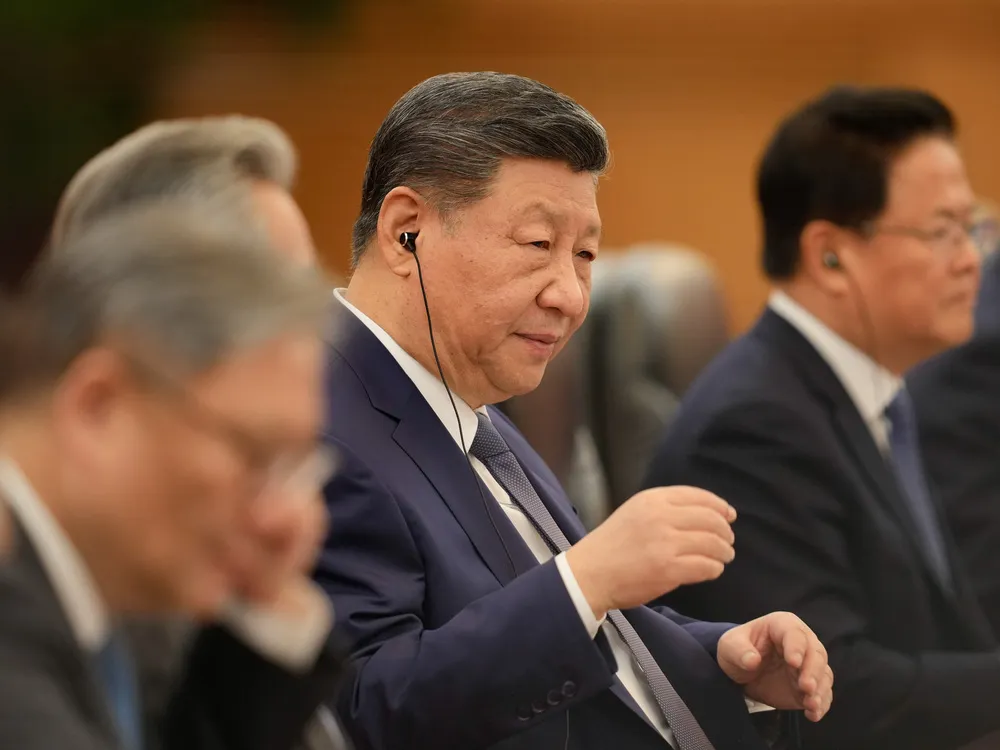
Skip to Content News Archives Economy Energy Oil & Gas Renewables Electric Vehicles Mining Commodities Agriculture Real Estate Mortgages Mortgage Rates Finance Banking Insurance Fintech Cryptocurrency Work Wealth Smart Money Wealth Management Investor Personal Finance Family Finance Retirement Taxes High Net Worth FP Comment Executive Women Puzzmo Newsletters Financial Times Business Essentials More Innovation Information Technology FP500 Podcasts Small Business Lives Told Tails Told Shopping Financial Post Store Obituaries Place a Notice Advertising Advertising With Us Advertising Solutions Postmedia Ad Manager Sponsorship Requests Classifieds Place a Classifieds ad Working Profile Settings My Subscriptions Saved Articles My Offers Newsletters Customer Service FAQ News Economy Energy Mining Real Estate Finance Work Wealth Investor FP Comment Executive Women Puzzmo Newsletters Financial Times Business Essentials HomeFinancial TimesXi Jinping wants China to boost demand. Why isn't it working?Activity is sputtering midway through 2026, undercutting efforts to galvanize the economyAuthor of the article: You can save this article by registering for free here. Or sign-in if you have an account.Xi Jinping and other policymakers are under pressure to wean China's economy off its current growth model but have few obvious alternatives to stimulate activity. Photo by Vincent Thian/Pool/Getty ImagesAt a meeting of Chinese officials at the end of last year, President Xi Jinping outlined the main driver of growth for 2026: domestic demand.Subscribe now to read the latest news in your city and across Canada.Exclusive articles from Barbara Shecter, Joe O'Connor, Gabriel Friedman, and others.Daily content from Financial Times, the world's leading global business publication.Unlimited online access to read articles from Financial Post, National Post and 15 news sites across Canada with one account.National Post ePaper, an electronic replica of the print edition to view on any device, share and comment on.Daily puzzles, including the New York Times Crossword.Subscribe now to read the latest news in your city and across Canada.Exclusive articles from Barbara Shecter, Joe O'Connor, Gabriel Friedman and others.Daily content from Financial Times, the world's leading global business publication.Unlimited online access to read articles from Financial Post, National Post and 15 news sites across Canada with one account.National Post ePaper, an electronic replica of the print edition to view on any device, share and comment on.Daily puzzles, including the New York Times Crossword.Create an account or sign in to continue with your reading experience.Access articles from across Canada with one account.Share your thoughts and join the conversation in the comments.Enjoy additional articles per month.Get email updates from your favourite authors.Create an account or sign in to continue with your reading experience.Access articles from across Canada with one accountShare your thoughts and join the conversation in the commentsEnjoy additional articles per monthGet email updates from your favourite authorsSign In or Create an AccountorChina should “co-ordinate efforts to promote consumption and expand investment“, he told a top economic policy meeting in December, according to a February article in the Communist Party’s flagship journal.Six months later, China is struggling on both fronts.Retail sales turned negative last month for the first time since 2022, underscoring deep consumer apathy that has lingered long beyond the pandemic. Investment weakness has also resurfaced, with a gauge now down 4.1 per cent over the first five months of the year compared with the same period in 2025 — the worst since the early days of COVID.Get the latest headlines, breaking news and columns.By signing up you consent to receive the above newsletter from Postmedia Network Inc.A welcome email is on its way. If you don't see it, please check your junk folder.The next issue of Top Stories will soon be in your inbox.We encountered an issue signing you up. Please try againThe declines in the official monthly data display an economy that is struggling to shake off a sense of domestic malaise despite Beijing’s desire to galvanize demand.“What we’re seeing here is a renewed slowdown in the economy,” said Frederic Neumann, chief Asia economist at HSBC. “Some of the optimism at the beginning of the year is beginning to fade again quite quickly.”“The question is: have we hit a wall yet?”The data woes lay bare a longstanding challenge for Beijing. Policymakers are under pressure to wean China’s economy off its current growth model but have few obvious alternatives to stimulate activity.Buoyant exports have already inflamed tensions with China’s trading partners, notably the European Union and the United States, which under President Donald Trump waged a tariff war against China last year. Exports have continued to rise this year, adding 19 per cent in May.At home, the slowdown in the property sector, now in its fifth year, has sapped consumer confidence. New home prices dropped a further 0.2 per cent in May on the previous month across 70 cities.Analysts said the decline in retail sales was also partly being driven by the waning use of a goods trade-in program, which has heavily affected sectors such as household appliances and autos. The data only covers goods and catering.Investment, meanwhile, is tumbling. In addition to the property slowdown, high input costs linked to the war in Iran are weighing on infrastructure investment, according to Logan Wright, an analyst at Rhodium. He added that this had not been offset by manufacturing investment.That said, “the weakness in consumption is more structural”, Wright added.Fixed-asset investment has long been subject to concerns over data quality, given incentives for local governments to overreport.The metric also declined last year, after Xi called for a crackdown on excessive industrial competition, and later hit out at wasteful spending. Some analysts accordingly saw that decline as a reflection of under-reporting, as well as possible data revisions, pointing to contradictions with other indicators.Lynn Song, chief China economist at ING, said China had been “cutting down on redundant and low-return investment”, pointing to wind and solar power projects that have been scrapped due to “economic viability concerns”.“We are at a juncture where the value we get out of further infrastructure investment begins to see diminishing returns,” he said.Unlike other major economies, China does not release quarterly GDP data on investment, consumption and net exports, forcing analysts to rely on monthly metrics. It also only publishes such annual GDP data with a considerable lag.The latest such data, released in recent weeks, showed that nominal gross fixed capital formation, the main component of investment, declined last year for the first time since the country began reporting GDP in the 1990s. The data does not account for price changes, however, which in a deflationary environment would provide a boost to the real numbers.“Investment was weak, as borne out by this national accounts data,” said Louis Kuijs, chief economist for Asia-Pacific at S&P Global. But he added that the “extremely strong declines” for fixed-asset investment in the second half of last year were “bizarre”.While investment is struggling overall, Song pointed to “a fairly clear trend of export-related investment categories outperforming”. China’s trade surplus in goods hit a record last year of US$1.2 trillion.In recent months, however, imports have risen even more quickly than exports, adding 27 per cent in May.Adam Wolfe, an economist at Absolute Strategy Research, said the increases were driven partly by prices, especially of semiconductors, as China’s tech sector benefited from the global AI build-out.“Business-to-business services seem to be doing relatively well,” he said. “Consumer-facing services and consumer-facing goods are still the weak spot.”There are few signs of a more substantial policy shift, especially in terms of consumer stimulus. Beijing’s GDP growth target is the lowest in decades but still aims to hit at least 4.5 per cent.“There’s never really been a policy of active demand management from the consumption side,” said Neumann. “China isn’t geared up for that.”But “it’s hard to see how growth is sustainable over time” if there is not a transition away from investment-led growth, he added.Chinese authorities at the highest levels have long been sensitive to the risks. Even as investment shows recent signs of reversals, the practicalities of any long-term shift still pose deep challenges.“It becomes a political system,” said Neumann, of China’s investment model. “There are big companies that depend on this.“If you’re Chinese and you see your country progress over 40 years, you’re not going to say the model doesn’t work,” he added. “It has worked.“It’s really hard psychologically to say this model no longer works.”© 2026 The Financial Times Ltd Join the Conversation This website uses cookies to personalize your content (including ads), and allows us to analyze our traffic. Read more about cookies here. By continuing to use our site, you agree to our Terms of Use and Privacy Policy.
Xi Jinping wants China to boost demand. Why isn't it working?
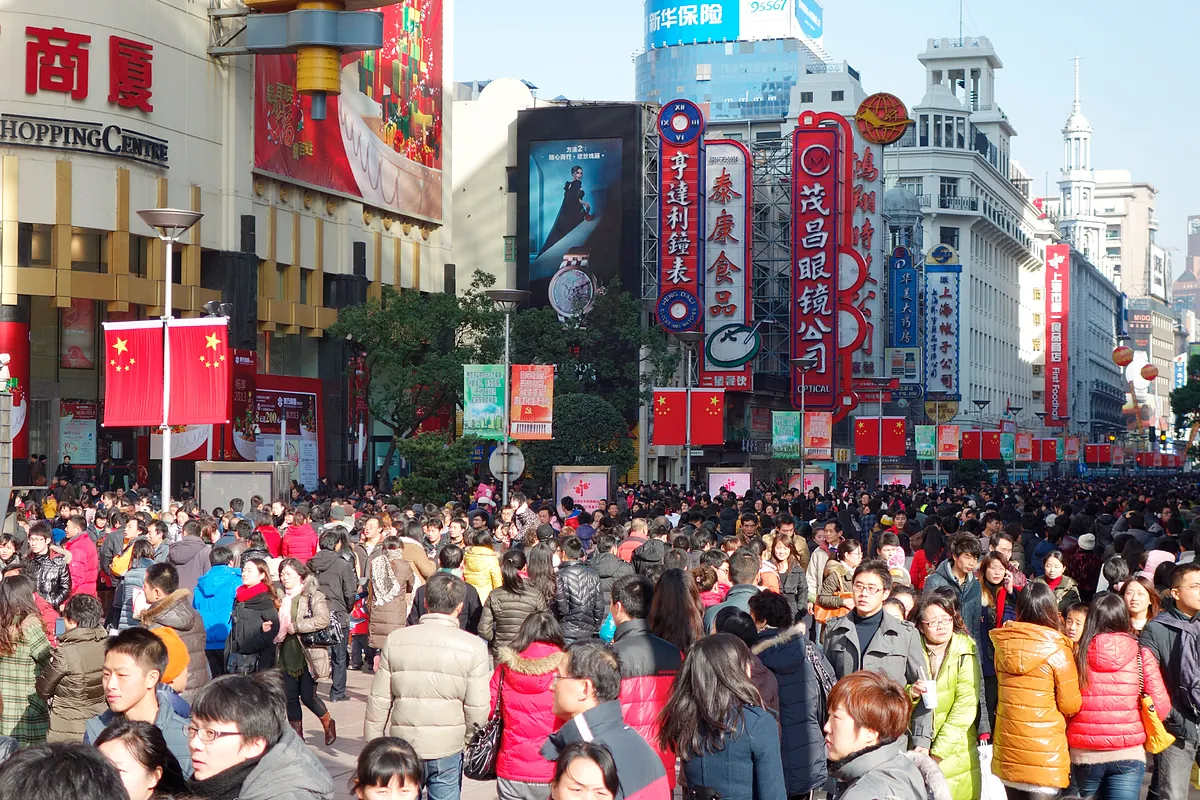
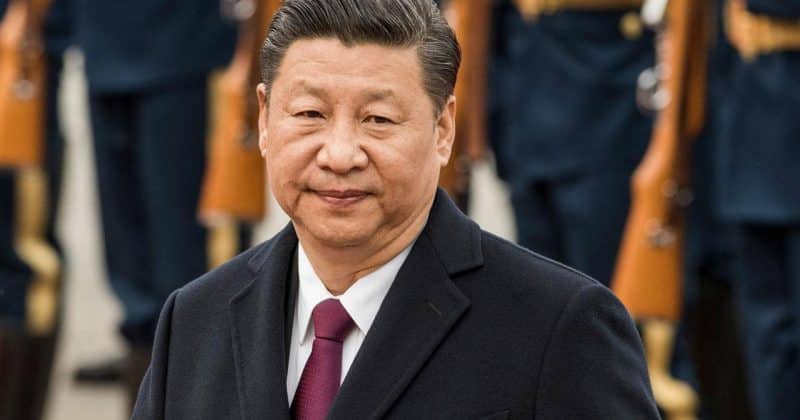
At a meeting of Chinese officials President Xi Jinping outlined the main driver of growth for 2026: domestic demand. Find out more here
TL;DRAI
China's retail sales fell negative in May; investment down 4.1% year-to-date. Xi's 2026 domestic-demand strategy is failing. Property collapse and weak consumption leave few stimulus levers; exports (up 19%) trigger trade tensions. Tech leaders should brace for reduced Chinese enterprise spending.
1,413 words~6 min read