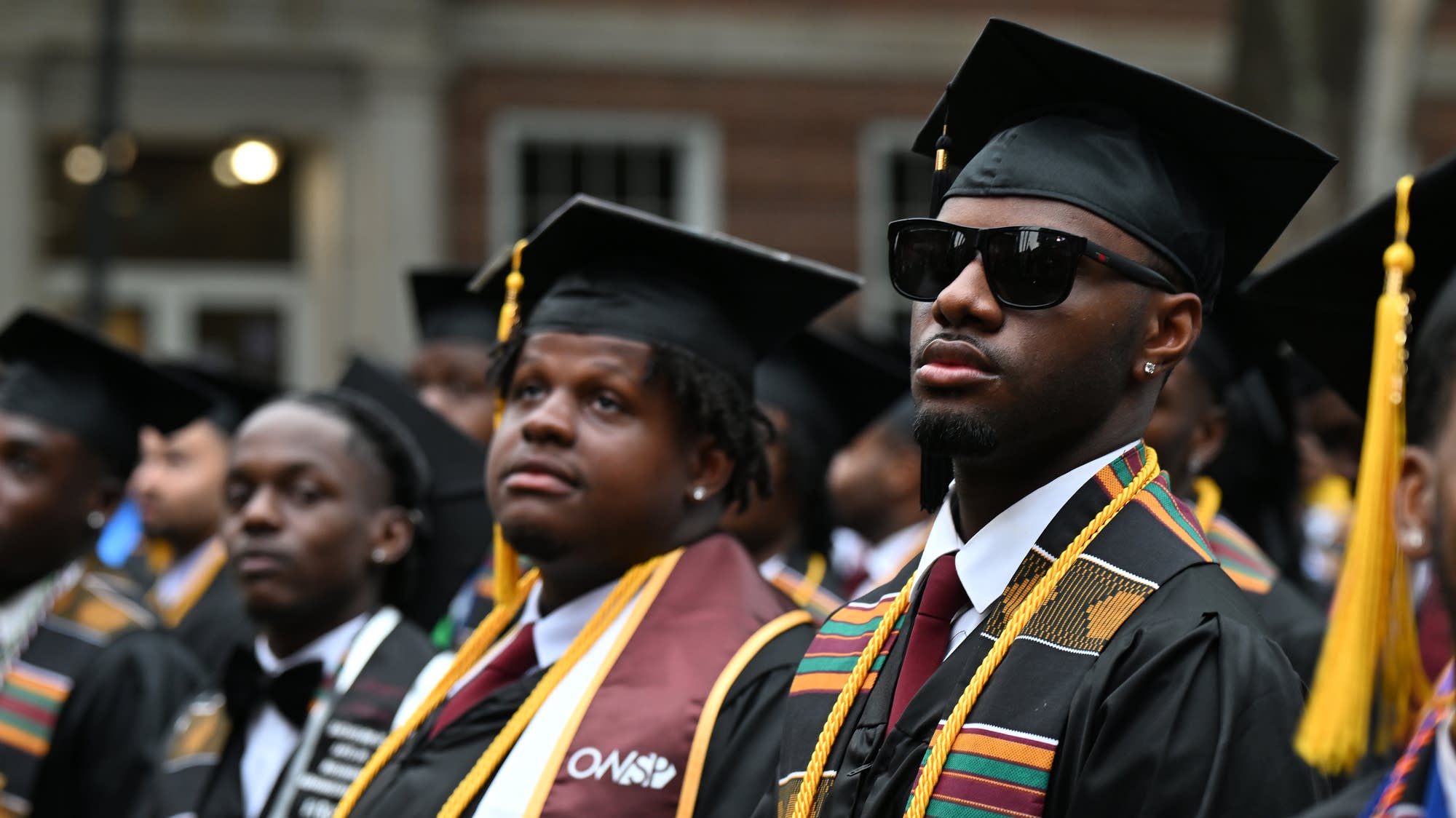
In 2024, the percentage of Black adults in the U.S. over the age of 25 who’d earned a bachelor's degree — or a higher credential — hit nearly 28%. That’s almost double what it was in the year 2000, according to an analysis of government data released by the Pew Research Center earlier this year. For decades after emancipation, there was an active movement to keep Black people uneducated. “Historically, we purposely created policies to stop Black people from going to college, and in more recent decades, we had taken the steps to actually lessen the impact of those historical policies,” said Dominique Baker, an associate professor at the University of Delaware. That includes the passage of the Civil Rights Act, which provided protections against discrimination, said Baker. “And it takes a while for that to show up, and so that is why we start seeing much higher attainment in recent decades.”But in the past few years, there have been changes in education policy. In 2023, the Supreme Court ruled that colleges can no longer legally consider race in admissions. Now, schools such as Johns Hopkins and MIT have fewer Black students enrolling.Both Texas and Florida have banned DEI programs at public colleges, and Jordan Nellums, a higher education senior policy associate with the Century Foundation, said schools elsewhere have rolled them back — and that leaves students with less mentorship and support. “They may end up thinking that college isn't for them,” he said.These programs are designed to help students succeed, Nellums added, and he called their elimination a potential disaster for Black educational attainment.
The number of degree-holding Black adults doubled 2000-2024. Will the anti-DEI era change that trend?
As states ban and colleges roll back DEI programs, Black students are left with less mentorship and support.
TL;DRAI
Black bachelor's degree attainment doubled from 14% (2000) to 28% (2024). Supreme Court admissions ban and state DEI rollbacks are now reversing this trend, reducing Black enrollment at top universities and signaling a shrinking tech talent pipeline.
266 words~1 min read