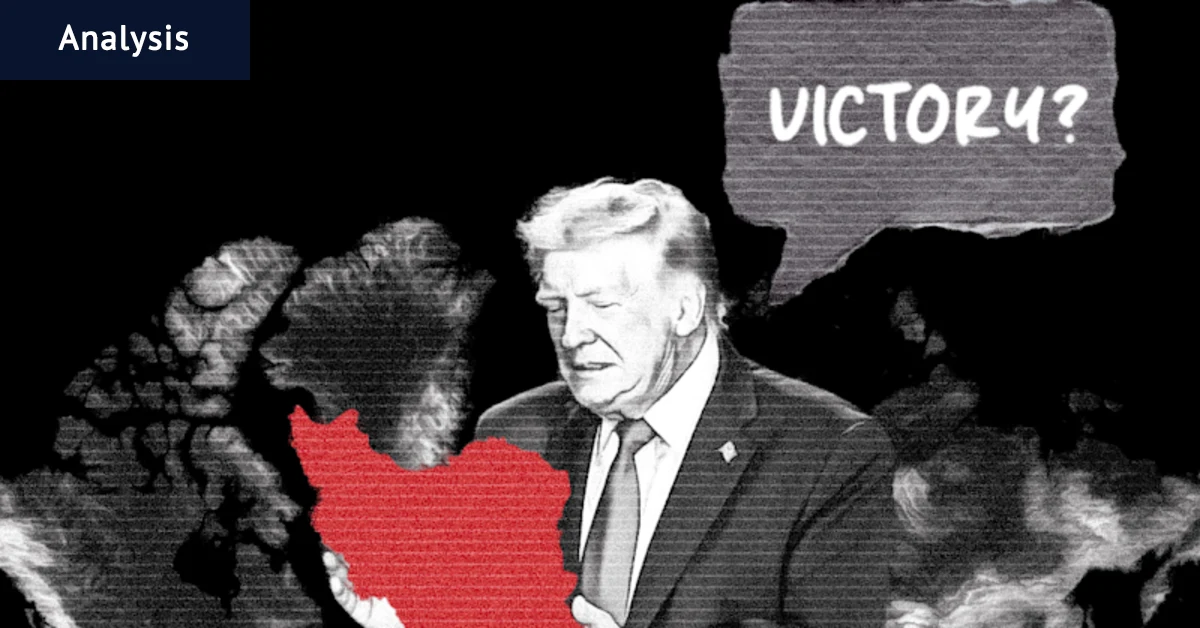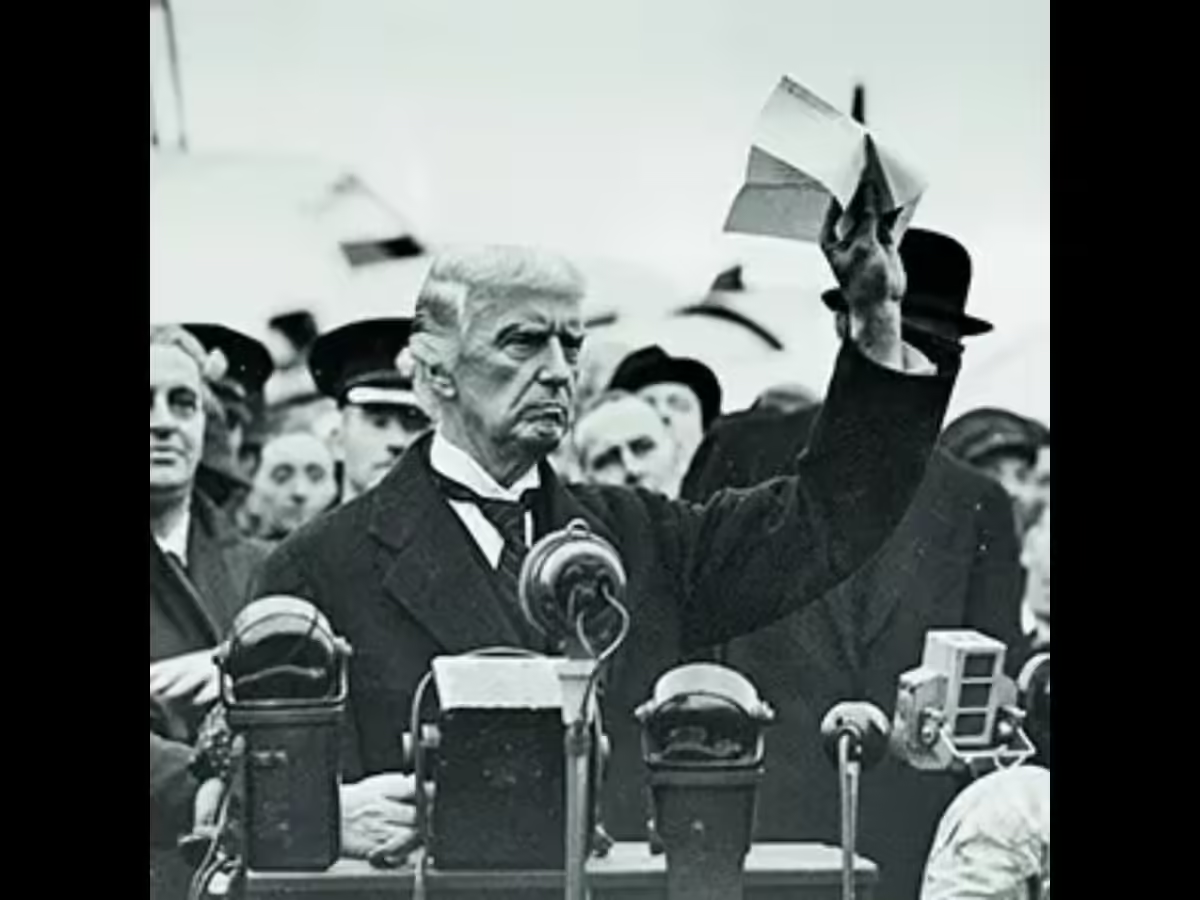
SynopsisDonald Trump's approach to Iran is questioned, contrasting him with historical leaders like Churchill and Wilson. Despite signing a significant MoU, the US president appears more focused on projecting victory than achieving it. The abrupt cancellation of US-Iran talks, ostensibly due to regional conflict, hints at deeper strategic concerns, possibly echoing past appeasement fears.New world order confirmed by US lossThis is not Winston Churchill that we're dealing with. Thus spake Donald Trump about Keir Starmer in March after the Brit PM refused to allow bases for US-Israel strikes on Iran. Three months on, after signing the 'new Treaty of Versailles' - the 14-pt MoU earlier signed by Trump's Iranian counterpart Masoud Pezeshkian - on Wednesday, the non-descriptor certainly applies to the US president.Never mind Winston, Trump's not much of a (Woodrow) Wilson either. The 28th US president (unsuccessfully) championed multilateralism and 'peace without victory' in 14 points advocating for a 'peace without victory' in 1918 to end WW1. The 47th US president is just keen to come across as winner in the US-Iran sweepstakes, even though facts suggest anything but that. The abrupt cancellation of start to Iran-US negotiations - No. 13 in the MoU - scheduled at Obburgen, Switzerland, on Friday, was ostensibly because Hezbollah and Israel - neither party to US-Iran peace plans - traded attacks in Lebanon. But the real reason may lie elsewhere. Someone in his team may have reminded Trump of the 1938 Munich Agreement. There, another Brit PM, Neville Chamberlain, had waved a piece of paper and declared 'peace for our time' - only to be remembered for appeasing Hitler. A comparison with Chamberlain wouldn't have looked good before negotiations with Iran - or midterms with Americans.Whichever way one spins it, Iran has come out on top in the war. The US is no longer even looking the global policeman many, non-Americans included, desperately hoped it still was. Multipolarity looks like the new 'law and order' in town. So, the US' diminished role shouldn't be seen as the end of world order but a new shuffle of cards - where 'folding' may not always be a smart option any more. ...moreElevate your knowledge and leadership skills at a cost cheaper than your daily tea.Subscribe Now
Avoiding 'Munich' after versailles? - The Economic Times
Donald Trump's approach to Iran is questioned, contrasting him with historical leaders like Churchill and Wilson. Despite signing a significant MoU, the US president appears more focused on projecting victory than achieving it. The abrupt cancellation of US-Iran talks, ostensibly due to regional conflict, hints at deeper strategic concerns, possibly echoing past appeasement fears.
TL;DRAI
Trump ha sottoscritto un MoU 14-punti con l'Iran ma cancellato i negoziati in Svizzera, evitando il parallelo con Chamberlain nel 1938. Il declino del ruolo USA globale e l'emergenza di multipolarity impattano compliance export, partnership tech internazionali e stabilità budget IT corporate.
371 words~2 min read