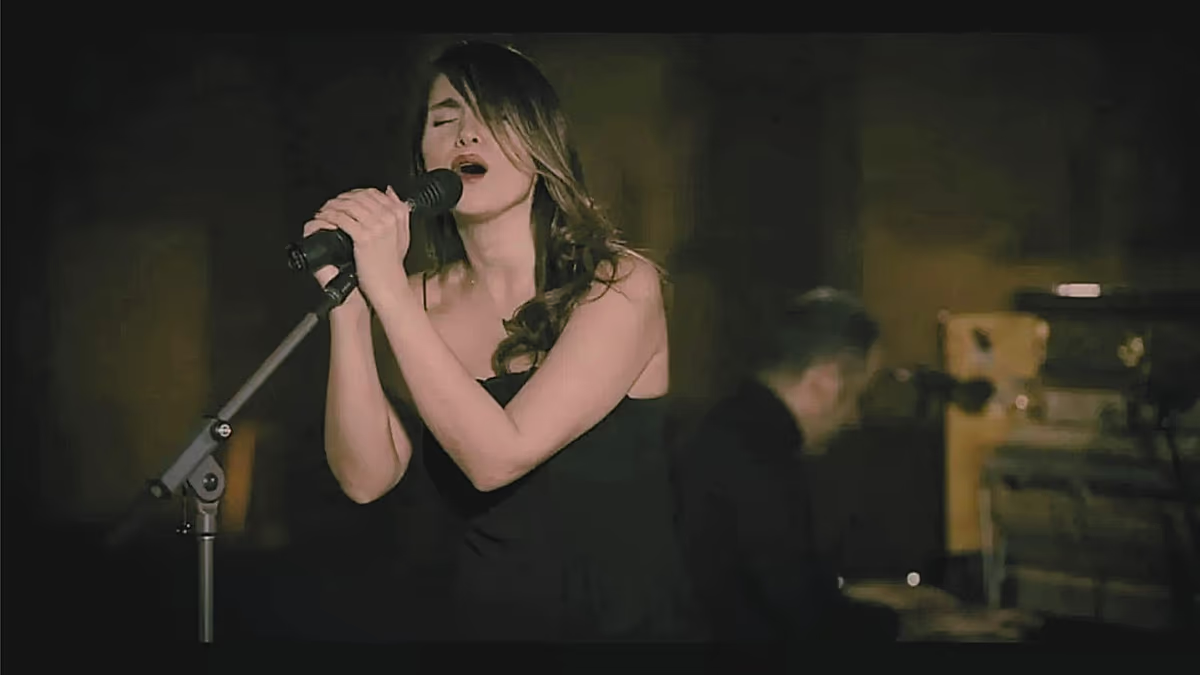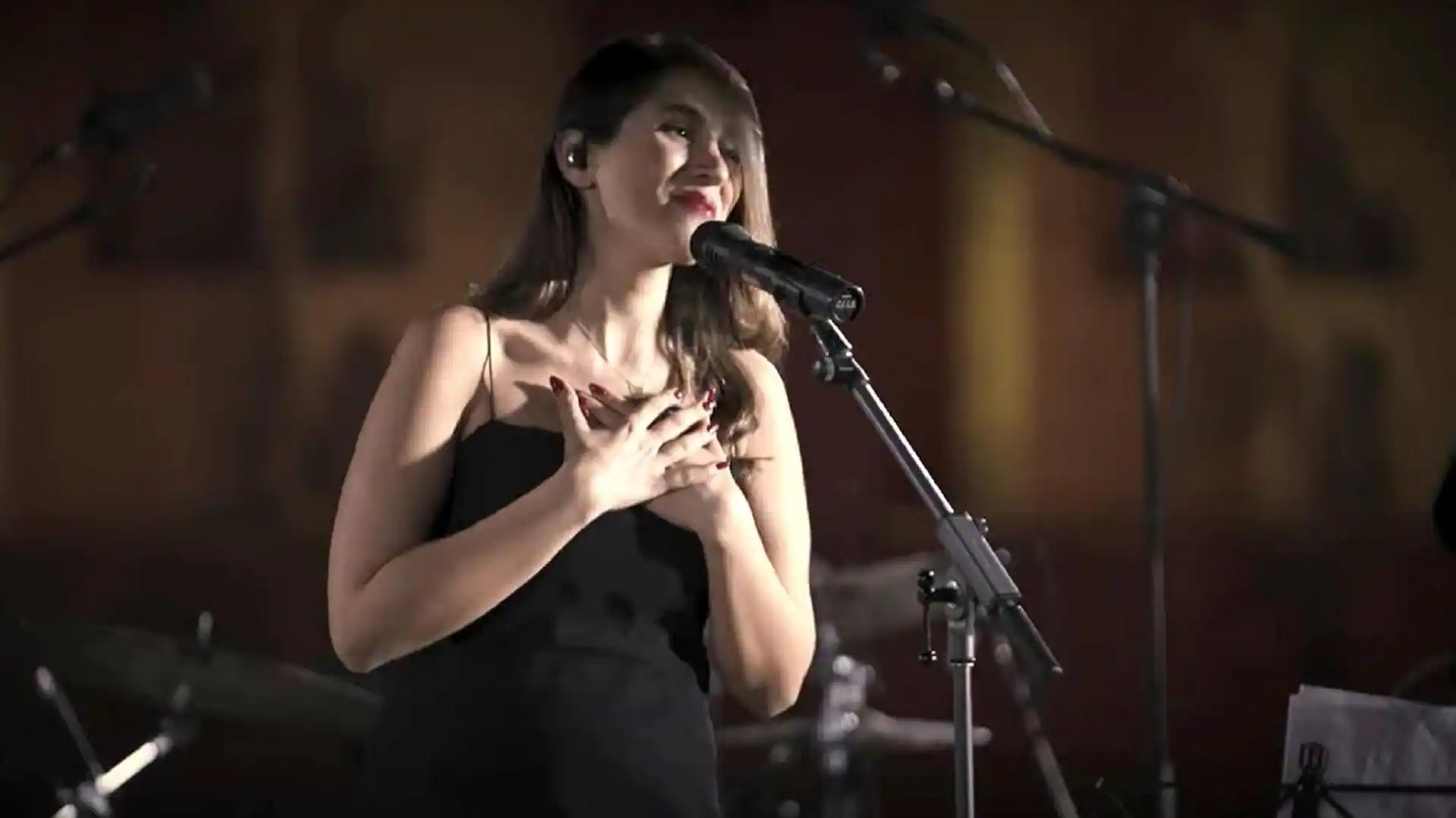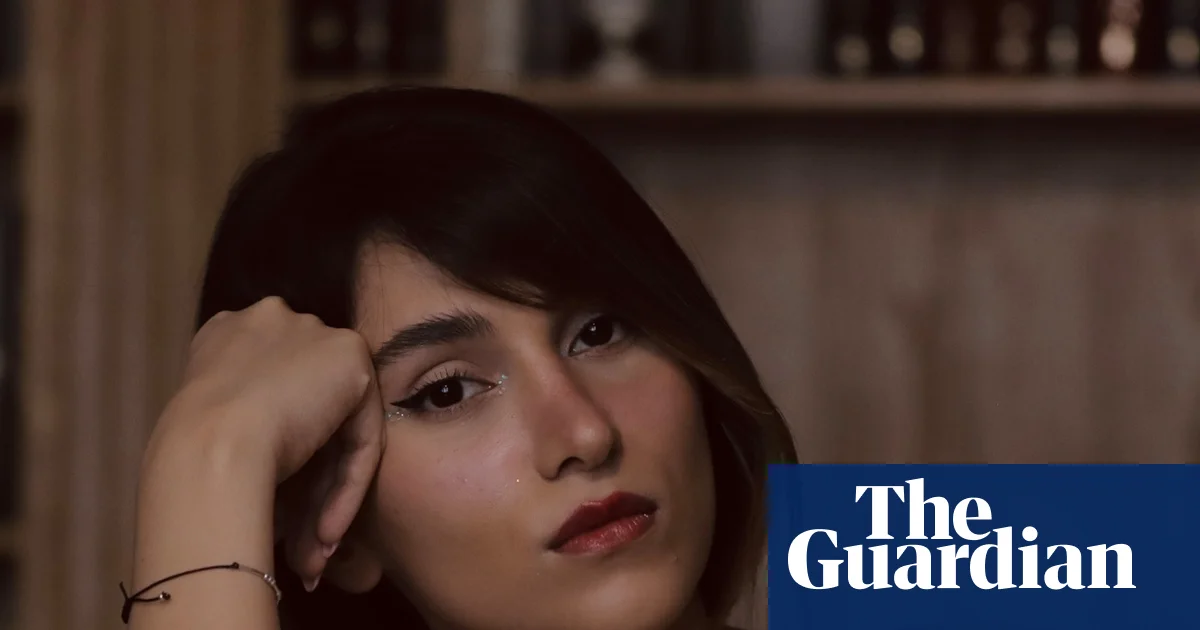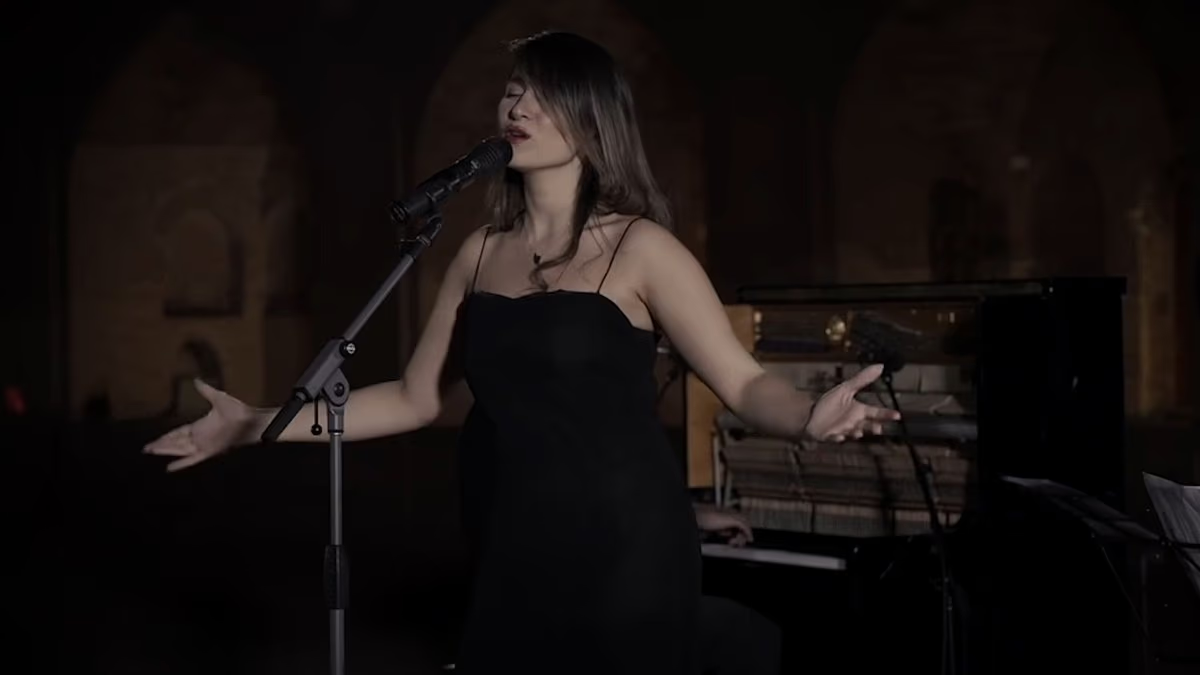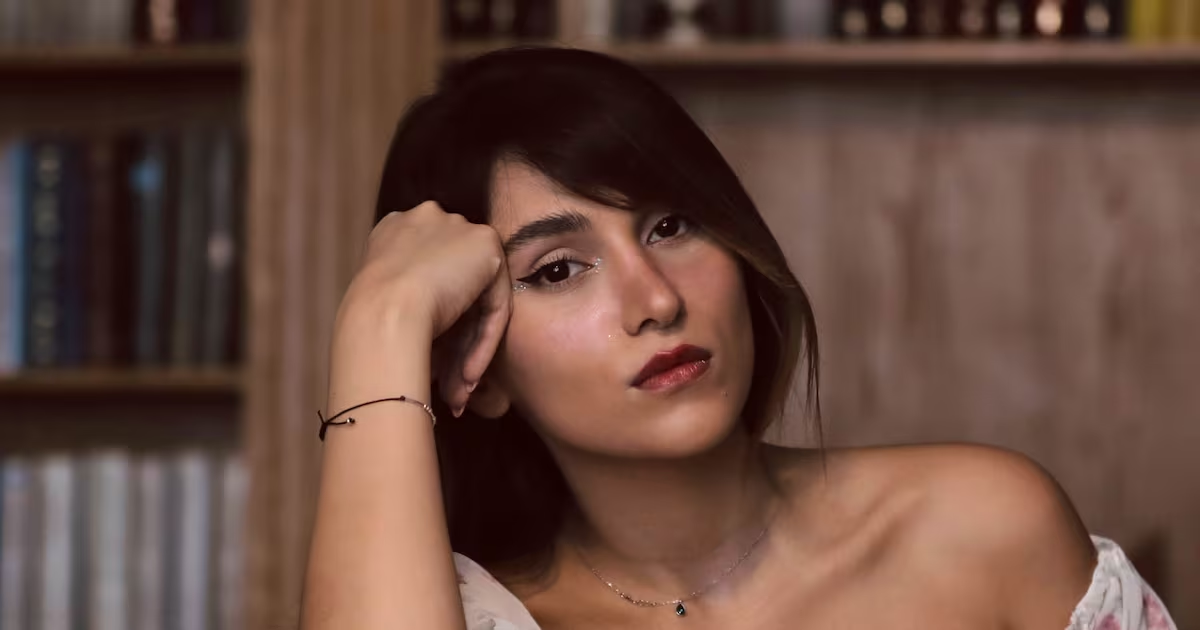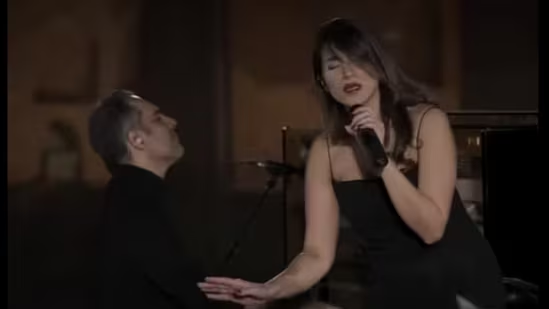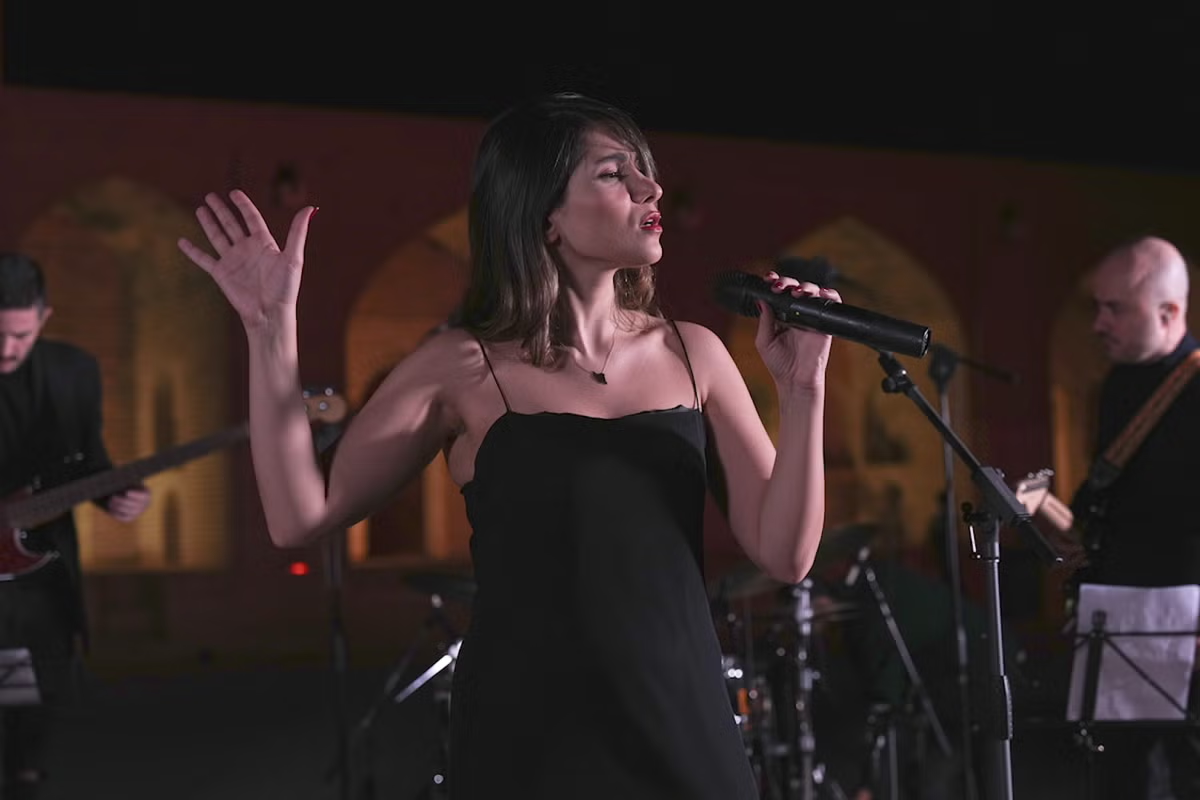
Iranian singer Parastoo Ahmadi has been sentenced to 74 lashes for performing without a hijab during a live-streamed YouTube concert in 2024, human rights groups have said. Ahmadi, 29, and eight members of her production team including musicians have been sentenced for the performance, according to court documents from the criminal court of Qom province seen by rights activists. The group have been banned from leaving the country and engaging in artistic activities for two years. The charges against them included offending public decency and the publication of “vulgar and immoral content” online. “Ahmadi’s punishment of 74 lashes for merely singing and appearing without a hijab is yet another reminder that human rights conditions in Iran have not changed, despite the Iranian authorities’ wartime propaganda campaign aimed at improving their image,” said Bahar Ghandehari, the director of advocacy at the US-based Center for Human Rights in Iran. Tahmineh Monzavi took pictures of Parastoo Ahmadi and has also been sentenced (Tahmineh Monzavi)The singer was previously detained along with several musicians in December 2024 after she performed the song Az Khoone Javanane Catam, a patriotic song meaning “From the Blood of the Youth of the homeland”, without a hijab. The video racked up millions of views on YouTube. “Singing, performing music and producing or disseminating musical works by women are not criminalised under Iranian criminal law,” said Moein Khazaeli, a human rights lawyer. “Consequently, such activities cannot reasonably be construed as the “production, distribution or publication of obscene content.”Tahmineh Monzavi, who spoke to The Independent last month, took photos of the concert and has also been given the same sentence along with the band and production team.Parastoo Ahmadi and eight other artists have been banned from leaving the country and punished for ’vulgar and immoral content’ (Tahmineh Monzavi)Monzavi was previously imprisoned at the age of 23 for taking photographs. The Tehran-based photographer’s images of drug addicts and prostitutes in the poorer parts of her city were deemed “dangerous to society” by the Iranian regime. She spent a month in solitary confinement.Iranians have largely lived under an internet blackout since US-Israeli strikes on 28 February sparked war in the region. On Tuesday 26 May, Iran’s internet connection to the outside world was partially restored after 88 days, according to online watchdog NetBlocks. After an agreement was reached between Iran and the US this week, president Donald Trump denied he had forced through the deal to end the war out of “desperation”. “We didn’t meet out of desperation, Iran did,” the US president wrote on Truth Social. “They are FINISHED! We’ll play out the 60 days. They get no money, not ten cents!”Trump listed off damage inflicted on Iran’s military and lashed out at those doubting his effectiveness as “stupid”. The US leader has faced criticism at home since unveiling an interim deal to end the war that includes an Iran recovery fund and sanctions relief.
Iranian singer sentenced to 74 lashes for performing without hijab - rights group
The 29-year-old and eight other musicians have been punished by the autocratic regime for sharing ‘vulgar and immoral content’
482 words~2 min read