For the better part of a decade, the semiconductor performance race had a clear winner. Nvidia’s GPUs dominated AI training so thoroughly that the company’s market cap ballooned past $3 trillion, and the word “chip” became almost synonymous with “graphics processor.” But a funny thing happened on the way to GPU hegemony: CPUs started mattering again.
The culprit is a shift in how AI actually gets used. Training a model is one thing, a massively parallel task that GPUs were born to handle. But running that model, the inference side, involves sequential decision-making that leans heavily on traditional processors. And as agentic AI systems gain traction, handling multi-step reasoning and real-world tasks, the humble CPU has found itself back in the spotlight.
The bottleneck nobody expected
Nvidia itself is making the case for why CPUs matter. Dion Harris from Nvidia stated in March 2026 that “CPUs are becoming the bottleneck” in AI workflows. That’s a remarkable admission from a company that built its empire on the idea that GPUs were the only chips that mattered for AI.
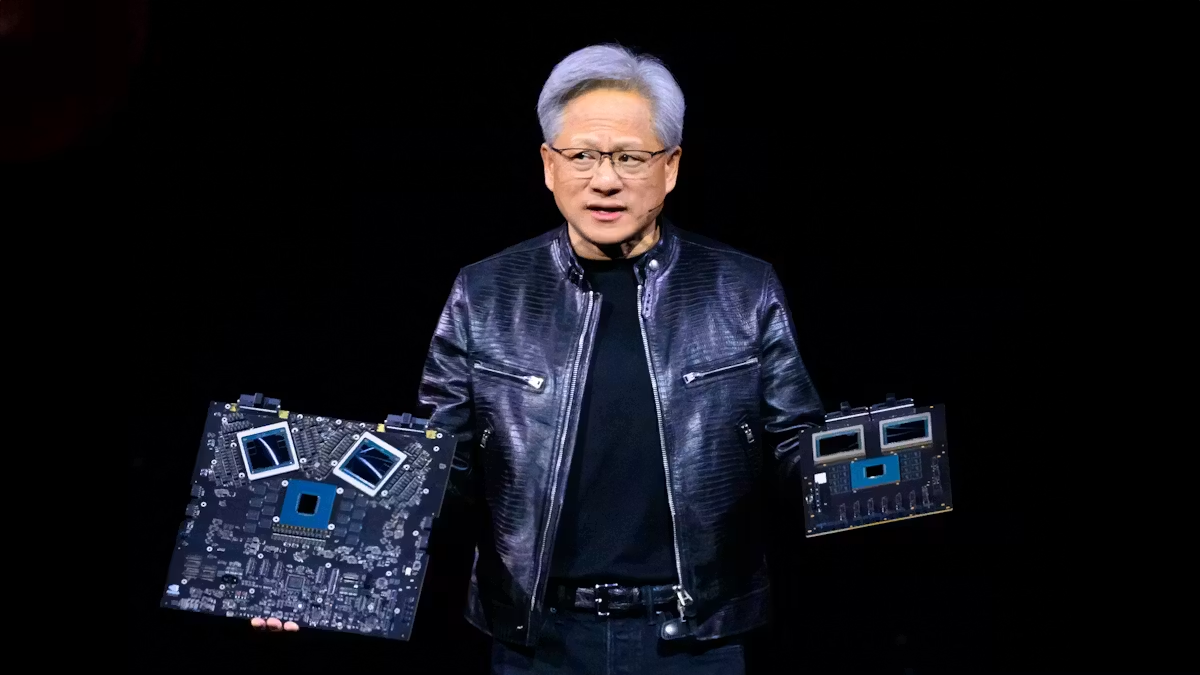
But Nvidia isn’t just diagnosing the problem. It’s selling the cure. The company has rolled out its Grace and Vera CPU lines, with the Vera chip specifically designed for inference and agentic AI workloads. Nvidia expects $20 billion in CPU revenue in 2026 from these offerings.