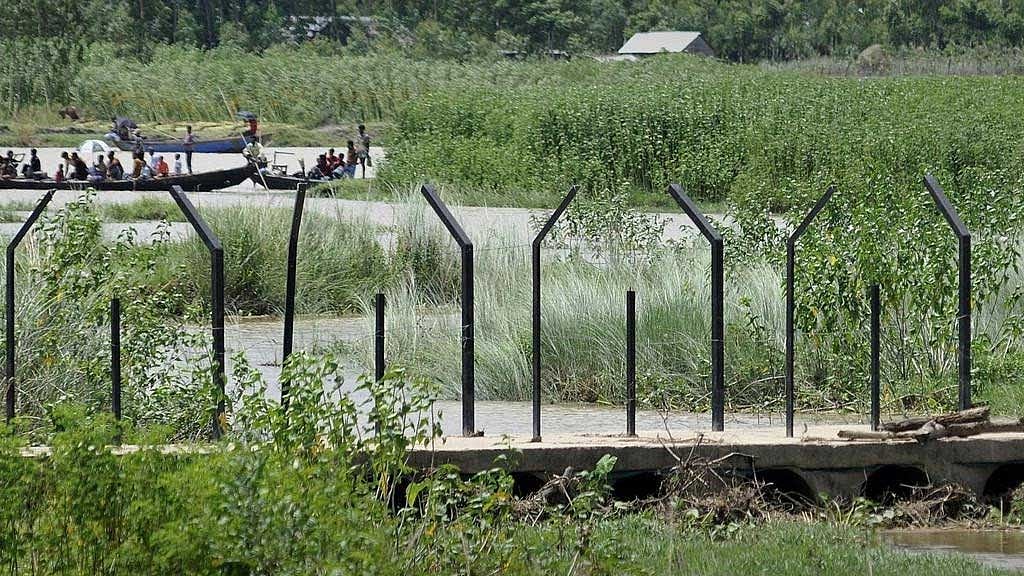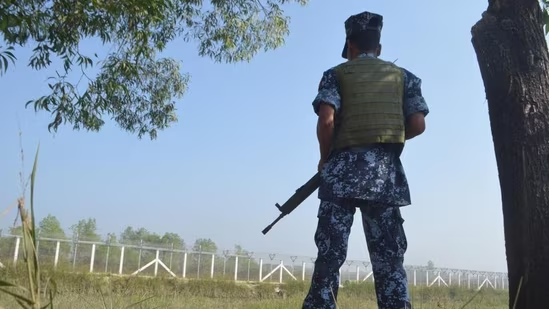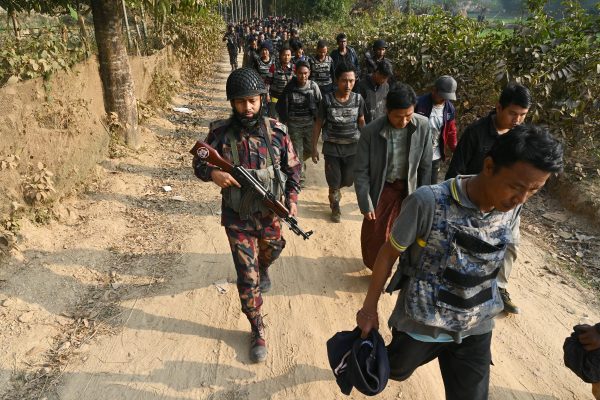
Bangladesh’s Home Minister Salahuddin Ahmed has announced plans to fence parts of the country’s 270-kilometer border with Myanmar. To understand why Dhaka has arrived at this point, one must look back to December 8, 2024, when the Arakan Army (AA) completed its capture of Maungdaw and assumed full control of northern Rakhine State’s border with Bangladesh.
For most international observers, the fall of Maungdaw marked a milestone in Myanmar’s civil war – another indication of the military junta’s shrinking territorial control.
For Dhaka, however, it meant the disappearance of effective Myanmar state authority along much of its southeastern frontier. Today, Bangladesh no longer faces a functioning state across large stretches of that border.
The Myanmar government retains little meaningful presence in northern Rakhine. In its place stands the AA, an ethnic armed organization that now exercises de facto control over much of Rakhine State, administers territory, collects taxes, regulates movement, and increasingly performs functions characteristic of a governing authority.
This transformation has upended Bangladesh’s border security environment — and exposed the fragility of the institutions that once managed it.