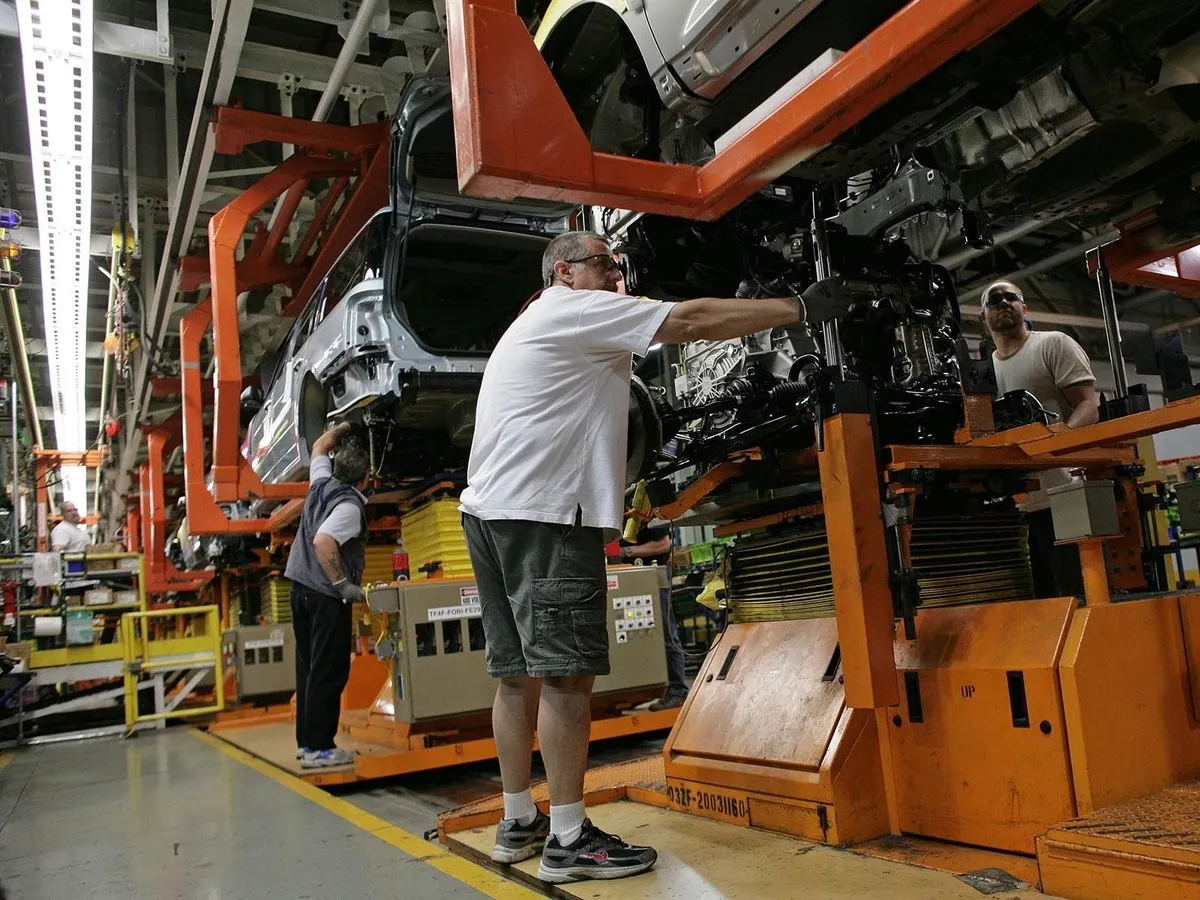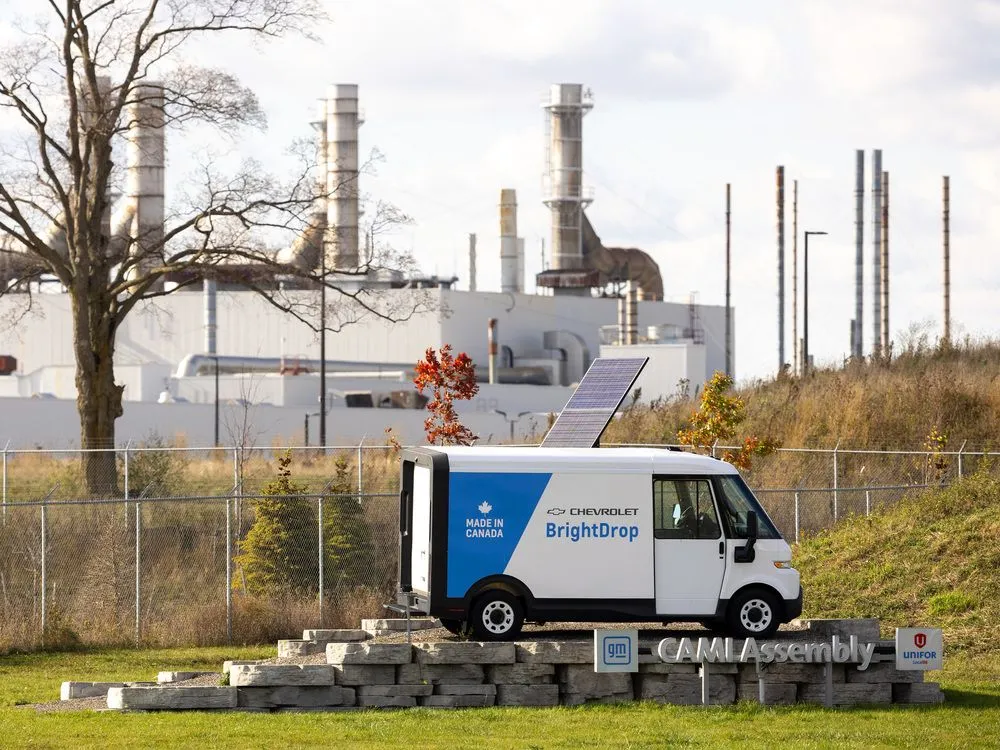
Skip to Content News Archives Economy Energy Oil & Gas Renewables Electric Vehicles Mining Commodities Agriculture Real Estate Mortgages Mortgage Rates Finance Banking Insurance Fintech Cryptocurrency Work Wealth Smart Money Wealth Management Investor Personal Finance Family Finance Retirement Taxes High Net Worth FP Comment Executive Women Puzzmo Newsletters Financial Times Business Essentials More Innovation Information Technology FP500 Podcasts Small Business Lives Told Tails Told Shopping Financial Post Store Obituaries Place a Notice Advertising Advertising With Us Advertising Solutions Postmedia Ad Manager Sponsorship Requests Classifieds Place a Classifieds ad Working Profile Settings My Subscriptions Saved Articles My Offers Newsletters Customer Service FAQ News Economy Energy Mining Real Estate Finance Work Wealth Investor FP Comment Executive Women Puzzmo Newsletters Financial Times Business Essentials HomeTransportationAutosDetroit automakers, union begin contract talks with future of Canada's auto industry on the lineTrump’s broader push to attract manufacturing investment south of the border presents a challenge. You can save this article by registering for free here. Or sign-in if you have an account.A worker is shown on the assembly line at the Stellantis Windsor Assembly Plant on Thursday, May 28, 2026. Photo by Dan JanisseFord Motor Co. and Unifor on Monday will begin what could be the most consequential round of bargaining with the Detroit Three automakers.Subscribe now to read the latest news in your city and across Canada.Exclusive articles from Barbara Shecter, Joe O'Connor, Gabriel Friedman, and others.Daily content from Financial Times, the world's leading global business publication.Unlimited online access to read articles from Financial Post, National Post and 15 news sites across Canada with one account.National Post ePaper, an electronic replica of the print edition to view on any device, share and comment on.Daily puzzles, including the New York Times Crossword.Subscribe now to read the latest news in your city and across Canada.Exclusive articles from Barbara Shecter, Joe O'Connor, Gabriel Friedman and others.Daily content from Financial Times, the world's leading global business publication.Unlimited online access to read articles from Financial Post, National Post and 15 news sites across Canada with one account.National Post ePaper, an electronic replica of the print edition to view on any device, share and comment on.Daily puzzles, including the New York Times Crossword.Create an account or sign in to continue with your reading experience.Access articles from across Canada with one account.Share your thoughts and join the conversation in the comments.Enjoy additional articles per month.Get email updates from your favourite authors.Create an account or sign in to continue with your reading experience.Access articles from across Canada with one accountShare your thoughts and join the conversation in the commentsEnjoy additional articles per monthGet email updates from your favourite authorsSign In or Create an AccountorThree years ago, the union representing nearly 19,000 Canadian auto workers secured historic wage gains. This time around, it will be attempting to protect the future of Canadian manufacturing amid United States tariffs, the ongoing review of the Canada-U.S.-Mexico Agreement (CUSMA) and pressure on automakers to move production south of the border.“The landscape is a very challenging one for the union to be collective bargaining,” said Charlotte Yates, president of the Automotive Policy Research Centre and former president of the University of Guelph. “You’ve got headwinds from the United States with tariffs, with opposition from the president of the United States, opposition to CUSMA.”Get the latest headlines, breaking news and columns.By signing up you consent to receive the above newsletter from Postmedia Network Inc.A welcome email is on its way. If you don't see it, please check your junk folder.The next issue of Top Stories will soon be in your inbox.We encountered an issue signing you up. Please try againJim Stanford, economist and director of the Centre for Future Work, said it’s like having a three-sided bargaining table this time around.The problem is that Donald Trump also puts pressure on the automakers to relocate production“The company on one side, the union on the second side and Donald Trump on the third side,” he said. “He is very much the elephant in the room in these talks.”Adding to the pressure are two Ontario assembly plants sitting idle: General Motors Co.’s CAMI Assembly plant in Ingersoll, Ont., and Stellantis NV’s assembly plant in Brampton, Ont. Nearly 6,500 jobs have been lost across Canada’s auto manufacturing sector since last February, according to Unifor.Ford was selected as Unifor’s lead bargaining target because of the automaker’s continued commitment to Canadian operations.“Ford has a couple of big Canadian launches coming up,” Stanford said, pointing to new Super Duty pickup production in Oakville, Ont., and the launch of a new engine program at Essex Engine Plant. General views of the Ford Motor Company World Headquarters on May 13, 2026 in Dearborn, Michigan. Photo by AaronP/Bauer-Griffin /GC ImagesUnder Unifor’s pattern bargaining system, an agreement reached with Ford would then establish a framework for subsequent talks with GM and Stellantis.“Unifor picks a company where they think they can get the best deal, but that deal has to be extended to the rest of the industry,” Stanford said.While wages and benefits remain important, analysts expect job security and future product commitments to dominate the talks.“They’re also going to be trying to get some commitment to their footprint in Canada to make sure that they protect jobs,” Yates said. “The question will be what happens when they start bargaining with Stellantis and when you’ve got two idle plants and you’ve got hundreds of workers on layoff.”Stanford expects Unifor to seek commitments from Stellantis and GM tied to their currently idle facilities and laid-off workers.The whole trade environment is so unpredictable because of the presidentU.S. tariffs are also expected to loom over negotiations. A 25 per cent tariff on vehicles assembled outside the U.S. remains in place, while CUSMA-compliant auto parts currently remain exempt.“Everybody is assuming tariffs in one form or another are here to stay in some capacity,” Yates said.Trump’s broader push to attract manufacturing investment south of the border presents another challenge.“The problem is that Donald Trump also puts pressure on the automakers to relocate production,” Yates said. “That’s been a bigger issue and that’s not just tariffs; that’s political power being used to force those companies to relocate production to the United States, which they are all doing. That’s a huge risk for Canada.” Cars exit the General Motors’ CAMI auto assembly plant in Ingersoll, Ontario, on October 24, 2025, a few days after the company announced it will stop producing the BrightDrop electric delivery van (Photo by Geoff Robins / AFP) Photo by GEOFF ROBINS /AFP via Getty ImagesThe uncertainty extends to whether CUSMA will be renewed, which analysts say will shape investment decisions for years.But Yates does not expect Unifor to delay bargaining while waiting for clarity on trade negotiations with the U.S.“They can’t possibly wait because it’s just too unpredictable,” she said. “The whole trade environment is so unpredictable because of the president.”Stanford also said automakers and the union will have little choice but to negotiate amid uncertainty.“To what extent can these negotiations nail down a bit of stability amidst Trump’s chaos and hopefully nail down a long-run future for those Canadian plants?” he said.It helps to have governments behind youDespite those challenges, both say Canada still possesses significant advantages that Unifor will use as leverage.“We have the best productivity and the best quality, and compared to America, we’ve got a labour cost advantage,” Stanford said. “These are fundamental economic reasons why the industry should be here.”Governments are also expected to play a larger role than in past bargaining rounds. Ottawa’s new national auto strategy designed to encourage manufacturers to maintain Canadian production levels could strengthen the union’s hand.“It helps to have governments behind you,” Yates said. “Let’s see how steadfast the Carney Liberal government is in backing up Unifor’s demands for a commitment around footprints.”Talks between Unifor and the Detroit Three automakers will begin Monday in Toronto. The current collective agreements expire on Sept. 20. Join the Conversation This website uses cookies to personalize your content (including ads), and allows us to analyze our traffic. Read more about cookies here. By continuing to use our site, you agree to our Terms of Use and Privacy Policy.
Detroit automakers, union begin contract talks with future of Canada's auto industry on the line
Unifor sits down with Ford Motor Co. on Monday to begin what could be most consequential round of bargaining with Detroit Three automakers.
1,351 words~6 min read