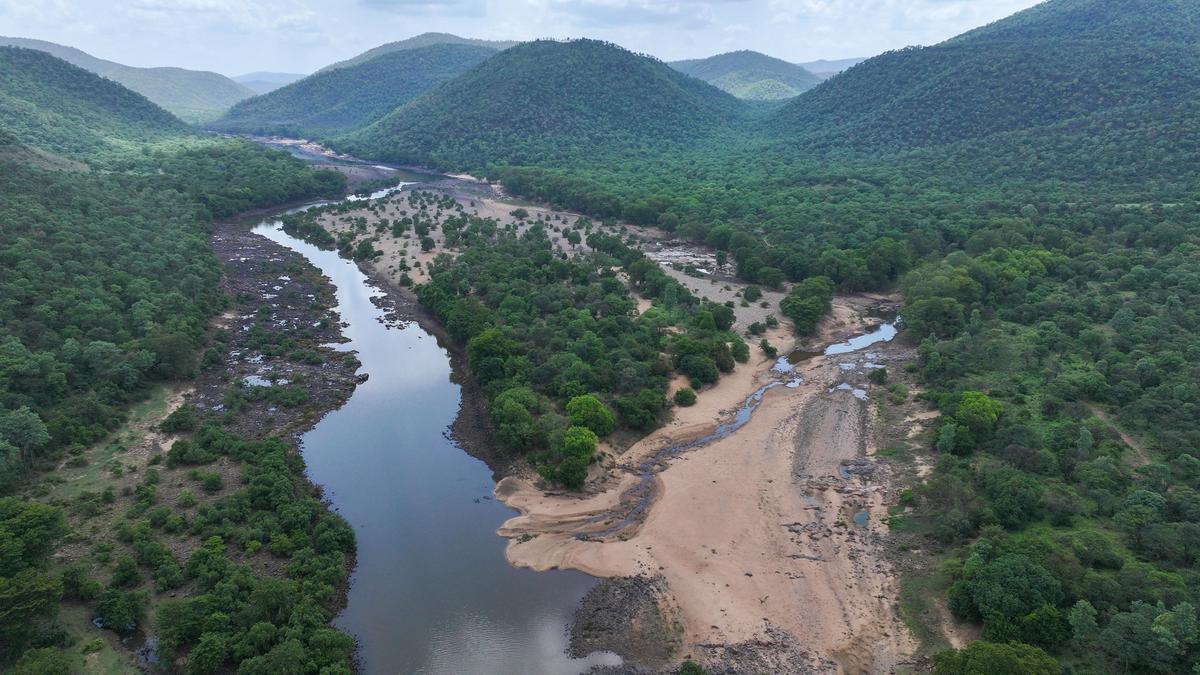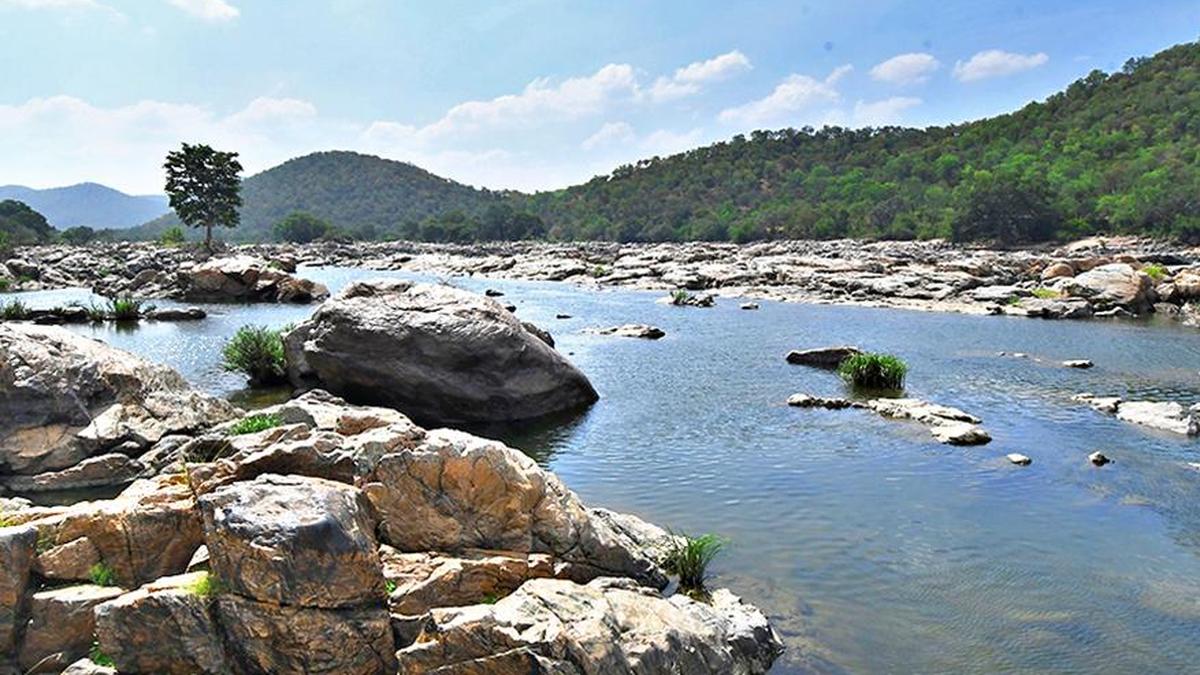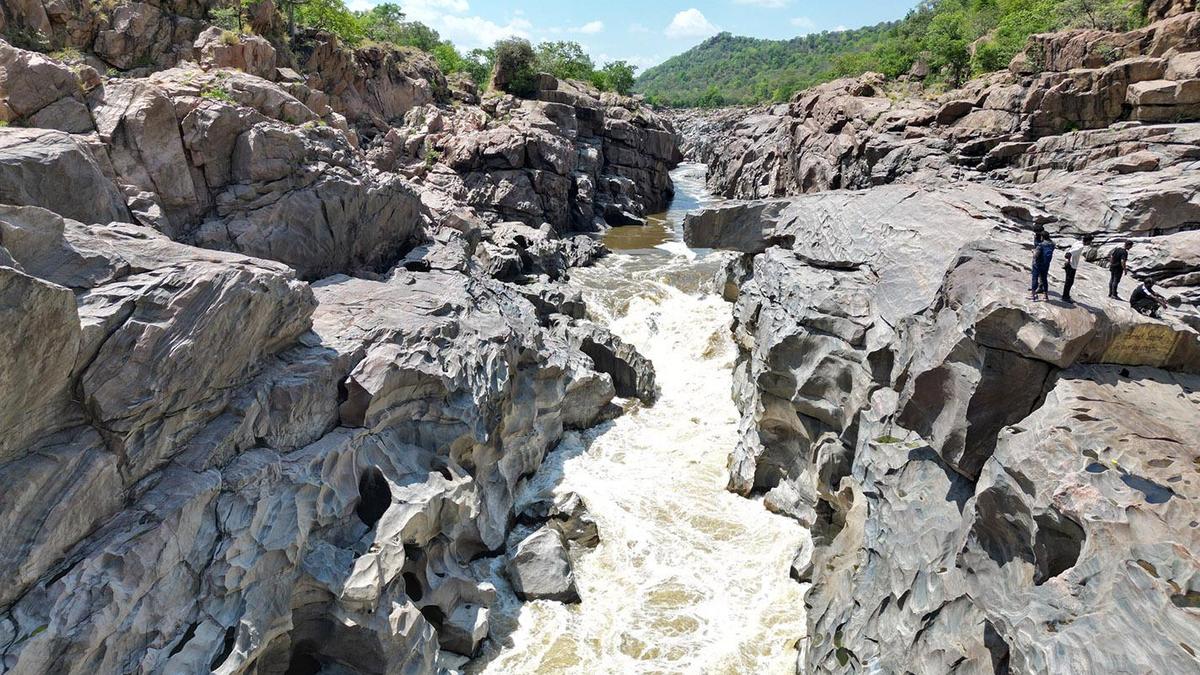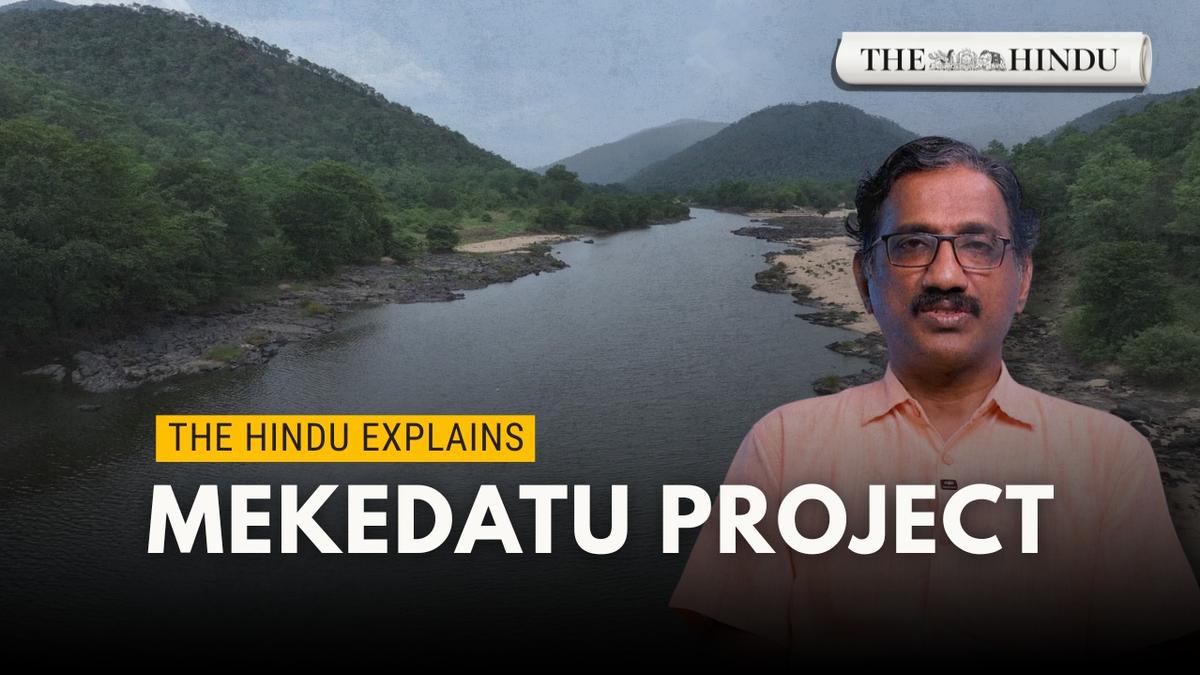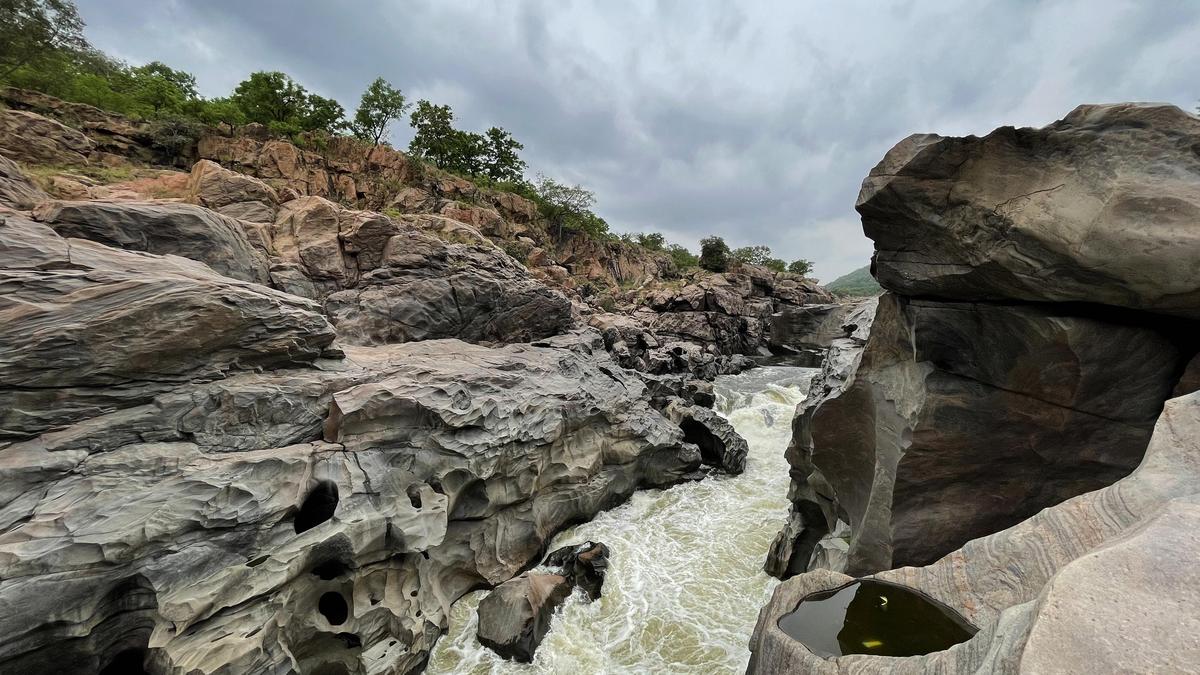
The Cauvery flows through a deep and narrow gorge at Mekedatu, near Kanakapura, in Ramanagara district of Karnataka. Tamil Nadu argues that Mekedatu “does not find any place” in the list of 28 projects considered by the Cauvery Water Disputes Tribunal for irrigating a total of about 18.85 lakh acres in Karnataka.
| Photo Credit: File Photo
The Tamil Nadu government’s demand for a new tribunal to go into the Mekedatu project centres around the argument that the project is “inadmissible” and “impermissible” as it is beyond the scope of the 2007 final award of the Cauvery Water Disputes Tribunal (CWDT) and the Supreme Court’s judgment of 2018.The State government’s communication, sent to the Union government in March this year (when the DMK was in office), points out that Mekedatu “does not find any place” in the list of 28 projects specified by the CWDT’s report in volume IV (pages 173-175) while discussing project-wise details of irrigated area in Karnataka, or in statements of the existing, under-construction, and proposed reservoirs in the neighbouring State (pages 98-100, volume III). The 28 projects were considered by the CWDT to irrigate a total of about 18.85 lakh acres in Karnataka. It was clear, according to Tamil Nadu, that the CWDT and the Supreme Court considered “only the projects required for the permitted utilisation”.As no new project other than those listed in the CWDT’s decision, as affirmed by the court, could be considered, the proposed executive action of Karnataka in taking up the Mekedatu project “would clearly be a water dispute” as contemplated under Section 2(c), read with Section 3, of the Inter-State River Water Disputes Act, 1956, the lower riparian State argued. While Section 2(c ) gives the definition for the term ‘water dispute’, Section 3 talks of complaints sent by the States to the Union government on water disputes.The communication, called “complaint” in legal parlance, said Karnataka’s claim of “exclusive right” to the water generated in its territorial limits of the Cauvery basin and “unilaterally proposing” to construct any new reservoir was “clearly impermissible”. The lower riparian State also argued that Karnataka “is not permitted to take any action, which will prejudicially affect” the flows, including the flows from the intermediate or uncontrolled catchment, between Kabini and Billigundulu, which is the point of measuring the flows on the inter-State border, and Krishnaraja Sagar and Billigundulu, which were considered by the Tribunal while making the allocation to Tamil Nadu. The contribution of the catchment was assessed as 80 thousand million cubic feet (TMC) on an average. This was one of the components of water to be delivered by Karnataka at the inter-State point. Any structure to impound the flows would be “in violation” of the court’s judgement.However, there has been no reply to Tamil Nadu’s communication. It was for these reasons, “a dispute has thus arisen on account of unilateral action of Karnataka in taking up the project, which is impermissible and amounts to dispute falling under Section 2(c), read with Section 3, of the Act, 1956”, Tamil Nadu concluded. Apart from requesting the Union government to set up a tribunal under Section 4 (constitution of tribunal) “at the earliest”, Tamil Nadu urged the Centre not to take any action on the Mekedatu project or any other new storage project across the Cauvery or its tributaries.On the legal position, a water expert explains that if the Central government is convinced that the water dispute cannot be settled by negotiations, it “shall, within a period not exceeding one year from the date of receipt of such request”, constitute a tribunal for the adjudication of the dispute. Published - June 19, 2026 09:10 pm IST