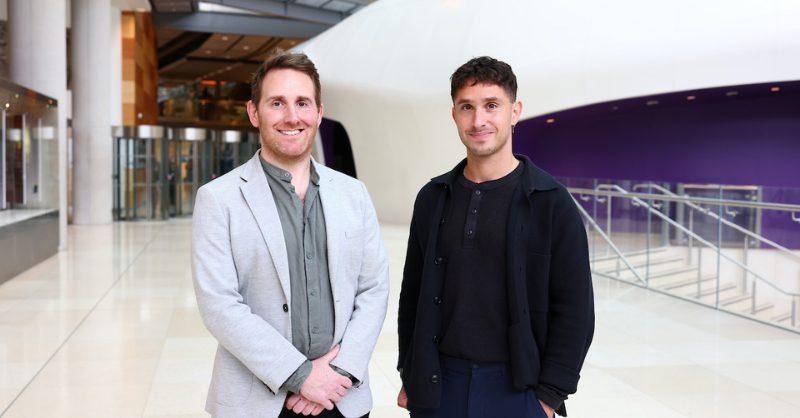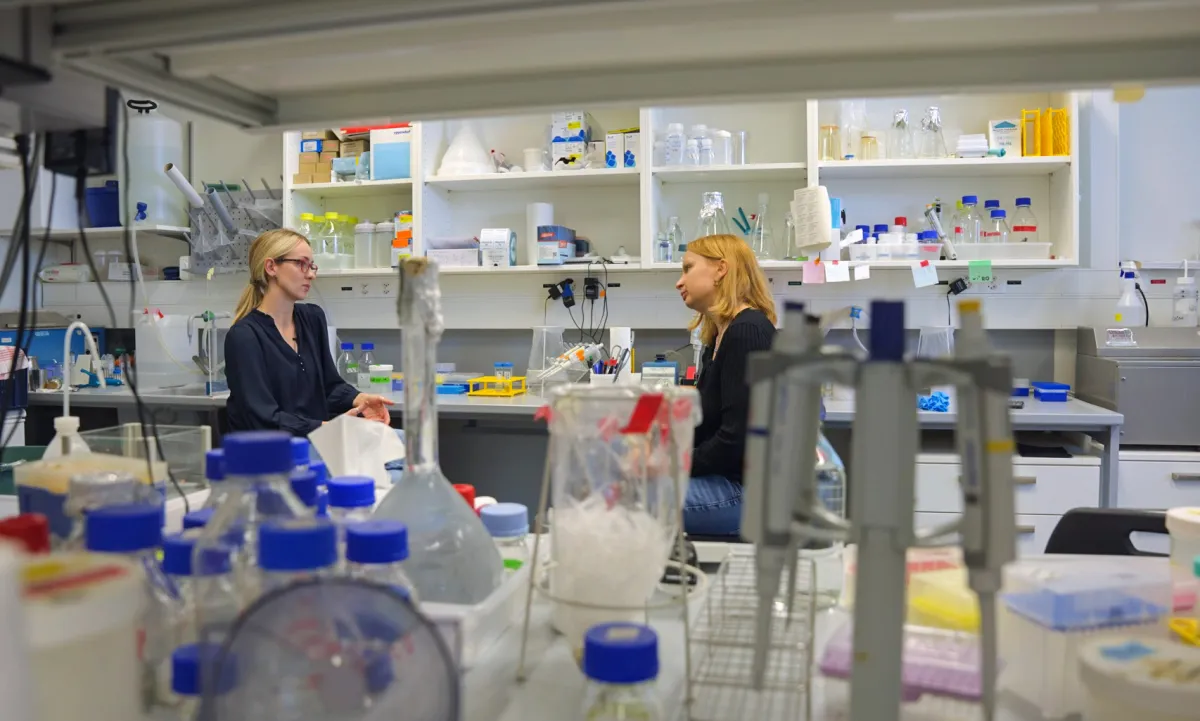
Supported by the EPFL Ignition Grant, three innovative projects, PolyDefine, Juturna Bio, and SwissIonics, are tackling some of the most pressing challenges in modern medicine. PolyDefine is developing safer, precision-engineered delivery systems for RNA therapeutics, while SwissIonics is creating advanced analytical tools to better understand and control RNA molecules. Complementing these efforts, Juturna Bio is pioneering a gene therapy approach aimed at restoring memory in Alzheimer’s patients. Together, these projects showcase cutting-edge advances across biotechnology and neuroscience, with the potential to transform the treatment of complex diseases.PolyDefineRNA therapeutics are one of the most exciting areas in drug development. While research on this new class of medicines started in the 1990s, it really came to the forefront during the COVID pandemic. Following this breakthrough, scientists want to use the same approach to treat a wider range of diseases – from cancers to genetic conditions. However, RNA is fragile and is destroyed if injected into the body. To overcome this, the RNA is encased in a tiny fat-based nanoparticle that carries it safely through the bloodstream to the cells and tissues of interest. This particle has a coating which stops the body attacking them too quickly. The standard coating – a polymer called polyethylene glycol (PEG) – can cause immune reactions in some patients and it’s not suitable for long-term or chronic treatments. Existing alternatives to PEG are chemically inconsistent, slowing down research and complicating the path to drug approval.The PolyDefine team, based in Professor Sandrine Gerber’s Group for Functionalized Biomaterials at EPFL, is developing a platform to create precision-engineered alternatives to PEG. Their technology allows them to adjust the parameters of the coating molecule – creating polymer-lipid conjugates where every molecule has a precise and unique chemical composition (something existing alternatives cannot achieve). They hope this consistency will speed up drug discovery, development, and delivery.The team will use their Ignition grant to validate their material works effectively with RNA, generating the evidence needed to move towards drug development partnerships.Team: Alireza KavandTeam PolyDefine - left Scientist Alireza Kavand, right Prof Sandrine Gerber © 2026 EPFLSwissIonicsSwissIonics, an EPFL-based startup hosted jointly by Professor Aleksandra Radenovic’s Laboratory of Nanoscale Biology and Professor Georg Fantner’s Laboratory for Bio- and Nano-Instrumentation, has been awarded a CHF 30,000 Ignition Grant from the EPFL Startup Launchpad.RNA therapeutics are transforming modern medicine, enabling new treatments for cancer, genetic diseases, and many other conditions. The global RNA therapeutics market is expected to exceed USD 40 billion within the next decade. However, the development and manufacturing of RNA-based medicines remain limited by a fundamental analytical challenge: RNA sequence and structure cannot currently be measured directly and reliably at the single-molecule level.To function correctly, RNA molecules require not only the correct sequence but also the correct three-dimensional structure. Existing technologies either provide limited structural information or lack sufficient sequencing accuracy, making it difficult to detect structural defects, sequence errors, or batch-to-batch variability. These limitations can lead to manufacturing failures, regulatory challenges, costly material losses, and delays in drug development.SwissIonics is developing a next-generation analytical platform that combines direct RNA sequencing and RNA structure probing in a single measurement. By enabling controlled scanning of individual RNA molecules, the technology provides unprecedented insight into both RNA sequence and structure under physiologically relevant conditions. The Ignition Grant will support further technology validation, proof-of-concept development, and engagement with pharmaceutical partners to better understand industrial needs in RNA drug development and manufacturing quality control.Team: Simon MayerJuturna BioAlzheimer’s disease affects two in three dementia patients worldwide. There currently is no effective treatment. As populations age, the number of people affected is expected to triple by 2050. The costs – both human and financial – are enormous. In Switzerland alone, age-related neurodegenerative conditions cost around CHF 10b a year. One of the most distressing and dehumanising aspects of the disease is memory loss. The prevailing assumption has been that those memories are lost forever. However, existing approaches to Alzheimer’s focus on trying to slow the disease, not addressing what’s changing at a cellular level.The Juturna Bio team, based in Professor Johannes Gräff’s Neuroepigenetics Laboratory at EPFL, has developed a gene therapy which challenges this assumption. Their research shows that memories in an Alzheimer’s patient are not lost but rather locked away because the neurons involved in their recollection have aged and deteriorated. Their therapy introduces three specific biological factors into the neurons responsible for memory, prompting the cells to behave as if they were young and healthy - essentially recovering these “lost” memories.The team will use their Ignition grant to test whether their therapy can be delivered through a simple injection rather than brain surgery, a significant step towards clinical treatment.Team: Davide Martino CodaTeam Juturna Bio, Left Gabriel Berdugo-Vega - rigtht Davide Martino Coda © 2026 EPFL
Three Ignition Grants fueling medical innovation
Supported by the EPFL Ignition Grant, three innovative projects, PolyDefine, Juturna Bio, and SwissIonics, are tackling some of the most pressing challenges in modern medicine. PolyDefine is developing safer, precision-engineered delivery systems for RNA therapeutics, while SwissIonics is creating advanced analytical tools to better understand and control RNA molecules. Complementing these efforts, Juturna Bio is pioneering a gene therapy approach aimed at restoring memory in Alzheimer’s patients. Together, these projects showcase cutting-edge advances across biotechnology and neuroscience, with the potential to transform the treatment of complex diseases.
788 words~4 min read