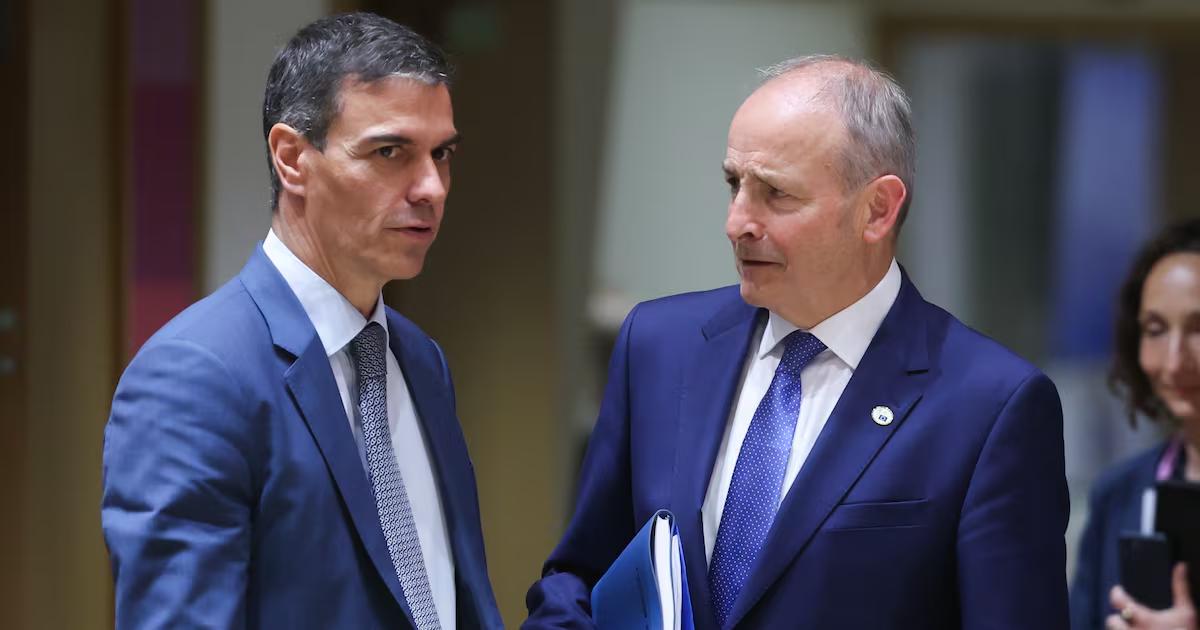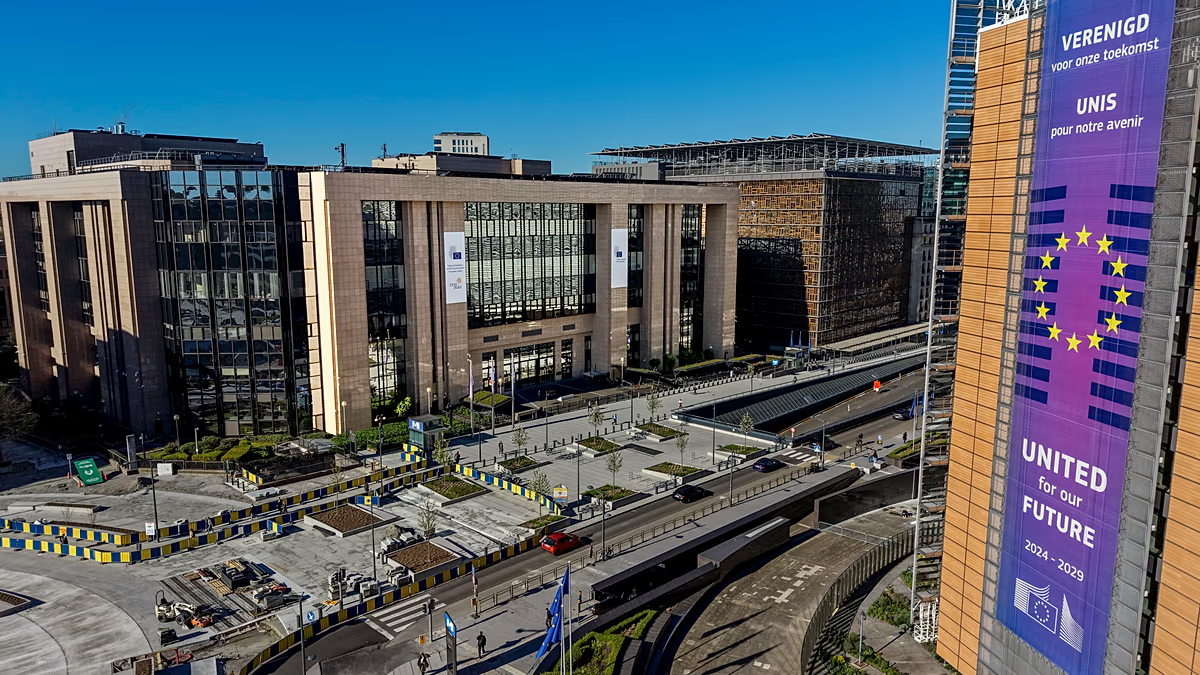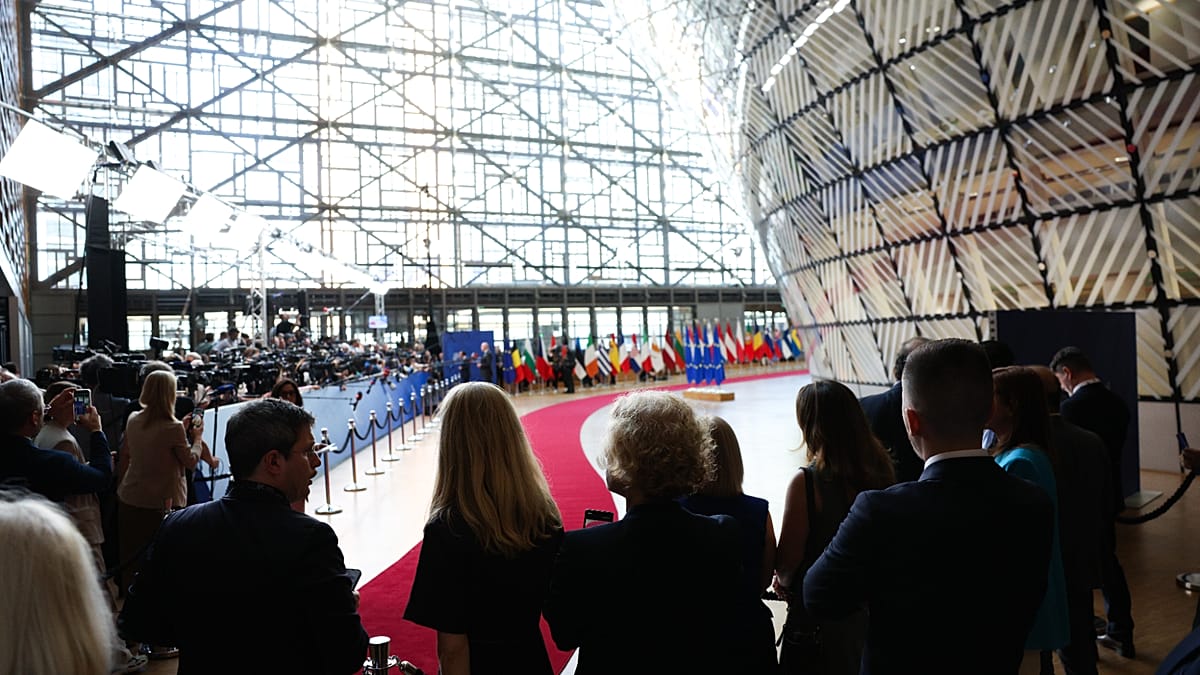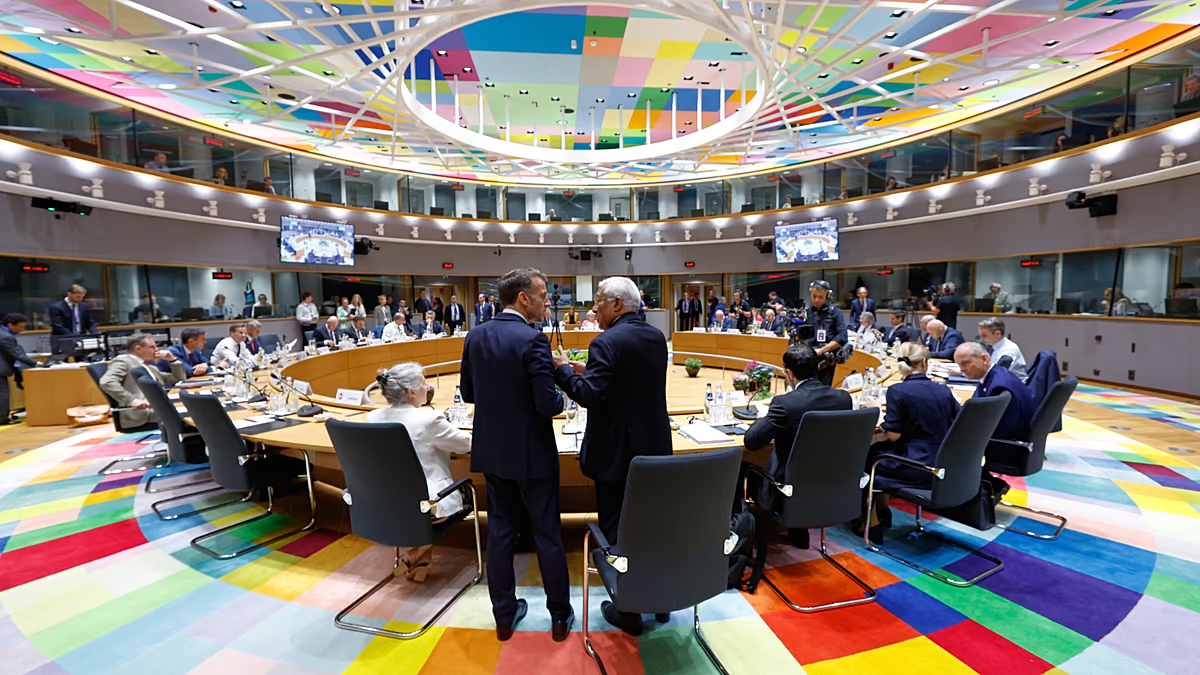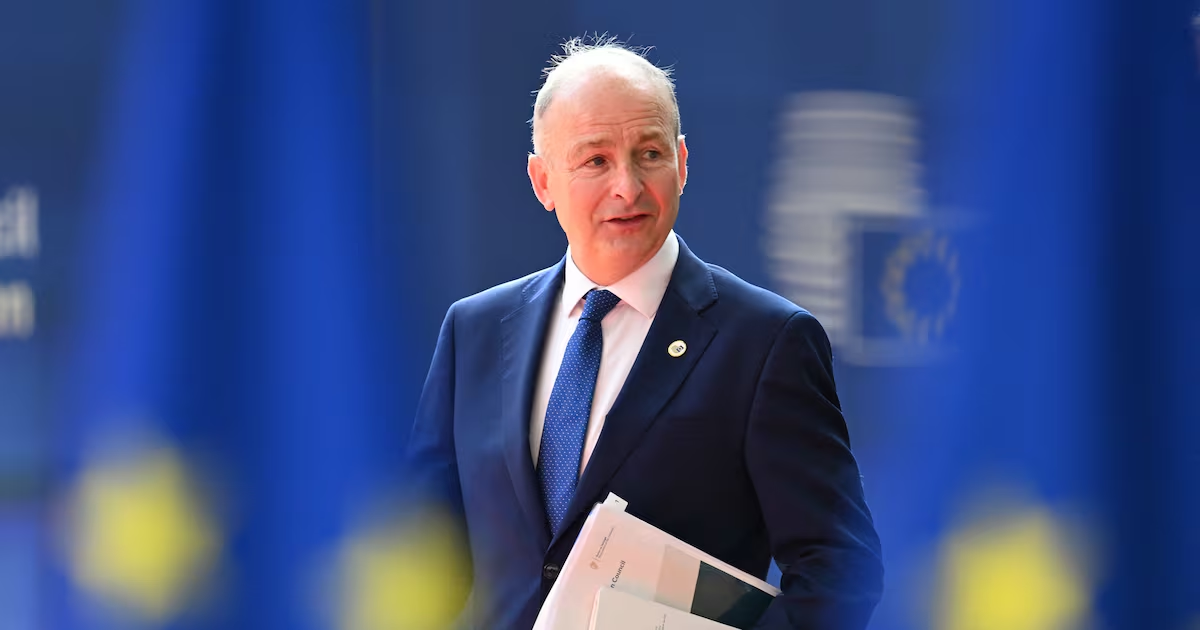
There will be lots of metaphorical blood and hair on the floor by the time the European Union’s 27 national governments manage to agree on the size and focus of the bloc’s next seven-year budget. Arguing about how to slice up the massive pie of EU funding is always the source of an almighty row in Brussels. Usually member states split into two camps. You have the countries who want a bigger budget and more money for traditional funds, such as Common Agricultural Policy (CAP) subsidies and “cohesion” funding for roads and other projects to develop poorer regions. Then there is the group of “frugal” countries who pay more into the joint pot than they get out. They want greater fiscal restraint and to rein in the EU budget. That camp traditionally includes the Netherlands, Sweden, Denmark, Germany and Austria. [ Failure to land European budget deal would leave EU in ‘limbo’, Taoiseach saysOpens in new window ]On top of that you have all the areas where Europe is being pushed to direct more attention (and money), such as shoring up its defences to deter the Russian threat on its eastern flank and jump-starting Europe’s lacklustre economy. “Everybody wants Europe to do more, but does not want to pay more,” Luc Frieden, prime minister of Luxembourg, said this week. European leaders were in Brussels on Thursday and Friday for a two-day summit. It was the beginning of the budget fight proper, after months of positioning. The negotiations will intensify from here on and possibly culminate in a deal thrashed out by the 27 leaders in a marathon European Council summit in late December. The existing budget runs from 2021 until the end of next year. It topped out at €1.2 trillion, plus an extra €800 billion Covid-19 economic recovery fund. The European Commission has proposed to replace it with a €2 trillion package that will last from the start of 2028 to 2034, meaning the outcome of negotiations will define the EU’s space to manoeuvre into the middle of the next decade. A revised €1.73 trillion draft budget put on the table this month has been criticised by all sides. It will be the job of the Irish Government to pull together another draft by October, as it will hold the rotating council of the EU presidency for the second half of this year. Irish officials hope their proposal will edge everyone closer to a deal. “It will be very difficult, because the demands are more, people want more. They want more areas ... some countries want defence covered by it, yet other countries want to reduce the contributions and want to reduce the level of the budget,” Taoiseach Micheál Martin told reporters in Brussels. Netherlands' prime minister Rob Jetten. Photograph: Nicolas Tucat/AFP/Getty Dutch prime minister Rob Jetten was unequivocal when asked if he would support the EU pushing out the timeline to repay its Covid-era loans, or jointly borrow more to fund new spending: “No”. [ Six-day week the new normal for Irish officials in Brussels as EU presidency loomsOpens in new window ]He expanded on his thinking on Friday morning. “We need a new budget. Not a budget from the ’90s. We need to focus on security and competitiveness,” the centrist politician said. For the Dutch, that should mean chopping back the amount put aside for farmers and regional development. They have an ally in Denmark’s Mette Frederiksen: “We need to spend money on defence, technology, energy, but not on the old agricultural schemes ... The budget should reflect the new times, and there must be a balance in who is paying.” “We love farmers ... but we have all these other priorities too,” one senior diplomat from the frugal camp said.Scaling back Cap payments would prove to be highly contentious with the farming lobby, which still wields significant political sway in many countries, including France, Italy, Poland and Ireland. The dozen or so countries in southern and eastern Europe that benefit hugely from cohesion funds will fiercely resist attempts to reduce their slice of the EU budget pie too. Czech prime minister Andrej Babiš was blunt about his demands: “I want money for the Czech Republic and I do not mind where the money will come from.” “For us the most important topics are the protection of the eastern flank,” said Kristen Michal, prime minister of Estonia. The vast majority of the union’s budget is financed by contributions from the 27 member states, in proportion to each country’s economic heft. As you might expect, nobody is keen to increase the amount they have to kick in from their state coffers. One way to bridge the shortfall between the union’s expanding ambitions and national contributions is by raising additional money, known in EU-speak as “own resources”. [ Frugals no more? Europe’s budget hawks try on a ‘moderniser’ makeoverOpens in new window ]A number of suggestions are in the mix. They include an EU tax on cryptocurrency profits, an online gambling tax, a digital levy and funnelling some excise duties from cigarette sales into the bloc’s common budget. One of the more controversial proposals from officials in the commission’s Berlaymont headquarters is an annual levy on companies with a turnover of more than €100 million. Getting all 27 member states to agree on one or several of those options will be tricky. Getting a deal on the entire budget will be trickier still.
A divided EU turns to Ireland to stitch together its next budget
Clashing demands over farm subsidies, defence and debt set the stage for a challenging Irish presidency
904 words~4 min read