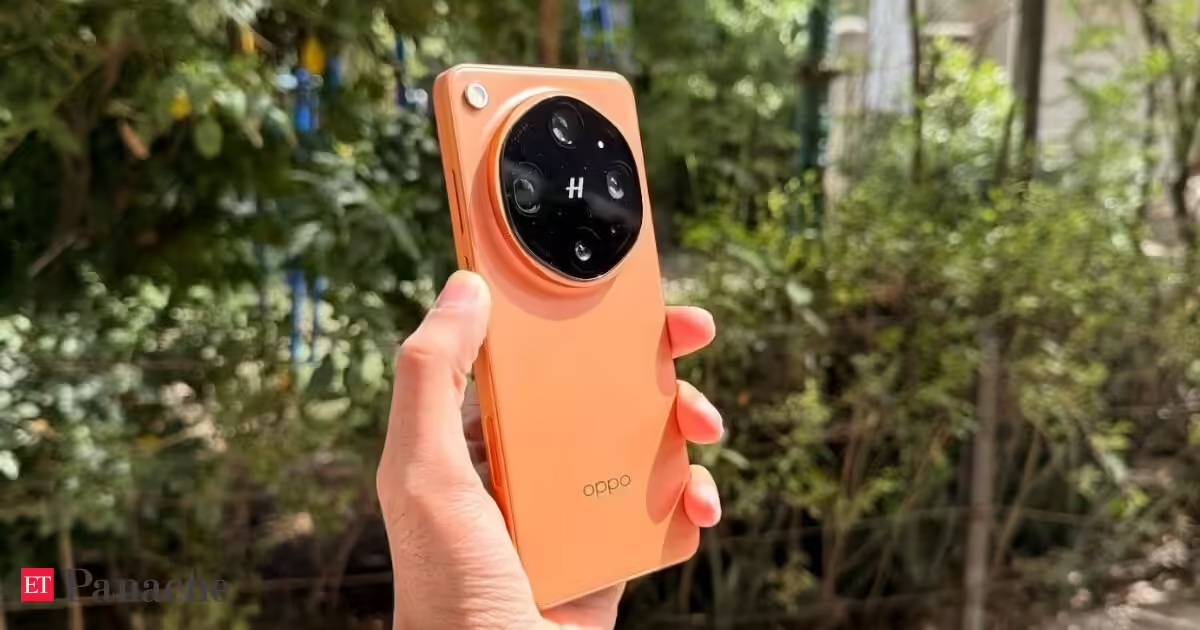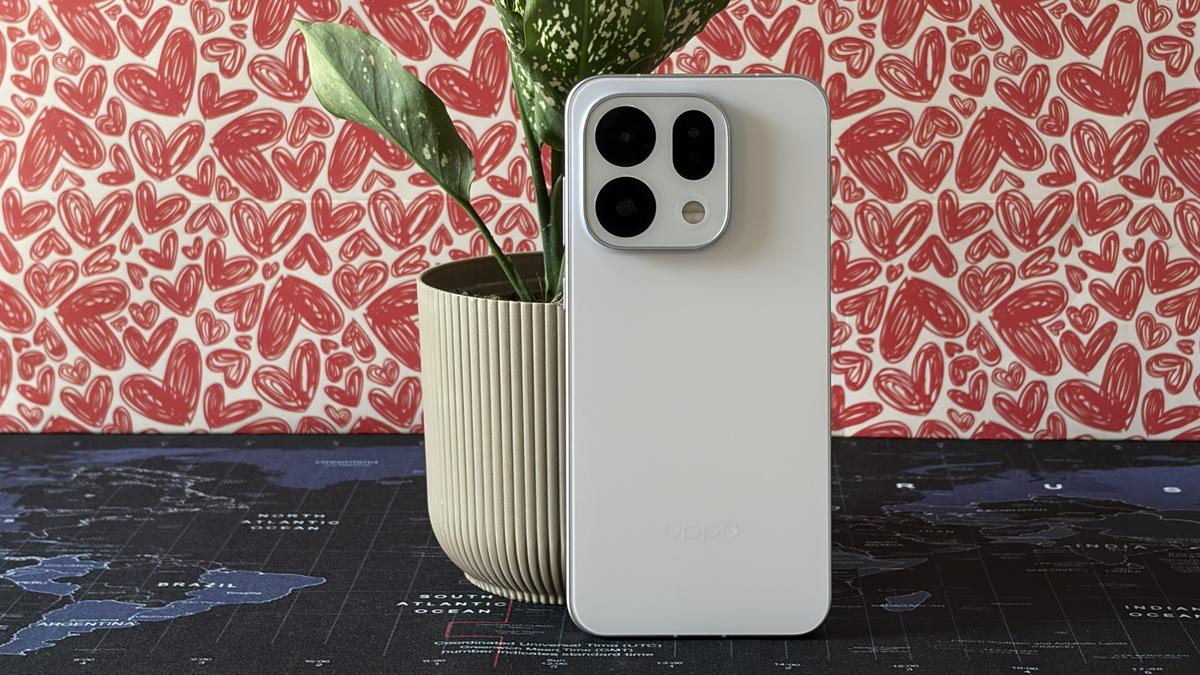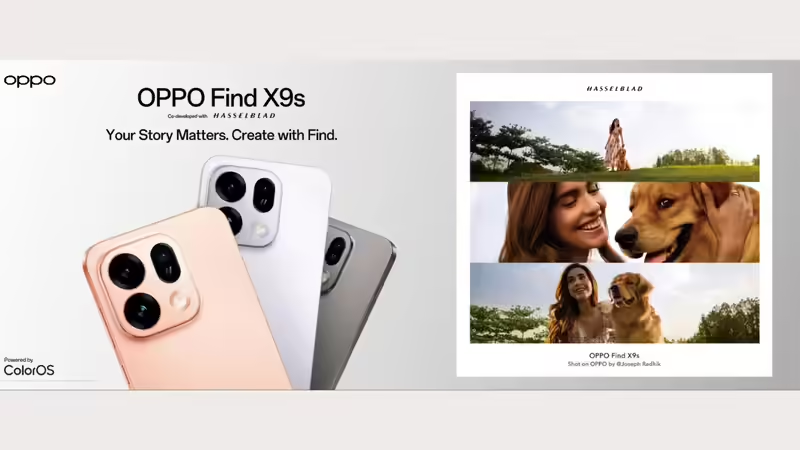
The smartphone has quietly become the most important personal computing device most people own. It is our camera, notebook, navigation system, communication device, payment tool and increasingly, our AI assistant.That shift is changing what people expect from a flagship smartphone.In the AI era, the question is no longer just how powerful a phone is. It's whether it can keep up with how we capture, organise and interact with information every day.After spending weeks with the OPPO Find X9s, that feels like the most interesting thing about the device. It isn't defined by a single standout feature. Instead, it feels designed around the way people are increasingly using smartphones in an AI-first world.50MP Main CameraThe camera encourages you to capture moreMost flagship smartphones today can capture impressive photos. The difference is that very few make users want to keep experimenting.That is where the Find X9s starts to separate itself.3x Telephoto shotIts camera system combines three 50MP sensors, including a 3x periscope telephoto camera, with Hasselblad imaging technologies and OPPO's LUMO Image Engine. On paper, that sounds like another flagship camera setup. In practice, what stands out is consistency.Hasselblad XPAN modeThe experience remains similar whether shooting at 1x, ultra-wide or telephoto focal lengths. Colours remain consistent. Skin tones remain natural. Images don't feel like they were captured using three completely different cameras.That consistency matters because modern photography is increasingly spontaneous. Users switch focal lengths constantly. They move from portraits to landscapes to zoom shots within seconds.The Hasselblad partnership also feels more meaningful after extended use. XPAN Mode adds a genuinely different perspective for storytelling, while Master Mode gives enthusiasts manual control and RAW capture without requiring a dedicated camera.Perhaps most importantly, the camera encourages experimentation. That's a quality that is difficult to measure on a specification sheet but becomes obvious over time.The battery: The feature you stop thinking aboutBattery life is one of the easiest specifications to compare and one of the hardest experiences to describe. The Find X9s packs a 7025mAh silicon-carbon battery, but the number itself is not what matters. What matters is what happens after a few weeks.The habit of checking battery percentage before leaving home starts to disappear. Long workdays, navigation sessions, social media scrolling, photography and video streaming stop feeling like activities that need battery planning.What's equally impressive is that OPPO has achieved this while maintaining a 7.99mm profile. Traditionally, bigger batteries have meant bulkier devices. The Find X9s manages to avoid that trade-off.There is another aspect that deserves attention. OPPO claims the battery is designed to retain over 80% of its original capacity even after five years of typical use. At a time when consumers are keeping their smartphones for longer than ever before, battery longevity matters almost as much as battery life itself.Weeks later, the biggest compliment the battery receives is that it rarely becomes part of the conversation.AI is most useful when it doesn't feel like AIThe smartphone industry has spent the last two years talking about artificial intelligence. Most consumers are still trying to figure out which AI features genuinely improve daily life.The Find X9s takes a more practical approach.Instead of focusing purely on content generation, many of its AI tools focus on a much more relatable problem: information overload.Think about how many screenshots, booking confirmations, payment receipts, restaurant recommendations and meeting notes accumulate on a smartphone every week. Saving information has become easy. Finding it again is often the difficult part.This is where AI Mind Space stood out.Over time, it became a central place to store and retrieve information that would normally disappear into a gallery full of screenshots. AI Mind Pilot builds on this by helping users surface relevant information when needed, while AI Bill Manager simplifies the process of tracking expenses.The most successful AI experiences are often the ones users stop actively noticing. After a few weeks, these tools begin to feel less like features and more like part of the workflow.Performance stays out of the wayNobody buys a flagship smartphone hoping to think about processor performance every day. The ideal experience is one where the device simply keeps up.Powered by the MediaTek Dimensity 9500s and supported by OPPO's Trinity Engine, the Find X9s handles the growing demands of an AI-first smartphone experience without drama. Whether moving between productivity apps, editing photos, managing information or consuming content, the experience remains consistently responsive over time.What becomes noticeable after weeks of use is not how fast the phone felt on day one, but how little that experience changes. There are no obvious slowdowns, no hesitation when switching between demanding apps and no sense that the phone is struggling to keep up.The best compliment that can be paid to the performance is that it rarely draws attention to itself.The software feels increasingly personalHardware attracts attention. Software is what people actually live with. ColorOS 16 stands out because it feels designed around personalisation and convenience rather than complexity.Features such as Flux Home Screen, Aqua Dynamics and Live Space help surface information based on what matters to the user, whether that's tracking a cab ride, following a live sports score or keeping an eye on an upcoming flight.Cross-device experiences also play a larger role than they once did. Tools such as O+ Connect and Quick Share make it easier to move files between devices and maintain continuity throughout the day.What stands out after extended use is not any individual feature. It is how cohesive the overall experience feels.The details reveal the product philosophyOne of the more interesting things about the Find X9s is that many of its strengths come from decisions that are easy to overlook. Take the size, for example. At a time when flagship smartphones continue to grow larger, OPPO has deliberately chosen a 6.59-inch display. It is large enough for watching videos, editing photos and multitasking, but remains comfortable enough to use with one hand. That balance becomes increasingly valuable over time, particularly for people who spend hours on their phones every day.The same thinking appears elsewhere. The 1.15mm ultra-thin bezels create a more immersive viewing experience without increasing the phone's overall footprint. The camera module placement feels considered, making it easier to shoot comfortably without constantly adjusting your grip.Even the 3D ultrasonic fingerprint scanner reflects this philosophy. It is not a feature users actively think about, but one they quickly begin to rely on. The best smartphone experiences are often the ones that remove small moments of friction, and unlocking the phone is something people do hundreds of times a day.Taken individually, these decisions may seem minor. Together, they reveal something about the Find X9s itself. Rather than chasing individual headline specifications, the device appears designed around everyday usability. That might not be the easiest thing to communicate on a specification sheet, but it becomes one of the most noticeable aspects of ownership.Why it feels like a complete flagshipThe most interesting thing about the OPPO Find X9s is that it reflects how people are using smartphones today.The device is no longer just a camera, a communication tool or a productivity device. It has become all of those things at once. We capture more content, save more information and expect our phones to help us organise and access it when needed.The Find X9s feels built around that reality. The camera encourages creativity through a consistent photography experience. The battery supports longer days without demanding attention. Features such as AI Mind Space and AI Mind Pilot help manage the growing amount of information we collect every day, while ColorOS 16 adds a layer of personalisation that adapts to individual habits and preferences.Weeks after the first impression fades, what stands out is not a single headline feature, but how naturally everything works together. In a market still obsessed with individual specifications, the Find X9s makes a compelling case for something else: a flagship experience where every part of the device works together.The OPPO Find X9s is available in Sunset Orange, Lavender Sky and Midnight Grey colour options. The smartphone starts at Rs 79,999 for the 12GB + 256GB variant, while the 12GB + 512GB variant is priced at Rs 89,999. Buyers can purchase the device through the OPPO e-Store, Flipkart, Amazon and leading retail outlets across India. Launch offers include instant cashback of up to 10% on select bank cards and eligible UPI transactions, exchange bonuses, no-cost EMI options and flexible financing plans.Disclaimer: This article has been produced on behalf of OPPO by Times Internet's Spotlight team.end of article
Is the OPPO Find X9s worth buying? What matters after the first impression fades
The smartphone has quietly become the most important personal computing device most people own. It is our camera, notebook, navigation system, communication device, payment tool and increasingly, our AI assistant.That shift is changing what people expect from a flagship smartphone.In the AI era, the question is no longer just how powerful a phone is. It's whether it can keep up with how we capture, organise and interact with information every day.After spending weeks with the OPPO Find X9s, that feels like the most interesting thing about the device.
1,405 words~6 min read