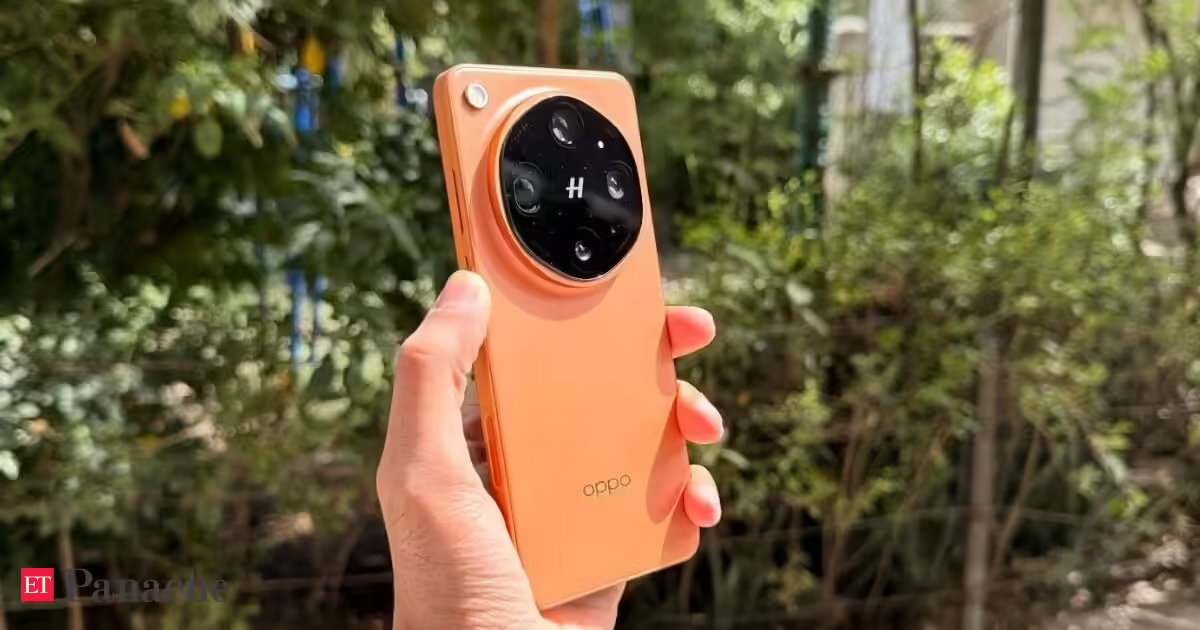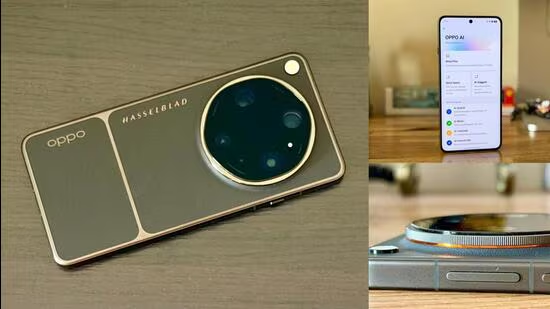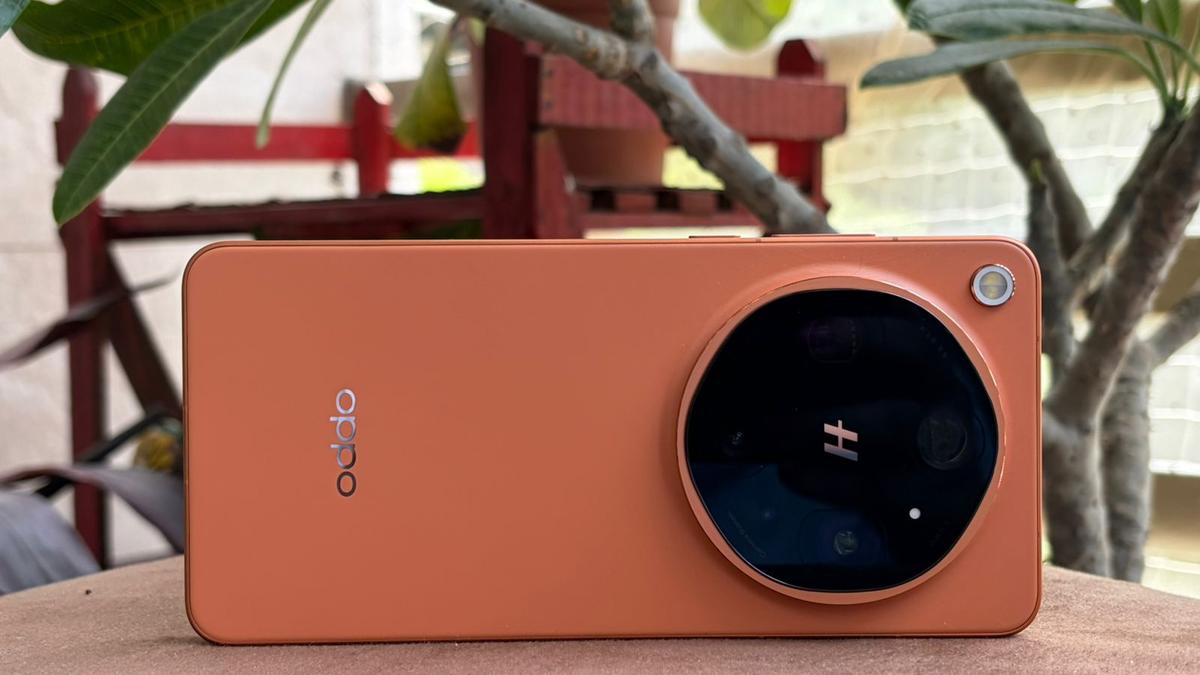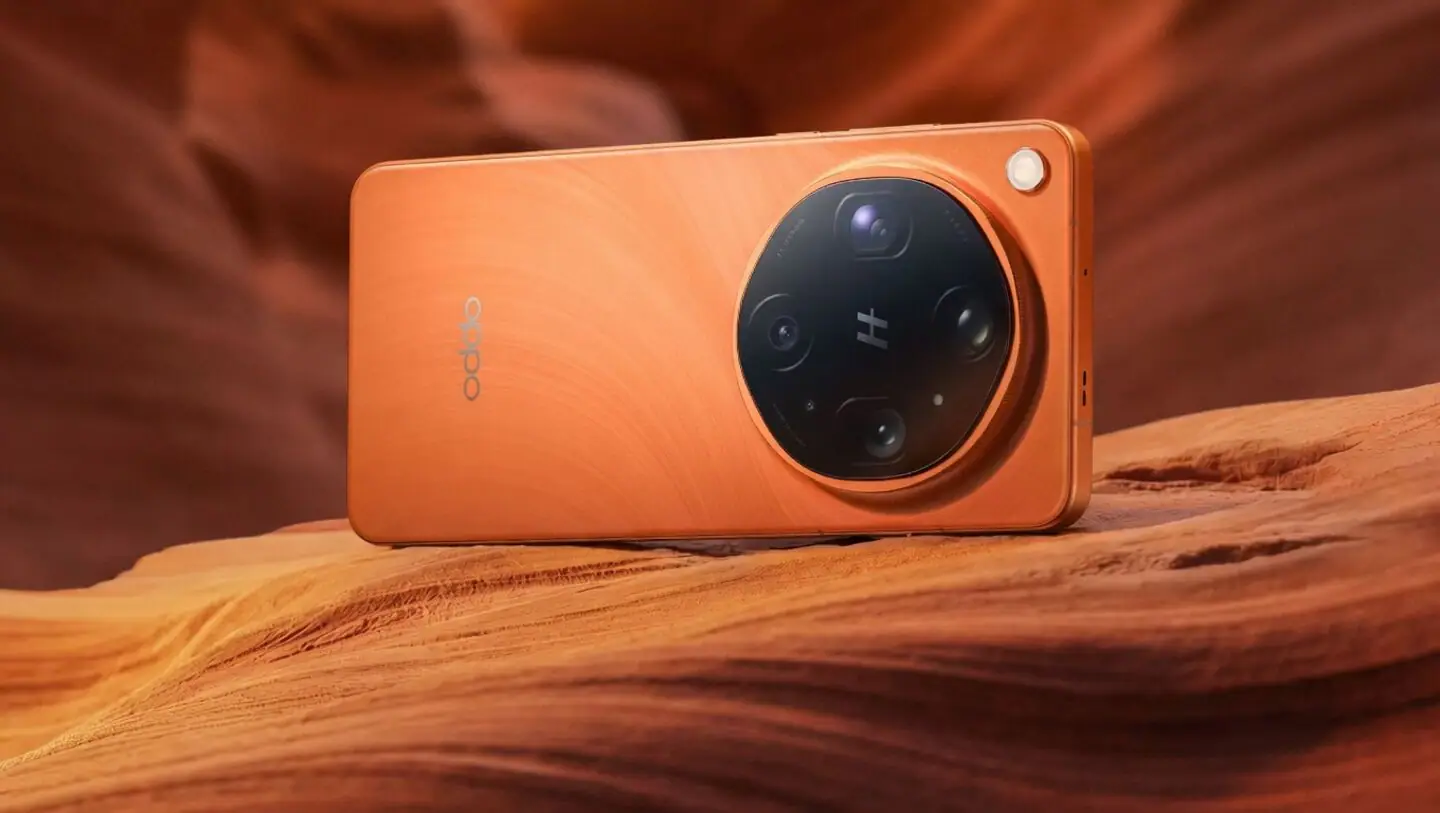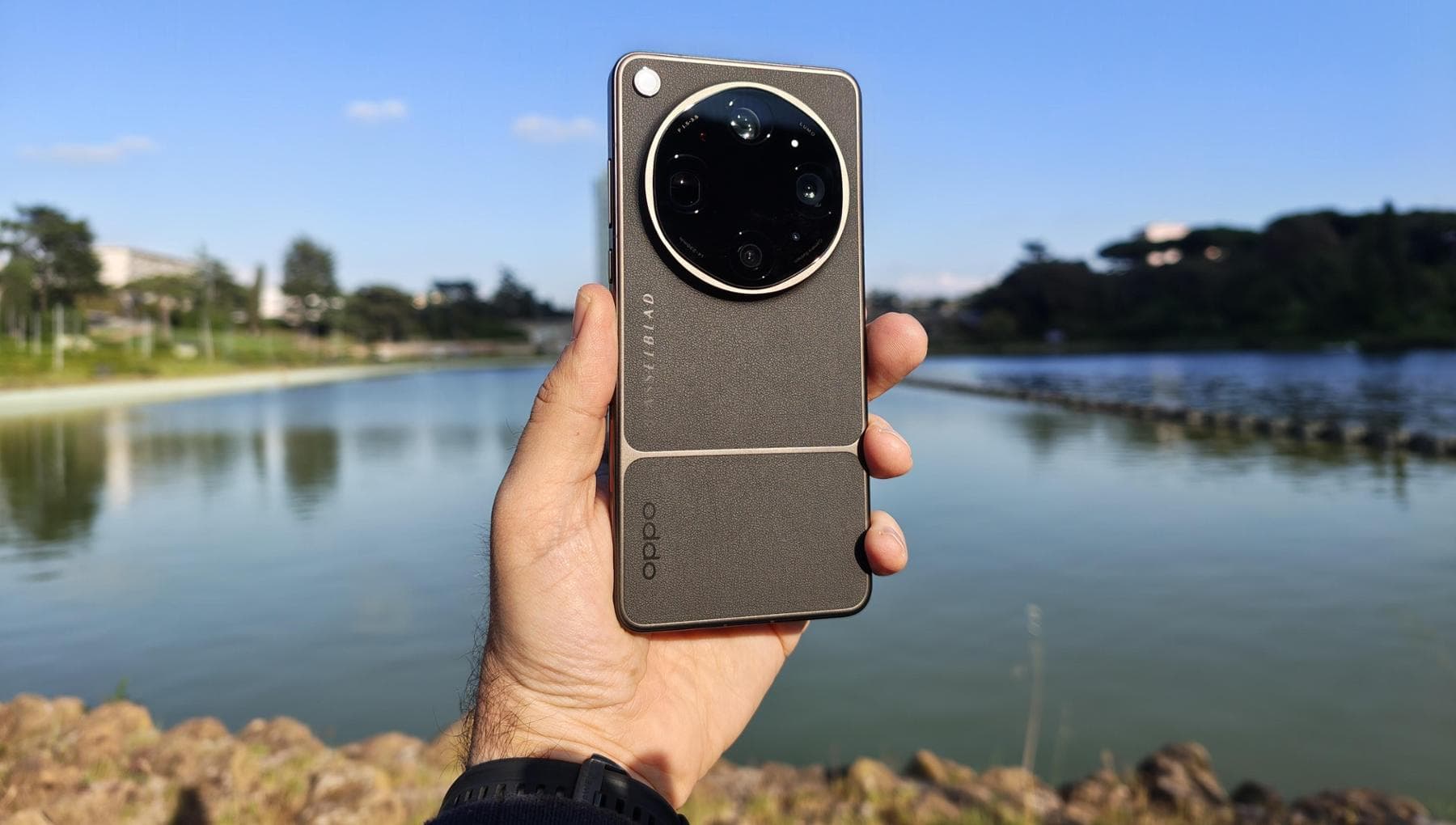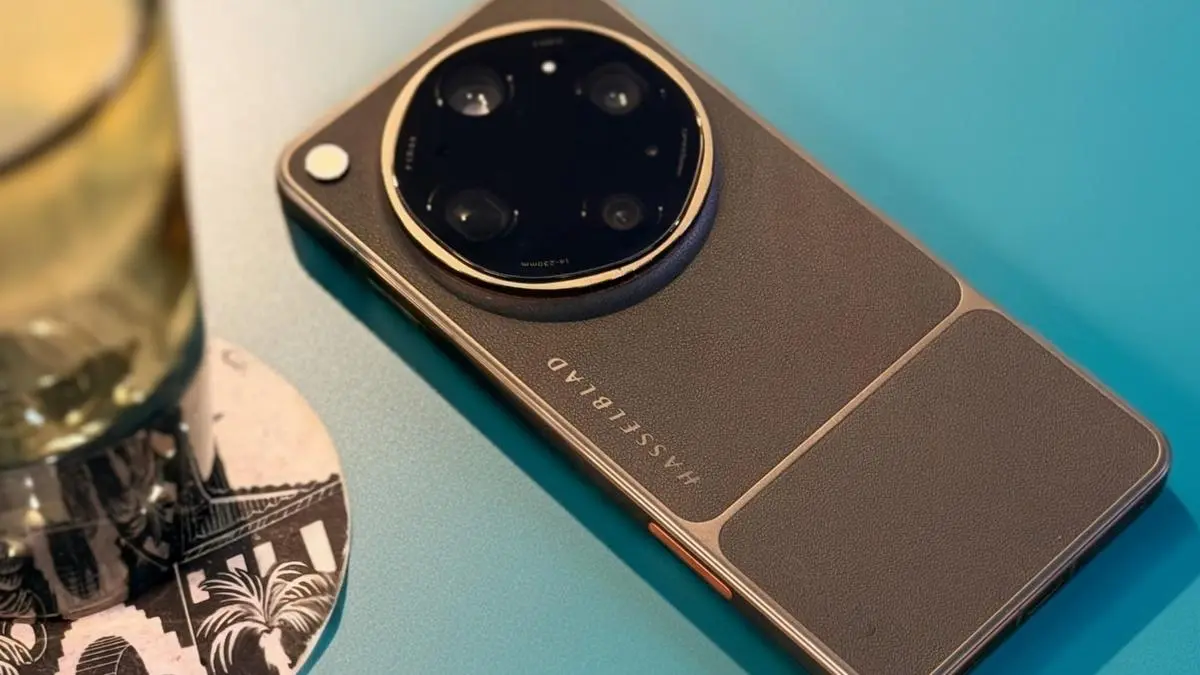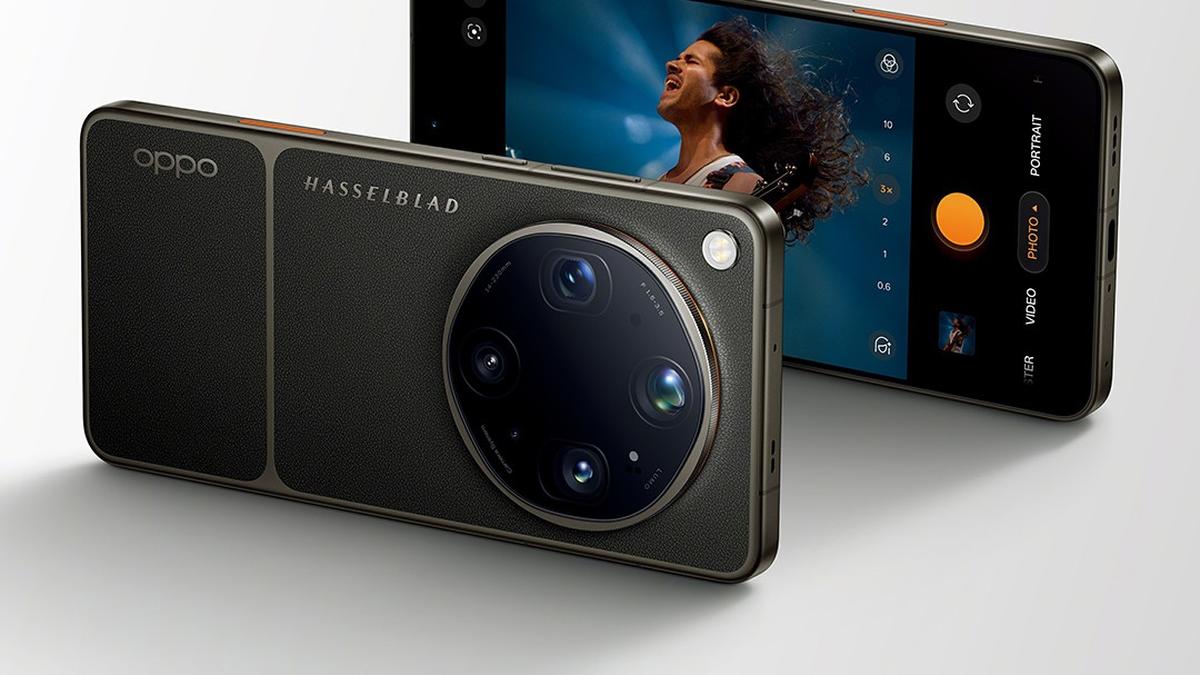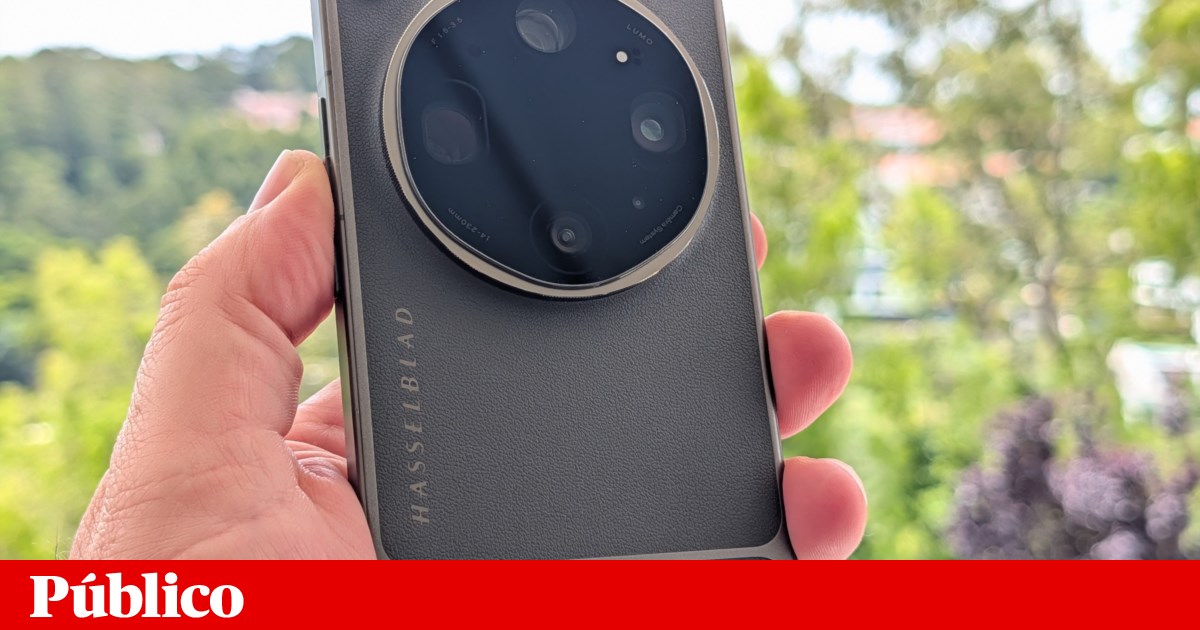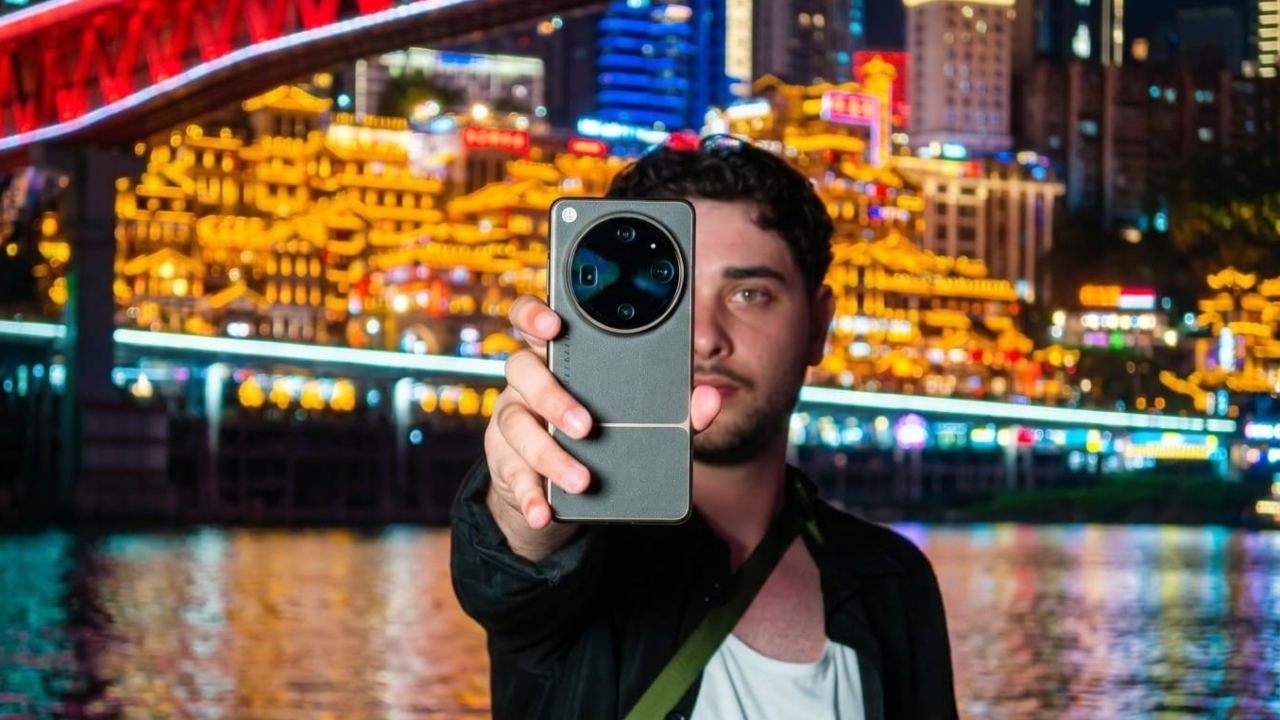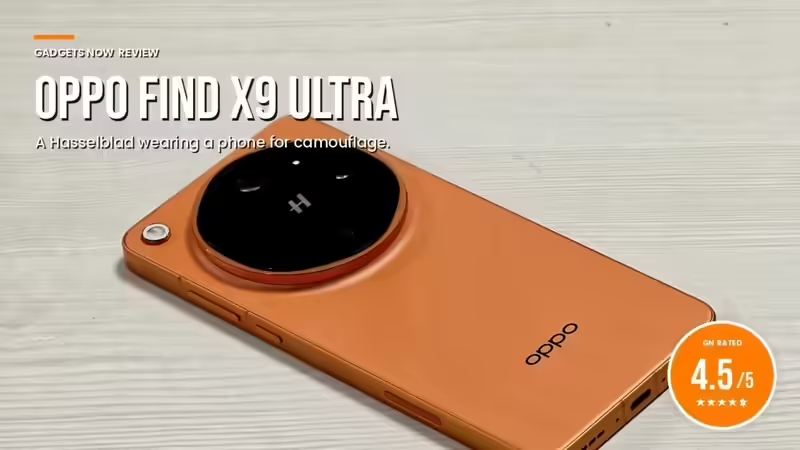
Somewhere in Chengdu, a committee of Hasselblad engineers and Oppo executives sat in a windowless room and concluded that what the world urgently needed in 2026 was a Hasselblad with a phone glued to the back of it. They have been completely right about this. They have also, in passing, ruined every other flagship phone you can buy in India.Hasselblad Vanity Bolted to a PhoneThe Tundra Umber model — vegan leather over an aluminium chassis, a copper-orange Master Shutter button on the right edge, a circular camera island the size of a small saucer — looks the way the Hasselblad X2D would look if it had attended business school. Hubba hubba. Cortana, my middle daughter and committed sniffer of all suspicious imports into the Friends Colony apartment, gave it the forensic going-over she usually reserves for an unscheduled Zomato delivery. She approved. Cortana has excellent taste in leather and a deep suspicion of anything orange.Which brings us to the Canyon Orange variant. Oppo has released this colour, presumably, to remind us that every car company also makes a hatchback nobody asked for. It is the chromatic equivalent of what would happen if a Fanta bottle and a Delhi Police traffic cone had a baby, and that baby grew up to disappoint its parents. It looks like an Astro Calcium tablet escaped from a Galaxo blister pack and crawled into a Hasselblad showroom looking for shelter. The Vivo X300 Ultra was released in the same shade earlier this year, which suggests a global conspiracy of senior Chinese phone designers who watched the same TikTok about Pantone 165C being "the new gold," and acted on it without first consulting anyone with eyes.The shape itself is a product of 2026's design tyranny. Flat rails, flat display, a camera bump tall enough to qualify as a step ladder — every Ultra-class phone now wears the silhouette of an F1 car under identical wind-tunnel regulations. Engineering rules dictate the front wings. Engineering rules dictate the phone outlines. The rear is the only canvas left, which is why the orange Vivo and the orange Oppo land in the same gallery: technically a colour, spiritually a Polo Mint.The phone weighs 235g. That sounds heavy. It is heavy. By the end of day one, the X9 Ultra had announced its presence the way a Patek Philippe announces yours — through gravity, and through the slow ruination of one's left front pocket. The camera bump doubles as a finger prop when held horizontally, which is also when the X9 Ultra stops being a phone and starts being a Hasselblad. Apparently this was the point all along. IP66, IP68 and IP69 ratings plus a Swiss SGS five-star drop certification handle the rest. Three coffee spills, one Cortana greeting that involved most of her bodyweight at 12mph, and one Mehrauli Uber ride that converted my driver's suspension into modern art — the X9 Ultra came through with the dignity of a Coldstream Guard. Patient. Unimpressed. Faintly disapproving.The Display That Ate The Boys in One SittingThe 6.82-inch LTPO AMOLED runs at 3168×1440 with adaptive 1–144Hz refresh, peaking at 3,367 nits in HDR per GSMArena's lab. The bezels are tiny enough that the average passport-office clerk would have filed a missing-person report. Dolby Vision, HDR Vivid, HDR10+ and Oppo's Display P3 Pro chip handle the codecs. The Galaxy S26 Ultra's display is also very good. The X9 Ultra's display is better, by the kind of margin that only matters to people who write about phone displays for a living, which is a tragically growing demographic in 2026.I watched the current season of The Boys on it. In one sitting. Yesterday, as it happens, with Cortana on my lap producing the kind of low growl she reserves for Homelander and the occasional Uber Eats delivery man. Homelander's laser eyes carry the menace of an industrial welding torch on this screen. The black levels keep the New York rooftops looking like the bottom of a Hasselblad lens cap. The 144Hz refresh rate exists, technically, in the same way that the M25 has a speed limit, technically. Most apps cap at 120Hz. Most apps were also designed in 2019. Both situations seem permanent.Typing on the X9 Ultra is the closest any Android has come to feeling like a real keyboard in 2026. The X-axis haptic motor taps back with the precision of a Steinway under a session musician. I edited a 1,400-word Gadgets Now feature from the back of an Uber crossing Mehrauli — the kind of road where the suspension files for legal separation around pothole number 47 — and produced one typo across the entire piece. That typo was a comma. I blame Cortana. She blames the Uber.Key SpecificationsSpecificationDetailDisplay6.82-inch LTPO AMOLED, 3168×1440, 1–144Hz, 3,367 nits peak HDRProcessorSnapdragon 8 Elite Gen 5RAM and Storage12GB LPDDR5X + 512GB UFS 4.1Main Camera200MP Sony LYT-901, 1/1.12-inch, f/1.5, OISTelephoto200MP OmniVision OV52A 3x, 1/1.28-inch, f/2.2, OISPeriscope50MP 10x Quintuple Prism, f/3.5, sensor-shift OISUltrawide50MP Sony LYT-600, 14mm, f/2.0, autofocusFront Camera50MP Samsung JN5 with autofocusBattery7,050mAh silicon-carbonCharging100W SuperVOOC wired, 50W AirVOOC wireless, reverse wired and wirelessSoftwareColorOS 16 on Android 16 (5 OS updates + 6 years security)DurabilityIP66 + IP68 + IP69, Swiss SGS 5-star dropWeight235g (Tundra Umber) / 9.10mmPrice (India)Rs 1,69,999 — 12GB / 512GBFour Cameras, One Spectral Sensor, and a Concerted Effort to Embarrass SamsungThe Find X9 Ultra runs a quad camera array plus a 24-channel True Color spectral sensor that handles colour science in the background. The numbers read like a press release written by a fourteen-year-old who has spent too much time on r/Android. The 200MP Sony LYT-901 main sensor sits at 1/1.12-inch, which is bigger than the dedicated 1-inch sensors in some Sony RX100-series compact cameras Sony itself sells, at f/1.5. The 200MP 1/1.28-inch 3x telephoto is the largest 200MP sensor that has ever been put inside a 3x lens, anywhere, full stop. The 50MP 10x periscope uses an industry-first Quintuple Prism Reflection design that bounces light five times inside a module 30 per cent shorter than a conventional periscope, which is an act of optical witchcraft Oppo refuses to fully explain. The 50MP Sony LYT-600 ultrawide handles 14mm at f/2.0.The Galaxy S26 Ultra has a perfectly respectable camera array on the back of it, in the same way that Maruti Suzuki makes a perfectly respectable Wagon R. The Find X9 Ultra is what happens when the people who made the Wagon R quit, moved to Modena, and joined Ferrari. The colour calibration runs closer to what your eye actually sees and your photo editor actually wants. Whites are white. Skin tones land on the right rung of the Pantone ladder. The Hasselblad colour science arrives with the restraint of a Stockholm art gallery and the speed of, well, a phone.XPAN mode is the standout vanity feature, and I use "vanity" with affection. The XPAN aspect ratio — borrowed from Hasselblad's panoramic 35mm film cameras of the 1990s — turns every shot into a Wes Anderson establishing frame. I shot a morning walk in Khan Market with it and the resulting image looked like a still from The Grand Budapest Hotel had Wes Anderson directed it from the back of the same Uber that ruined my driver's suspension. Emotive. Cinematic. The kind of feature you forget exists for three days and then use seventeen times in one afternoon, because you have just realised your phone now does the work of a Hasselblad XPan that costs Rs 4 lakh on the secondhand market in Tokyo.Zoom is where the Find X9 Ultra and the Vivo X300 Ultra trade punches like Tyson and Holyfield in their prime. The 10x native periscope means the Find X9 Ultra reaches 230mm without bolting on an external teleconverter. The Vivo needs the teleconverter. The teleconverter sells separately, weighs 320g, communicates via Bluetooth like a man trying to fax himself, and lives in your bag instead of your phone. For an Indian buyer who plans to use the phone as a phone, this is the difference between owning a camera and owning a camera kit. Pure imaging ability sits within touching distance between the two. Where the Find X9 Ultra pulls clear is the camera app. Vivo's interface has the menu architecture of a UPSC general studies paper. Oppo's has the menu architecture of a well-organised wardrobe.Video shoots 8K/30, 4K/120 Dolby Vision on the main and 3x lenses, 4K/60 Dolby Vision on every lens, plus O-Log2 with ACES certification and in-camera 3D LUTs with real-time preview on the screen. The film toolkit goes deep enough that you can run a Tilta Khronos rig off the phone, which Oppo demonstrated at the Chengdu launch with the kind of straight face that suggested they have already filmed someone's wedding with it. Stabilisation locks during deliberate zoom pulls. That is the only video complaint. The iPhone 17 Pro Max still has the edge on motion stability in low light. The X9 Ultra has the edge on everything else.Performance: Same Chip, Different PostcodeEvery 2026 flagship runs the Snapdragon 8 Elite Gen 5. The Galaxy S26 Ultra runs it the way your bank's net banking website runs Chrome — present, technically functional, occasionally slow on a Tuesday. The Vivo X300 Ultra runs it the way a 296 GTB runs the Stelvio Pass — fast, refined, almost certainly enough for any actual road. The Find X9 Ultra runs the same chip the way a Ferrari F80 on performance-enhancing drugs runs the same Stelvio Pass — at speeds the road was, in fairness, never zoned for.AnTuTu 11 lands at 4.31 million. Geekbench 6 hits 3,646 single-core and 11,276 multi-core. These are the highest numbers any phone has produced this calendar year. The vapour chamber covers most of the chassis, the silicon-tuning team have done their homework, and the LPDDR5X memory bandwidth has been opened up like a four-lane Yamuna Expressway.BenchmarkScoreAnTuTu 114.30 millionGeekbench 6 single-core3,646Geekbench 6 multi-core11,2763DMark GPU compute27,916CPU stress (sustained)65 per cent of peak3DMark Wild Life Extreme stability40 per centI played 90 minutes of Wuthering Waves on high settings on a 42-degree Delhi afternoon — the kind of heat that turns Mehrauli's tarmac into Plasticine and Delhi's auto-rickshaw drivers into philosophers — and the phone stayed cooler than my opinion of the Delhi traffic police. I edited four videos on VN. I exported one 4K timeline at 60fps. The back of the phone reached body temperature only after the export had finished, and even then it was the kind of body temperature you would describe as "warm cup of chai" rather than "your laptop in a presentation." Apex predator stuff.The Battery Refused to Die. Cortana Gave Up First.The 7,050mAh silicon-carbon cell has the endurance of a Christopher Nolan film with three intermissions and an epilogue you keep arguing about in the car park. Oppo has added 950mAh on top of the Find X8 Ultra's already class-leading 6,100mAh cell, and the silicon-carbon chemistry means the phone is the same thickness it would have been with a smaller lithium-ion brick. GSMArena measured an Active Use Score of 20 hours 10 minutes, the longest of any 2026 Ultra they have tested.In Delhi NCR conditions — with Maps on, 5G on, Reels watched, edits filed, games played, and Cortana wandering across the touchscreen at irregular intervals — the X9 Ultra left me at 38 per cent at midnight after a 7am pickup. Cortana fell asleep at 9.30pm. The phone outlasted my dog. The Vivo X300 Ultra is a good phone with a good battery. The Find X9 Ultra is the apex predator of 2026 flagship battery life, and it crushes the competition with the easy confidence of a Saturn V crushing physics.The 100W SuperVOOC wired charger fills the cell in 45 minutes flat. Oppo bundles the 100W adapter in the India box, which means the day Vodafone Idea finally fixes my street's power supply, I will be ready. 50W AirVOOC handles the wireless side. Reverse wired and reverse wireless are both there for the inevitable "my AirPods are at 3 per cent" Uber emergency.ColorOS 16 + Gemini 3.5 Flash: The First AI Phone That Actually WorksColorOS 16 ships with Mind Pilot, Mind Space, AI Recorder, AI Bill Manager, Live Space, and tight integration with Google's Gemini 3.5 Flash for the cloud-grade reasoning the on-device model gracefully sidesteps. The list reads like every other 2026 flagship press release. The difference is that this is the first one where the features actually function in the order, and at the speed, the press release promised they would.Samsung's Galaxy AI feels like an internal corporate tool. Competent. Slow. Three menu taps from wherever you wanted to be. Designed, on the evidence, by a committee of people who have read about humans but never met one. Vivo's OriginOS AI is sharp where it works, with the user-friendliness of a Doha Airport transfer in monsoon season. Google's Pixel AI is brilliant on the model side and lives on phones that throttle the moment you ask them to do anything other than be a Pixel. Oppo runs Mind Pilot the way a Star Trek bridge runs LCARS — voice in, action out, no detour through a quiz on which sub-menu you wanted.AI Recorder transcribed a 38-minute Qualcomm executive interview in 41 seconds with accurate speaker labels and clean chapter breaks. Mind Space took a screenshot of a SpiceJet booking and produced a calendar event with the date, gate and PNR already filled in. This is the on-device AI use-case the entire industry promised us in 2024, and Oppo has shipped it in 2026 while Samsung is still running its slideshow about what Bixby could one day become.ColorOS does borrow heavily from Apple's Liquid Glass design language in iOS 26. Transparency effects everywhere, the kind of frosted-pane menus that look exactly like the iPhone the Oppo PR team have on their other pocket. It is the phone equivalent of a man who buys a Stetson on his first trip to Texas and wears it home to Greater Kailash, where the climate suits it less. The seventeen pre-installed apps — Hot Apps, Hot Games, plus assorted Lazada-grade clutter — have the cheek of a chai-vendor charging Rs 50 for elaichi on a Rs 1,69,999 phone. The 5-year OS plus 6-year security commitment trails Samsung's and Google's 7+7 by exactly the period a flagship buyer cares about.The Rs 1,69,999 QuestionThe Find X9 Ultra is the most expensive slab Android in India. Rs 10,000 more than the Vivo X300 Ultra. Rs 30,000 more than the Galaxy S26 Ultra base. Rs 20,000 more than the iPhone 17 Pro Max 256GB. The Rs 129 Privilege Pack — Enco Air5 Pro, an 80W charger, an aramid case, a cooling card, all worth Rs 18,296 — takes the edge off. The Rs 22,000 trade-in bonus takes more off. The effective price after bank stacks lands around Rs 1,36,999, which puts the Find X9 Ultra within visiting distance of the Vivo and the Samsung.Buy the Find X9 Ultra if cameras are the reason you spend this much on a phone. Buy it if you have ever wished your phone had the battery life of a Land Rover Defender diesel tank. Buy it if you want an AI assistant that responds without needing you to consult its instruction manual. Buy the leather one. Return the orange one to whichever Pantone executive signed off on Pantone 165C in the first place, with a polite note. The Vivo X300 Ultra stays the value pick with longer software support. The Galaxy S26 Ultra stays the S Pen pick. The iPhone 17 Pro Max stays the ecosystem pick. The Find X9 Ultra is the camera pick, the battery pick, the AI pick and the performance pick — Hasselblad has sold you a phone disguised as a medium-format sensor disguised as a phone, and the orange variant aside, it is the most complete Ultra-class flagship of 2026.Rating SnapshotCategoryScoreDesign4 / 5Display4.5 / 5Performance5 / 5Camera5 / 5Battery5 / 5Software4 / 5Value3.5 / 5Overall4.5 / 5end of article
Oppo Find X9 Ultra Review: The Hasselblad Phone That Ruined Every Other Flagship
The Oppo Find X9 Ultra arrives as the top premium smartphone of 2026. It features a Hasselblad camera system and impressive battery endurance. Its AI features are functional and responsive. The device offers top-tier performance. This phone redefines flagship expectations for consumers in India.
2,655 words~12 min read