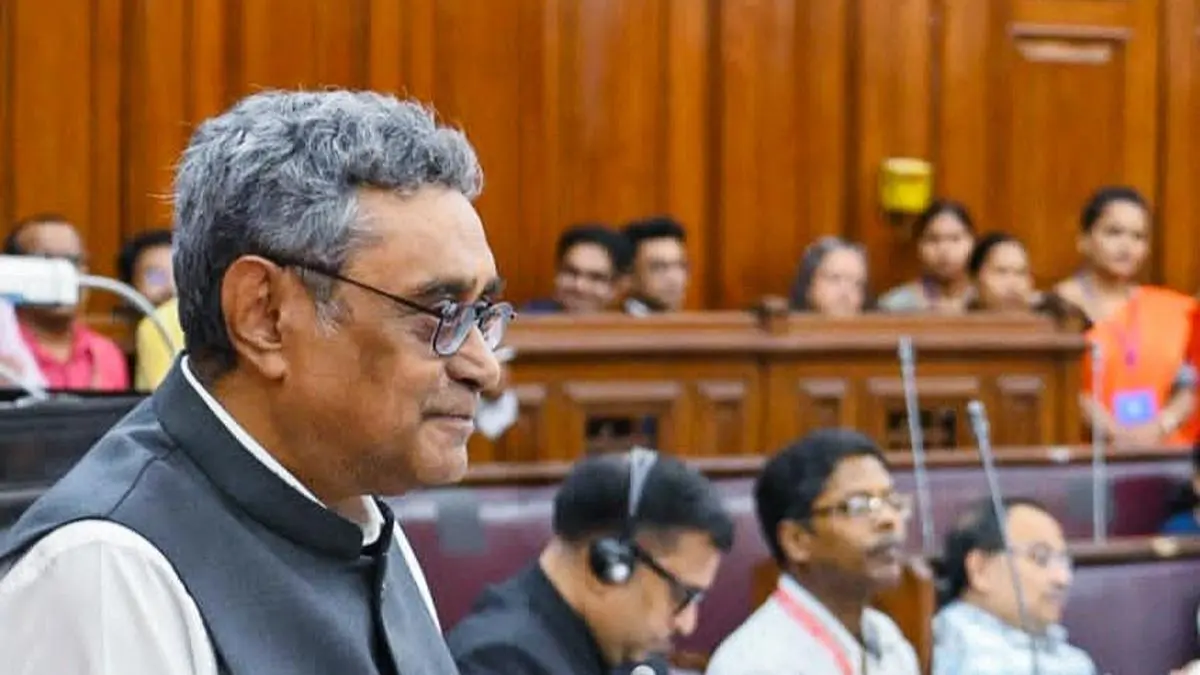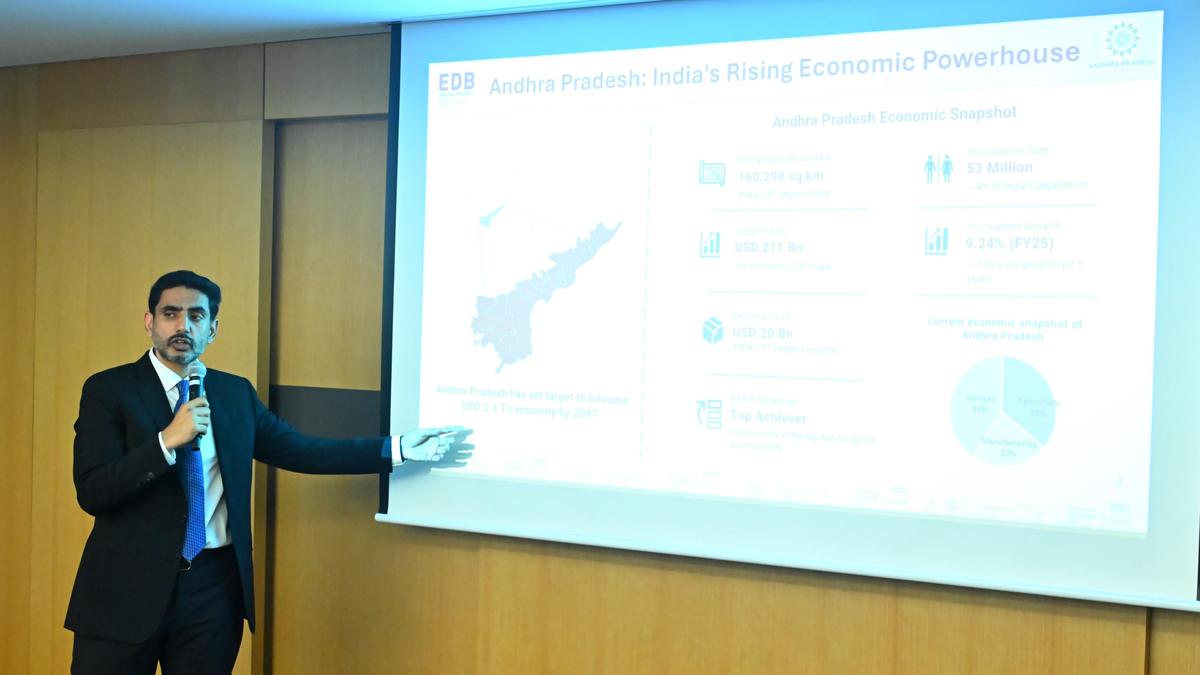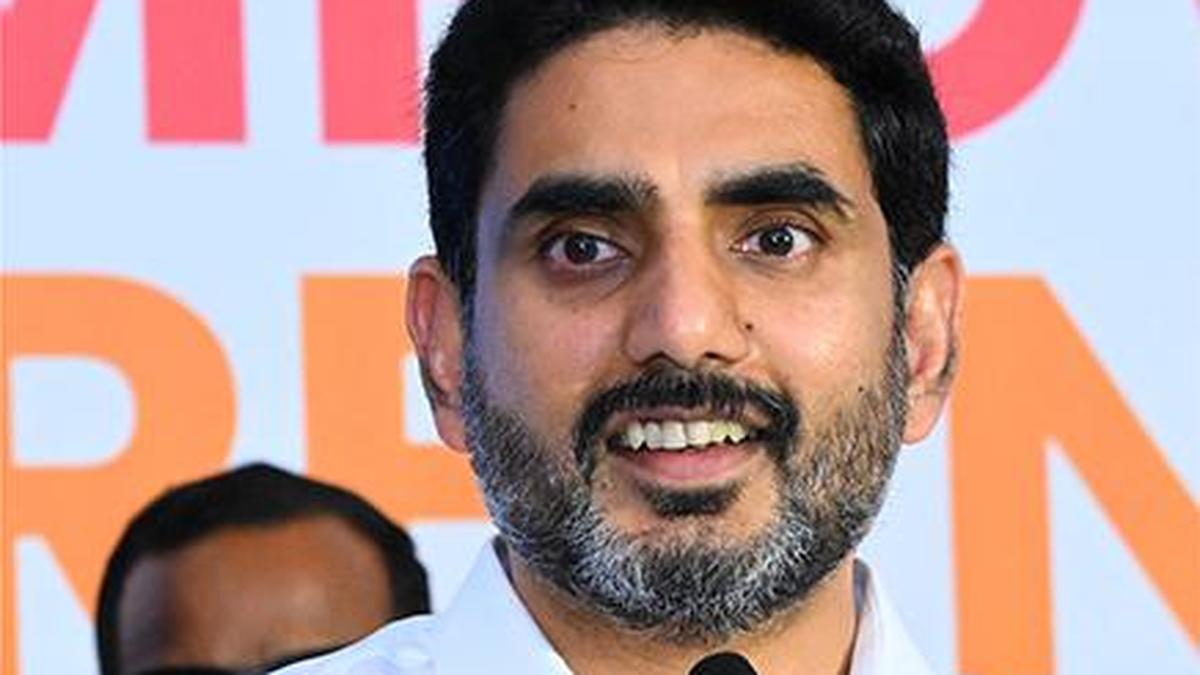
IT Minister Nara Lokesh participating in a plenary session of the Indian Chamber of Commerce in Kolkata on Friday.
| Photo Credit: SPECIAL ARRANGEMENT
IT and HRD Minister Nara Lokesh has called upon the prospective investors in West Bengal to become partners in the development journey of Andhra Pradesh (A.P.) while emphasising that strong States make a strong nation, and speed of doing business, stability of policies and the ‘government as a service provider’ (rather than being a regulatory entity) are three reasons why A.P. should be preferred over other States. Addressing a session on Investment Opportunities in A.P. organised by the Indian Chamber of Commerce (ICC) in Kolkata on Friday, Mr. Lokesh said he had the opportunity to meet the Chief Minister of West Bengal on Thursday (June 18) evening and was inspired by his commitment to development and insisted that India would prosper only when States indulged in healthy competition that brings the best results. He observed that India was at a turning point as the world was looking at it as an emerging force and it was time to harness its demographic dividend. While Prime Minister Narendra Modi introduced a slew of path-breaking reforms, it was up to the States to execute them. In this context, A.P. was leading in the implementation of reforms and it was able to mobilise 25% of the total investments coming into India. Mr. Lokesh said that the A.P. government targeted to make the State a $2.40 trillion economy by 2047 and expressed confidence it would become a reality under the stewardship of Chief Minister N. Chandrababu Naidu, whose track record was already doing wonders for the State. The event was attended by ICC president Brij Bhushan Agarwal and vice-president Keshav Bhajanka, Bijay Agarwal, Parthiv Vikram Neotia and other industrialists. Earlier, Mr. Lokesh met Vishal Agarwal, vice-chairman and managing director of Visa Steel, Aditya Agarwal, director of Emami group, and Prashanth Bangur. In yet another meeting, he requested ITC chairman and MD Sanjiv Puri to consider investing in crop value chain clusters, work on climate-resilient crops, agro-forestry and the development of model villages.