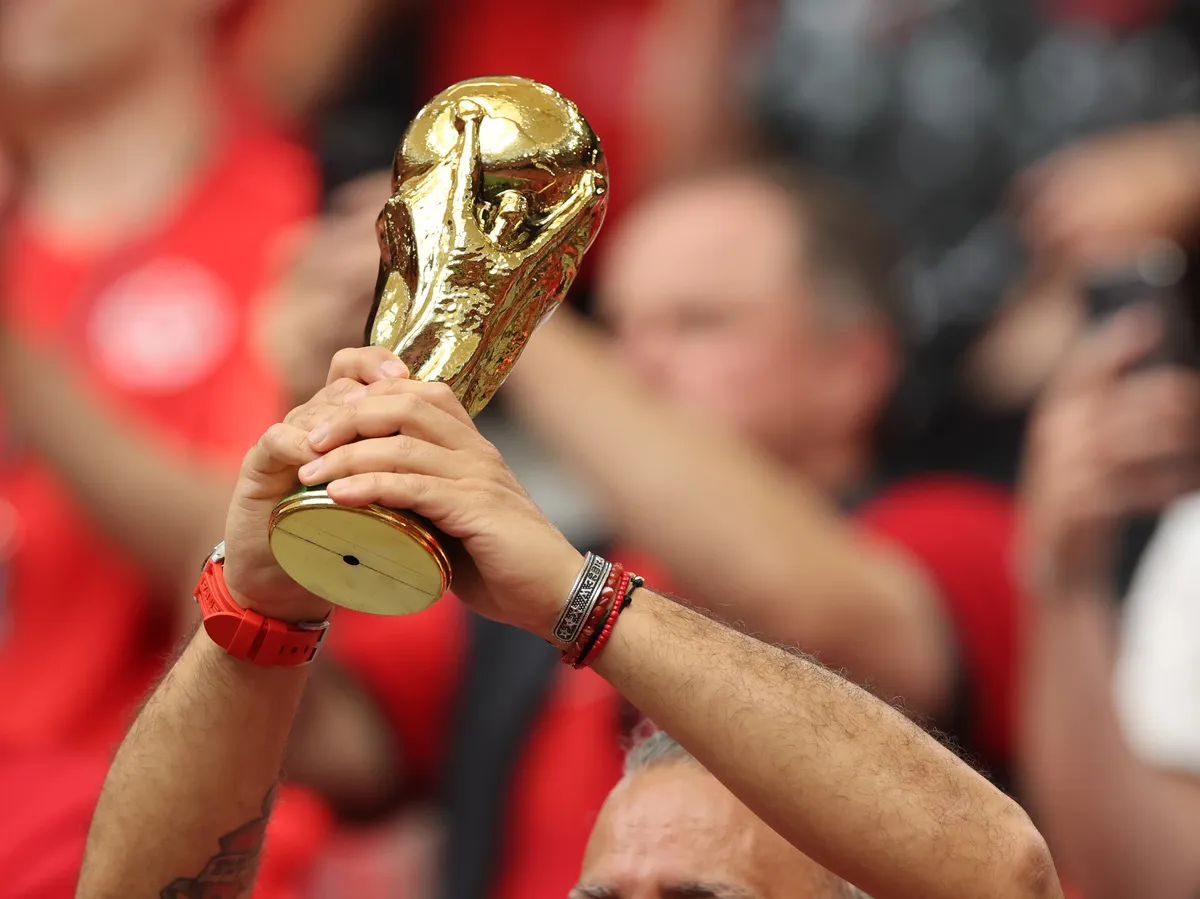
Skip to Content News Archives Economy Energy Oil & Gas Renewables Electric Vehicles Mining Commodities Agriculture Real Estate Mortgages Mortgage Rates Finance Banking Insurance Fintech Cryptocurrency Work Wealth Smart Money Wealth Management Investor Personal Finance Family Finance Retirement Taxes High Net Worth FP Comment Executive Women Puzzmo Newsletters Financial Times Business Essentials More Innovation Information Technology FP500 Podcasts Small Business Lives Told Tails Told Shopping Financial Post Store Obituaries Place a Notice Advertising Advertising With Us Advertising Solutions Postmedia Ad Manager Sponsorship Requests Classifieds Place a Classifieds ad Working Profile Settings My Subscriptions Saved Articles My Offers Newsletters Customer Service FAQ News Economy Energy Mining Real Estate Finance Work Wealth Investor FP Comment Executive Women Puzzmo Newsletters Financial Times Business Essentials HomeNewsRetail & MarketingWorld Cup 2026’s dynamic pricing has tickets going one way: upAfter the first week of matches, ticket demand has held up on resale platformsAuthor of the article: You can save this article by registering for free here. Or sign-in if you have an account.A fan holds up a replica of the FIFA World Cup Trophy before the FIFA World Cup 2026 Group B match between Canada and Qatar at BC Place Vancouver on June 18, 2026 in Vancouver, British Columbia. Photo by Alex Grimm/Getty ImagesBefore the World Cup started, fans raged over the cost of tickets — the highest ever for the tournament. Critics wondered whether prices would crash before kickoff, and if swathes of empty seats would embarrass FIFA’s pricing strategy.Subscribe now to read the latest news in your city and across Canada.Exclusive articles from Barbara Shecter, Joe O'Connor, Gabriel Friedman, and others.Daily content from Financial Times, the world's leading global business publication.Unlimited online access to read articles from Financial Post, National Post and 15 news sites across Canada with one account.National Post ePaper, an electronic replica of the print edition to view on any device, share and comment on.Daily puzzles, including the New York Times Crossword.Subscribe now to read the latest news in your city and across Canada.Exclusive articles from Barbara Shecter, Joe O'Connor, Gabriel Friedman and others.Daily content from Financial Times, the world's leading global business publication.Unlimited online access to read articles from Financial Post, National Post and 15 news sites across Canada with one account.National Post ePaper, an electronic replica of the print edition to view on any device, share and comment on.Daily puzzles, including the New York Times Crossword.Create an account or sign in to continue with your reading experience.Access articles from across Canada with one account.Share your thoughts and join the conversation in the comments.Enjoy additional articles per month.Get email updates from your favourite authors.Create an account or sign in to continue with your reading experience.Access articles from across Canada with one accountShare your thoughts and join the conversation in the commentsEnjoy additional articles per monthGet email updates from your favourite authorsSign In or Create an AccountorAfter the first week of matches, ticket demand has held up on resale platforms, with prices staying steady and some cases increasing. Stadiums are also close to full, and prices for the most exciting early games have hit highs of over US$4,000.FIFA, the sport’s global governing body, has engaged in more aggressive ticketing tactics compared with previous tournaments, including dynamic pricing, staggered ticket drops and promoting its own resale platform. The event is expected to generate US$11 billion in revenue, the most in the tournament’s history. That has prompted accusations by some fans that the organizer is prioritizing profits over creating an enjoyable and accessible experience for people from all over the world.Breaking business news, incisive views, must-reads and market signals. Weekdays by 9 a.m.By signing up you consent to receive the above newsletter from Postmedia Network Inc.A welcome email is on its way. If you don't see it, please check your junk folder.The next issue of Posthaste will soon be in your inbox.We encountered an issue signing you up. Please try again“It’s led to a bit of confusion and frustration among fans wanting to attend these matches,” said Michael Johnson, an analyst at S&P Global. “They expected prices to drop once this tournament has started, but that really hasn’t happened.”This year’s World Cup is being hosted in North America, with matches being played in 16 cities across the U.S., Canada and Mexico. Early on, in the days leading up to the tournament and in some of the first games, there were reports of empty seats in stadiums and tickets still available on FIFA’s official site. That suggested fans were rebelling against high prices for tickets, or transportation.But despite negative press, premium demand is strong and tickets scarce, according to Bloomberg Intelligence analyst Kevin Near. That’s helping primary sales, though resales should heat up as the tournament progresses, he said. The first round of group-play matches have also been exciting, likely juicing demand, with one of the biggest upsets in the tournament’s history and stellar performances by football’s biggest stars, including Lionel Messi’s hat trick of goals for Argentina.Chris Leyden, senior director of marketing at resale platform SeatGeek Inc., said FIFA likely priced tickets similar to what a fan would pay for marquee sports events in the U.S. The average price for a group stage World Cup ticket on SeatGeek was US$750 as of June 12, comparable to a National Football League playoff game. In five days since then, 84 per cent of matches have experienced price increases on the platform, he said.“What we’ve seen on the resale side is a lot of the World Cup games have ended up being pretty close to the pricing that FIFA did,” he said.Pricing and availability varies considerably depending on who’s playing and who’s winning. For example, after the U.S. team notched a record-setting win over Paraguay in its opening match, prices soared 68 per cent to US$2,314 for the June 19 game in Seattle against Australia, according to prices from resale platforms compiled by aggregator site Ticket Data. Prices to the U.S. team’s June 25 game against Turkey in Los Angeles have risen 105 per cent over the last few days to US$2,150, according to Ticket Data.Meanwhile, games involving Mexico against South Korea or Colombia vs. Portugal are up only 15 per cent, but prices are already super high. The Miami face-off between Colombia and Portugal, the team of superstar Cristiano Ronaldo, costs US$2,573 on average, Leyden said.The uncertainty of match outcomes means some fans, including those who purchased tickets before game lineups were set in December, might actually lose money by selling their tickets for a lower price than what they bought them for.The cheapest match on SeatGeek is currently a group stage face-off on June 26 between the tiny African nation of Cape Verde and Saudi Arabia in Houston, with an average ticket price of US$236, Leydon said.World Cup tickets on SeatGeek are still cheaper on average than those sold for Taylor Swift’s Eras Tour, Leyden said, though he expects they they will be closer in price near the end of the tournament. Swift’s global concert tour, which took place across nearly two years in 51 cities in 21 countries, generated a record US$2.2 billion in revenue. The average resale ticket price in North America for the Eras tour was a reported US$3,801.FIFA has also been pushing its own resale platform, which may make it harder for fans to secure something affordable. FIFA takes a 15 per cent transaction fee from the buyer and seller, which Leyden said “is broadly pretty high” relative to other platforms, though he declined to disclose SeatGeek’s fee structure.There has also been speculation that FIFA has been shifting unsold tickets to secondary marketplaces, according to S&P Global’s Johnson. “It’s kind of creating a sense of artificial scarcity, which is kind of pushing fans to pay a little bit higher prices in both the primary and secondary markets,” he said. FIFA did not respond to a request for comment.Alex Bird, a blog editor at Ticket-Compare.com, a site that tracks ticket prices for soccer matches on resale markets, said part of why FIFA priced tickets so high was to discourage ticket reselling and that its staggered release system also helped inflate prices by limiting supply.These tactics do the most harm to local fans, who are the ones most likely to buy resale tickets. Those travelling from other cities and countries probably would have purchased their tickets well in advance as they had to plan their flights and accommodation.“This isn’t something you’re going to do with the resale market at the last minute,” he said. “That’s for local people.”Some cities drew the short straw when it came to matches. A study from Ticket-Compare found that San Francisco and Atlanta were the two cheapest U.S. cities to buy tickets in, noting that they’re hosting lower-profile teams like Jordan, Algeria and the Czech Republic. But lingering high ticket prices combined with weaker teams might mean sparse attendance.“Looking at it now, you could conclude that there’ll be a significant number of empty seats in those stadiums,” Bird said. Join the Conversation This website uses cookies to personalize your content (including ads), and allows us to analyze our traffic. Read more about cookies here. By continuing to use our site, you agree to our Terms of Use and Privacy Policy.
World Cup 2026’s dynamic pricing has tickets going one way: up
Before the World Cup started, fans raged over the cost of tickets — the highest ever for the tournament. Read more.
TL;DRAI
FIFA deployed aggressive dynamic pricing for World Cup 2026: tickets held at $4,000+ through week one, stadiums near-full, $11B record revenue achieved. Algorithmic pricing and proprietary resale maximized value extraction—a SaaS playbook ticketing and platform businesses now replicate.
1,533 words~7 min read