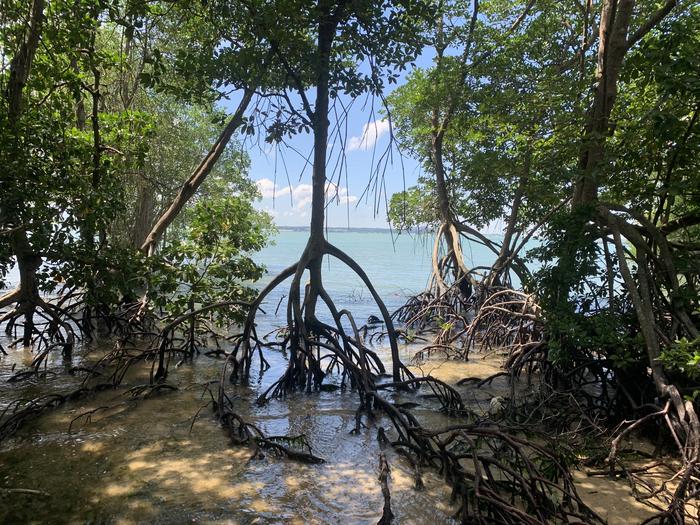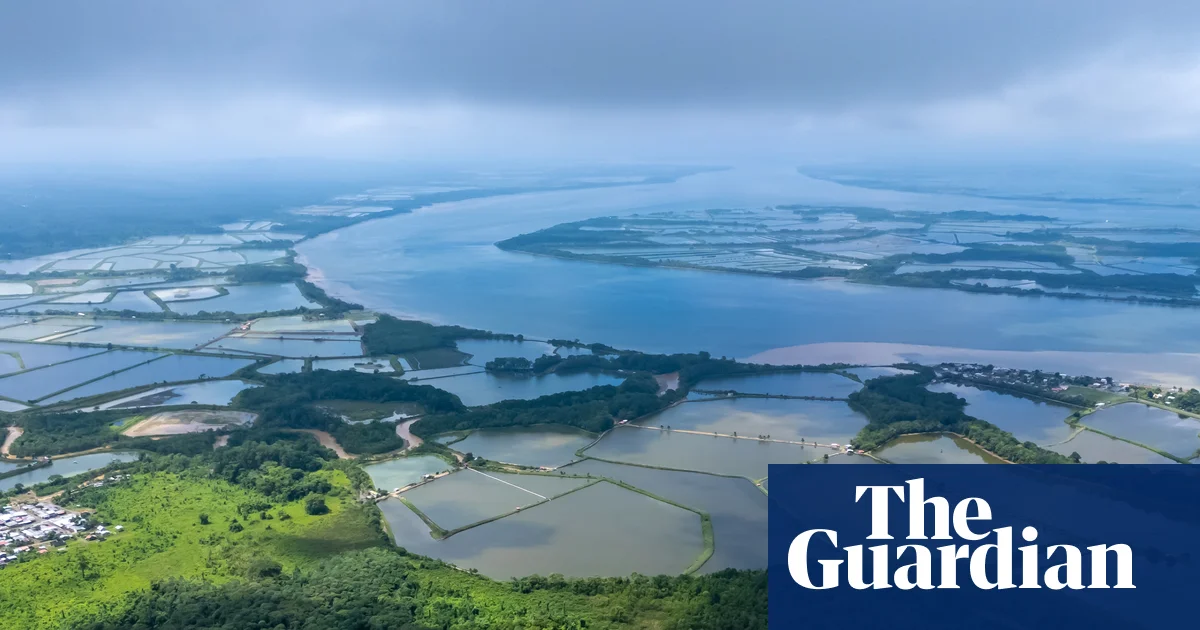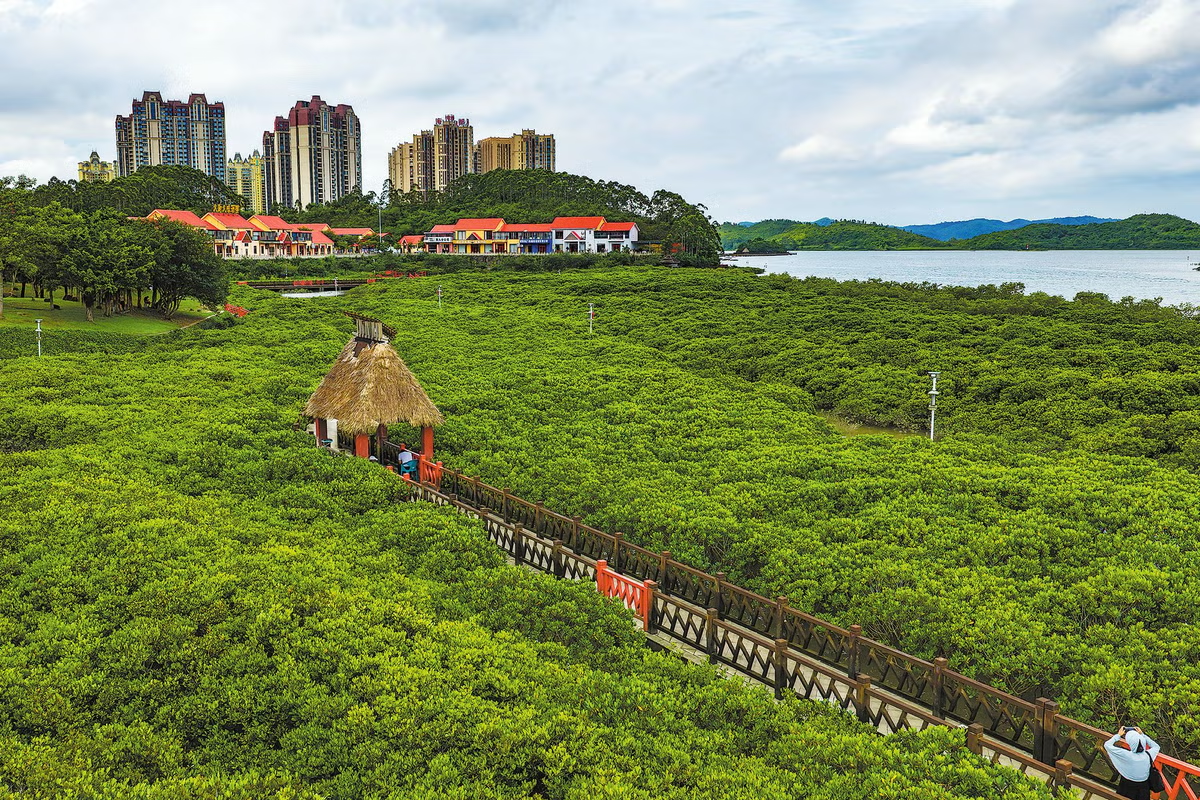
China has become one of the few countries to buck the global trend of coastal deforestation, achieving a 44 per cent increase in mangrove forest area since 2000, according to the latest data from the Ministry of Natural Resources and the National Forestry and Grassland Administration.For Xu Hechang, 38, a crab farmer who leases 131 acres of coastal ponds in Zhanjiang in South China’s Guangdong province, the rapid improvement is tangible.“The shells of crabs raised here are harder and the meat is sweeter because of the clean water,” he said.“My family has farmed here for generations, but never at this scale. Now, with healthier mangroves, the crabs can sell for double the normal price.”The latest data shows that China’s total mangrove canopy now stands at approximately 78,300 acres, up from a low in 2000 of 54,000 acres. The milestone establishes China as one of the few maritime nations globally to secure net-positive growth in intertidal wetlands.China’s trajectory began to diverge in the 2000s as protection efforts intensified. Progress accelerated further in the past few years after the Ministry of Natural Resources and the National Forestry and Grassland Administration rolled out a special action plan for mangrove protection and restoration (2020-25), setting targets to create 22,363 acres of new mangroves and restore 24,092 acres of degraded forests.Prioritising the protection of mangrove ecosystems, authorities banned further reclamation of tidal flats, incorporated remaining mangrove stands into ecological protection red lines and promoted tailored, science-based restoration approaches.Workers set up crab pots in a mangrove swamp in Wenzhou, Zhejiang province, in July 2024 (PROVIDED TO CHINA DAILY)“Mangroves are the only woody plant communities that survive in the intertidal zones of tropical and subtropical regions — flooded at high tide and exposed at low tide,” said Ding Xinyuan, an associate professor at the mangrove protection research centre of the Southern Marine Science and Engineering Guangdong Laboratory (Zhanjiang).“Ecologically, they are defined by their specialised aerial roots. These roots allow the trees to absorb oxygen in waterlogged mud, and some species can excrete excess salt through their leaves,” Ding said.Ding said the tangled root systems act as natural nurseries, providing shelter and breeding grounds for fish, crabs and other benthic organisms. The dense roots also help purify water by slowing tidal currents, trapping suspended sediments and absorbing excess nitrogen and phosphorus from aquaculture runoff before it reaches the open sea.“Globally, they are among the planet’s most powerful carbon sinks, sequestering carbon dioxide from the atmosphere at a rate significantly higher than that of a tropical rainforest of the same area,” he said.Home to China’s largest mangrove area, accounting for nearly 40 per cent of the national total, Guangdong was assigned the largest share of the 2020-25 national plan: creating 13,590 acres of new mangroves and rehabilitating 6,178 acres of degraded forests. Yet much of its suitable intertidal land had long been converted into aquaculture ponds that supported tens of thousands of coastal households.“The biggest challenge in restoration is not planting trees, but balancing nature with livelihoods,” Ding said.Science has offered a way forward through an integrated mangrove-aquaculture model, such as the one used by crab farmer Xu. Unlike conventional ponds that enclose all water for farming or clear all vegetation to maximise space, the approach restores ecosystems while maintaining productivity.Similar efforts have taken shape nationwide. Fujian, home to the Zhangjiangkou National Mangrove Nature Reserve, has expanded greenbelts along the Zhangjiang River estuary. Hainan province, which boasts the country’s richest mangrove biodiversity, has focused on genetic research and invasive species removal. Coastal provinces have incorporated mangrove targets into their local five-year plans, helping fulfill the national blueprint.China has also shown a willingness to share its experience internationally. Efforts include building the International Mangrove Centre in Shenzhen, Guangdong province, integrating mangrove conservation into the Kunming-Montreal Global Biodiversity Framework, and expanding South-South technical cooperation with mangrove-restoring countries across Asia and the Pacific.Despite being home to only about 0.2 per cent of the world’s mangroves, China is demonstrating that restoration is not a choice between nature and humanity, but a synthesis of both. It is proving that even a small fraction of greenery can anchor a coastline, sustain a community and contribute to global ecological balance.
Ecological action spurs mangrove regrowth
THE ARTICLES ON THESE PAGES ARE PRODUCED BY CHINA DAILY, WHICH TAKES SOLE RESPONSIBILITY FOR THE CONTENTS
694 words~3 min read