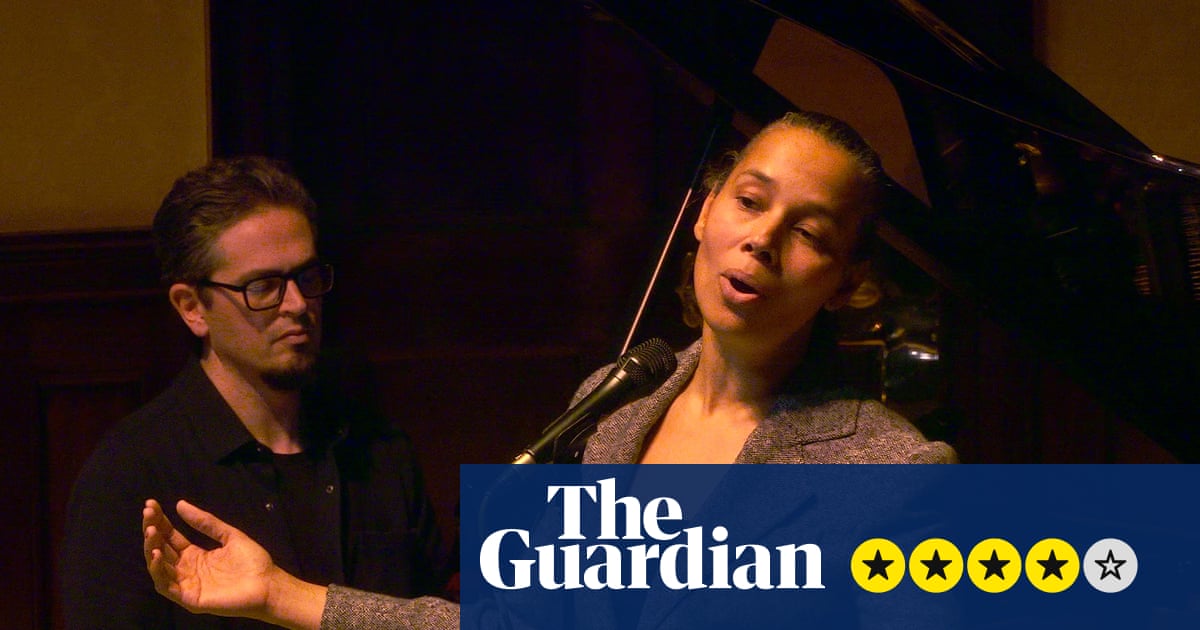
Public radio’s longest-running daily global news program.AboutContactDonateMeet the TeamPrivacyTerms of use©2026 The World from PRXPRX is a 501(c)(3) organization recognized by the IRS: #263347402.Rhiannon Giddens discusses the history of the banjo and its African rootsMusician Rhiannon Giddens is a modern-day Renaissance woman who trained as an opera singer before veering into folk music. She’s an award-winning composer and multi-instrumentalist. But she is first and foremost a dedicated banjo player who has been researching and teaching the instrument’s African heritage. The World’s Carolyn Beeler speaks with Giddens about the origins of the banjo.Musician Rhiannon Giddens is a Renaissance woman whose work shines across a variety of genres. She is a talented singer, composer and multi-instrumentalist; she has won two Grammys, a Pulitzer Prize and a MacArthur “Genius Grant” for her work. Giddens was trained at a conservatory where she studied opera, but decided to pursue a career as a versatile folk instrumentalist.More than anything else, Giddens is committed to the banjo — playing it, researching it and teaching its African heritage. She is also the founder of Biscuits & Banjos Foundation, which celebrates the African diaspora’s role in shaping American identity. For Juneteenth, Rhiannon Giddens joined The World’s Host Carolyn Beeler to talk about her work and the influence of the African diaspora on American folk music.Rhiannon Giddens:So, I mean, “Build a House” just stands for, you know, in my eyes, African American history. A man’s brought over to build a house. He builds the house, he builds the gardens and then he’s told to go. He tries to build his own house; it’s burned down. He finally finds a place to live. And so, at the end, he says, “You brought me here to build a house, but I’m not gonna be moved. I’m here. I’m stayin’.”I mean, yeah, it’s a ballad that got turned into a kids’ book. So, I mean, if that’s the intention — if you place that history upon that character, you know. It is a very broad idea, “You brought me here to build your house,” but that’s basically, you know, when you think about how much slave labor built the United States, and the very manor houses that these plantation owners were living in. So, it’s the knowledge of how to grow rice, the knowledge of all of the stuff that goes into building the edifice of the nation-state of the United States. So much of that is slave labor, slave knowledge and slave wisdom.Well, I think it’s pretty certain that you don’t have the banjo without the transatlantic slave trade, because that is literally the reason why they have Africans in the New World. And I think it’s pretty safe to say in our timeline, the banjo comes about because of enslaved people being brought from Africa to the Caribbean and creating sort of Creole cultures there.Obviously, Africa is an enormous continent, and so people are being brought from different areas, put together, maybe not a common language, maybe not a common religion, but there were aspects of music and dance that started to coalesce around instruments that became known as the banjo. That’s the latest research. And it makes a lot of sense to me that it is a Creole instrument when it begins in the Caribbean, because the Caribbean was also the way station for so many enslaved people through which they ended up in the United States or down in South America.A majority of them came through the Caribbean, so it makes sense that that instrument ended up in the United States as sort of an indelible emblem of enslaved life; and then later on after Emancipation, the character of the African American, the banjo was known as a cultural artifact of Black culture. It was just so overwhelmingly known that the fact that it’s so overwhelmingly known in the opposite direction now is just such a fascinating thing.Well, you’re hearing akonting. Akonting is one of the numerous lute-like instruments that are all over West Africa and other parts of Africa. And there are so many. There’s the buchundu, the ngoni, the guembri … there are a lot of different instruments. And I think it’s really irresponsible to say that there’s one banjo ancestor. I think that’s impossible. I think we’ll never know exactly how we got the banjo in the Caribbean, but all of these instruments, if they’re not direct ancestors, they are kin. And that’s all I care about. Now, the akonting was my entryway in, because it is one of the few of these lute-type instruments that are all, kind of, from a class of instruments brought over by Arab traders, and it [itself] came from China. So, it’s like this huge mass movement of instruments from East to West. And you see these stringed lutes all over the place, and they all have different names, not just in Africa and Europe. And the banjo — there’s only a few of these kinds of instruments that’s played with the back of the forefinger. The nail on the forefinger, and the thumb … that is how Daniel is playing. So, one of the old styles of playing the banjo — which we now call clawhammer — but which is called lots of different stuff, and that’s how I play, is played the same way that Daniel is playing that akonting. And I saw that when I met him at the Black Banjo Gathering in 2006. I saw that and heard it, and I was like, “Whoa.” And so, I went to the Gambia to study that for two weeks. The left hand was, you know, there’s a whole different ballgame because it’s a different scale, all this kind of stuff. But the right hand was exactly the same, and it was like, whoa. So, that was a real entryway for me. And there are only a few other instruments that I’ve come to know are played with the same right-hand technique, and they’re all in Africa. So, for me, it’s the style of play that’s even more of an ancestor. That for me is very powerful.I mean, yeah! I mean, like, c’mon, we don’t get a lot of that as African Americans. There’s a very common sort of wall that hits you when you try to do your ancestry, you know? It’s like, if your ancestor was brought over and labeled as “Female, 15,” that’s it. You have no idea where she came from, you know what I mean? So, to have an embodied piece of connection like that, for me, was really, really powerful. That’s why it’s important to reach out to these musicians and go back across the ocean. But then they also want to connect back in the other direction. So that, for me, has been the work of recent years. It kind of started with Daniel in the Gambia, and that’s been really powerful.Yeah, it punches you in the face before you’ve known it. Because you’re like, “Doo doo doo doo doo, oh, okay.” You know? And that’s kind of how I like to do it, because that’s kind of the tradition, you know? Like, “Oh Susanna,” the verse that nobody does has the N-word in it. And it’s just like, you turn around, you’re like, “Oh, oh, oh, okay. Great. That’s really nice.” I thought it was important to not shy away from that. I mean, it’s not gonna be a Top 40 hit. Nobody knows that song. But a lot of the work that I do, really engaging in a historical sense, is used by teachers, and it’s used by folks who are educating, and that makes me happy. I’m actually working on a project that uses all the tunes from this time, liberating them. I’m working with a musician from Congo who’s writing new songs on top of these tunes, and it’s just been incredible. So, that’s really my endgame. People don’t understand how racist this stuff was. I mean, people like to talk about blackface, but when you think about how long it was popular, how far it reached around the globe, how much it has affected and still affects our culture through things that we don’t even think about. There’s reams to be written on it, but I’m just doing what I can.I’m a banjo player, and when I’m asked to play the banjo, I’m going play it. I’ve never met Beyoncé, you know what I mean? For me, it was an opportunity to have greater exposure in the Black community, because [with the] mainstream Black community, there was not a lot of interest in what I’ve been doing, which is fine, neither in mainstream culture nor in general. So, I’m always trying to find the folks like me who want to come into this music. I just want to be available to them. So that, for me, it was an opportunity to reach out of where I have been sort of sequestered in my NPR world, you know. And I did that. I did it for the mission.Parts of this interview have been lightly edited for length and clarity.
Rhiannon Giddens discusses the history of the banjo and its African roots - The World from PRX
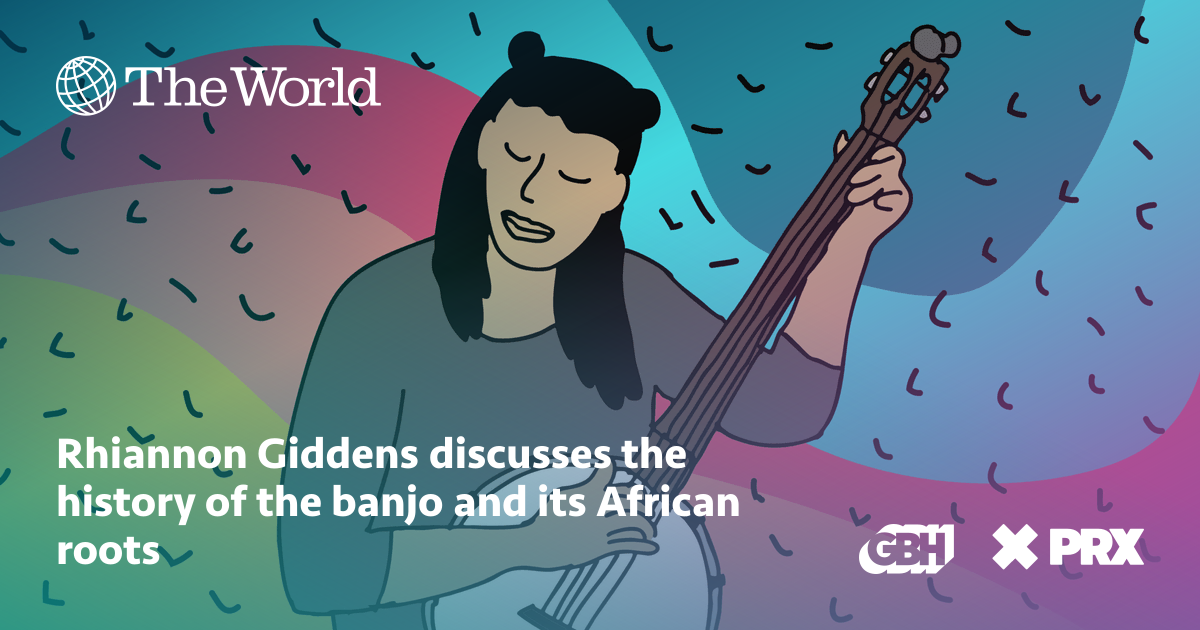
Musician Rhiannon Giddens is a modern-day Renaissance woman who trained as an opera singer before veering into folk music. She's an award-winning composer and multi-instrumentalist. But she is first and foremost a dedicated banjo player who has been researching and teaching the instrument's African heritage. The World’s Carolyn Beeler speaks with Giddens about the origins of the banjo.
1,521 words~7 min read