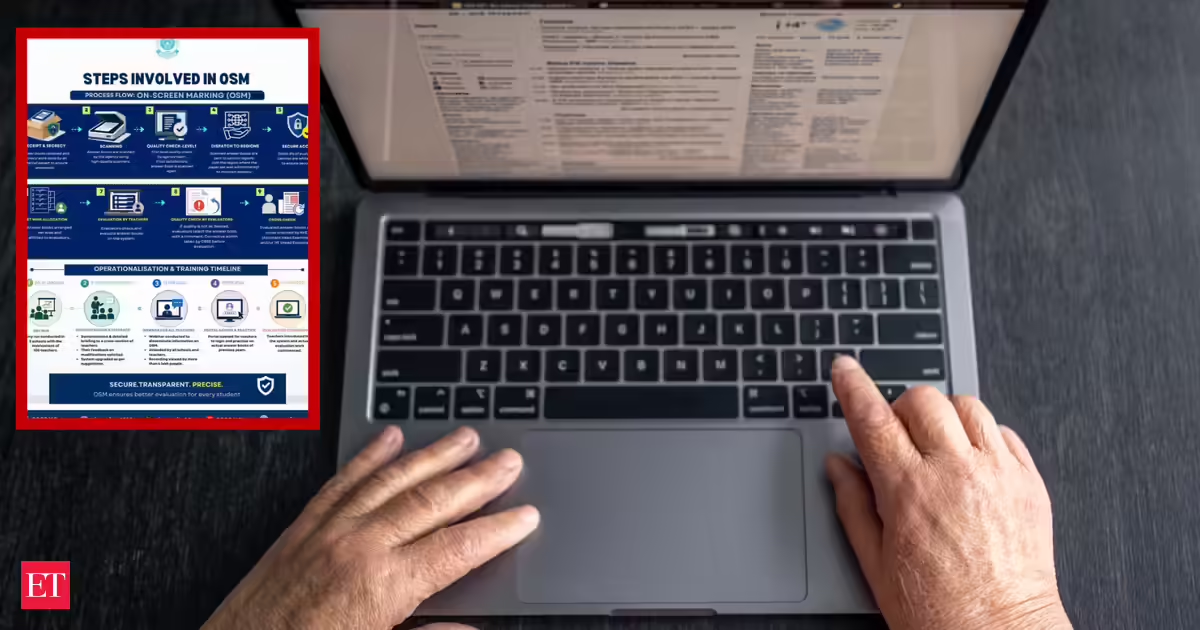
Nearly six weeks after the declaration of the CBSE Class XII results, the controversy surrounding the On-Screen Marking (OSM) system remains unresolved. Affecting about 17.7 lakh students and nearly 98 lakh answer scripts, the initiative was introduced to enhance fairness, transparency, uniformity, and objectivity in the evaluation of descriptive answer scripts. Yet, widespread complaints about portal failures, payment disruptions, limited disclosure of answer scripts, and concerns about scanning and evaluation have raised questions about whether these objectives were actually achieved.(Sign up for THEdge, The Hindu’s weekly education newsletter.)In response, Coempt Eduteck has defended the OSM rollout by citing certifications, audits, and institutional scrutiny. However, the central issue is far simpler: were students—the individuals whose futures depend on these results—provided a meaningful opportunity to independently access, verify, and challenge the evaluation of their answer scripts?The available data suggest otherwise. Despite involving nearly 17.7 lakh students and about 98 lakh answer scripts, only a small fraction of students could access their scripts, seek verification, or pursue re-evaluation, leaving the overwhelming majority of answer scripts outside independent scrutiny.
Coempt defends OSM rollout, but transparency concerns remain
Coempt defends the OSM rollout amid transparency concerns, as most answer scripts remain inaccessible for student verification.
TL;DRAI
CBSE's OSM digitised 98 lakh scripts with only 4% disclosed; scanning defects and mismatching errors emerged. For CIOs: vendor certifications don't ensure operational quality—document digitisation requires transparent access and pre-launch verification, not post-hoc audits.
1,399 words~6 min read