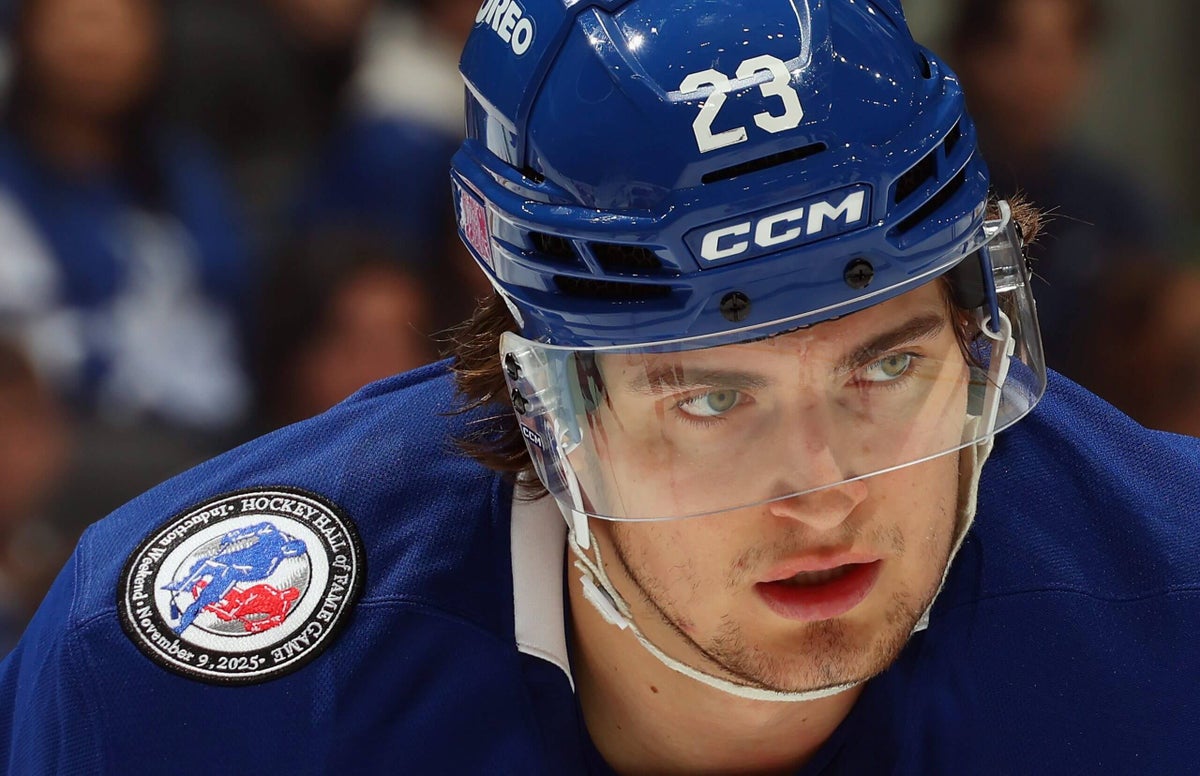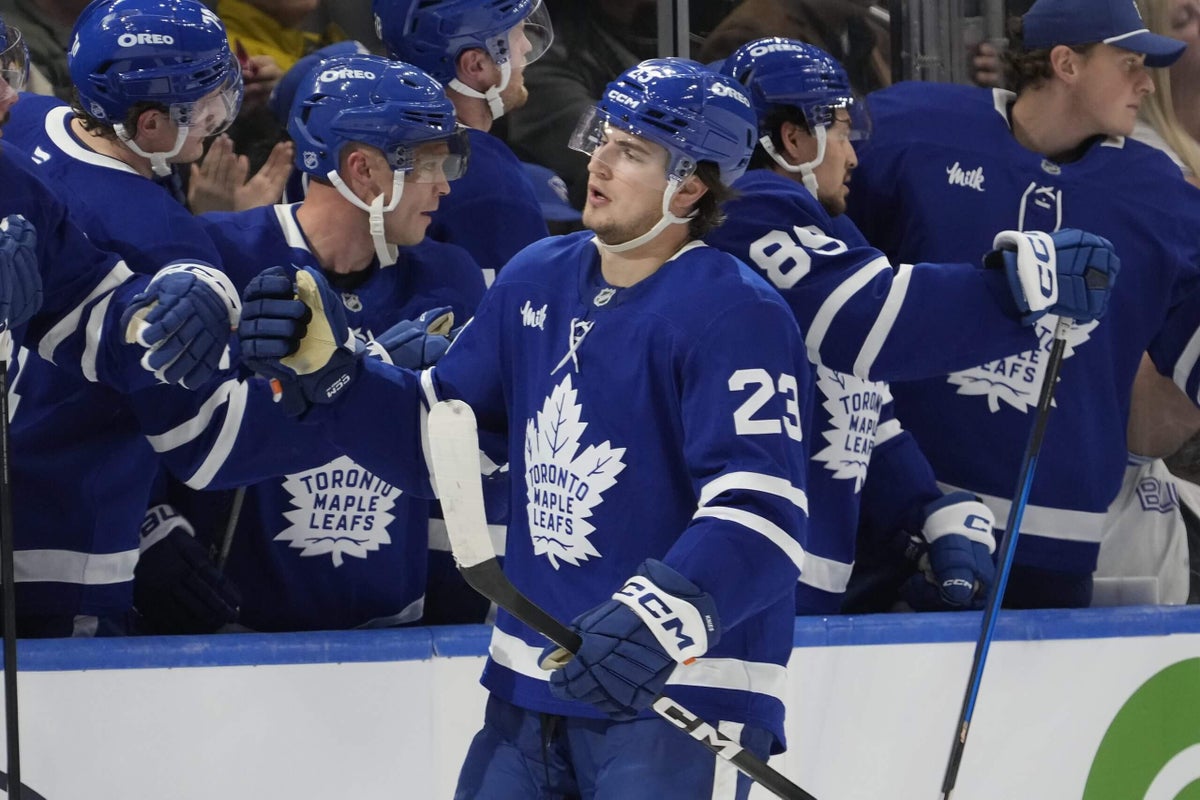
A few years ago, Mason McTavish seemed like a future franchise cornerstone for the Anaheim Ducks. Matthew Knies looked like the ideal power forward to lead the Toronto Maple Leafs’ supporting cast behind the Core Four.Now, they’re fifth and sixth on Chris Johnston’s latest trade board.So, what’s changed?The market, for one. It’s a lot harder to find difference-makers outside the draft in today’s NHL. The free agency class is weak, and teams have more money to spend in a rising cap world. That should turn up the heat on the trade front and force teams to get creative. Knies and McTavish are generating buzz, and the potential returns for them could be the best way for Anaheim and Toronto to address other areas of need.But there’s been one other development over the last year: their respective games, with McTavish and Knies both taking a step back on the ice.So what went wrong this past season? What promise do these players show? And what’s the case for and against trading them? Let’s dive in.Flyers trade Samuel Ersson, Emil AndraeKevin Kurz and Madison EadesMason McTavish, Anaheim DucksOn paper, McTavish is a general manager’s dream — a 23-year-old cost-controlled center who brings some size and skill to a lineup and was a top-five pick. The reality just isn’t as sparkling. McTavish has the tools to be an effective second-liner; it just hasn’t come together consistently enough at the NHL level. And sometimes, that’s the perfect setup for a change-of-scenery trade.It really all depends on whether another team thinks they can get the best out of McTavish after this past season, if the Ducks decide to move on from him.That ‘best’ has been seen in glimpses in the offensive zone. He does his best work off the cycle. McTavish has handled the puck in tight to generate looks from the scoring areas, whether it’s with his effective shot, rebounds created or some dangerous passing to set up his teammates. The hands and the skill are there, but other elements are lagging.One of the most glaring is his footspeed, which he acknowledged as an area to work on this summer. The Ducks played with a lot of pace, and McTavish struggled to keep up with it. He wasn’t active enough in transition or with the puck on his stick.His play outside the offensive zone was even more concerning, with his play along the boards, turnovers and overall defensive play. Some of the problems were that McTavish’s timing seemed off a lot of this season. His play was too reactionary, which would pull him out of position, and without that skating speed he failed to recover from those mistakes. Shifting him to the wing at points didn’t stop him from floating around the defensive zone, either.Pair all that with slowed offensive stretches, and it led to McTavish falling out of favor and out of the lineup entirely for a few regular season and playoff games as a healthy scratch.It’s possible that all of it was set in motion by his late start to the season due to contract negotiations, and it spiraled as the year went on. It can be challenging enough to catch up after missing camp, let alone when trying to learn and adapt to a new coach and system that demands a lot more pace. Maybe he just needs a more routine offseason and training camp. Or maybe it’s that he doesn’t mesh with Joel Quenneville’s system in a top-six role, either.That’s what the Ducks, and any other interested team, have to sort out. Because while McTavish projected to be worth his $7 million cap hit last summer, his market value has since trended below that.So has his range of possible outcomes, based on players with similar traits. So, is McTavish bound to be the next Max Domi or Alex Galchenyuk? Or is he just a later bloomer, like Dylan Strome or Derrick Brassard? Does he just need a new environment to thrive, like Ryan Strome or Pavel Zacha?Or can he raise the bar higher by showing more of the traits that earned him that No. 3 pick? Anaheim could try to find that out for itself. The team did just invest $42 million in him over six seasons, less than a year ago. If the team moves on too soon, the risk is that he thrives elsewhere as a reclamation project. But if he doesn’t find his game this year, it could tank his trade value further.The rising cap works in his favor, though. So does the number of teams looking for centers. The market is shallow and costs are rising around the middle class, so a 23-year-old reclamation project should be an attractive option. Plus, he’s the kind of player who can help teams at all different phases of their respective contention cycle.His age puts him right in the range of an up-and-coming team, whether it’s the Vancouver Canucks at rock bottom or a team on the fringes of the playoff picture like the Detroit Red Wings, Pittsburgh Penguins or Philadelphia Flyers. A McTavish trade could be another measured step in the late phases of the Montreal Canadiens’ retool. But he could also make sense for a playoff-caliber roster that doesn’t have the patience to develop a young player, or doesn’t have that kind of pipeline due to the cost of competing.With all that demand, the Ducks shouldn’t have to sell low despite his play this year. That, plus Anaheim’s talent up front and in the pipeline, helps limit some of the risk here — especially if a McTavish trade is the key to adding a difference-maker on defense.Matthew Knies, Toronto Maple LeafsOn the surface, the Knies situation is completely different from McTavish. Knies’ six-year, $46.5 million extension was signed early last offseason and unlike the Ducks, the Maple Leafs aren’t deep with up-and-coming forward talent.Yet there’s a lot more smoke here — even when skipping past Knies being a part of 2022 trade conversations for Brandon Hagel in 2022, or Mikko Rantanen in 2025. This past deadline, he was involved in trade talks again; it’s a story that gained even more traction in recent weeks when the “32 Thoughts” podcast addressed a Knies-to-Montreal deal that ultimately was late over the finish line.All Knies speculation could have been put to rest after a general manager shake-up. That was Brad Treliving’s attempted move, and now it’s the John Chayka era … except this situation is still developing after front-office changes. Already, Knies has jumped from No. 13 on Johnston’s trade board to No. 5 in just under two weeks.Knies has qualities that general managers look for. It’s a unique combination of skill, size and a physical edge. At 24 years old, he is likely only scratching the surface of his full potential, so if his name is out there, it’s going to generate buzz around the NHL.That’s still true, even when acknowledging some of the drawbacks in his game. Knies isn’t a dominant play-driver, has benefited from skating alongside some elite offensive players in Toronto’s top six, saw his goal-scoring dip this past year as his shooting percentage came down, and doesn’t have the strongest underlying numbers. But there are still promising signs that point to him being more than just a passenger alongside players like Auston Matthews.Knies has the footspeed and strength to drive up the middle of the ice and to the net-front areas, where he tends to do a lot of his damage. He’s not a controlled-entry machine or primary puck-carrier, but still creates chances off his entries. When the Leafs chip the puck in, he can forecheck and pressure the puck to regain possession, or just extend zone time. Pair those power-forward qualities with his ability to finish chances from the quality areas of the ice and his passing game, which has developed into a more dangerous threat over the last year, and it makes for a promising top-sixer.The red flags are a part of the conversation, though, especially how much his five-on-five play cratered this year. His xG rate sank below 43 percent, due to slumps on both ends of the ice, especially down the stretch. Toronto generated fewer shots and scoring chances in his minutes, and allowed a much higher rate back. Some of that falls on Knies’ shoulders, but his surroundings are also a part of the equation. The Maple Leafs’ top six was short-handed coming into the season after not adequately replacing Mitch Marner. The blue line was incredibly one-dimensional with few puck-movers to help support the forward group. And Craig Berube’s system continued to chip away at this team’s true ability and ceiling.And those setbacks, unsurprisingly, have had a ripple effect on some of his comparables. Last year, his No. 1 match was Mark Stone. After this season, he shares the most traits with Victor Rask. But there are still similar matches from year-to-year in Max Pacioretty and Timo Meier, and those are paths worth betting on.Whether the Maple Leafs plan to reload for a playoff run next season or quickly retool, keeping Knies makes a lot of sense given his age and their timeline — even after some downs last year. He projects to be worth his $7.75 million contract (and then some) throughout the life of this deal, even after last season’s concerning trends.Everything that makes him a fit for the Leafs also makes him an attractive option around the league. At the very least, that’s worth listening to this summer because this team has so few needle-moving assets otherwise. It’s a tough position to be in, but it’s a consequence of poor asset management over the years.But it doesn’t mean this team should be racing to move him, either. Knies likely has a lot of untapped upside still and hasn’t fallen out of favor like McTavish or played his way out of the Maple Leafs’ lineup. And if Toronto does decide to trade him, it puts the team right back on the market for another top-six winger, which won’t be easy to find.It could be worth it in the right kind of trade — one that centers around certainty and skill, versus the unknown of draft picks or lesser-known prospects. It’s just risky for a team under extreme pressure with little maneuverability. Data via Evolving-Hockey, HockeyViz, HockeyStatCards, All Three Zones, Dom Luszczyszyn, Natural Stat Trick and CapWages. This story relies on shot-based metrics; here is a primer on these numbers.
What can Matthew Knies and Mason McTavish offer as trade targets?
Both Knies and McTavish have incredibly promising potential but saw their stats crater in 2025-26. To move or not to move?
1,740 words~8 min read