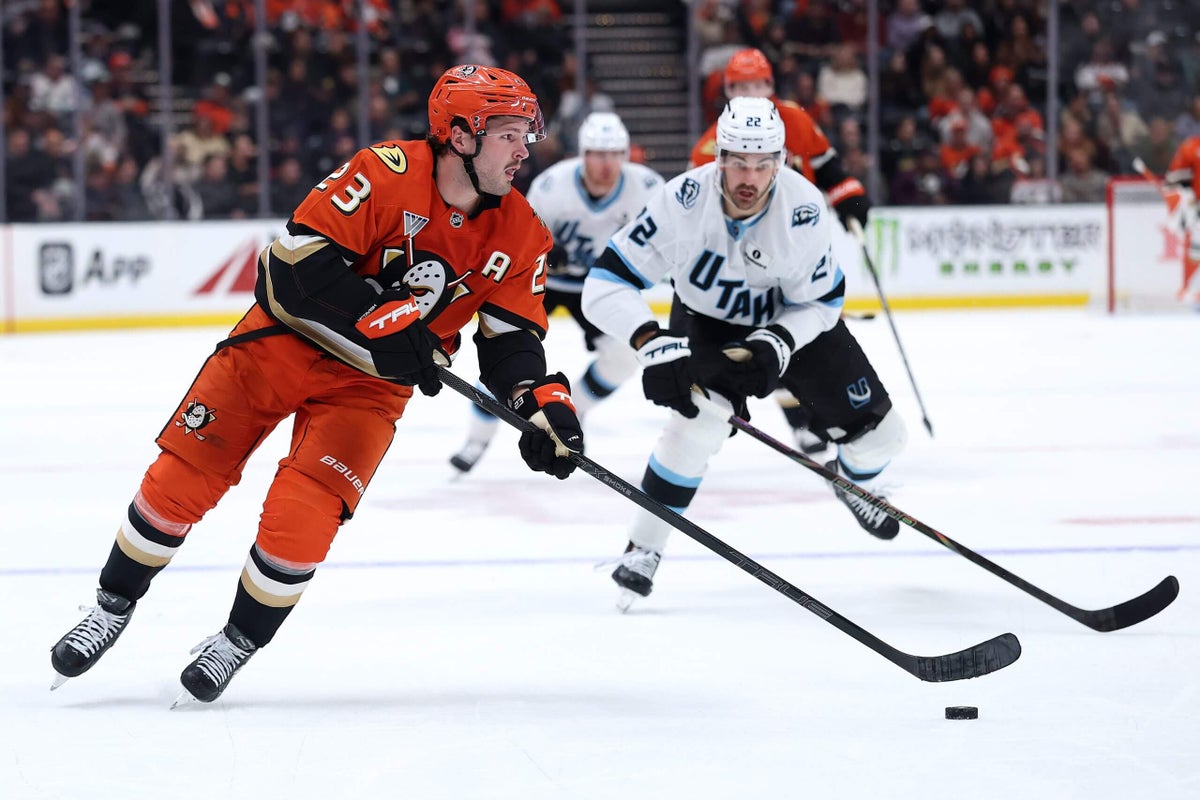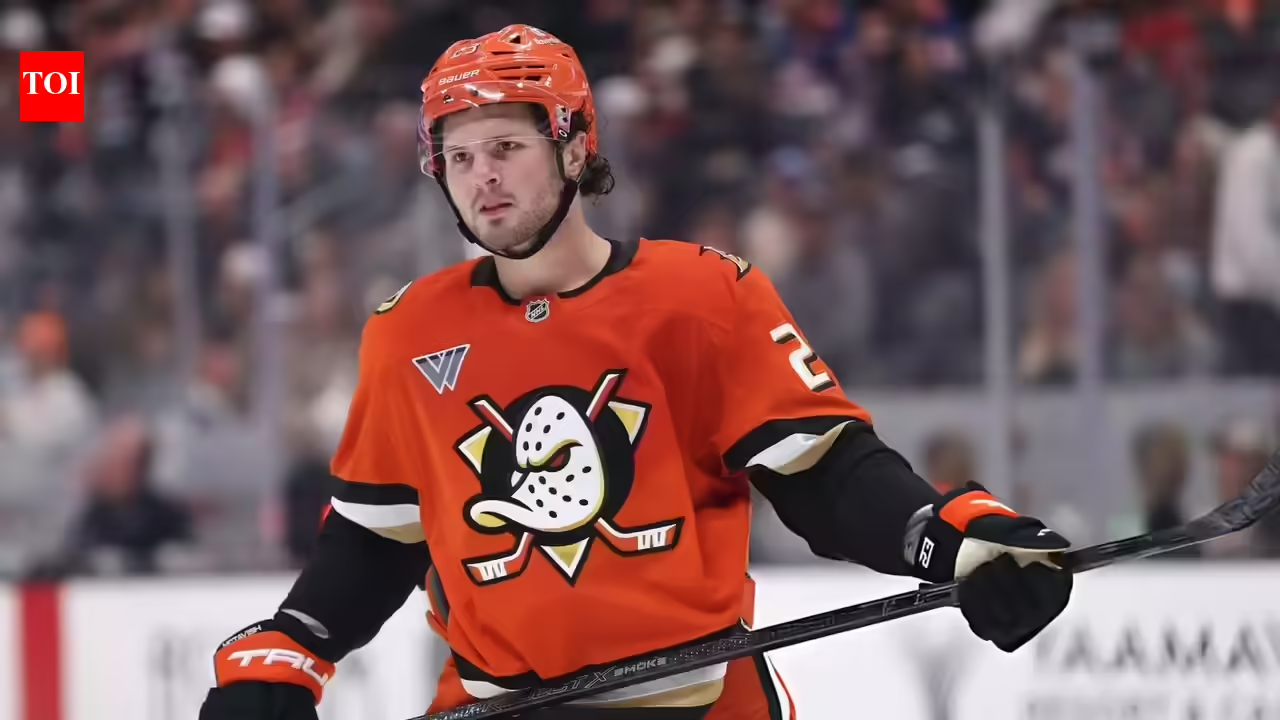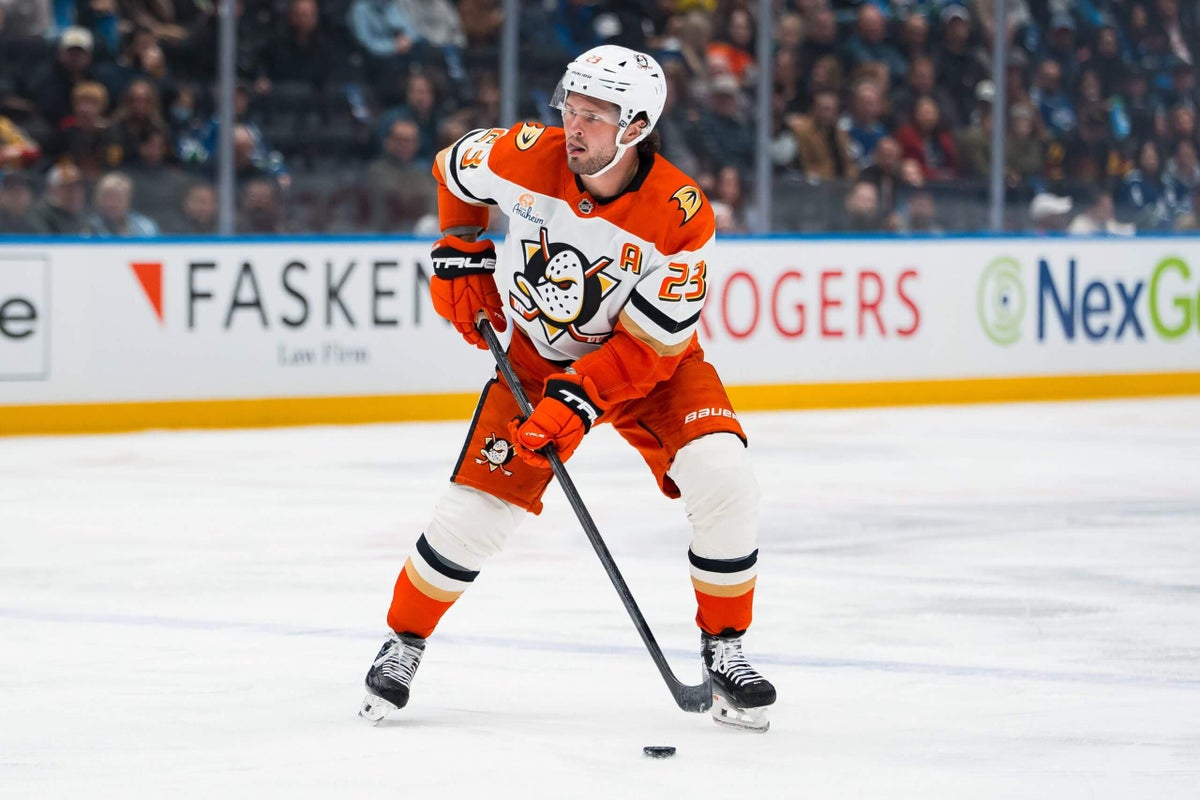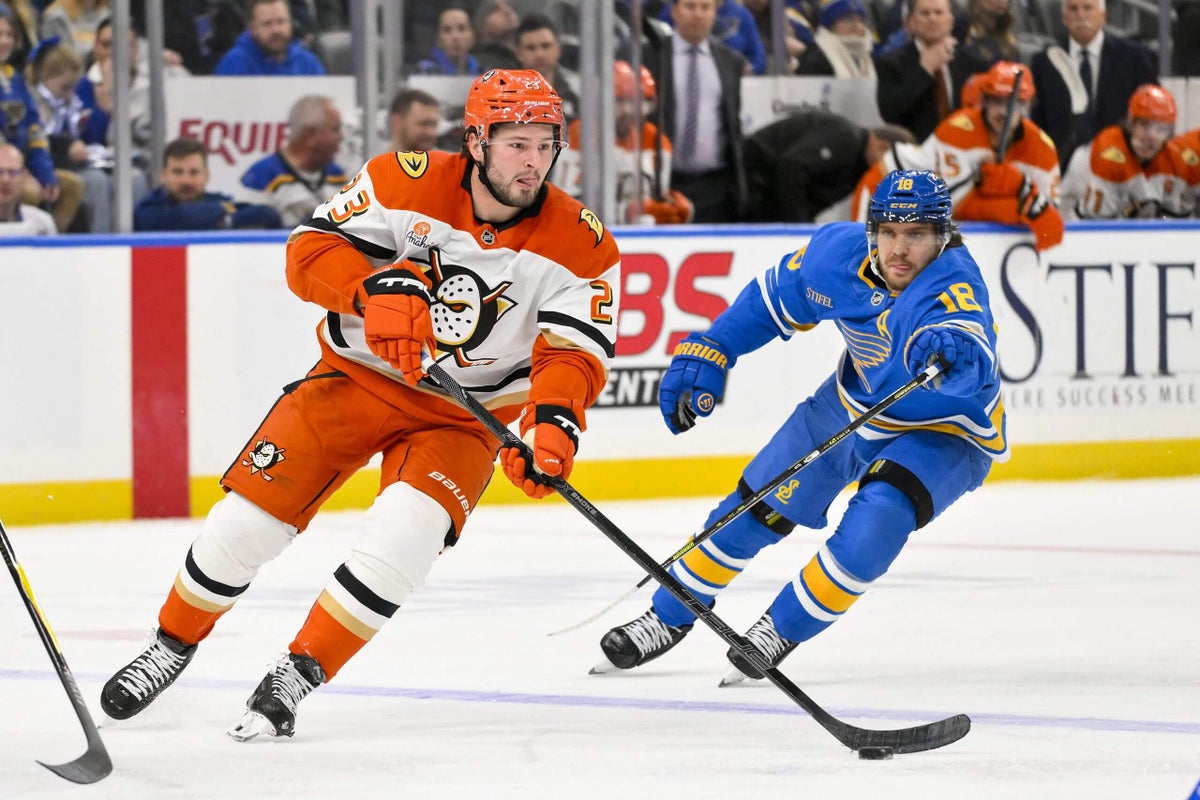
In the summer of 2006, Anaheim had just made a run to the Western Conference final, which ended with a loss to Edmonton. After the Oilers eliminated those then-Mighty Ducks and lost to the Carolina Hurricanes in the Stanley Cup Final, Oilers defenseman Chris Pronger asked to be traded.Brian Burke, then the Ducks’ general manager, had an up-close look at the impact Pronger had in the Oilers’ playoff run and jumped at the opportunity to acquire Pronger, whom he drafted while with the Hartford Whalers. Pronger became the massive final piece to Anaheim’s 2007 Stanley Cup championship.Why is this relevant to the current Ducks?This season’s Ducks won their first playoff series in nine years, then lost to the Vegas Golden Knights in the second round. With a team on the rise, the Ducks could be seen as having opened a new contention window.As part of this season’s success, Mikael Granlund took over second-line center duties behind young star Leo Carlsson. That, in theory, was supposed to be Mason McTavish’s spot, the place where he would shine for years. Instead, McTavish got moved off center to left wing and occasionally got scratched by Ducks coach Joel Quenneville in the regular season and playoffs.McTavish’s struggles to thrive in Quenneville’s system were apparent most of the season. The 23-year-old backslid offensively, defensively and in details such as faceoffs, an area where he had been one of the Ducks’ best. As he finished the first year of a six-year, $42-million contract, McTavish identified what he needed to do in the offseason and future to bounce back in 2026-27.“Round out my defensive game,” McTavish said. “I think that’s probably a big thing. I think it kind of got better toward the end. And I think just foot speed, too. Maybe come in a little lighter. I haven’t put too much thought into what my summer’s going to look like yet. … But obviously, I think foot speed and maybe come in a bit lighter, quicker, I think could go a long way.”Asked about McTavish’s erratic season and what the team would seek from him going forward, Ducks general manager Pat Verbeek said, “If we were to critique Mason, it’s probably just more consistency from night to night.”“And I think if you asked him, that would be his response as well,” Verbeek continued. “Which ultimately would lead to more ice time, which would mean to never getting healthy scratched. There’s lots of pressures when new contracts come out on younger players, and so sometimes that can affect them in a negative way. Whether the pressure is putting too much pressure on themselves — and I think that happens, that happens a lot and it’s very common — next year there’s nothing to worry about as far as contract. He can play a more free game on the ice and not worry about the pressure.”What does that mean for McTavish’s future? The Ducks obviously can keep McTavish and work with him to improve, and there is no sense that they’re in a rush to trade the No. 3 draft pick from 2021, much less move him for future assets.However, McTavish might be the kind of valuable trade chip that can land a star-level or higher-tier center and make Anaheim formidable down the middle. Is this the right time to strike? What are the potential options if McTavish is involved in a deal?Option No. 1: Auston MatthewsMitch Marner worked himself out of Toronto and turned around his narrative in this postseason with a performance potentially worthy of the Conn Smythe Trophy for Vegas. Could Auston Matthews break free from the endless scrutiny in Toronto and see Anaheim as the place to win the Cup?Will Matthews commit to the plan new general manager John Chayka has for the franchise after a dreadful 2025-26 season? Chayka told reporters at the NHL Scouting Combine that Matthews takes pride in being the Leafs’ captain and is “someone who wants to win in Toronto, which aligns with how we’re thinking about it.”If that is the case, then this is a moot point. Matthews has two years remaining on his contract that carries a $13.25 million average annual value. But with the Leafs coming off a 78-point season and unlikely to unseat one of the five Eastern Conference playoff teams — or leapfrog a resurgent, injury-riddled Florida Panthers club — out of the brutal Atlantic Division, would Matthews want to risk missing the playoffs again for one or two of his prime years?Matthews’ most recent season on ended March 12, when an illegal hit by Radko Gudas led to MCL surgery. Matthews’ injury history is starting to become lengthy. He has been limited to 67 and 60 games the last two seasons respectively, which has helped limit his production to 60 total goals. He’ll still be only 29 when next season starts, but he has played a lot of tough seasons.But this is the game’s most prolific goal scorer since he came into the league. In Anaheim, Carlsson and Matthews would be a 1A/1B tandem to throw at teams. Imagine adding a player with two 60-goal seasons.One worry is whether Matthews has already hit his peak and that the injuries night hasten his decline. But with McTavish and an array of left-shooting defensemen (outside of Jackson LaCombe) on the roster and in the system, the Ducks have the kind of trade pieces that might interest Chayka — if Matthews signals he wants a change. The Ducks sent their 2026 first-round pick to Washington in the John Carlson deal, but they’ve got their first-round pick in 2027 along with their own second-round selection this year and three in 2027.Option No. 2: Dylan LarkinOne would have to think Verbeek has already called Steve Yzerman, his former boss in Detroit to ask about Dylan Larkin, the Red Wings captain who shocked the NHL with his request to be traded. But any deal to trade Larkin would require him to waive his no-trade clause.With five years left on Larkin’s contract, Yzerman is under no pressure to move his six-time 30-goal scorer unless the situation deteriorates into a full-blown mess that could wreck Detroit’s 2026-27 season. But what if the Ducks were to step up with a package that Yzerman found acceptable to take to Larkin and his agent, Pat Brisson? Colleague Max Bultman theorized that the Red Wings would have interest in McTavish, with left-shooting defense prospect Stian Solberg (the No. 23 draft pick in 2024) and Anaheim’s first-round pick in 2027 added to complete the return.Trading for Larkin would work financially for the Ducks, as his cap hit is only $1.7 million more than McTavish’s over the same five remaining years, which would help since they still have to re-sign Carlsson and Cutter Gauthier, likely to big-money extensions.Perhaps Brisson, who has LaCombe as a client and negotiated the defenseman’s eight-year extension, could broker this by getting Larkin to see Anaheim as a team that could make multiple Cup pushes with him.Option No. 3 Robert ThomasRobert Thomas is the other front-line center who has been mentioned in trade discussions. The St. Louis Blues have entertained offers but aren’t looking to readily deal their No. 1 center unless it’s for a significant return.Why would the Blues trade their productive 26-year-old pivot, who has averaged 22 goals and 74 points over the last five seasons? He is a two-way player, and the affordability of his contract will only increase, since it runs through the 2030-31 season. That type of player isn’t dealt unless a) the relationship between the player and team is bad enough to cause a major distraction, b) it’s a one-for-one deal in which each club fills a specific roster need or c) the team is set to rebuild and could get multiple pieces that will affect future squads.The only element that might apply to Thomas’ situation with the Blues is that they missed the playoffs for the third time in the last four years and only have one series win since capturing the franchise’s only Stanley Cup title in 2019. Does their path back to annual playoff contention center around their current core of Thomas, Jordan Kyrou, Pavel Buchnevich and Colton Parayko? Or would they be better served to extract a ton of value for Thomas and reconfigure around a new core of Jimmy Snuggerud, Philip Broberg, Dylan Holloway and Dalibor Dvorsky? They would prefer to trade Parayko or Kyrou before Thomas.The Blues reportedly turned down Minnesota’s offer of goalie Jesper Wallstedt and young center Danila Yurov, and asked Philadelphia for a return of Porter Martone, 2025 first-round pick Jack Nesbitt and another first-round selection, which the Flyers balked at. But that should provide a sense of what St. Louis wants to even consider dealing Thomas.Are the Ducks interested? There isn’t strong sentiment that they are. Thomas also had a full no-trade clause kick in before last season.Bonus option: Roger McQueenInstead of moving pieces off the roster, the Ducks could continue their process of gradually building a contending team and fill the 2C position with Granlund or McTavish while Roger McQueen develops. That could take another year or two, but the organization firmly believes the 6-foot-6 pivot has that kind of offensive upside.While some Red Wings fans might pine for Anaheim to trade McTavish and McQueen, the Ducks likely would never consider moving both — perhaps not even for a superstar center, unless he has plenty of term left on his contract and is closer in age to the Carlsson-Gauthier-Beckett Sennecke core. One thing to remember is that Granlund has just two years remaining on his contract. McQueen could do an apprenticeship in the American Hockey League and eventually be his natural replacement.It might be unwise to project, but even the right-shot McQueen welcomes being seen as Ryan Getzlaf 2.0. And while quality centers in this offseason are worth kicking the tires on, Verbeek might find the last option to be the best when it comes to settling on a long-term partner for Carlsson in the quest to bring Anaheim another Cup championship to pair with the one Pronger helped them win 20 years ago.
Where do the Ducks and Mason McTavish go from here? Could he help land Matthews or Larkin?
After a challenging season, the Ducks must decide how to handle McTavish this summer.
1,688 words~8 min read