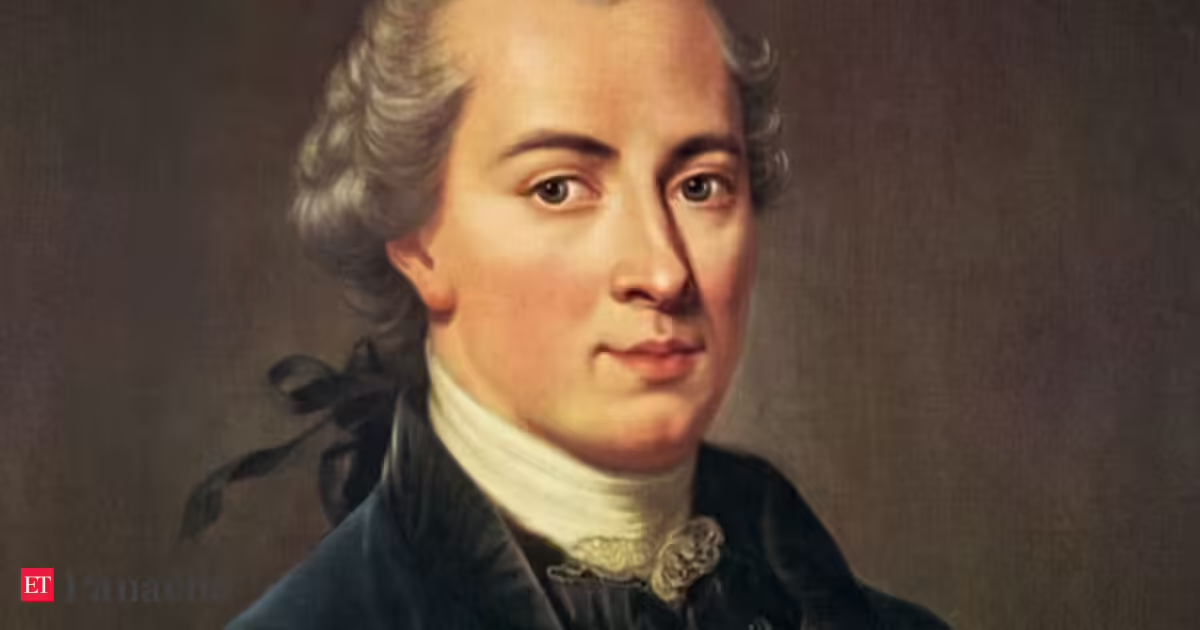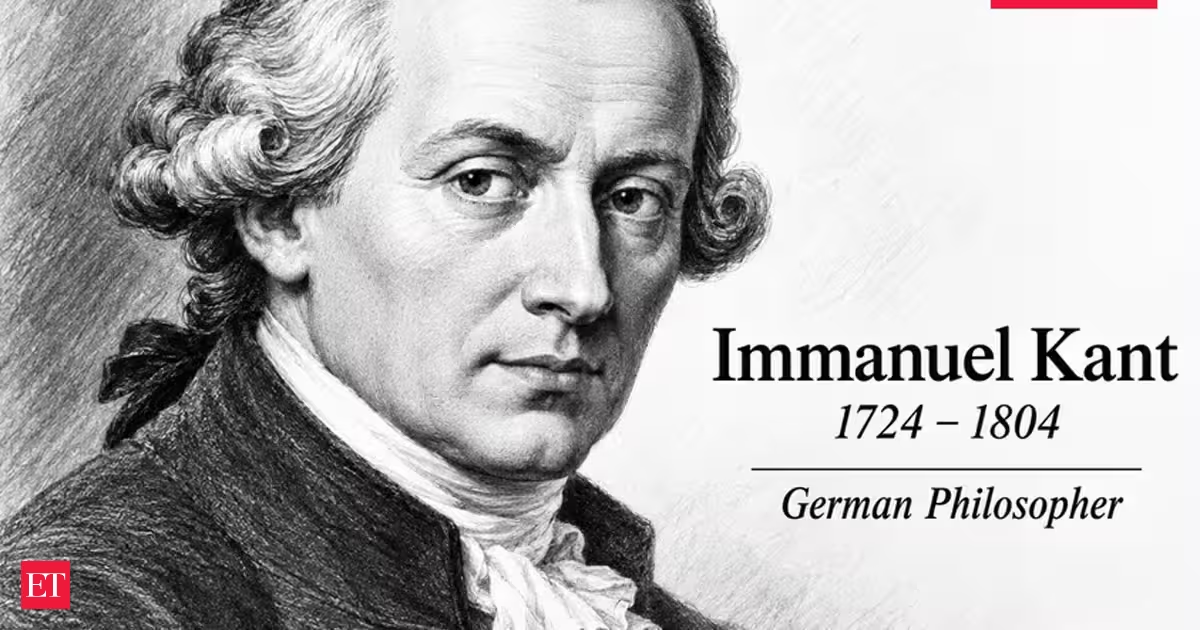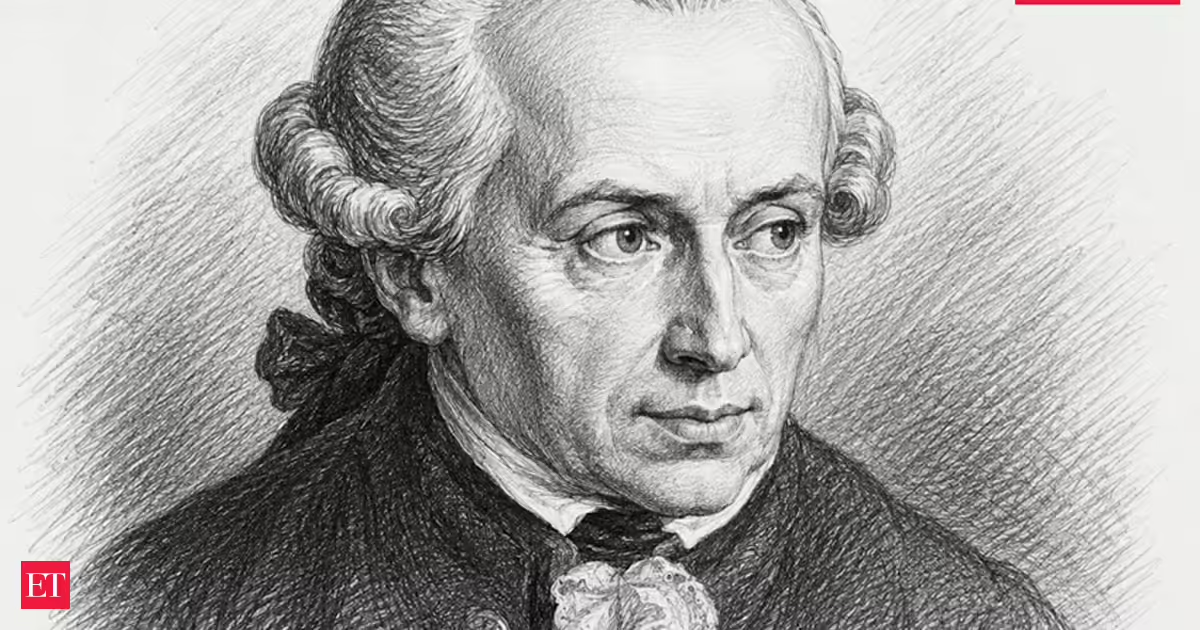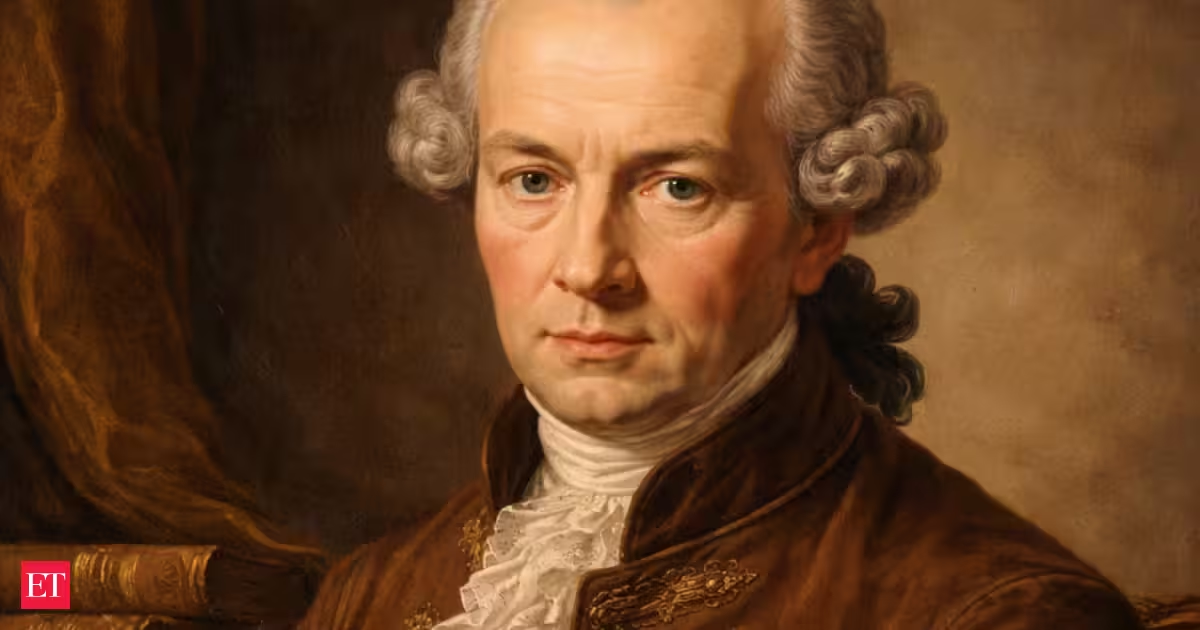
Few philosophers have shaped modern thinking as deeply as Immanuel Kant. More than two centuries after his death, his ideas on ethics, duty and human behaviour continue to influence debates about education, parenting and morality.One of Kant's most thought-provoking observations focuses on how children learn right from wrong and whether rewards and punishments are the best way to teach morality.The quote of the day reads: “If you punish a child for being naughty, and reward him for being good, he will do right merely for the sake of the reward; and when he goes out into the world and finds that goodness is not always rewarded, nor wickedness always punished, he will grow into a man who only thinks about how he may get on in the world, and does right or wrong according as he finds advantage to himself.”Although written centuries ago, the quote continues to spark discussions about motivation, character and the foundations of ethical behaviour.What Did Immanuel Kant Mean by This Quote?At its core, Kant's message is about motivation. He argues that children who are taught to behave well only because they expect rewards may never fully understand why certain actions are right in the first place.If a child learns that good behaviour always leads to praise, gifts or approval, they may begin to see morality as a transaction rather than a responsibility.According to Kant, this creates a problem. The child is not behaving ethically because they believe it is the right thing to do. Instead, they are acting in a certain way because they expect a benefit in return. For Kant, that distinction matters.Immanuel Kant on Rewards and PunishmentsRewards and punishments are common tools in parenting and education. Many schools use incentive systems. Parents often praise children for good behaviour and discipline them for breaking rules.Kant did not completely reject discipline. However, he questioned whether reward-based systems alone could build strong moral character.His concern was that such methods encourage people to focus on outcomes rather than principles.If the reward disappears, what happens to the behaviour? This question sits at the heart of the philosopher's argument.He believed that genuine morality should survive even when nobody is watching and when there is nothing to gain.Why Kant Believed Morality Should Come From WithinKant's philosophy places great importance on inner responsibility. In his view, people should do what is right because it is right, not because they expect praise, money, recognition or other benefits.This idea became one of the foundations of his ethical theory. He argued that moral actions gain their value from intention rather than reward.For example, helping a stranger simply because you expect recognition is different from helping because you genuinely believe it is your duty to do so.The action may appear identical from the outside, but Kant believed the motivation behind it makes all the difference.What Happens When Good Behaviour Is Driven Only by Rewards?The second part of Kant's quote explores what happens when children grow up and enter the real world.Life is often unfair. Good people sometimes face setbacks. Honest individuals are not always rewarded. Meanwhile, those who act selfishly may occasionally benefit from their actions.Kant believed that people raised solely on reward-based morality may struggle when confronted with this reality.If someone expects goodness to always produce positive outcomes, disappointment can follow when life proves otherwise.As a result, they may begin making decisions based on personal advantage rather than ethical principles. This is the danger Kant wanted people to recognise.Why This Kant Quote Still Matters TodayAlthough Kant wrote during the eighteenth century, the issues he raised remain surprisingly relevant. Modern debates about parenting, education and workplace culture often revolve around similar questions.Should children receive rewards for every good action?Do incentive systems encourage genuine responsibility?Can external rewards sometimes weaken internal motivation?Researchers, educators and parents continue to discuss these topics today.Many studies in psychology have explored how excessive reliance on rewards can sometimes reduce intrinsic motivation, a concern that echoes Kant's observations from centuries ago.Immanuel Kant's Philosophy of DutyKant's ethical framework is often described as duty-based ethics. Rather than focusing primarily on consequences, he believed that people should act according to principles they would want everyone else to follow.This approach became one of the most influential moral theories in Western philosophy.According to Kant, morality is not about calculating personal gain. Instead, it is about recognising obligations and acting from a sense of duty. The quote about rewarding children reflects this broader belief. He feared that when morality becomes tied to rewards, people lose sight of the principles that should guide their decisions.Who Was Immanuel Kant?Immanuel Kant was born in 1724 in Königsberg, then part of Prussia. He spent most of his life in the same city, teaching, researching and writing.Despite rarely travelling far from home, his ideas transformed philosophy across Europe and eventually the wider world.His most influential works include:Critique of Pure ReasonCritique of Practical ReasonCritique of JudgmentThese books explored knowledge, ethics, reason and human understanding. Today, Kant is widely regarded as one of the most important philosophers in history.Lesser-Known Facts About Immanuel KantAlthough he is now considered one of philosophy's giants, Kant's rise to prominence was relatively late. His landmark work, Critique of Pure Reason, was published when he was in his late fifties.Before securing a stable university position, he spent many years working as a private tutor for different families.This period gave him exposure to everyday social life beyond academic circles and may have influenced some of his reflections on education and human behaviour.Kant also taught a surprisingly wide range of subjects. Alongside philosophy, he lectured on geography, physics and several practical topics. Contemporary accounts suggest that his lectures were often lively and engaging, even though many readers have found his written works challenging.Immanuel Kant's Legacy 300 Years LaterThe year 2024 marked the 300th anniversary of Kant's birth. Across Germany and beyond, exhibitions, lectures and academic events revisited his contributions to philosophy. The continued interest in his work demonstrates how enduring his ideas remain.Questions about morality, responsibility and human behaviour are still relevant today, and Kant's writings continue to provide a framework for discussing them.The Lasting Lesson Behind Kant's QuoteThe quote about rewarding children offers a lesson that goes beyond parenting. It asks a broader question about why people choose to do the right thing.Are actions guided by principles or by rewards? Kant believed that strong moral character develops when people learn to value ethical behaviour for its own sake.His warning remains clear: if morality depends entirely on rewards and punishments, it may not survive when those rewards disappear.For that reason, he encouraged the development of inner responsibility, a commitment to doing what is right even when there is no recognition, no advantage and no reward waiting at the end.
Best parenting quote of the day by Immanuel Kant: 'If you punish a child for being naughty, and reward him for being good, he will do right just for the reward...' Why morality should not depend on rewards or fear explained by the German philosopher
Best Immanuel Kant Quote of the Day: Immanuel Kant argued that rewarding children for good behaviour can teach them to act for external rewards rather than from a genuine sense of morality. He believed this approach may encourage people to prioritise personal gain over ethical principles when rewards are absent. Instead, Kant's philosophy emphasises doing the right thing out of an inner sense of duty, regardless of rewards, punishments or consequences.
1,114 words~5 min read