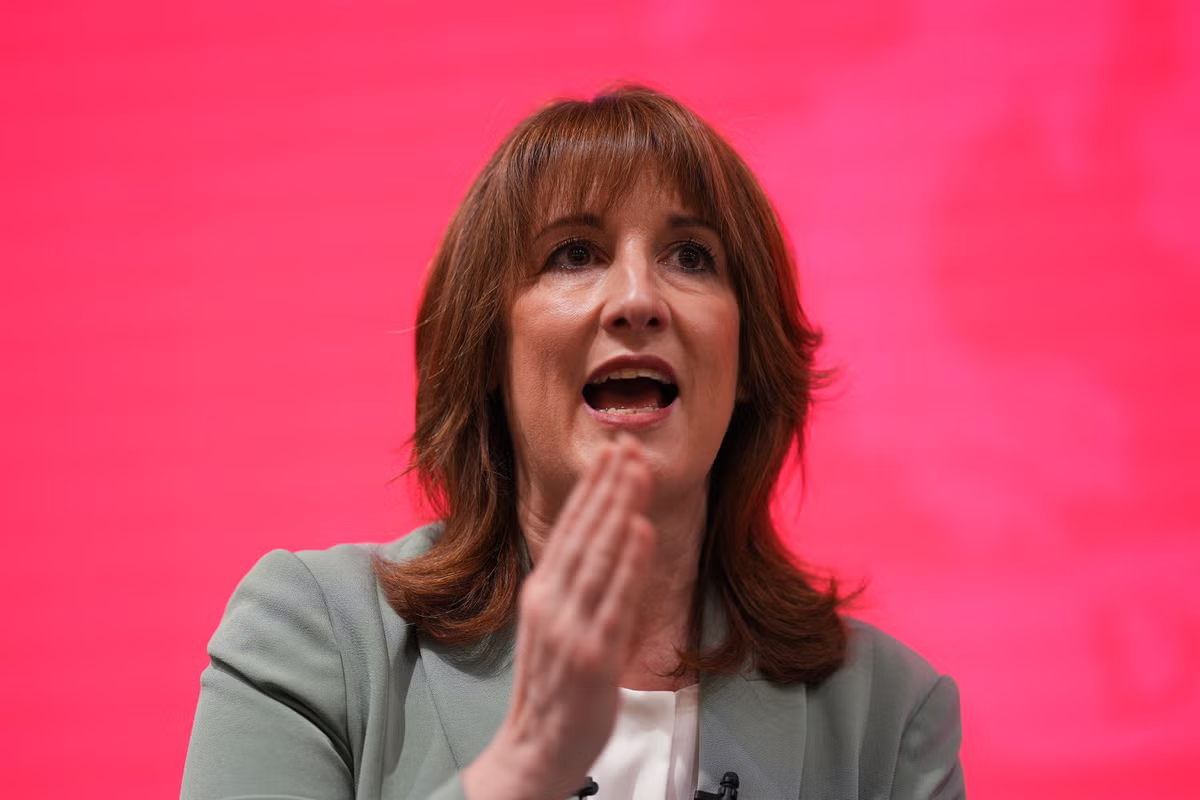
The impact of Iran war pressures on UK public finances has been laid bare as official figures showed Government borrowing lifted to a higher-than-expected £23.3 billion last month after debt interest costs surged to a record May high.The Office for National Statistics (ONS) said borrowing was nearly a third (30.4%), or £5.4 billion, higher than a year earlier in May.It was also more than the £18.8 billion expected by most economists and the £17.7 billion forecast by the UK’s independent fiscal watchdog, the Office for Budget Responsibility (OBR).The ONS said interest payable on Government debt jumped £4.1 billion to £11.7 billion – the highest ever recorded in any May – as rising Retail Prices Index (RPI) inflation impacted index-linked Government bonds.Long-term Government borrowing costs have risen as the outlook for UK growth has weakened since the start of the Middle East conflict at the end of February and amid political uncertainty.Tom Davies, ONS senior statistician, said: “Borrowing in the first two months of the financial year was nearly £9 billion higher than the same period of 2025.“Spending on debt interest, public services, investment and benefits all increased in May 2026, compared with last May, more than outweighing higher tax receipts.”The figures also showed borrowing in the financial year so far to May stood at £46.3 billion, which is £8.9 billion – nearly a quarter – more than the same period a year earlier and £7.7 billion more than the forecast by the OBR.Chief Secretary to the Treasury Lucy Rigby said: “Inflation has held steady and unemployment has fallen this week, but the war in the Middle East has clearly had an impact on economies around the world.“We have the right economic plan to deal with these challenges – protecting families and businesses from rising costs, while cutting borrowing at a faster rate than any other G7 economy.”
UK Government borrowing jumps as debt interest costs hit record May high
The ONS said borrowing was nearly a third (30.4%), or £5.4 billion, higher than a year earlier at £23.3 billion in May.
307 words~1 min read