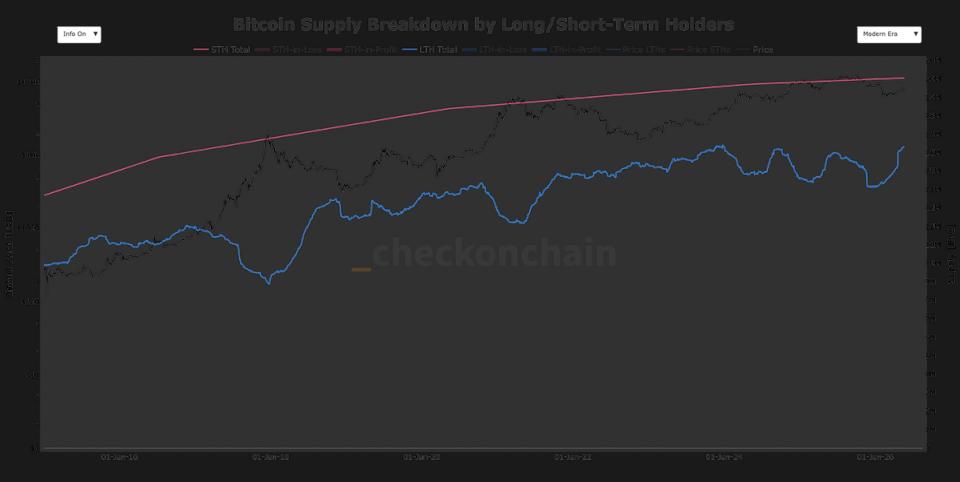
Bitcoin has a maximum supply of 21 million coins, a limit written into the network’s code by its creator, Satoshi Nakamoto. Once all 21 million bitcoin have been mined, no new bitcoin will ever be created. Regardless, the network is expected to keep operating much the same as it does today. Instead of mining newly issued bitcoin, miners will instead earn revenue from transaction fees.
In this article, we’ll explore the implications of this change, and what it will mean for bitcoin holders.
Why Does Bitcoin Have a 21 Million Supply Limit?
Bitcoin has a 21 million supply limit because the rule was hard-coded into its software from the start, and that rule is enforced by every full node on the network. Unlike government-issued currency, no central authority can issue more bitcoin or alter the schedule on which new coins are released. As a result, anyone can calculate exactly how many bitcoin will exist at any future point in time.
The number 21 million was not chosen arbitrarily either. It is the sum of a formula. At the genesis of bitcoin, mining a block gave a reward of 50 bitcoin per block. This reward is cut in half roughly every four years, summed across all blocks until the reward rounds down to zero. The math converges on just under 21 million coins.