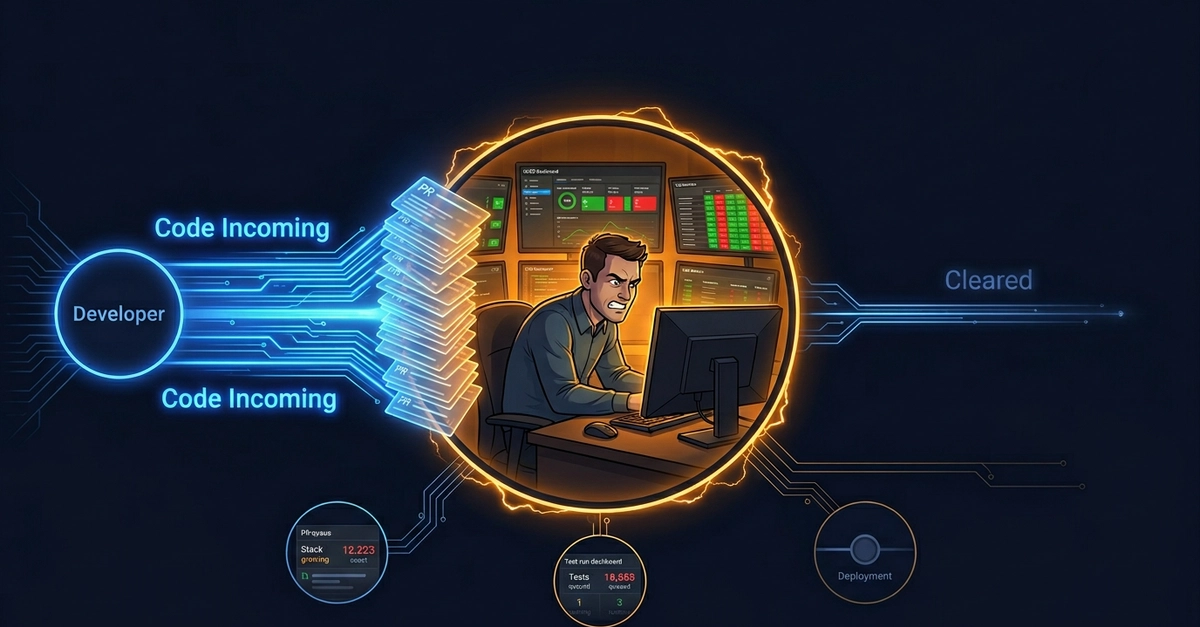
You know that moment in a retrospective when someone says, "We shipped 40% more tests this quarter" and everyone nods like that metric actually means something?
I watched this happen at a Tokyo-based SaaS company in early 2026. The QA lead was proud. Management was thrilled. The CI/CD pipeline was green.
Six weeks later, a payment flow broke silently for 72 hours because nobody noticed the test suite was passing on bad assertions. The AI had written tests that checked "no errors thrown" instead of "correct data persisted."
That's when I first heard someone call it Testing Blindness — the condition where your team can generate test cases but can't catch when those tests are lying to you.
This isn't a Japan-specific problem. But the way Japanese QA engineers are approaching it reveals something Western dev blogs keep missing: there's a critical difference between "test coverage" and "test quality," and AI makes it dangerously easy to mistake one for the other.