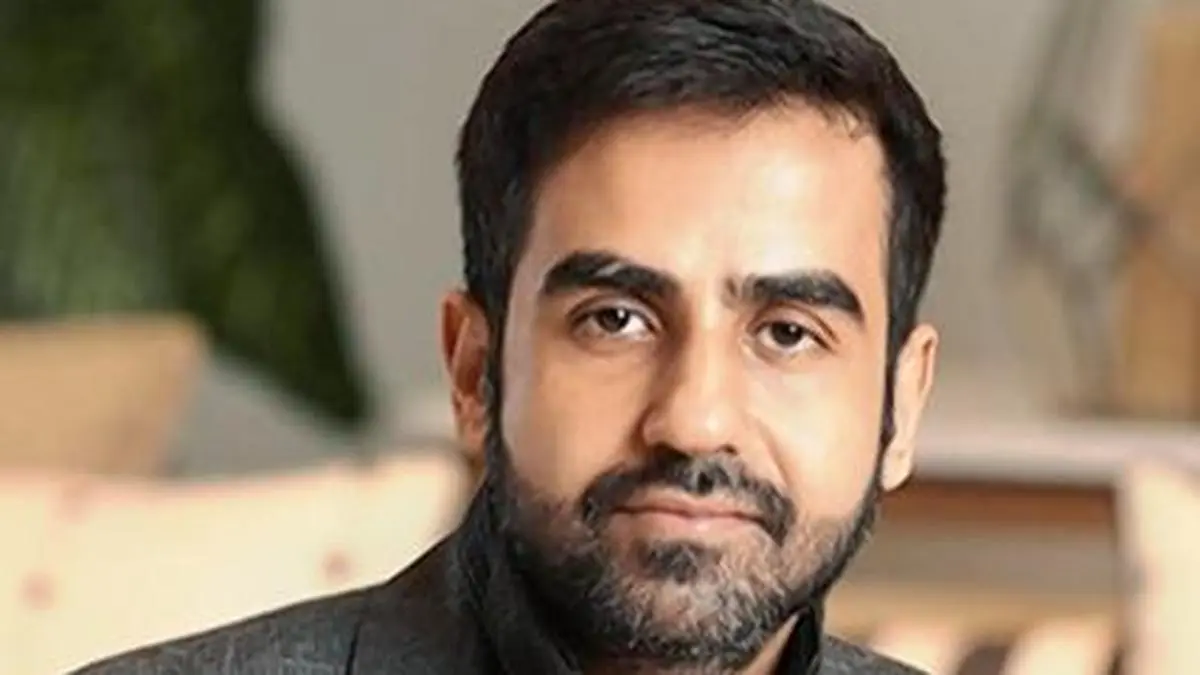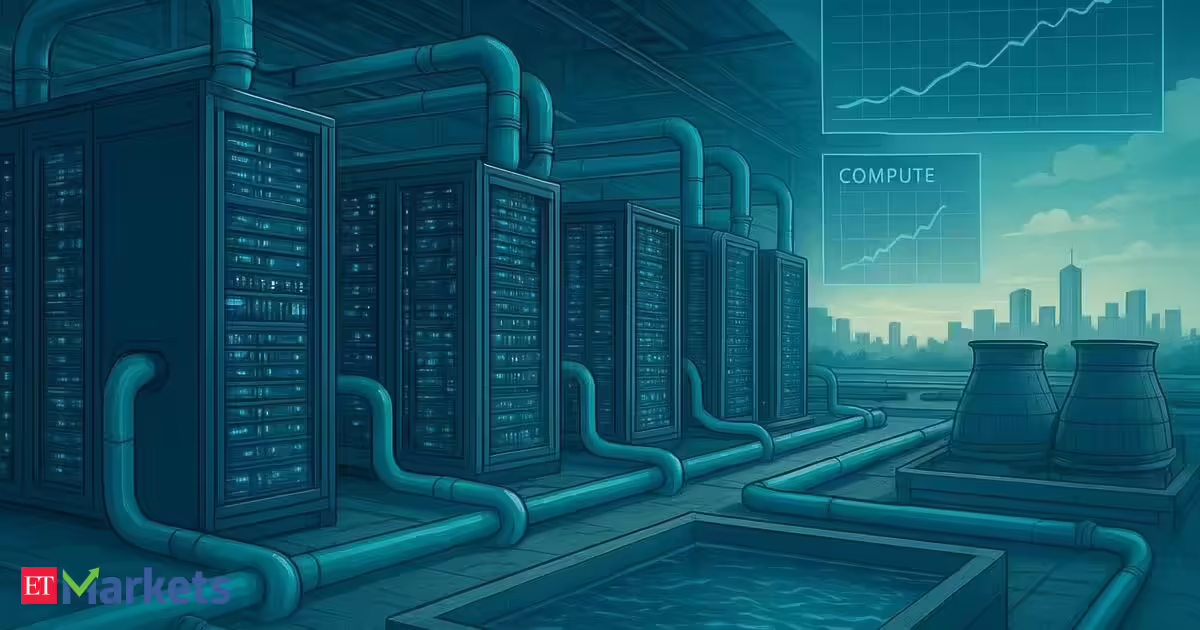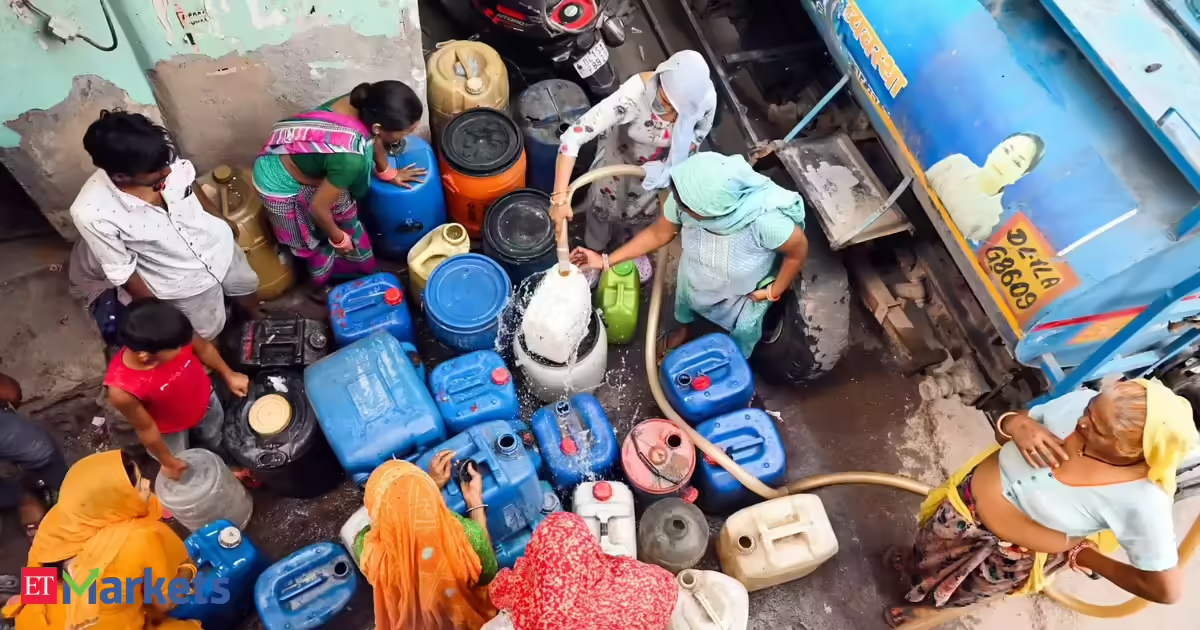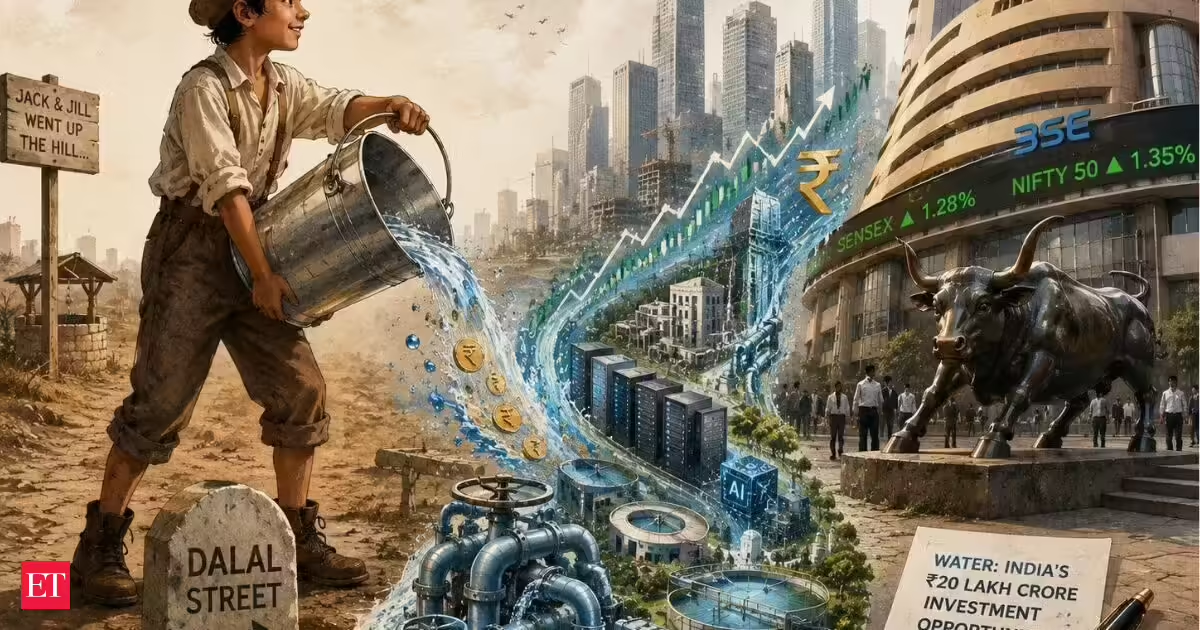
The next big business opportunity for India may be not in artificial intelligence, electric vehicles or financial technology. It could be from a resource that is growing ever more difficult to control, water. Zerodha co-founder Nikhil Kamath has pointed to an increasing disconnect in India’s development story where some of the fastest growing sectors in the country also happen to be the biggest water guzzlers.“Four key growth sectors for India – food production, nuclear energy, pharmaceuticals and data centres – are growing in already water-stressed regions,” Kamath said. Food, nuclear, pharma, data centre. India's 4 biggest growth bets are all water guzzlers, built in states that are already running dry The resource is free of charge. The metering is only beginning.Also Read: Iran-US sign 14-point deal at Versailles: In 1919, the same place hosted a treaty after World War I that created conditions for World War II “Somewhere in that gap is a company worth building...” His observation has triggered a larger conversation around whether India’s water challenge could create the foundation for the next major business opportunity.India’s growth story meets a water challengeIndia’s economic ambitions depend heavily on sectors that require large amounts of water. Agriculture supports food security and rural livelihoods. Nuclear power is expected to play a bigger role in clean energy plans. Pharmaceutical manufacturing continues to expand globally. Meanwhile, the data centre industry is growing rapidly due to artificial intelligence, cloud computing and digital services.— nikhilkamathcio (@nikhilkamathcio) But all four sectors face a common issue — reliable access to water.Several regions attracting industrial growth are already dealing with falling groundwater levels and changing rainfall patterns. States such as Punjab and Haryana are struggling with groundwater depletion due to intensive farming, while industrial expansion in parts of Karnataka, Telangana, Tamil Nadu and Rajasthan is adding fresh pressure.Agriculture’s success story comes with a costIndia’s agricultural growth over decades has been closely linked to groundwater use. The Green Revolution helped the country increase food production and reduce dependence on imports. However, heavy dependence on tube wells and groundwater extraction has left several farming regions facing declining water reserves.As demand rises for food processing, exports and higher agricultural output, managing water use has become a major challenge.Experts have suggested solutions such as drip irrigation, crop diversification and technology-driven farming practices. The challenge is taking these solutions to millions of farmers across the country.Nuclear power’s hidden water requirementIndia is expanding its nuclear energy capacity as it looks for cleaner and more reliable sources of electricity. However, nuclear power plants require large volumes of water, mainly for cooling operations. This creates a balancing challenge, especially when projects are located in regions where freshwater availability is limited.Coastal projects have more options because they can access seawater-based solutions, but inland locations require careful planning to avoid adding pressure on local resources.Pharma industry faces a water dilemmaIndia’s pharmaceutical sector has earned a global reputation for producing affordable medicines. But behind the industry’s success is a resource-intensive manufacturing process. Drug production requires water for multiple stages, including processing, cleaning and cooling.As pharmaceutical hubs expand, companies are increasingly focusing on wastewater treatment, recycling and more efficient production systems to reduce dependence on fresh water.Data centres add a new layer of demandThe rise of artificial intelligence and digital services has created a data centre boom in India. Technology companies are investing heavily in infrastructure, particularly in cities such as Bengaluru and Chennai. These facilities operate continuously and require cooling systems to maintain equipment performance.Traditional cooling methods can consume significant amounts of water, raising questions about where future data centres should be built and how they can become more sustainable.The missing piece: Understanding the true value of waterOne of India’s biggest challenges is that water remains poorly measured and often undervalued. Unlike commodities such as oil or metals, water does not have a uniform market price. Its value changes depending on location, availability, climate and demand.Without accurate measurement, it becomes difficult to control consumption or encourage conservation.That is slowly changing. Government agencies are improving groundwater monitoring, mapping water resources and tracking usage. Businesses are also adopting smart meters and digital systems to understand consumption patterns.Could water create India’s next big companies?The growing water challenge is creating opportunities for businesses focused on solving the problem. Startups and companies working in areas such as water monitoring, recycling, wastewater treatment, desalination and smart irrigation are exploring ways to make water management more efficient.A future water economy could include systems that measure usage, encourage conservation and create better ways to allocate resources.However, experts believe any water market will have to consider the unique nature of the resource. A litre of water saved in one region may not have the same value as a litre saved elsewhere.What other countries reveal about water managementCountries around the world have taken different approaches to managing water resources. Israel has focused on recycling, technology and efficient water management. Singapore has built a strong water strategy around reuse, desalination and strict monitoring because of limited natural freshwater resources.At the same time, examples such as Chile show that treating water as only a market commodity can create challenges if public access and affordability are not protected.India’s next opportunity may be built around saving waterIndia’s water challenge is not simply about availability. It is also about measuring, managing and distributing the resource better. As the country pushes towards a larger economy, water could become one of the biggest factors shaping future growth.Kamath’s argument is that the next major opportunity may not come from selling water, but from building the technology, systems and infrastructure that help India understand what its water is worth.The companies that solve this problem could become part of India’s next wave of innovation.
Forget AI and EVs: Zerodha’s Nikhil Kamath spots next big billion-dollar opportunity hidden in India’s biggest problem
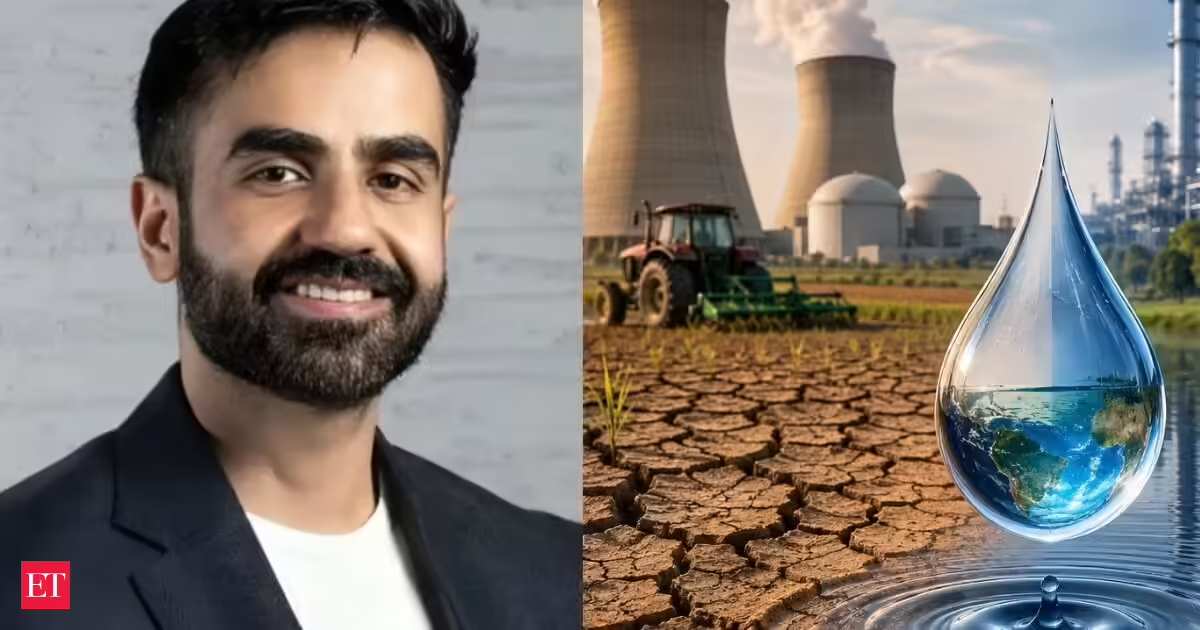
Nikhil Kamath water business idea: India's rapid growth in water-intensive sectors like agriculture, nuclear energy, pharmaceuticals, and data centers is straining already stressed water resources. Nikhil Kamath highlights this gap, suggesting a significant business opportunity lies in developing solutions for water measurement, management, and conservation, rather than water itself.
945 words~4 min read