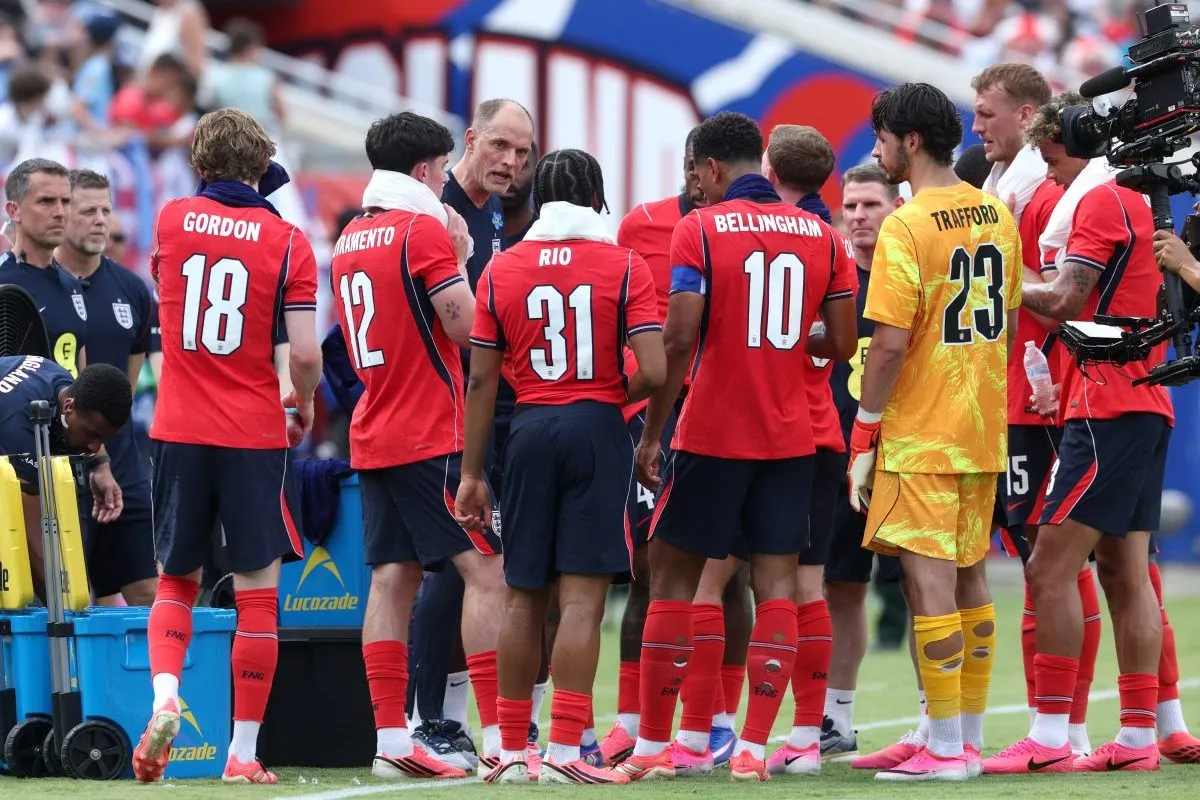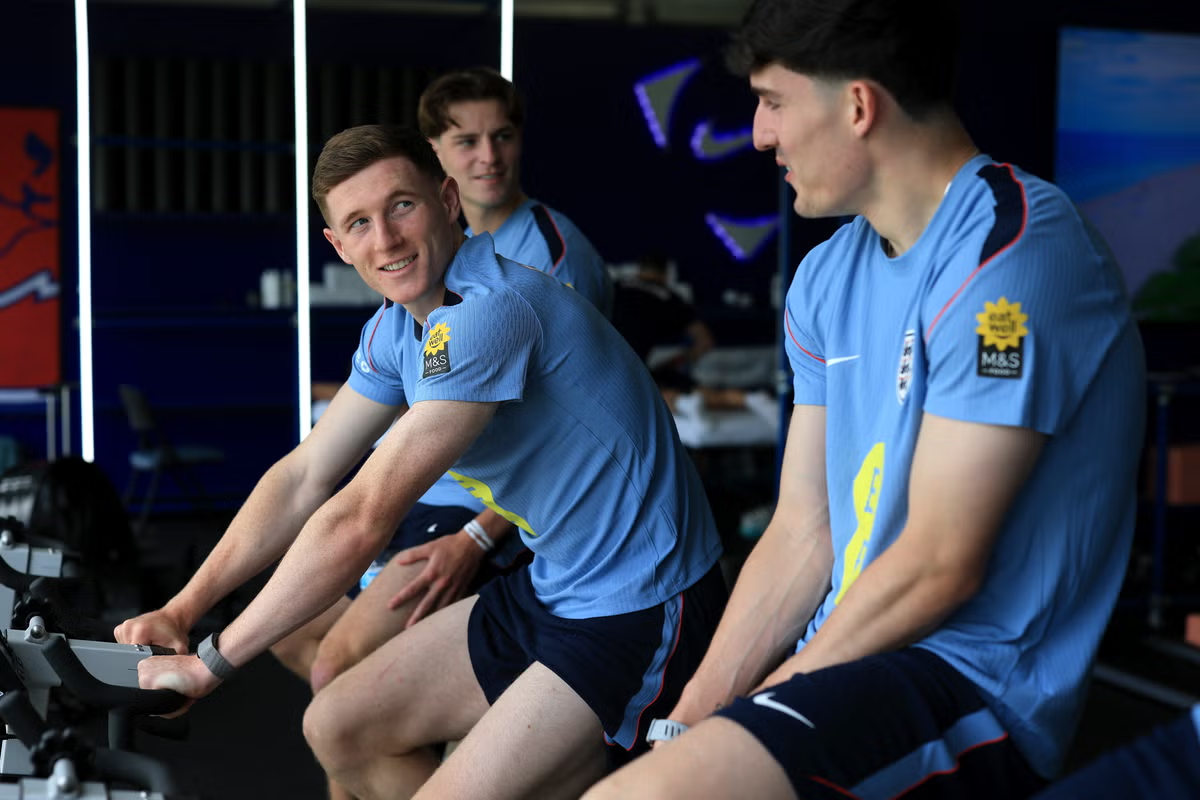
When England chose their training base for this World Cup, they drew a latitudinal line across a map of the United States.They knew that everywhere south of the line would have temperatures too high for the players to train every day, during what was expected to be the hottest World Cup since 1994. But they did not want to go too far north, either. They needed somewhere hot enough to acclimatise the players.This question of heat has hung over England’s preparations for this World Cup like no other. Thomas Tuchel attended the Club World Cup here last summer, and looked into what it took for a European team to win. Anthony Barry, his assistant coach, spoke about developing a “heat-proof game model” that could work in North America. England flew straight out to Florida, as early as they could, to get the players used to it, comfortable with being uncomfortable.And then England played their first game in Dallas on Wednesday and produced something close to their natural game. The way they cranked up the intensity in the second half against Croatia looked like a Premier League game, in a way that you rarely see in international football. This is what Tuchel had promised he wanted to see from his England side. But it was not what many people expected at this World Cup, which felt like it might be even more dominated by low blocks, counter-attacks and set pieces than recent international tournaments.Should England start Madueke over Saka?Duncan Alexander and Tom WilliamsBut by the end of the game, according to FIFA’s own statistics, England’s players had covered 117km. Only eight of the 47 other nations ran more than that over the first round of fixtures. England’s players completed 6.6km in what FIFA terms ‘Zone 4 sprints’, between 20-25kph (12-15mph). Only four teams — France, Jordan, Brazil and Austria — recorded more. It was an impressive physical effort, allowing England to impose their game on Croatia precisely how they wanted.
England want to play Premier League football at this World Cup. It may not be that easy
High-intensity football was feasible in air-conditioned Dallas but as temperatures climb elsewhere, is it sustainable?
965 words~4 min read