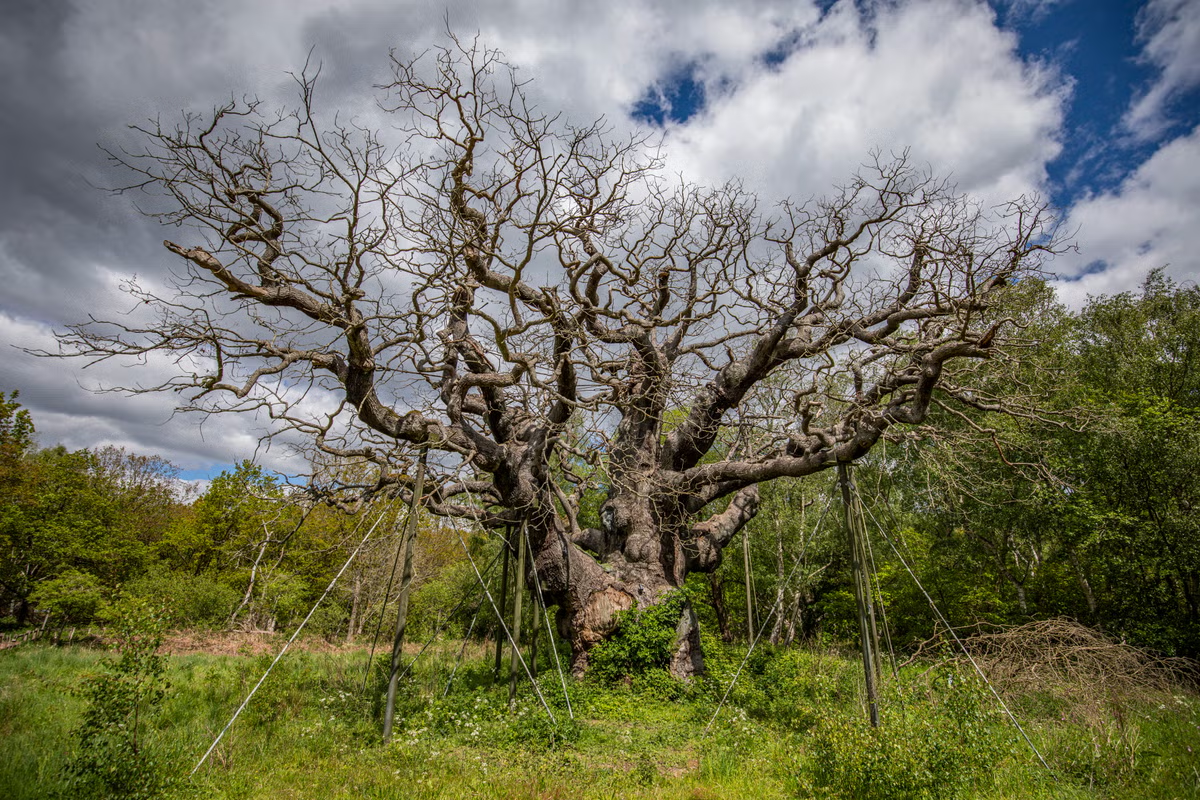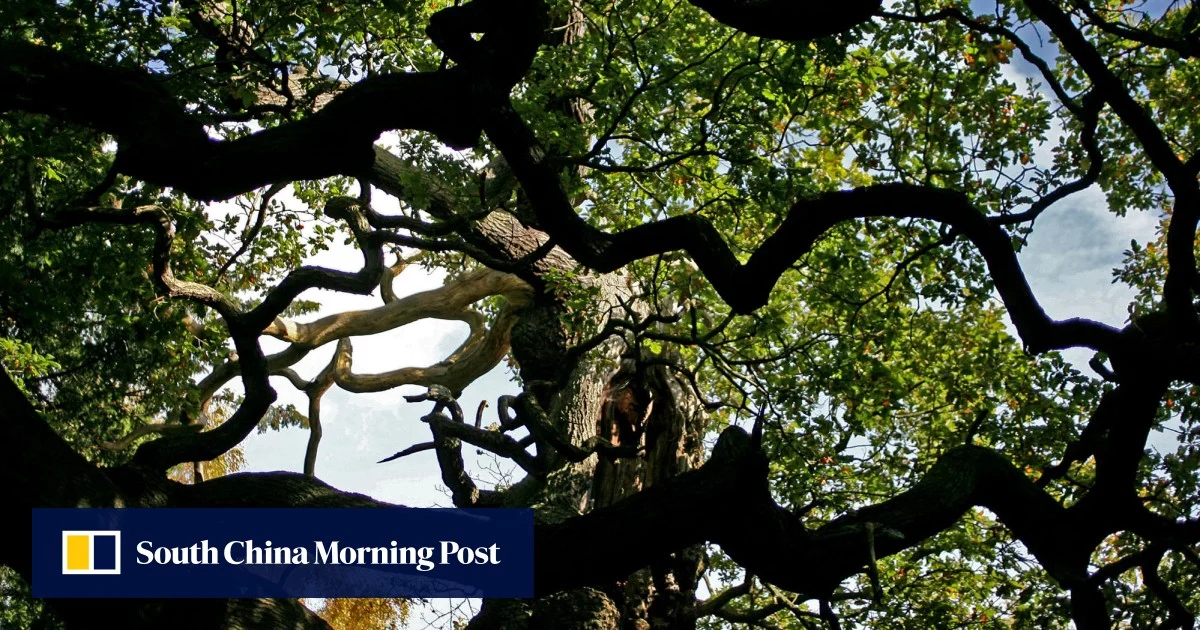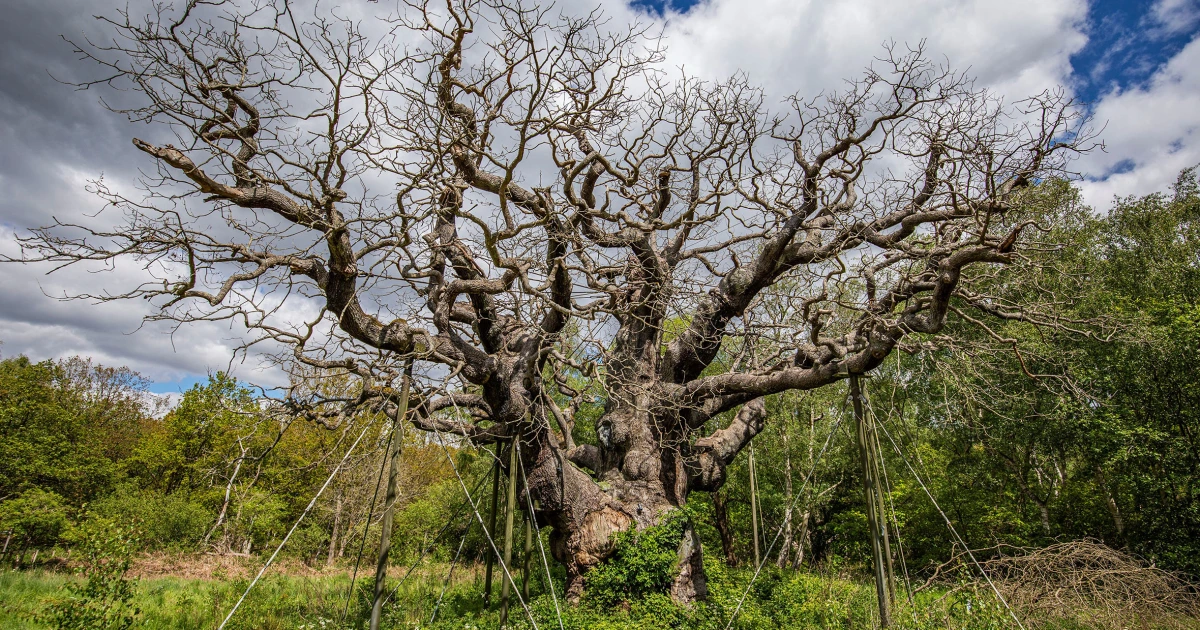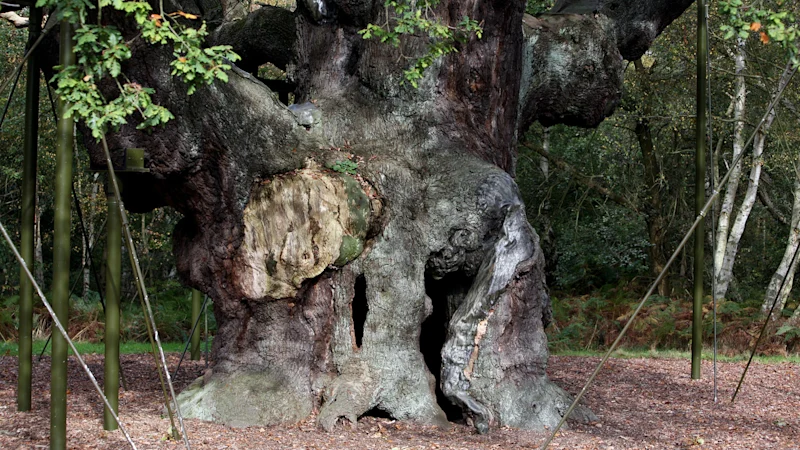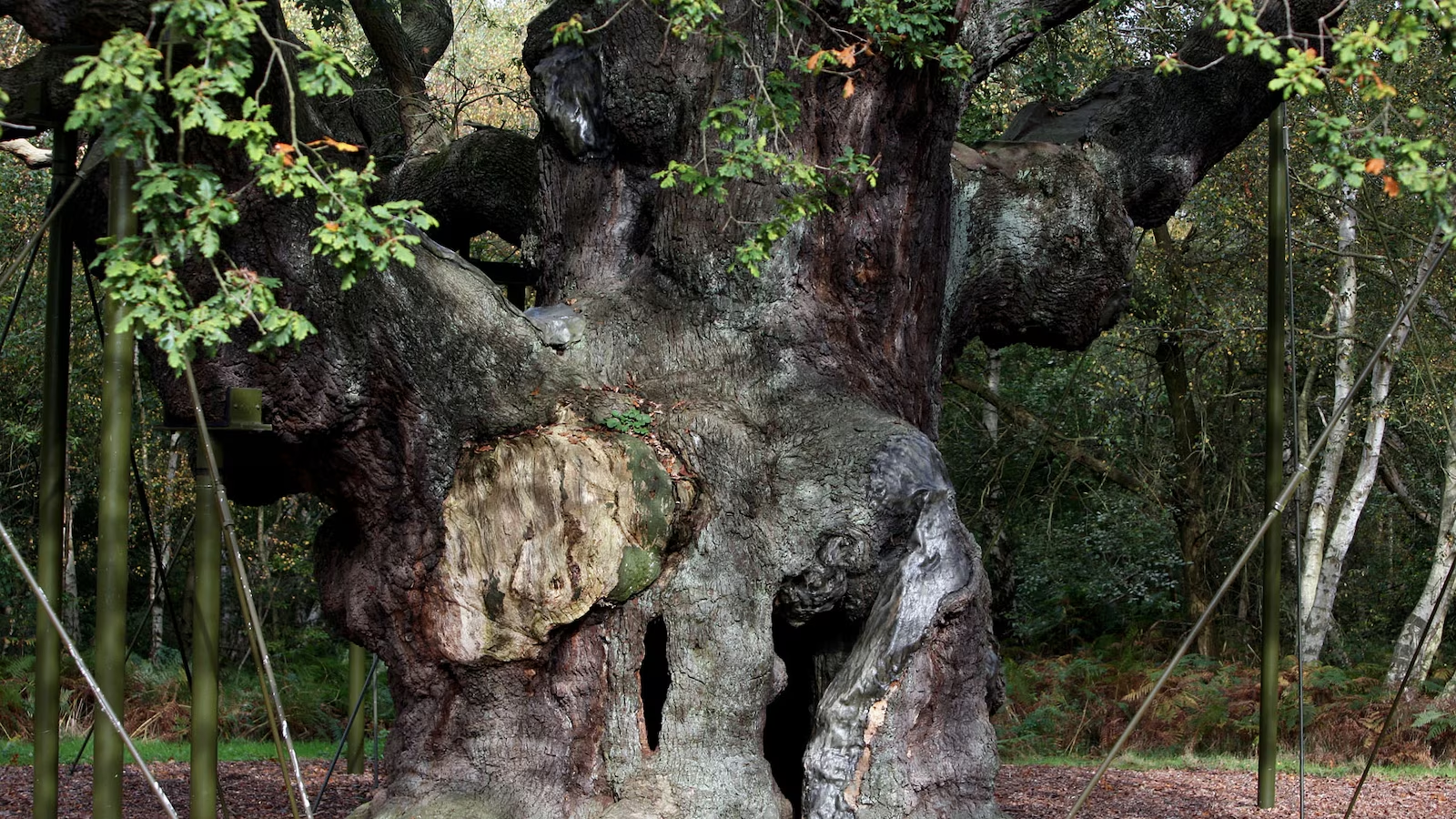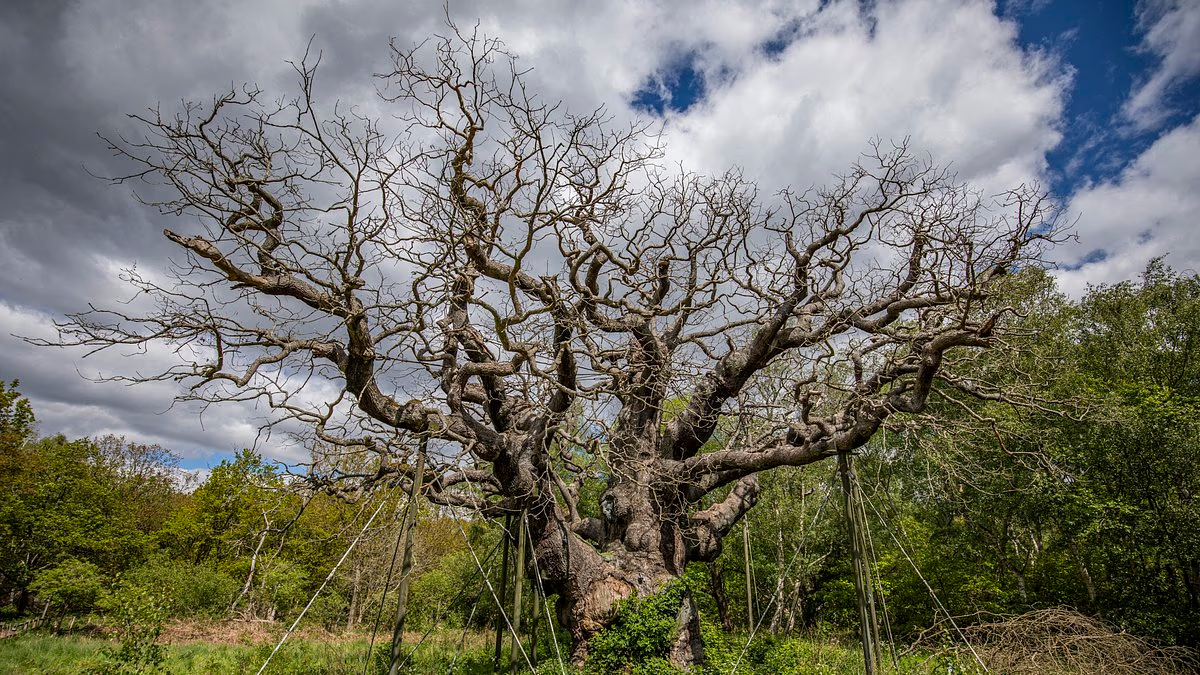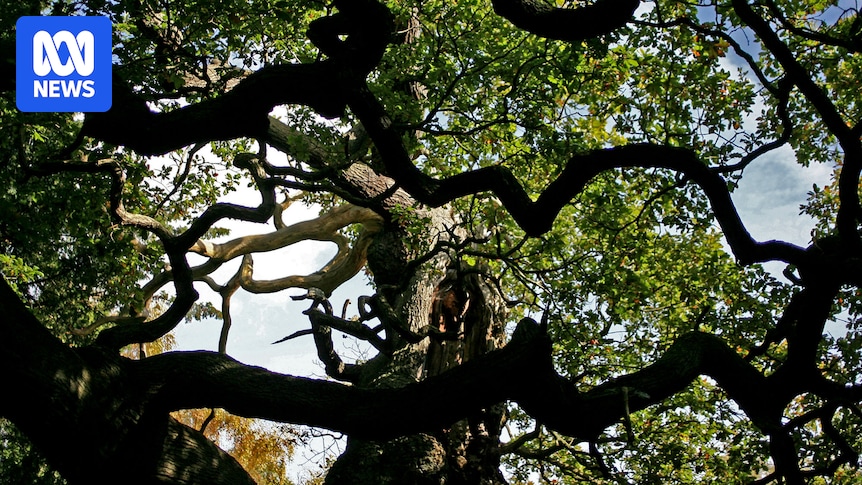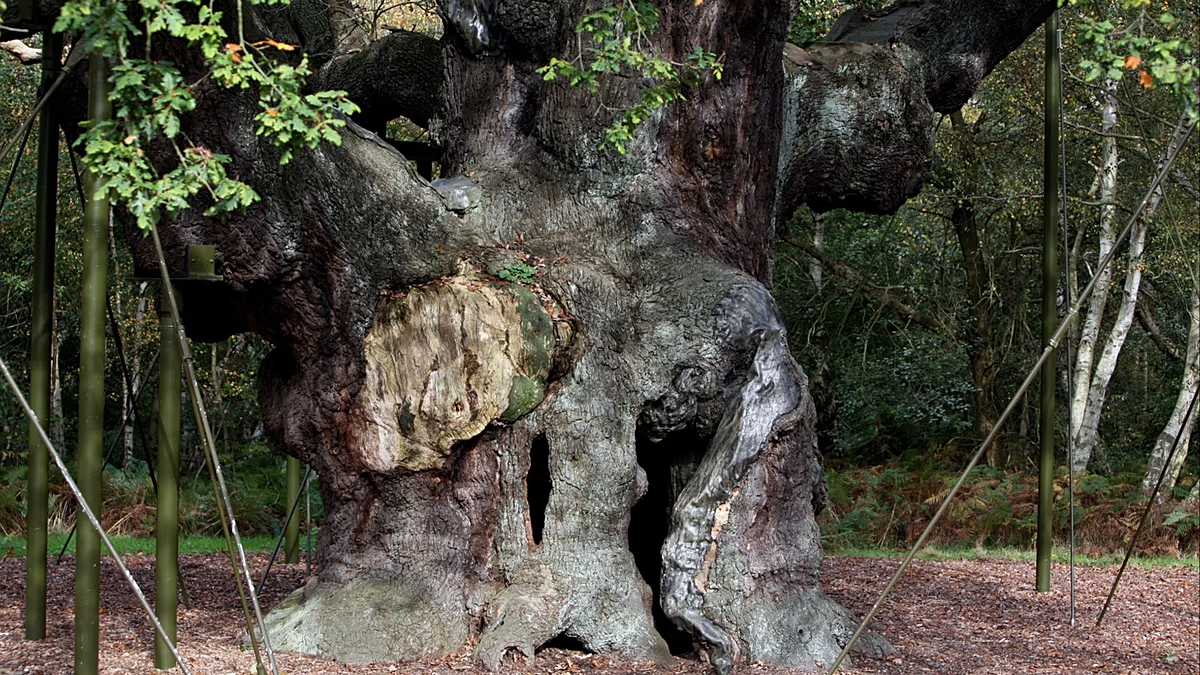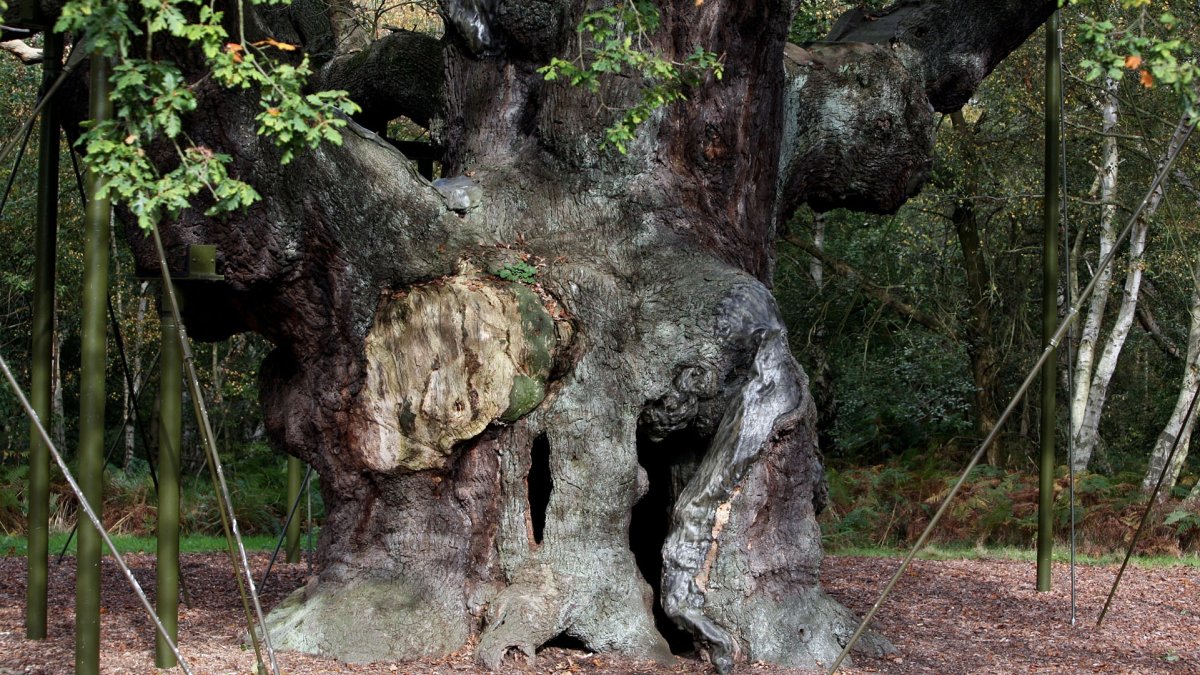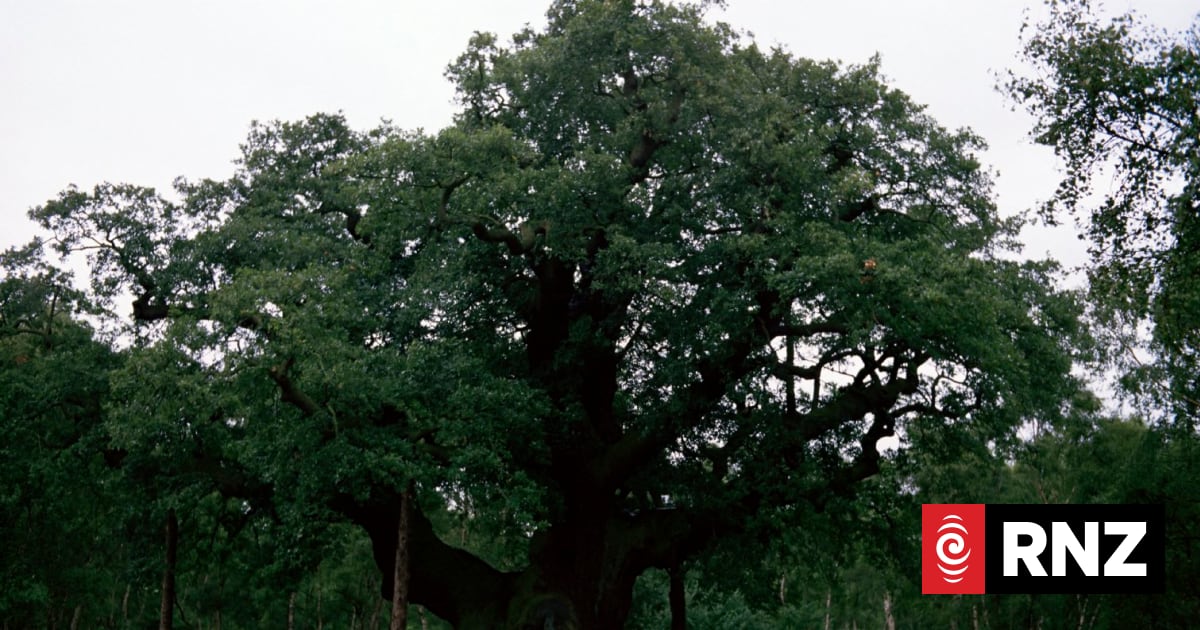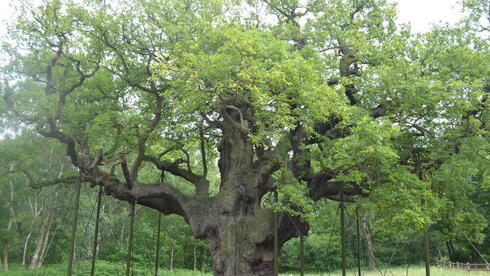
The 1,200-year-old Major Oak in Sherwood Forest, long linked to the legend of the outlaw hero, failed to grow new leaves this spring; experts cite climate stress, drought and centuries of visitors compacting the soil around its rootsWhen the sheriff of Nottingham’s men and Prince John’s agents searched for Robin Hood, legend says they knew where to look.For centuries, the English folk hero and medieval outlaw, famed in stories as the skilled archer who “stole from the rich and gave to the poor,” has been tied to Sherwood Forest in Nottinghamshire. One tree in particular was traditionally identified as his hiding place: a giant oak at the heart of the forest.5 View gallery The support structure provided for Robin Hood’s 1,200-year-old oak tree (Photo: Mark Green/Shutterstock)Now, that 1,200-year-old tree, known as the Major Oak, has died after failing to produce new leaves this spring, according to the Royal Society for the Protection of Birds, which manages Sherwood Forest.With a canopy reaching 28 meters and a trunk circumference of about 11 meters, the Major Oak was considered one of Britain’s largest and most iconic oak trees. Supports and cables were added to some of its branches in the early 20th century, and a fence was placed around it in the 1970s, a sign of the reverence with which it was treated.The RSPB said the exact cause of death was difficult to determine, but experts believe several factors contributed to its decline. Hot, dry summers and the effects of climate change placed pressure on the ancient tree, while the millions of visitors who came to see it over the past two centuries compacted the soil around its roots. That made it harder for rainwater, oxygen and nutrients to reach the root system.5 View gallery A view from within the canopy of Robin Hood’s oak tree in Sherwood Forest (Photo: Simon Dawson/AP)5 View gallery (Photo: Simon Dawson/AP)The charity also said years of “well-intentioned structural intervention” may have played a role in weakening the tree over time.Robert Brackley, a guide who has introduced thousands of schoolchildren to the tree while dressed in authentic outlaw furs and carrying a bow and arrows, said the Major Oak’s stories were its legacy.“This is the most famous tree in the world,” he said. “The legend always lives on. I feel sadness, but this is a fleeting moment in time. We must remember what the tree was and continue to stand before it in awe.”Sherwood Forest is known for its hundreds of ancient oaks, but none was more famous than the Major Oak. Its name became widely known after it was mentioned in a 1790 book about oaks by Major Hayman Rooke, a former British Army officer. The book helped draw the first waves of tourists to the ancient forest.5 View gallery The statue of Robin Hood in Nottingham (Photo: Tutti Frutti/Shutterstock)“The death of this iconic tree is heartbreaking for everyone,” said Holly Drake of the RSPB.Ed Pyne, senior conservation adviser at the Woodland Trust, described ancient trees like the Major Oak as Britain’s “white rhinos of conservation,” warning that their decline is far less visible than that of endangered animals.“Saving them is vital for the health of the world we live in, but most disappear quietly, without the recognition or care given to this oak,” he said.Pyne told the BBC that the Major Oak might have lived for hundreds more years had it not faced pressures such as climate change and 200 years of tourist footfall compacting the soil around it. Trees, he noted, “do not die of old age.”Dame Judi Dench, the actor and a patron and ambassador for the Woodland Trust, also paid tribute to the tree, saying it had inspired “countless stories, poems, paintings and people for more than 1,000 years” while providing a home to a vast range of wildlife.5 View gallery A child dressed as Robin Hood climbs an oak tree in Sherwood Forest (Photo: Three Lions/Getty Images)The legend holds that Robin Hood used the Major Oak’s hollow trunk as a hideout, though experts say the hollowing was caused by fungi. At one time, visitors could climb inside the trunk. Since the 1970s, they have had to admire it from behind a fence.The tree will not be cut down. The RSPB said it will remain standing at the heart of Sherwood Forest as a natural monument for visitors and as a continuing part of the forest ecosystem. As it decays over the coming decades, it will provide habitat for animals, plants and insects.Saplings grown from the Major Oak have also been planted around the world.Beyond its place in folklore, Sherwood Forest is also known for the oaks that supplied timber for the Royal Navy ships of Vice Adm. Horatio Nelson in the late 18th and early 19th centuries, as well as beams for the roof of St. Paul’s Cathedral in London.“Although it has died, this oak will continue to stand at the heart of Sherwood Forest as a natural monument for visitors,” Drake said. “It will forever be linked to the legend of Robin Hood and will continue to provide great support to the forest ecosystem, in death as it did in life.”
End of a legend: Ancient Major Oak said to have sheltered Robin Hood is dead
The 1,200-year-old Major Oak in Sherwood Forest, long linked to the legend of the outlaw hero, failed to grow new leaves this spring; experts cite climate stress, drought and centuries of visitors compacting the soil around its roots
TL;DRAI
Sherwood's 1,200-year-old Major Oak died from climate stress and 200 years of soil compaction preventing water and nutrient absorption. System resilience requires preventive maintenance before environmental pressures exceed recovery capacity.
860 words~4 min read