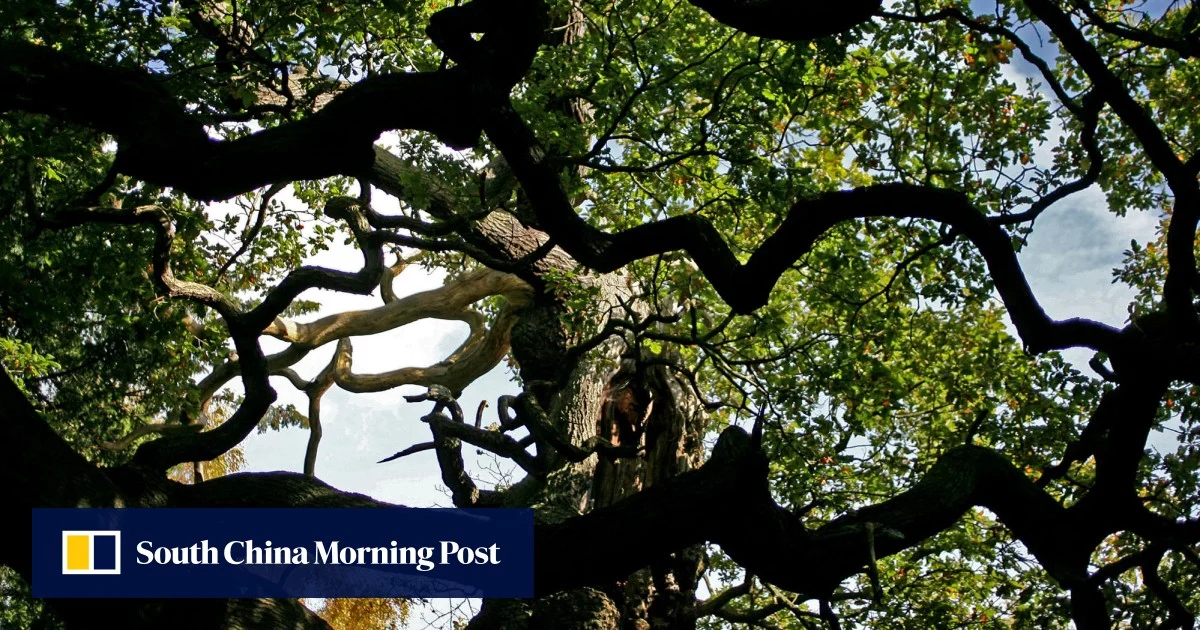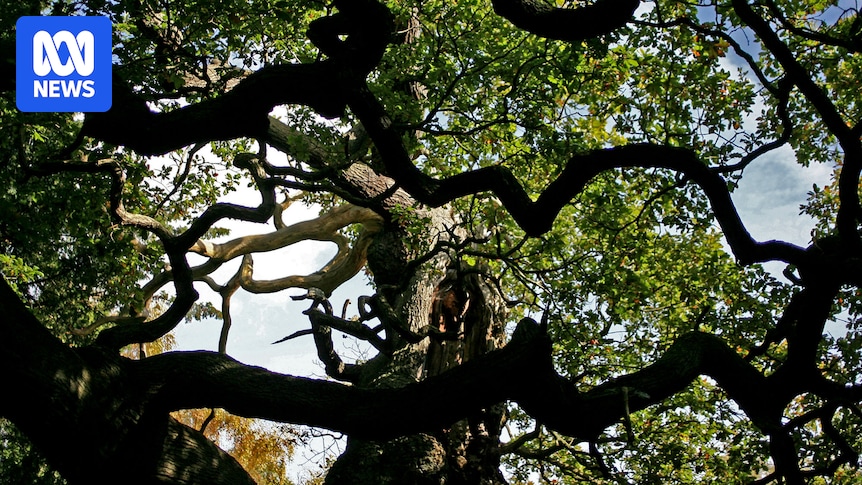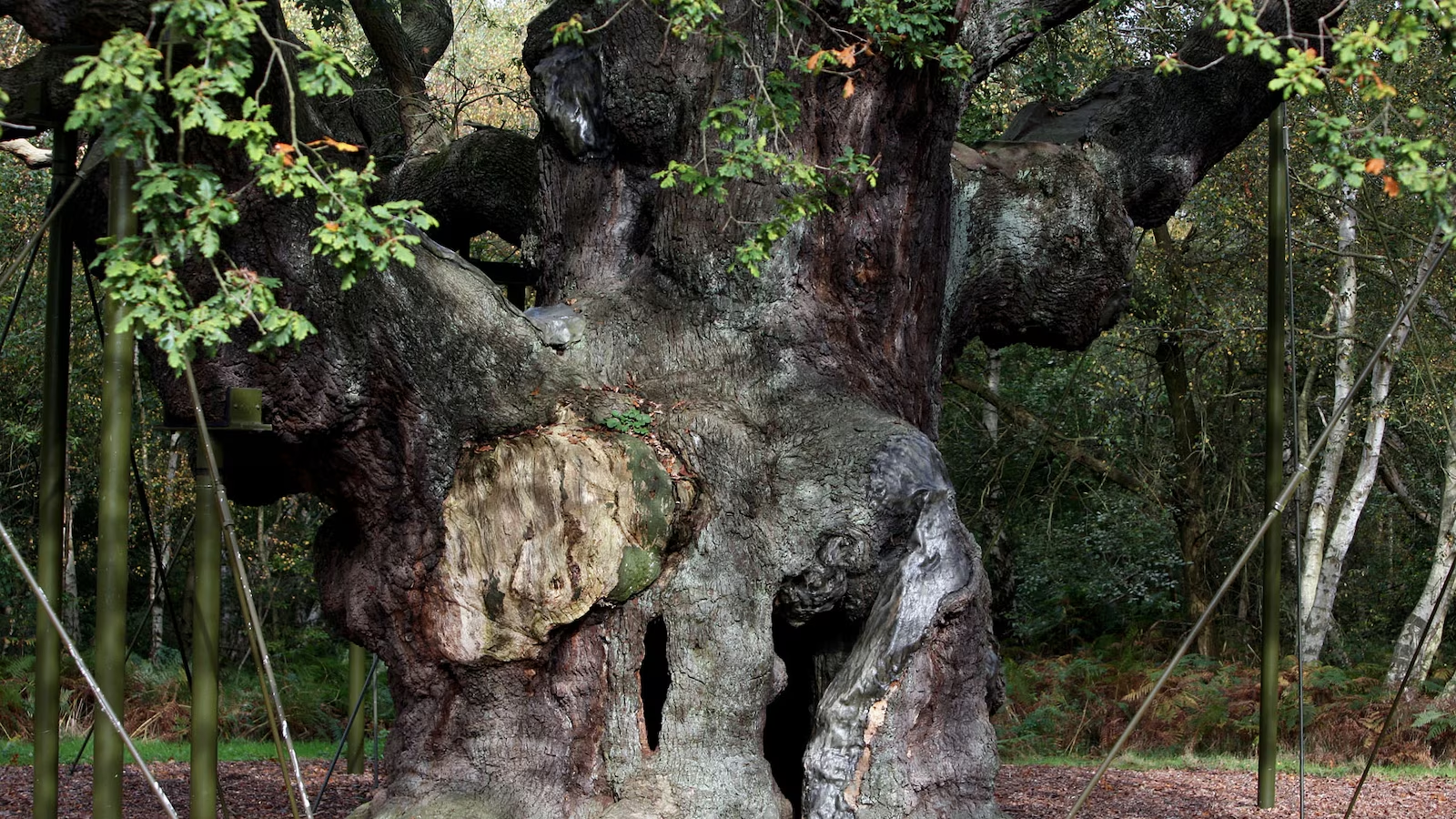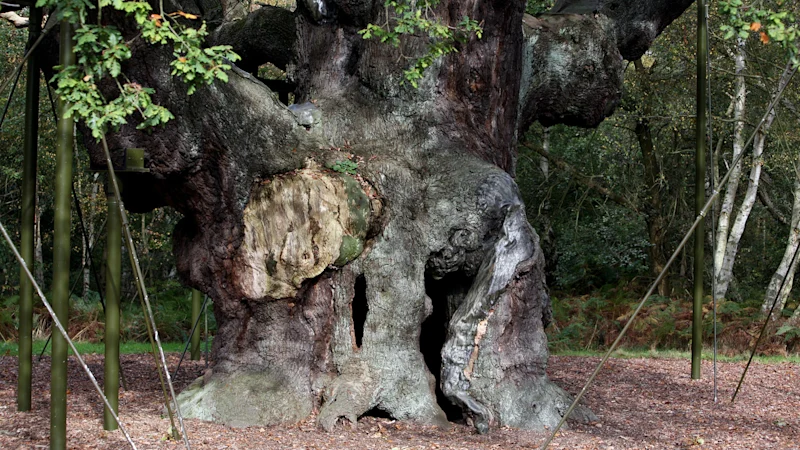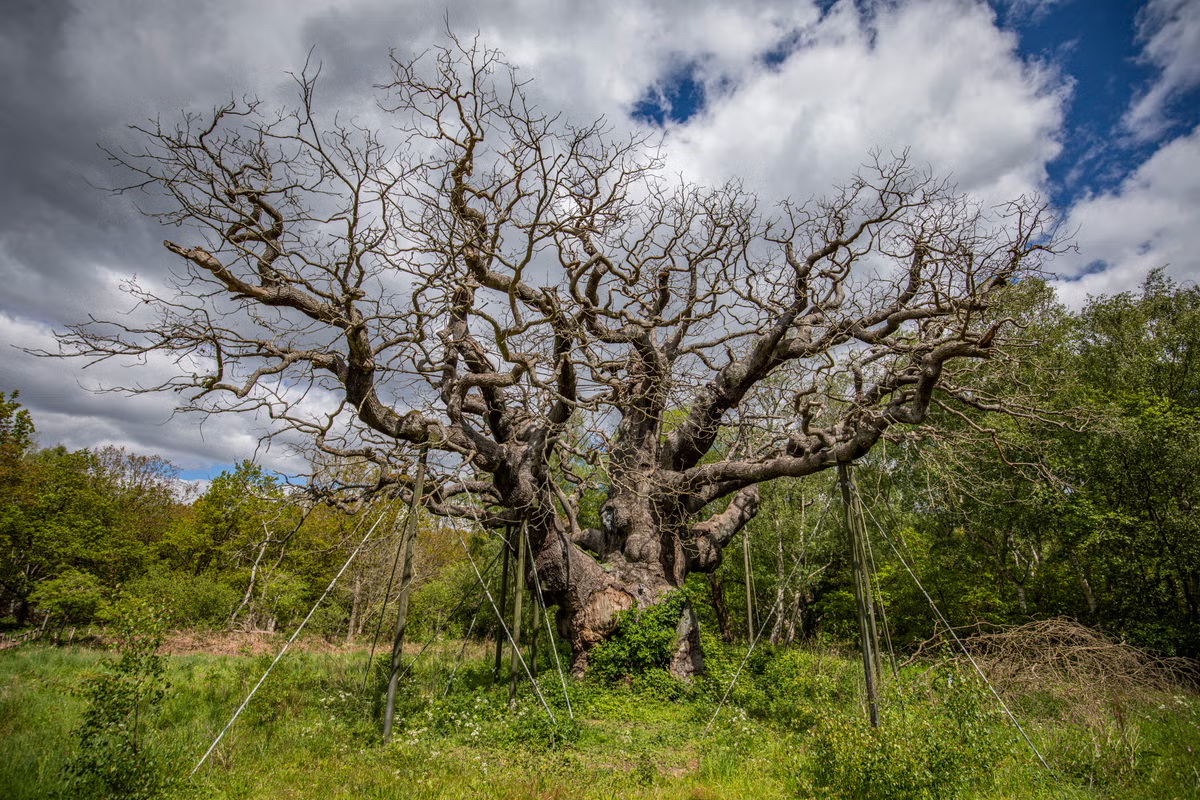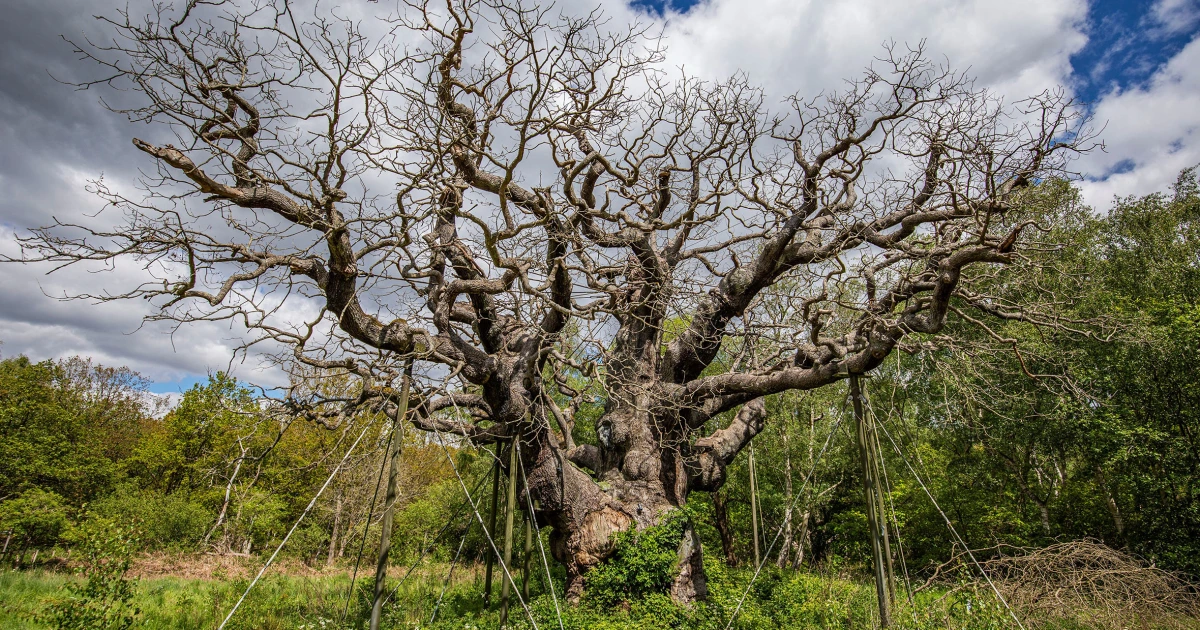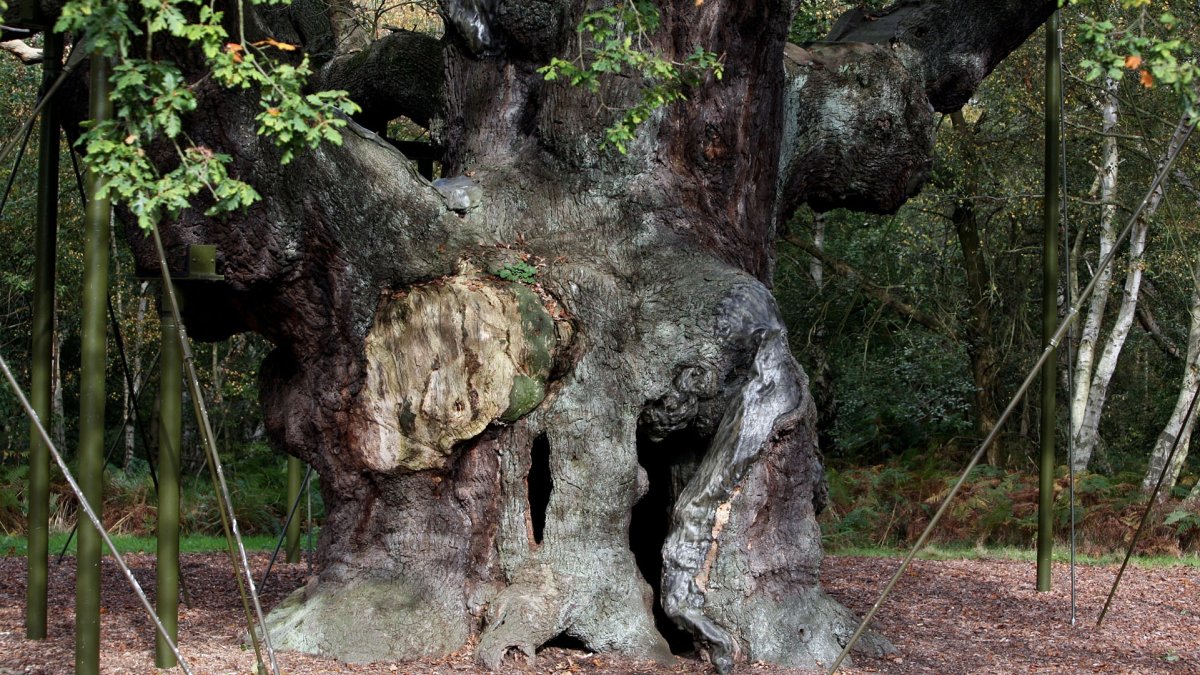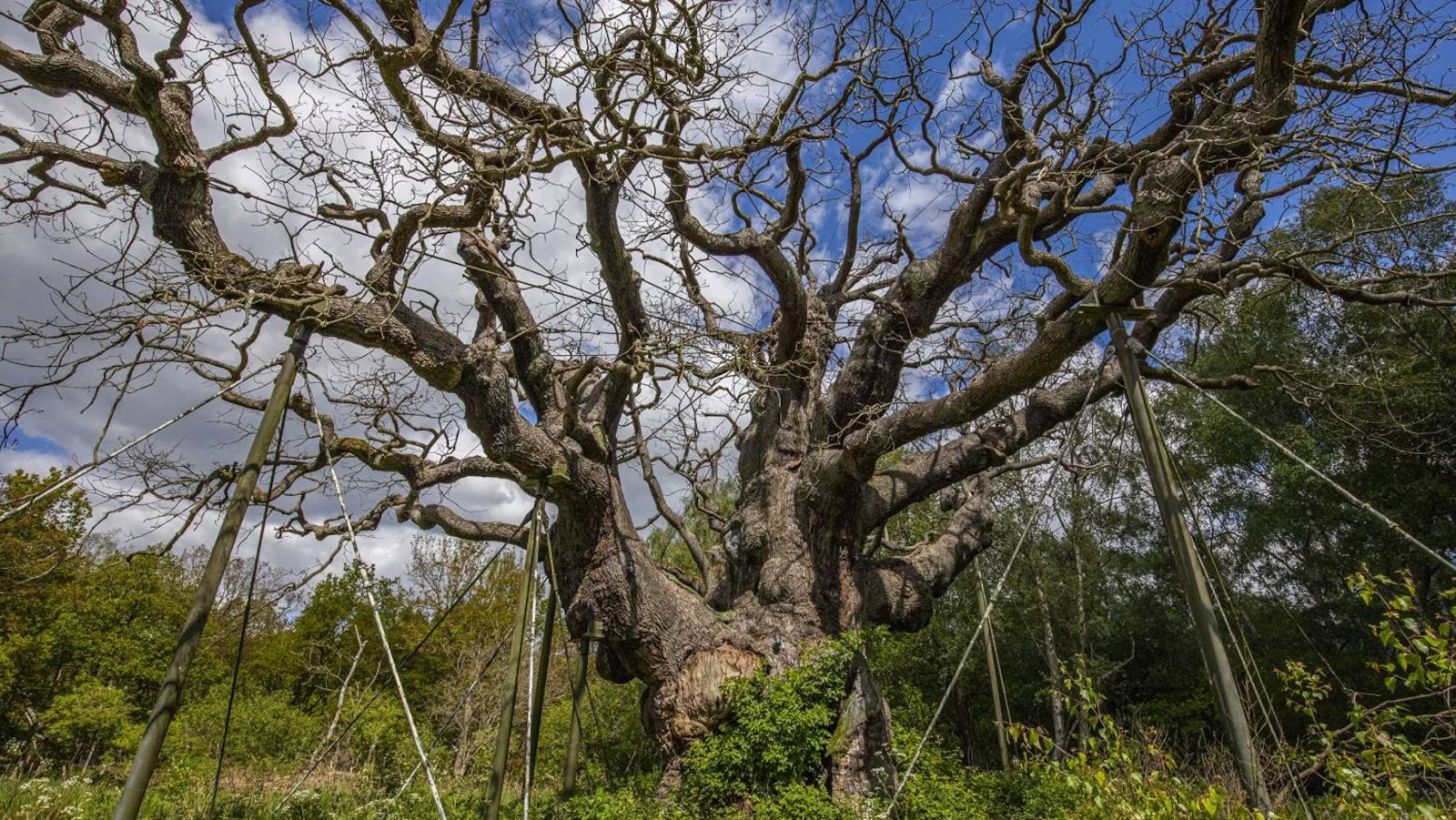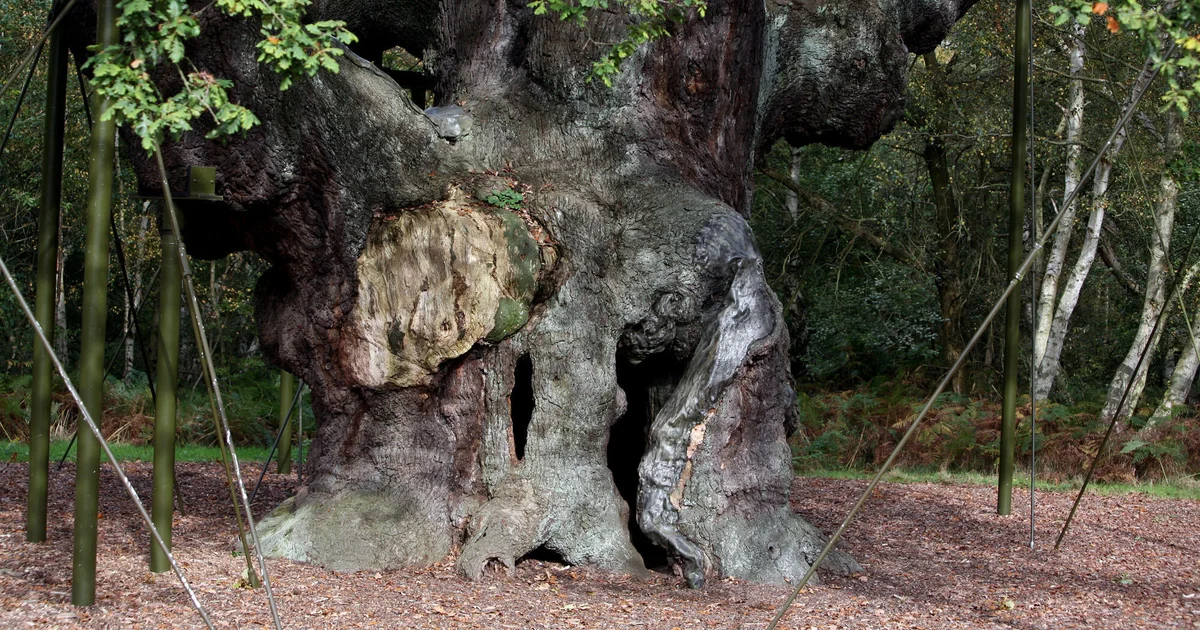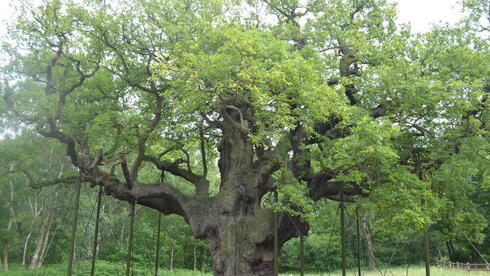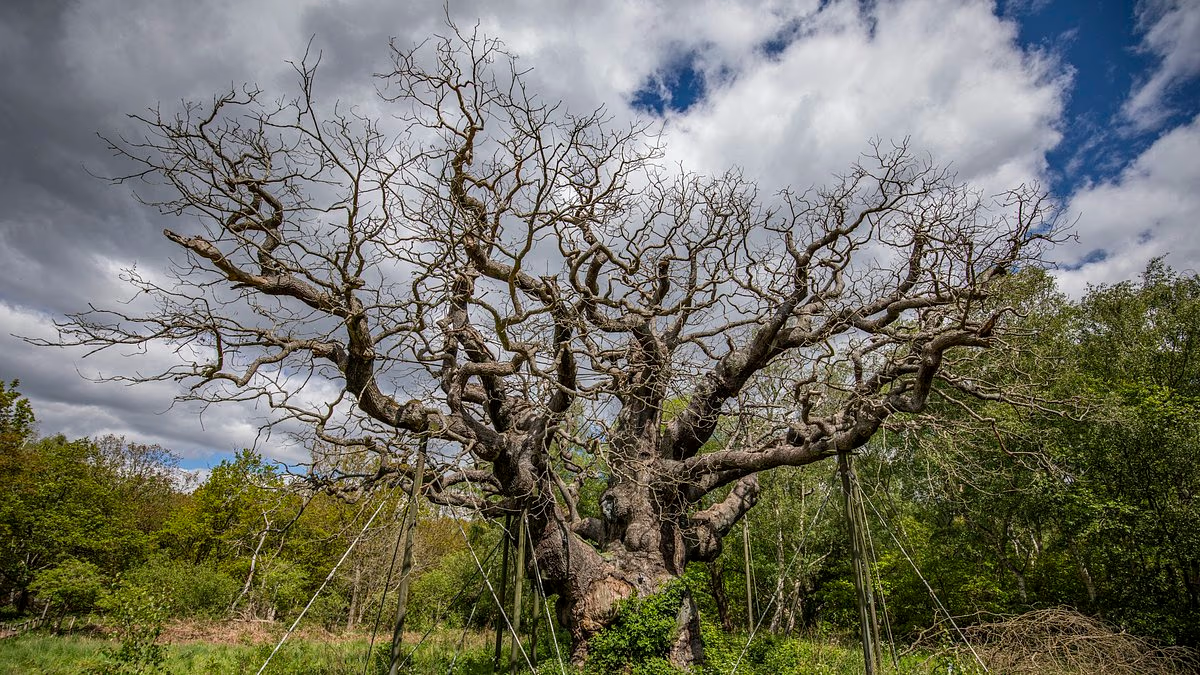
An ancient oak tree linked to a Robin Hood legend has died after 1,200 years, thanks to heatwaves and huge numbers of tourists visiting the site. The Major Oak, located in Sherwood Forest in Nottinghamshire, is thought to have died after its first spring with no leaves. Legend has it the hollowed-out trunk of the huge oak - a cavity actually caused by fungi - was used as a hideout by outlaw Robin Hood, shooting the tree to worldwide recognition.Experts from the Royal Society for the Protection of Birds (RSPB), who manage the woodland, said the tree has been severely impacted by several factors, including the large numbers of tourists that have visited over the years, a century of 'well-intentioned' structural intervention and recent heatwaves and droughts.The footfall of millions of tourists to the ancient oak has resulted in the soil becoming heavily compacted, with testing revealing it to be as solid as concrete in some spots. This has made it increasingly more difficult for rain to penetrate the soil, meaning the tree can't soak up the nutrients that it needs.The tree was named 'Major' after it was mentioned in a 1790 book by Major Hayman Rooke - an ex-British Army soldier who lived in Mansfield Woodhouse, a few miles from Sherwood Forest. And tributes have been made to the oak tree from famous faces including Dame Judi Dench, who is known for her love of ancient trees. The Major Oak, an ancient tree linked to a Robin Hood legend, is thought to have died after its first spring with no leaves Legend has it the hollowed-out trunk of the huge oak - said to be approximately 1,200 years old - was used as a hideout by outlaw Robin Hood. The tree has been impacted by several factors, including tourism, a century of 'well-intentioned' structural intervention, and recent heatwaves and droughtsDame Judi, an ambassador for the Woodland Trust, told the BBC: 'The Major Oak has provided inspiration for countless stories, poems, paintings and people for more than 1,000 years - all the while itself teeming with life and providing a home to an enormous range of wildlife.'I hope everyone who has been inspired by the Major Oak or another ancient tree reaches out to their MP and asks them to improve legal protections for these iconic and vital elements of our national landscape.' Simon Parfey, managing director at SoilBioLab - specialists in soil microbiology testing and part of the team caring for the ancient oak since 2021 - said surveys uncovered the root system had been 'quietly struggling for a long time' because of naturally poor soil and heavy ground compaction.Supports for some of its sprawling branches, in place since the early 20th century, have also been cited as among the 'well-intentioned' human interventions that are thought to have contributed to its decline. Such factors only serve to compound challenges such an old tree would naturally already be facing, according to scientists who confirmed its death after it failed to produce any leaves earlier this year.Despite efforts to revive the environment surrounding the tree, Mr Parfey said the damage was 'already too deeply entrenched to fully reverse.'Reg Harris, director of Urban Forestry (Bury St Edmunds) Ltd, has been monitoring the leaf canopy of the oak across the past nine years. He added the oak's most recent decline has corresponded with five hot, 'droughty' years, including July 2022 when temperatures hit record highs above 40C. Despite efforts to revive the environment surrounding the tree, the damage was 'already too deeply entrenched to fully reverse' Excessive tourism in Victorian times compacted the soil around the Major Oak's rootsMr Harris said: 'Sadly, it seems probable the lack of summer rainfall over the last five years, coupled with the unprecedented high temperatures, have had a significant hand in it.'For years, visitors could walk right up to the tree and climb into its famed hollow trunk, however, since the 1970s it has been viewed from a distance after being fenced off. The RSPB has confirmed the tree - which has been alive since the Norman conquest - will remain standing in the forest as a monument for people and wildlife. Chloe Ryder, the RSPB's estate operations manager at Sherwood Forest said the death of the tree has been 'devastating to accept'.She said: 'We know the Major Oak will have a lasting legacy, first and foremost because it is so inextricably linked to Robin Hood and Sherwood Forest.'But beyond its cultural heritage, the Major Oak will continue to provide important habitat for wildlife, reminding us why these remarkable trees are so important and why protecting them for the future matters.'She added: 'Previous surveys of the tree have shown concerning declines in its vitality over the past few decades, which is easily recognised in the appearance of the famous leafy silhouette. 'Recent years' surveys have focused on what's happening underground, and what we discovered was a surprising and grave situation; a strangled and starved root system in total disconnect to its surrounding environment, and a need to act much more urgently and innovatively than we ever anticipated if we were to reverse the fortunes of this natural wonder.' Kevin Costner starred as outlaw Robin Hood in the 1991 film Robin Hood: Prince of Thieves The RSPB has confirmed the tree will remain standing in the forest as a monument for people and wildlifeHowever, Ms Ryder added that the knowledge gained from monitoring and surveying Major Oak will now help shape how other ancient trees across the country are protected.Acorns and cuttings have since been grown from the tree, with saplings from the oak planted in locations around the world. This, Ms Ryder said, will ensure Major Oak's offspring will 'grow and generate their own acorns – and legends – for centuries to come'.Calls have also been made for stronger legal protections for ancient woods and trees in light of Major Oak's death. Ed Pyne, senior conservation adviser at the Woodland Trust, said: 'Excessive tourism in Victorian times compacted the soil around the Major Oak's roots, causing damage that could never fully be reversed.'Its decline is a warning – the way we treat ancient trees today will shape whether they survive for future generations.'
Ancient oak tree linked to Robin Hood legend dies
The Major Oak, located in Sherwood Forest in Nottinghamshire, is thought to have died after its first spring with no leaves, according to wildlife charity the RSPB.
1,036 words~5 min read