Japan just posted another month of stubbornly low inflation, with core CPI holding at 1.4% year-on-year in May 2026. That’s the fourth consecutive month below the Bank of Japan’s 2% target, and it’s becoming increasingly clear that government subsidies are doing the heavy lifting in keeping consumer prices subdued.
The headline inflation rate ticked up slightly to 1.5% from April’s 1.4%, but the broader picture remains one of an economy that simply cannot generate the kind of price growth its central bank has been chasing for decades.
The subsidy effect is doing serious work
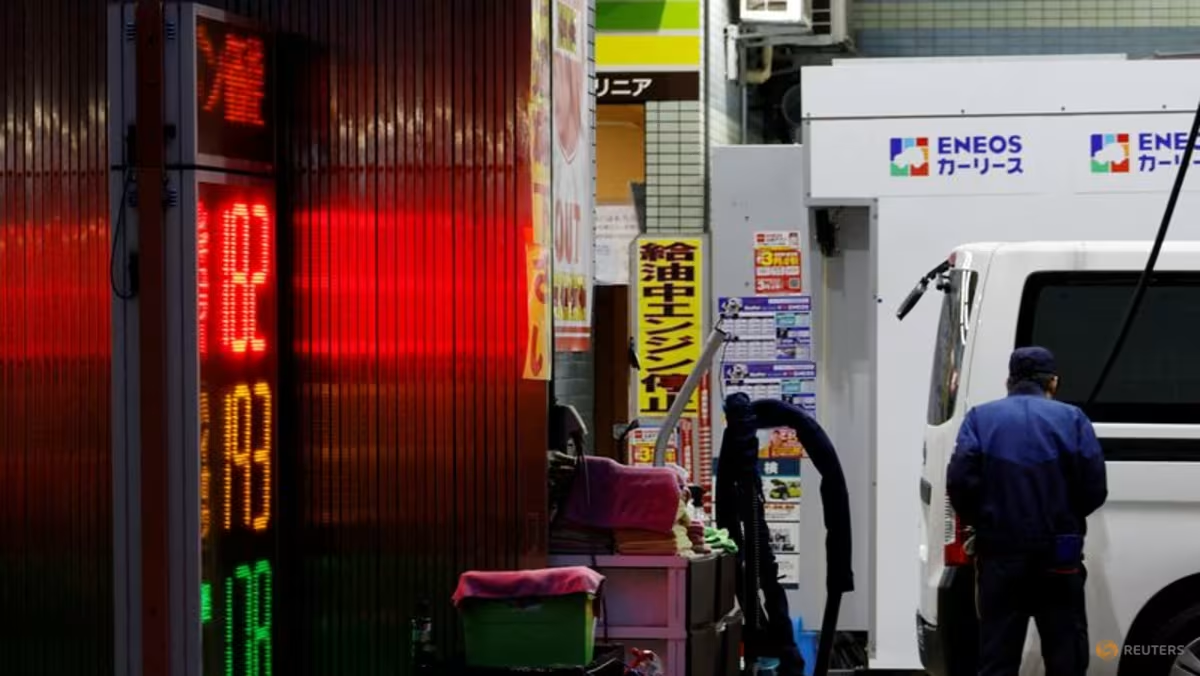
Here’s the thing about Japan’s inflation numbers: they’re being actively managed downward. The government has kept subsidies in place for electricity, gasoline (capped near 170 yen per liter), and education costs. They represent a deliberate policy choice to shield households from global energy price pressures, particularly as geopolitical tensions in the Middle East continue pushing oil and gas costs higher.
Tokyo’s core CPI, often treated as a leading indicator for national trends, eased further to 1.3% year-on-year in May. That marked the sixth consecutive monthly decline and came in below the 1.5% that economists had anticipated.