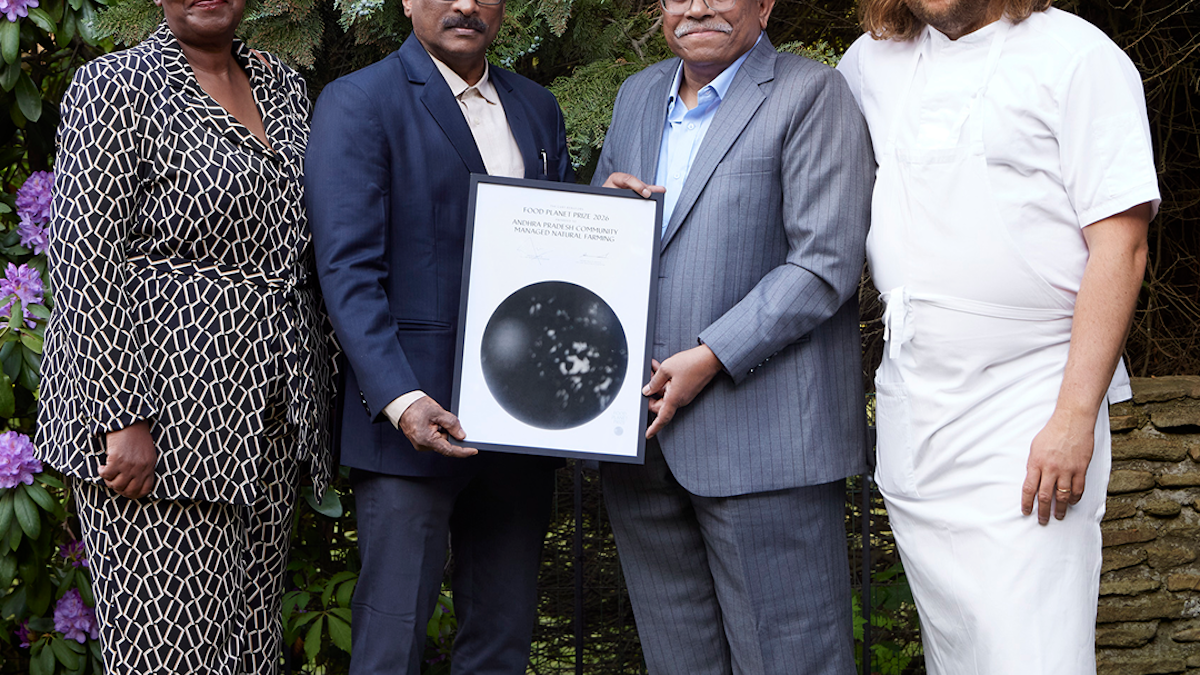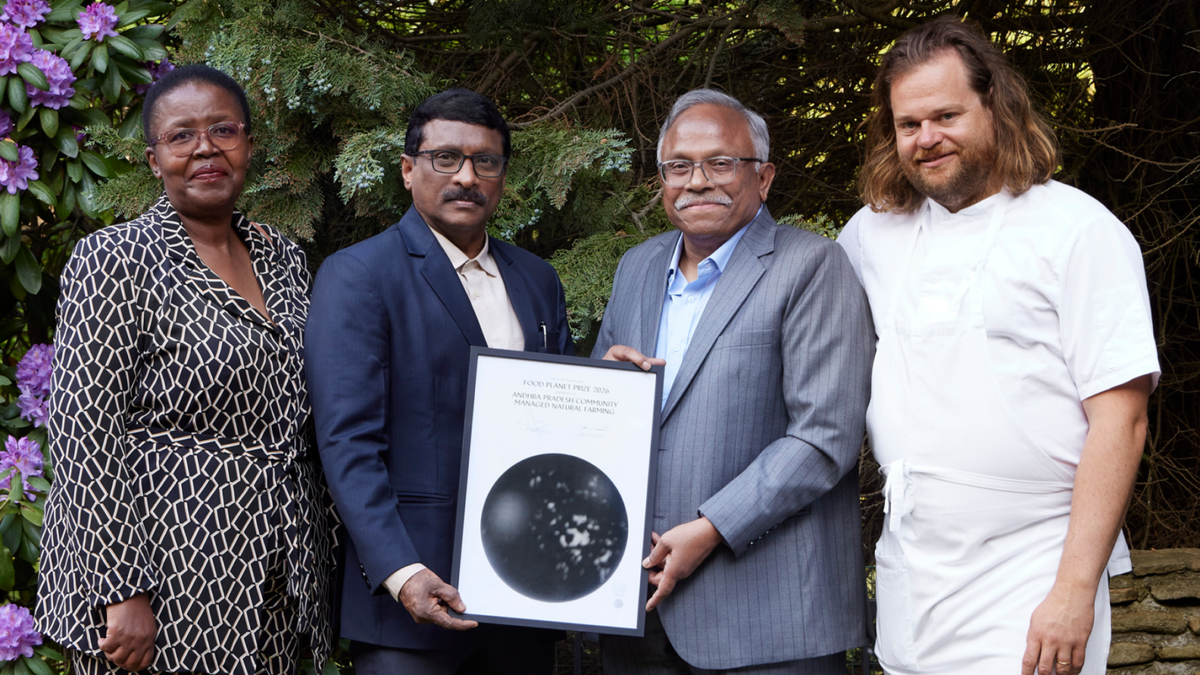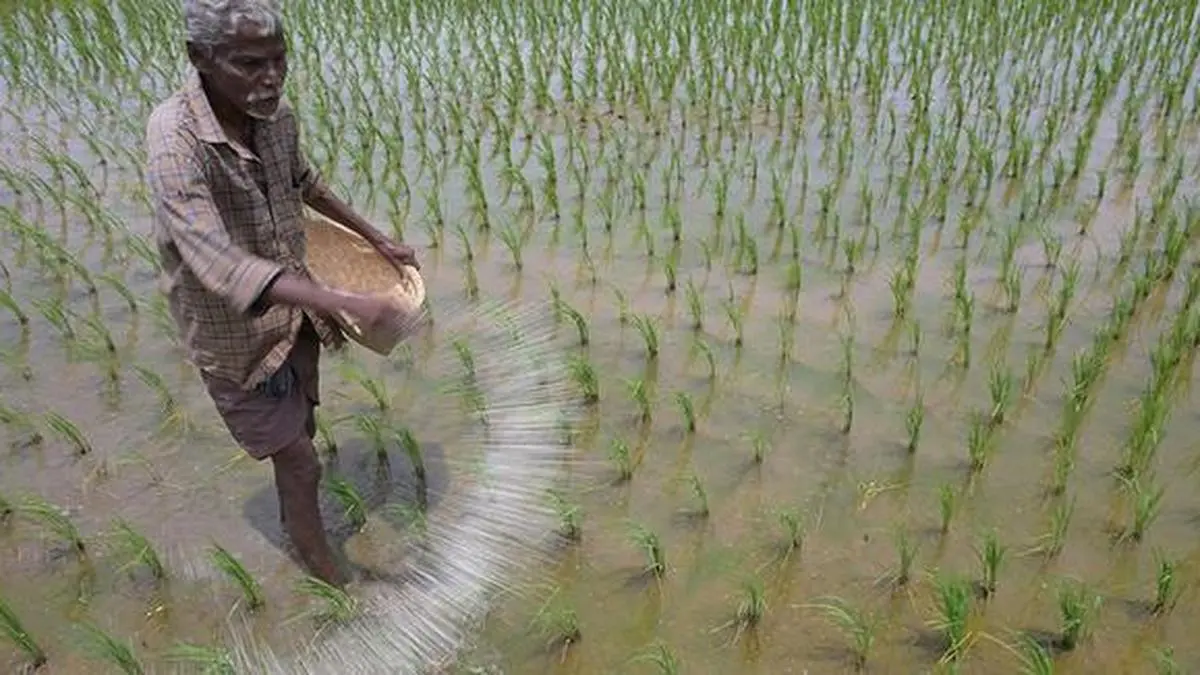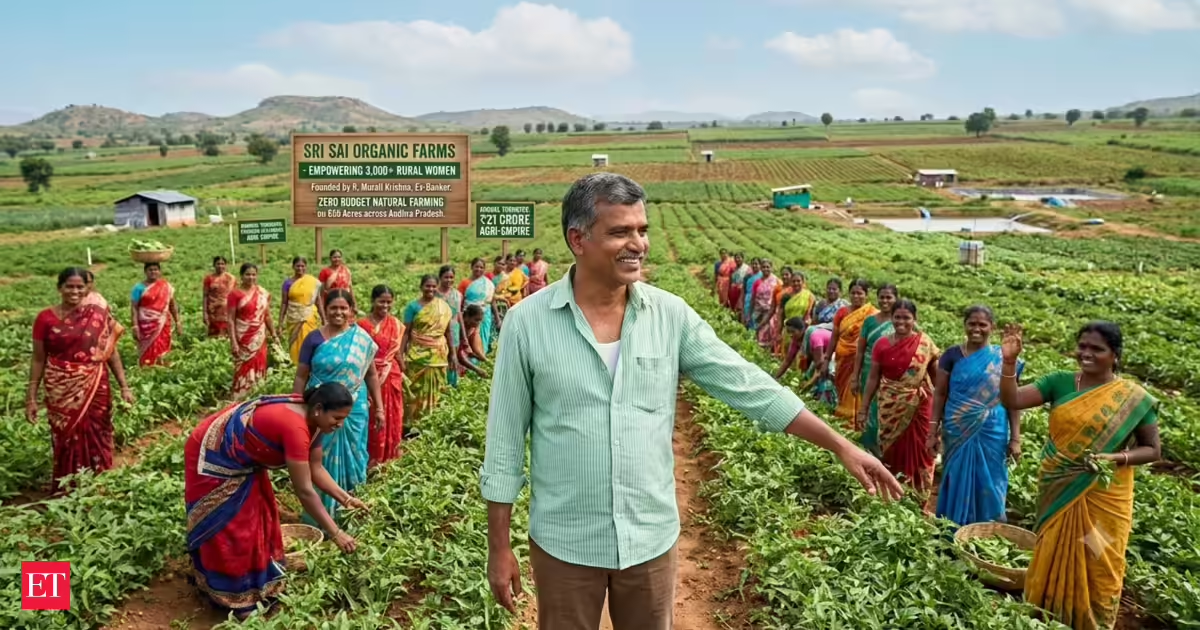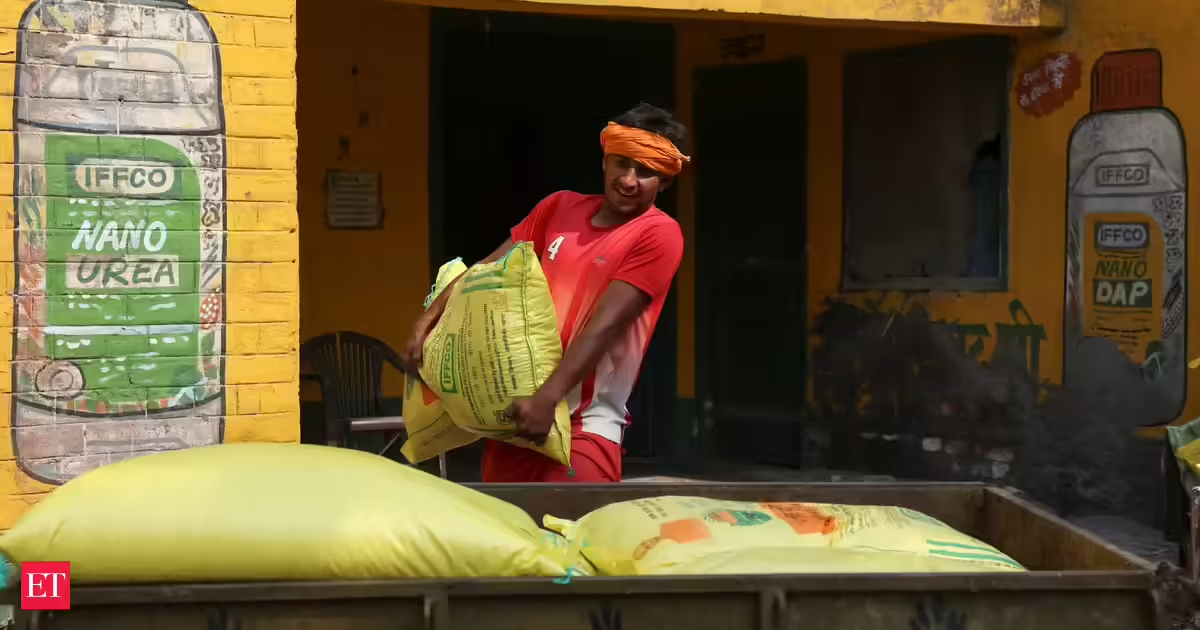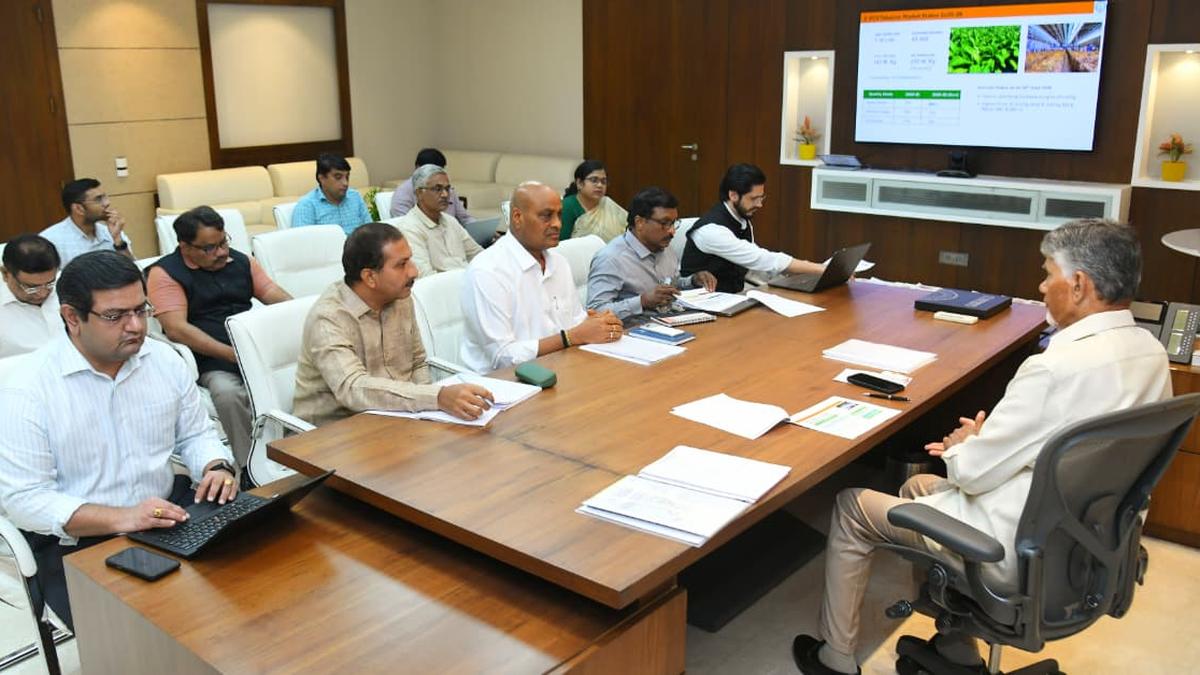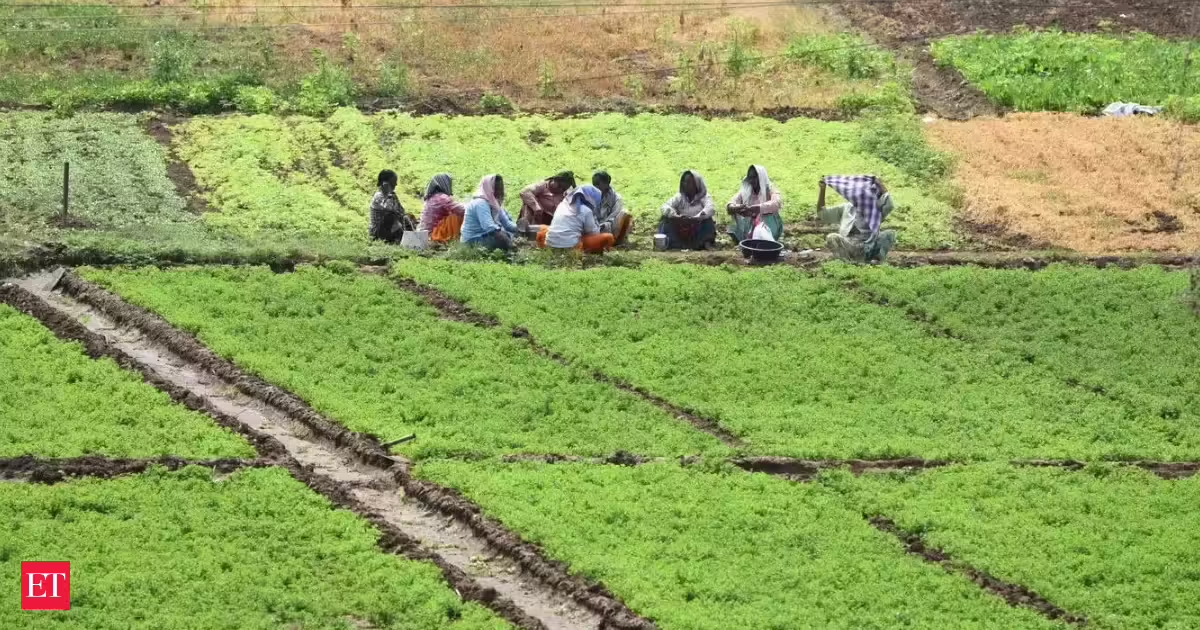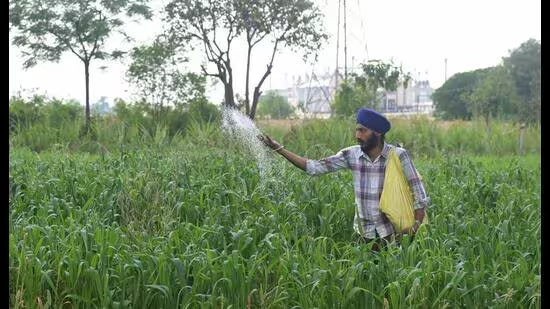
This month, a farming programme run by the government of Andhra Pradesh was awarded the prestigious $1.5 million Food Planet Prize. The winner was the Andhra Pradesh Community Managed Natural Farming (APCNF), which the jury described as one of the most ambitious transitions to agroecology ever attempted. Over a decade, around 1.8 million farm families have adopted APCNF’s natural farming practices across thousands of villages and nearly a million hectares. Organised through women’s self-help groups and a network of farmer-trainers, the programme aims to reach all six million farmers in the state by 2030.Entire agricultural systems can change when farmers are given the knowledge and confidence to experiment for themselves. This is worth remembering because the original Green Revolution did not spread overnight either. (AFP)APCNF’s zero budget natural farming method draws on farming innovator Subhash Palekar’s prior work. It replaces synthetic fertilisers and pesticides with locally prepared biological inputs and practices designed to restore soil ecology. Instead of feeding plants with concentrated doses of soluble nutrients, the aim is to feed the soil’s living community and let it nourish the crop.Conversion to natural farming under APCNF has been entirely voluntary. Farmers typically begin on a fraction of their land, keep the remainder under conventional cultivation, compare results for a season, and then decide whether to expand. Each village receives several years of support. This gradual approach separates the state’s experience from the cautionary tale of Sri Lanka that is often invoked in discussions about natural farming.In April 2021, the Sri Lankan government which was facing a forex crisis, banned the import of synthetic fertilisers and pesticides almost overnight and ordered the country’s farmers to go organic without any warning. Within a season, paddy yields fell sharply, rice imports surged, and tea exports suffered major losses. Although the policy was reversed within months and led to a fall in government, it became the standard warning that natural farming cannot feed a nation, and can cause civil instability. But Sri Lanka’s experience of a hurried, unplanned transition without giving farmers time to adapt is a sharp contrast in implementation to the Andhra Pradesh experience.In fact, a peer-reviewed study based on APCNF suggests that across 206 harvests, natural farming did not alter yields. Yet, by eliminating the cost of purchased inputs, it increased farmers’ profits by an estimated 124%. The same study also found higher biodiversity on natural-farming land, particularly among bird species associated with pest control and ecosystem health. However, results varied across farms, suggesting that natural farming is not a guaranteed success everywhere. Also, biodiversity gains will depend on broader land-use policies, not farming practices alone.The more interesting question is how Andhra Pradesh managed to spread natural farming at such scale and speed. Part of the answer lies in women’s self-help groups. These village collectives already existed as trusted financial and social institutions and provided peer learning, local accountability, small loans, and a channel to reach the women who do much of the actual cultivation, but often own little of the land. Natural farming depends less on purchased inputs, than on knowledge and farmer-to-farmer learning. Conventional extension systems were designed to distribute standardised packages of seeds and fertiliser but natural farming requires a change in thinking and practice, all of which takes time and works better through farmer social networks and handholding.Scaling beyond these self-help networks has proven more difficult. State agriculture departments are focused on the chemical model with performance often measured through fertiliser utilisation and crop production targets. India spends enormous sums subsidizing synthetic fertiliser, reinforcing the very dependence that natural farming seeks to reduce. Meanwhile, natural farming requires knowledge that is difficult to deliver through conventional extension systems, and risk-averse smallholders need support during transition years. Overcoming these barriers will require investment in farmer-trainers, demonstration farms, and modest protections against losses during conversion.Then, there is the question whether natural farming shifts additional labour onto women, who often prepare biological inputs, manage cover crops, and undertake tasks that chemicals once replaced. However, studies suggest that women participating in these programs report greater access to training, stronger roles in decision-making, and a more visible identity as farmers rather than helpers. This is not to deny the female labour involved, but to reduce female drudgery through better tools and innovation while preserving the gains in agency.The Andhra Pradesh experience shows that while natural farming is not costless, millions of farmers can be persuaded to convert to this more sustainable method of farming. Over time, entire agricultural systems can change when farmers are given the knowledge and confidence to experiment for themselves. This is worth remembering because the original Green Revolution did not spread overnight either. Beginning in the mid-1960s, it took two decades or more to become the dominant model across much of Indian agriculture. Its success depended not only on improved rice and wheat varieties but also on enormous public investments in irrigation, fertiliser production, rural electrification, agricultural research, extension services, credit, procurement, and price support.Natural farming requires a different kind of infrastructure. Instead of dams, fertiliser factories, and input distribution networks, it depends on farmer-trainers, demonstration plots, local experimentation, social networks, and support during transition years. If governments were willing to invest heavily in the institutions that enabled the first Green Revolution, there is no reason they cannot invest in those required for a second one.Ramanan Laxminarayan is president, One Health Trust. The views expressed are personal
The new green revolution in Andhra Pradesh
The Andhra Pradesh experience shows that while natural farming is not costless, farmers can be persuaded to convert to this more sustainable method of farming
TL;DRAI
APCNF won $1.5M prize with 1.8M farmers adopting natural farming voluntarily, achieving 124% profit gains. Voluntary adoption via farmer-trainer networks and peer learning scaled systemic change where Sri Lanka's mandated ban failed—knowledge infrastructure, not coercion, drives transformation.
898 words~4 min read