Show Caption
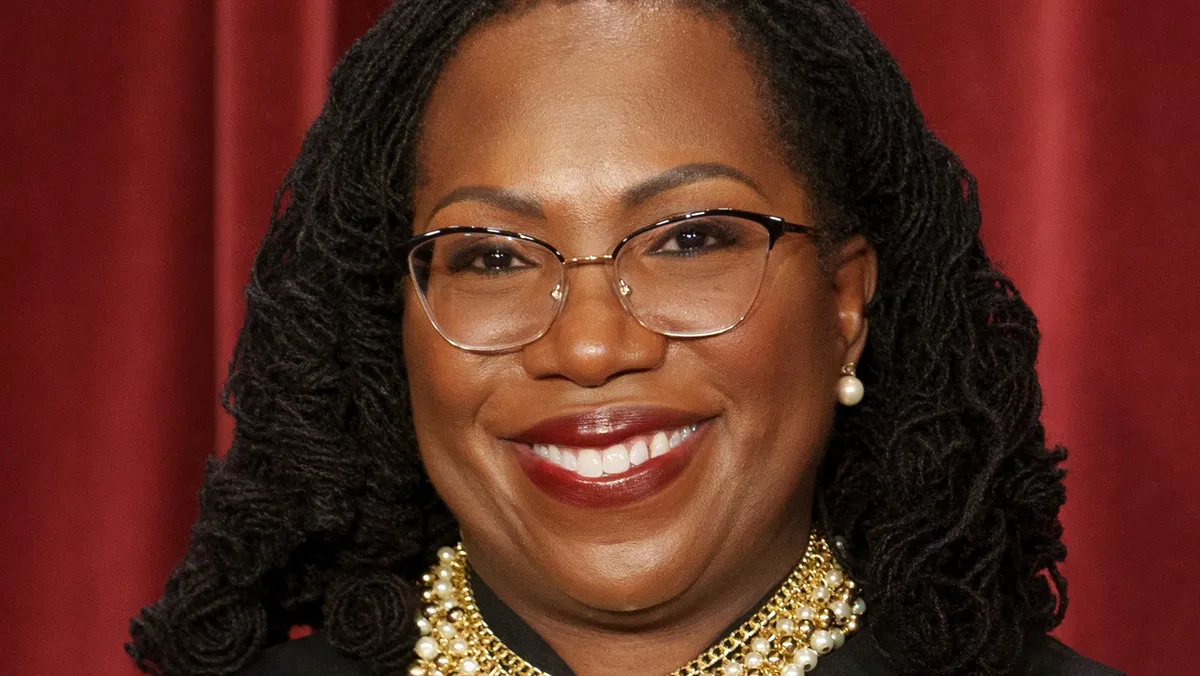
WASHINGTON – A Supreme Court that is often ideologically divided on gun control issues nonetheless unanimously agreed June 18 that a federal law aimed at keeping guns out of the hands of dangerous people went too far.But two of the court’s three liberal justices still want a course correction on how the court evaluates gun regulations.Justice Ketanji Brown Jackson said the "historical tradition" test for gun rules that the court created in its landmark 2022 decision in New York State Rifle & Pistol Association v. Bruen is “unworkable.”Rather than evaluating whether a gun rule is a justifiable way of addressing a modern problem, judges must sift through centuries-old evidence to find a previous law that’s roughly equivalent, she wrote in a concurring opinion joined by Justice Sonia Sotomayor.For example, in the case decided June 18, Justice Neil Gorsuch cited the drinking habits of the founding fathers as evidence that historical laws restricting the rights of habitual drinkers were not a good match for a modern law that makes it a crime for a regular marijuana user to have a gun.“Had habitual drunkard laws applied to those who simply drank regularly," he wrote, "many notable early Americans could have faced trouble."Jackson agreed with that reasoning but said the test itself is bad. She said the court should consider in a future case “whether to retire the failed Bruen experiment.”The court, which has a conservative 6-3 majority, split along ideological lines when deciding Bruen in a case that expanded the Second Amendment right to bear arms outside the home.Two years later, all but Justice Clarence Thomas signed onto an opinion that made it easier to apply the historical tradition test.But lower courts are still having trouble applying it.The justices could offer more guidance in a pending decision about a Hawaii law that requires gun owners to get permission before bringing a firearm into a store or other private property that’s open to the public.During the January oral arguments, a majority sounded ready to rule that the law flunks the historical tradition test.But the fact that Thursday’s decision in favor of the drug user was a relatively narrow one could be a sign that the justices will also limit the impact of the Hawaii decision, according to Notre Dame Law School associate professor Haley Proctor, who specializes in the Second Amendment.Proctor said the Hawaii decision, which is expected by the end of the month, may not meaningfully change the court’s test for gun rules.The justices may not, for example, provide much guidance on whether there are other ways states can ban firearms in “sensitive” public places, such as parks or public transportation.“Meanwhile, lower court decisions on 'sensitive place' laws are all over the map,” Proctor said. “They uniformly recognize that the government may ban firearms from sensitive places but disagree on what makes a place `sensitive.’”Jonathan Lowy, president of Global Action on Gun Violence, said Jackson is exactly right that judges are not equipped to play historians and the Bruen test should be scrapped.“While the court was correct that a gummy at bedtime should not automatically disqualify someone from guns, that’s because of 2026 views on marijuana use, not because of 18th or 19th century laws that now determine the fate of all gun laws,” he said in a statement. “Twenty-first century gun violence can’t be solved with 18th century solutions.”