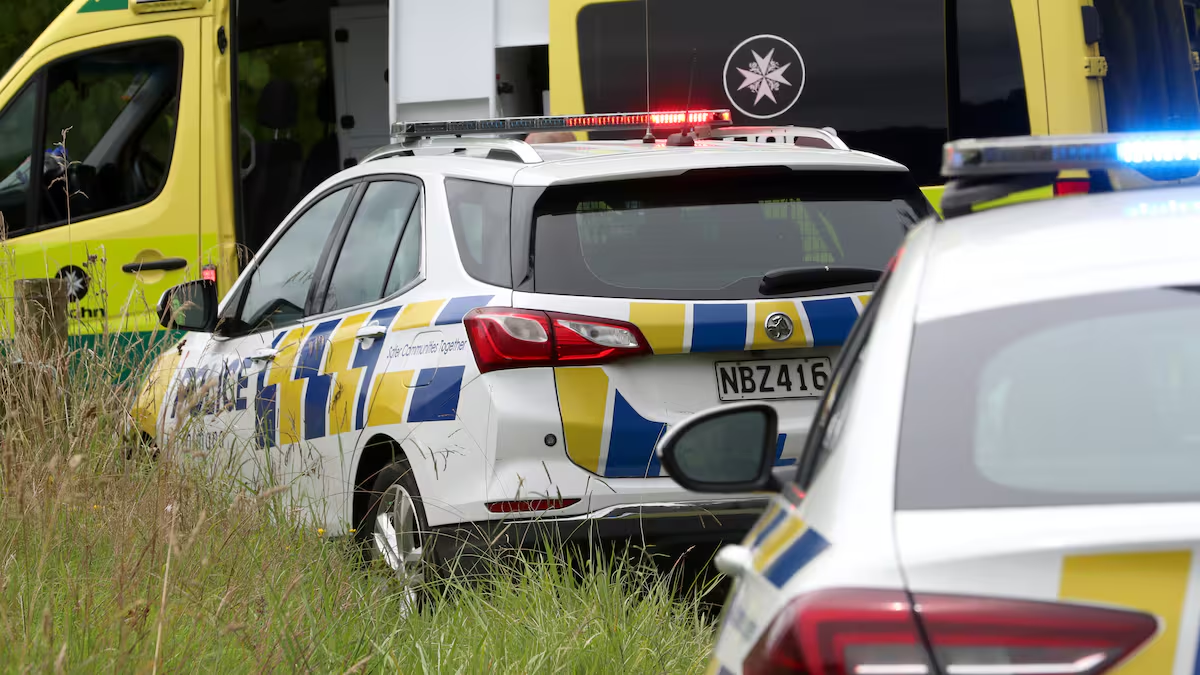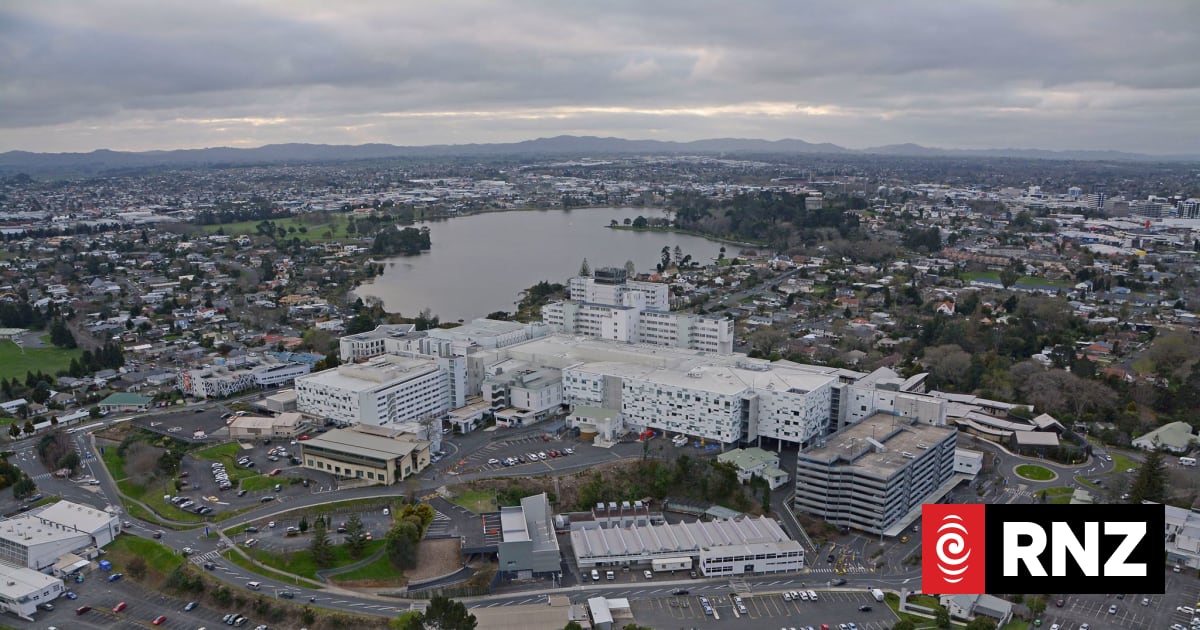
The family of an 11-year-old autistic girl who was mistaken for an adult, restrained and injected with drugs at a Waikato Hospital says it's had a "lasting and traumatic impact".In a statement released alongside reports by the Health Ministry and the Health and Disability Comissioner (HDC), the family says they cannot understand how the non-verbal child was mistaken for a 20-year-old woman, handcuffed by police and admitted to an adult mental health ward where she was restrained and twice injected with sedatives.The ministry investigation has found the central and key failing was hospital staff not following the formal process for confirming the identity of people who are unable to say who they are. Not all staff were aware of what the policy was.It also said there was no lawful basis to restrain and medicate the patient even if she had been the 20-year-old person they thought she was.In March 2025, an 11-year-old Māori child was taken to the hospital by police, who were concerned for her welfare after she was spotted in the middle of the road and climbing a bridge just after 6.30 on a Sunday morning. Police misidentified her as a missing 20-year-old mental health patient - Patient B - who was under a compulsory treatment order.The child was admitted to the Henry Bennett Centre, where over the course of the day she was restrained and sedated because she refused oral medication.The family said this was "inexplicable" and that there were "errors in every step of the system process".They say they have been distressed by conflicting accounts from police and staff and public statements at the time, which suggested that procedures had been followed, and appeared to be contradicted by the reports' findings.For more than a year, the family say they have been waiting for answers and dealing with the "lasting and traumatic impact" of the mistake.John Crawshaw, the director of mental health at the Health Ministry, said: "There was a whole series of failures."The Ministry of Health's director of mental health, John Crawshaw.RNZ / Nathan MckinnonHow the misidentification happenedThe report found actions of the police had been a "significant contributing factor" in misidentifying the child.The officers who found the child near the bridge initially described her as a non-verbal and a possibly autistic teen.When they brought her to hospital, a member of the crisis team at the emergency department said she was clearly a child and autistic and should not be taken to the Henry Bennett Centre.Hospital staff decided to keep the girl under the care of the emergency department.One of the officers contacted an NGO (non-governmental organisation) where Patient B had been treated and asked if the girl was the patient. The officer said a staff member at the organisation confirmed this, but the staff member denied saying they were certain.The officer told the emergency department staff in charge that there was a possible identification, giving them Patient B's name and date of birth.The child was given to the care of the crisis team, and assigned new staff members, who said they understood that the patient's identity had been confirmed.The report found that the officer did not communicate the doubts around the identification clearly, which undermined the hospital staff in conducting independent checks.But it stated that responsibility for confirming the identity sat with the hospital and "could not be delegated to the police".The findingsDeputy Health and Disability Comissioner Rose Wall.LANCE LAWSON / SUPPLIEDIn his report, Dr Crawshaw said hospital staff failed to follow the formal process in place for confirming the identity of unknown patients.He discovered that staff had not been aware of the policy, which had also not made clear whose responsibility - the ward, the emergency department, the police - it had been to confirm the identity of patients.Additionally, he noted there had been no legal basis for the restraint and medication of the child - even if she had been Patient B. Instead, he said safeguards to protect people's right to treatment (which includes the right to refuse it) had failed.He said the situation had not met the requirements of urgent treatment which would have allowed for restraints under the Mental Health Act.Crawshaw told RNZ: "This was deeply concerning to me, and I think it's deeply concerning to all who've been involved, because at the heart we had an 11-year-old Māori girl with autism who was misidentified, then admitted to an adult unit as if she was a 20-year-old, and then the treatment given to her was not consistent with what the practices should have been, and in fact was not authorised under the Mental Health Act, which is the protective mechanism."He apologised again to the family and said his "heart goes out" to them.The HDC's report found Health NZ had breached the Code of Health and Disability Services Consumers' Rights by failing to provide services that took account of the child's need and respected her dignity.It stated that the use of medication and restraint was "unreasonable and premature" as the child had displayed no signs of being a danger to herself or others. Dr Bensemann, an expert quoted in the report, said the "inability to administer treatment is is not by itself an indication for use of force".The report's author, deputy commissioner Rose Wall, expressed concern that medication had been prescribed by a registrar without a patient being seen in-person.Both reports said changes needed to be made to ensure this did not happen again.In response, Health NZ said it had implemented 19 of the 22 recommendations from a rapid review report last year and accepted the recommendations from the Health Ministry and HDC reports. It said it was committed to ensuring this did not happen again.It had issued new identification policies which had been filtered down to frontline staff in Waikato, which it would also roll out across the country.A national restraint governance group had also been established.Health NZ's chief clinical officer Dr Richard Sullivan.RNZ / Calvin SamuelHealth NZ's chief clinical officer Dr Richard Sullivan said: "We recognise this has been a very traumatic event for this young person and their whānau and have apologised to them again and continue to offer them support."Minister for Mental Health Matt Doocey said that he expected full compliance with the Mental Health Act and for Health NZ to roll out the reports' recommendations as quickly as possible to ensure this did not happen to someone else.Doocey said: "At the heart of this report is a young girl and a family who have endured a deeply traumatic and entirely avoidable experience. They have carried the burden of these failures and will continue to do [so]."Health New Zealand failed this young person and her family. The safeguards that exist under the Mental Health Act were not followed, resulting in a serious breach of the protections that exist for some of our most vulnerable people."
Major failures led to autistic 11-year-old being sedated in adult ward, two reports find
The family of an 11-year-old autistic girl who was mistaken for an adult, restrained and injected with drugs at a Waikato Hospital says it's had a "lasting and traumatic impact".
1,137 words~5 min read