Kubernetes-based virtualization proves its enterprise credentials on critical rail infrastructure
As enterprises accelerate away from legacy virtualization platforms, the debate over whether Kubernetes-based virtualization is ready for mission-critical workloads is shifting from conference rooms to production rail lines as the push to consolidate virtual machines alongside containers on a single platform becomes a reality.
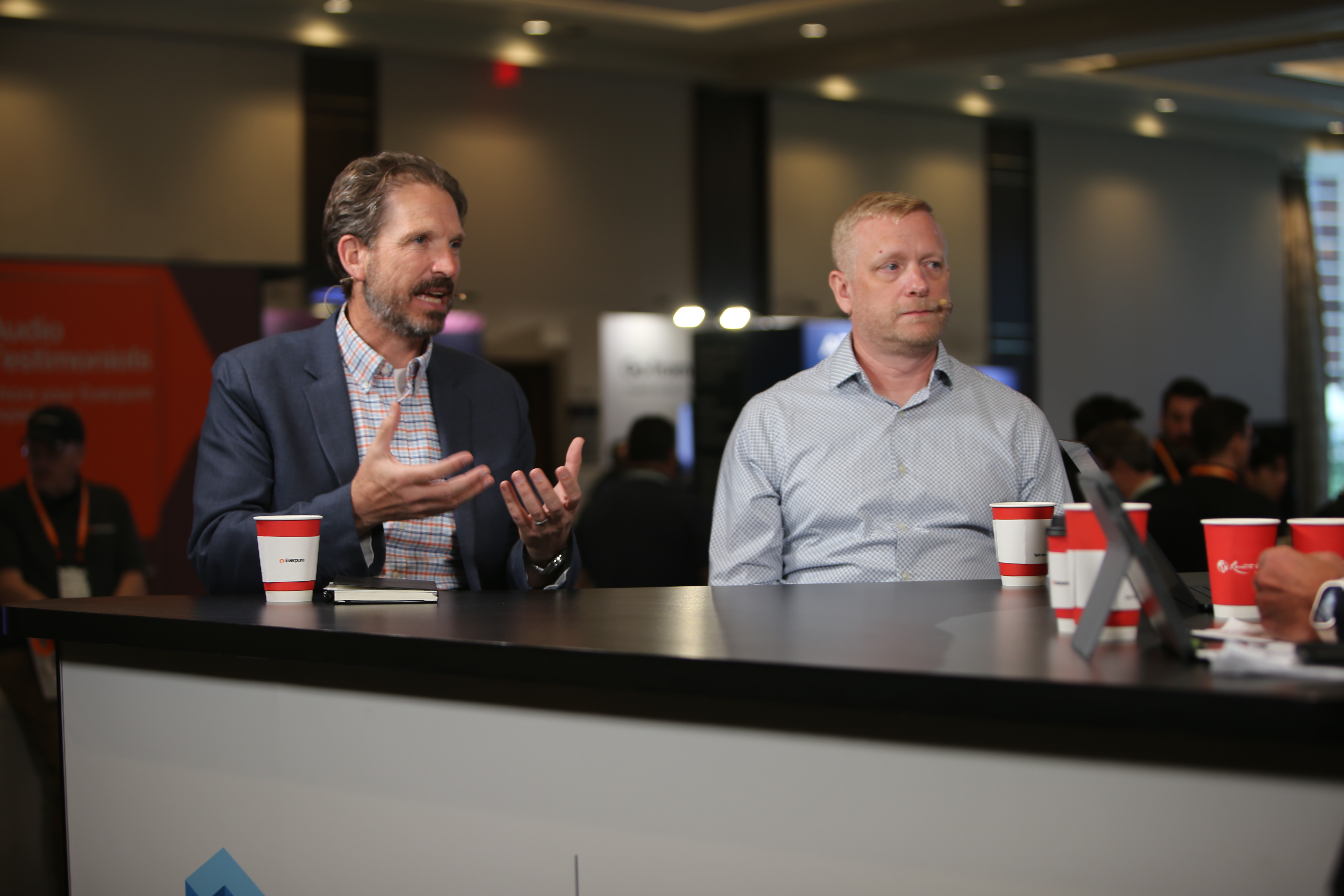
CSX Corp., one of the largest freight railroad operators in the United States, is among those making the move. The company operates roughly 21,000 miles of track across the eastern U.S. and runs safety-critical systems such as Positive Train Control — infrastructure where downtime carries consequences far beyond business interruption. After migrating about 80% of its workload to the cloud over three years, CSX turned its attention to what remains on-premises and what platform should unify both, according to Eric Grabill (pictured, right), lead senior product manager of IT at CSX.
“With the changes in the virtualization landscape recently — with acquisitions and such — we were looking at not being stuck with one vendor,” Grabill said. “Fortunately, we had quite an experience and background and knowledge in OpenShift, and so it just caused us to look at what else is out there. Then, once we realized OpenShift was an enterprise platform that could also handle the virtualization, then it was just a matter of proving out that it was capable of the resiliency that we needed.”