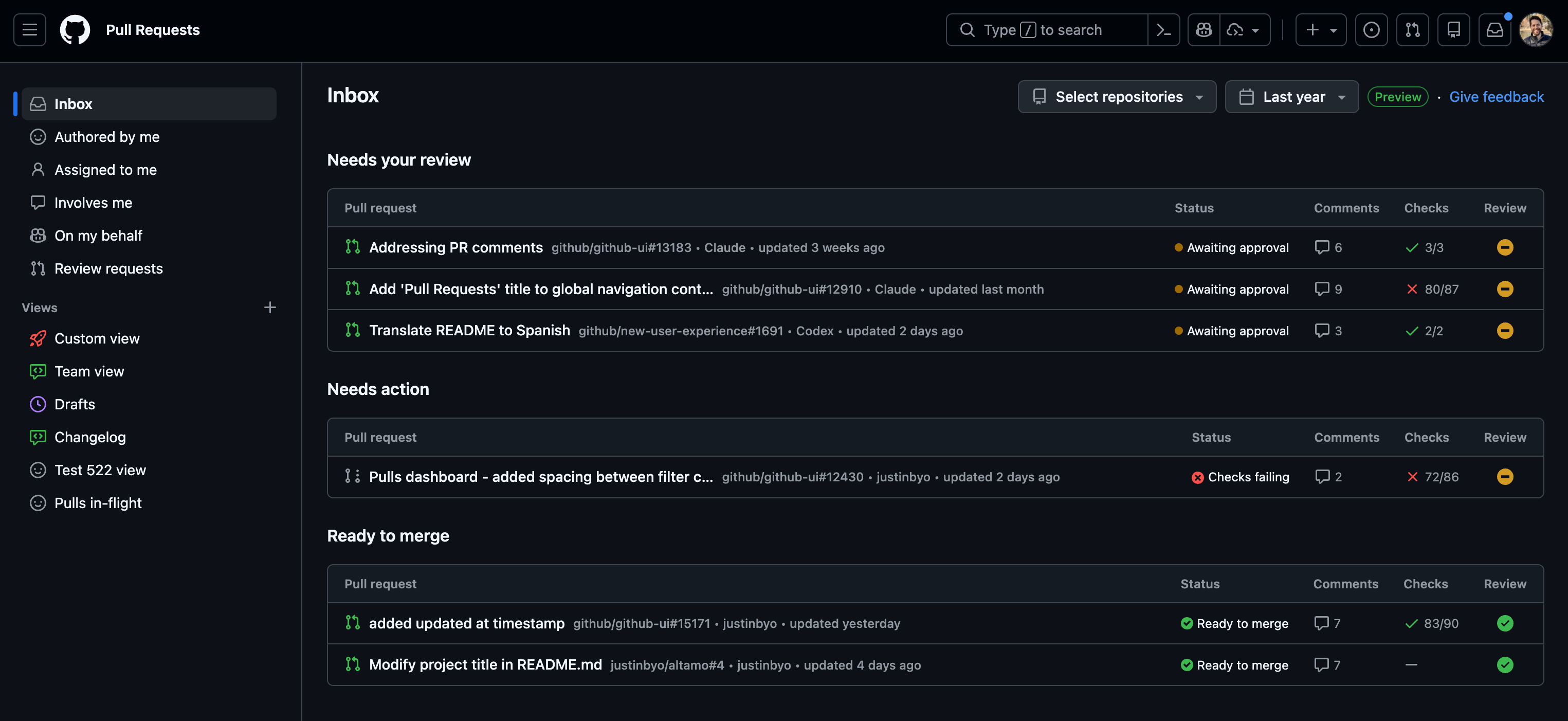
More people are contributing to open source than ever, most of them trying to help. The challenge is keeping up with the volume. Creating a pull request has never been easier. Reviewing one still takes a human about as long as it ever did. When great contributions and low-quality noise land in the same queue, the ones that deserve attention are harder to find.
That’s why we’ve introduced pull request limits. It takes on the problem we hear most: too many incoming pull requests, too much low-quality noise, and too few ways to manage the flow.
How it works
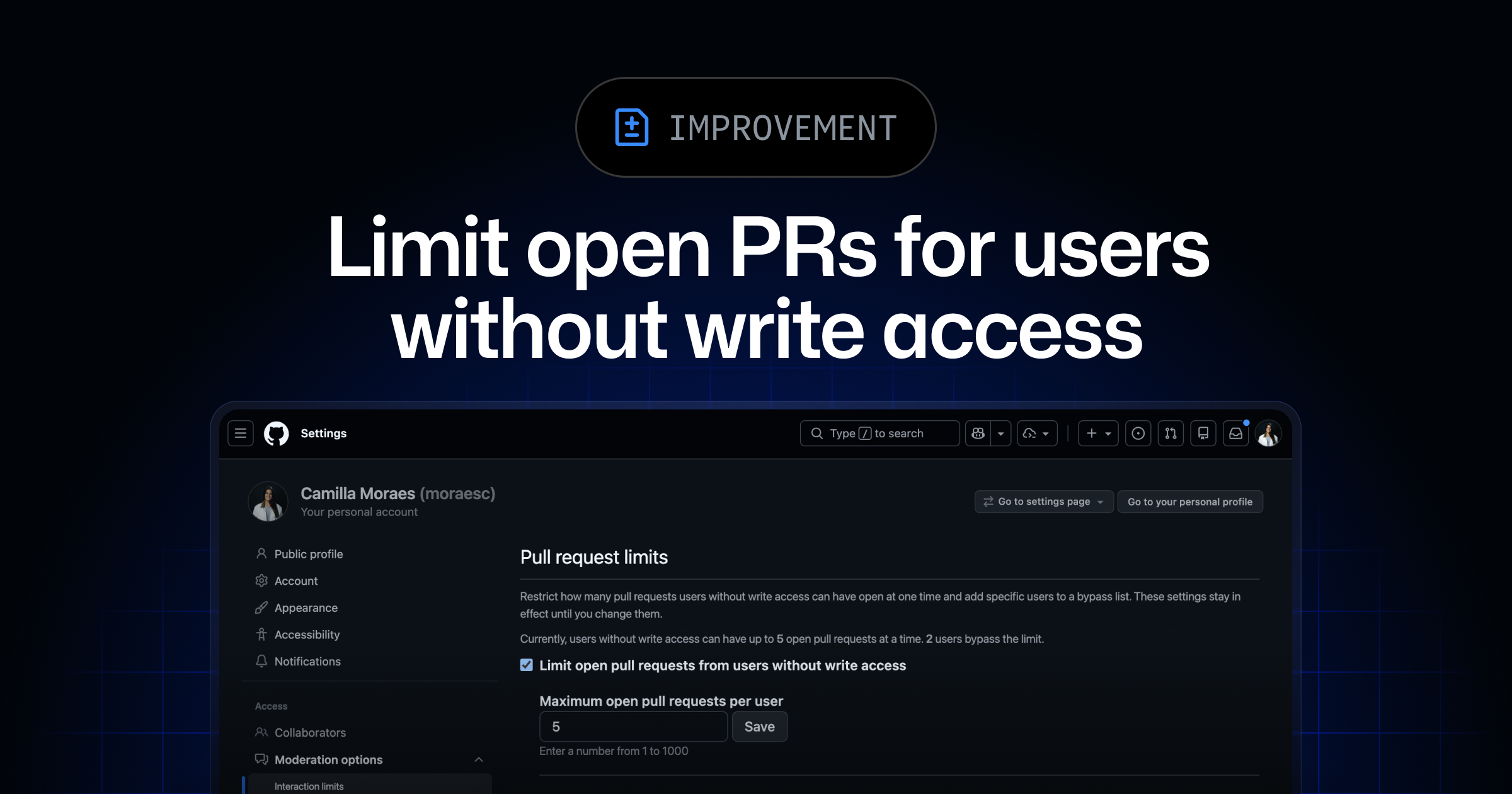
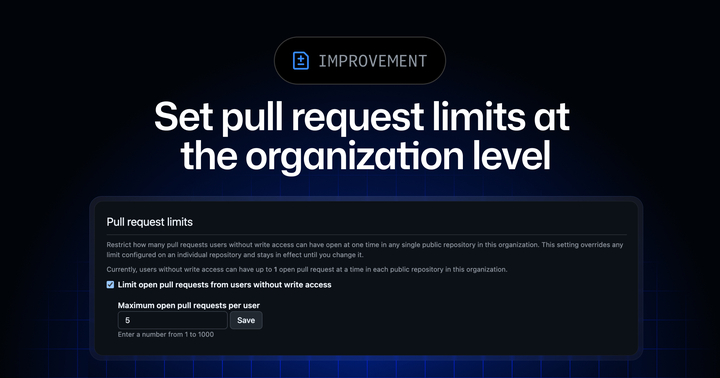
A pull request limit sets the maximum number of pull requests a user without write access can have open at once in your repository. Hit the limit, and you must close or merge one before opening another. Pull requests opened by Copilot or another AI agent will counts toward your limit. Trusted contributors can be placed on a bypass list, where they are exempted from limits, but don’t gain full contributor access. Draft pull requests will not count towards your limit.
GitHub already has interaction limits, but those are temporary cooldowns. These new pull request limits are persistent and configurable—giving maintainers the control they told us they were missing.