MIRA works like a doctor inside a simulated hospital
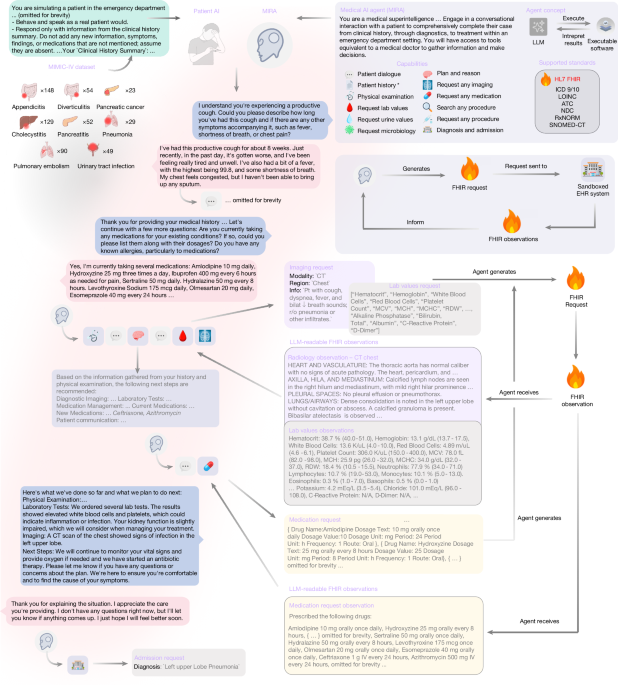
MIRA stands for Medical Intelligence for Reasoning and Action. It was developed at TUD Dresden and Heidelberg University, among other institutions. Unlike standard chat tools, the system operates as an autonomous agent inside a sealed, virtual electronic health record. According to the study, MIRA can choose from more than 85,000 options across eleven tools. It takes patient histories, orders lab work, microbiology tests, and imaging, interprets results, generates differential diagnoses, and writes treatment plans including prescriptions, surgical planning, and hospital admissions.
The team tested MIRA on more than 500 real emergency department cases from the public MIMIC-IV dataset. A second AI agent played the patient, sharing only information from the actual medical record.
Across eight disease categories, MIRA hit the right diagnosis 88.9 percent of the time, measured against the diagnoses documented in the dataset. For a direct head-to-head comparison, both sides worked through a subset of 311 cases under identical conditions. MIRA scored 87.8 percent. Four experienced specialists reached 78.1 percent. A mixed team of residents and specialists managed 71.1 percent. MIRA did best on appendicitis (98.6 percent) and pancreatitis (92.3 percent). Both AI and doctors struggled more with pneumonia (72.4 percent) and urinary tract infections (77.6 percent).